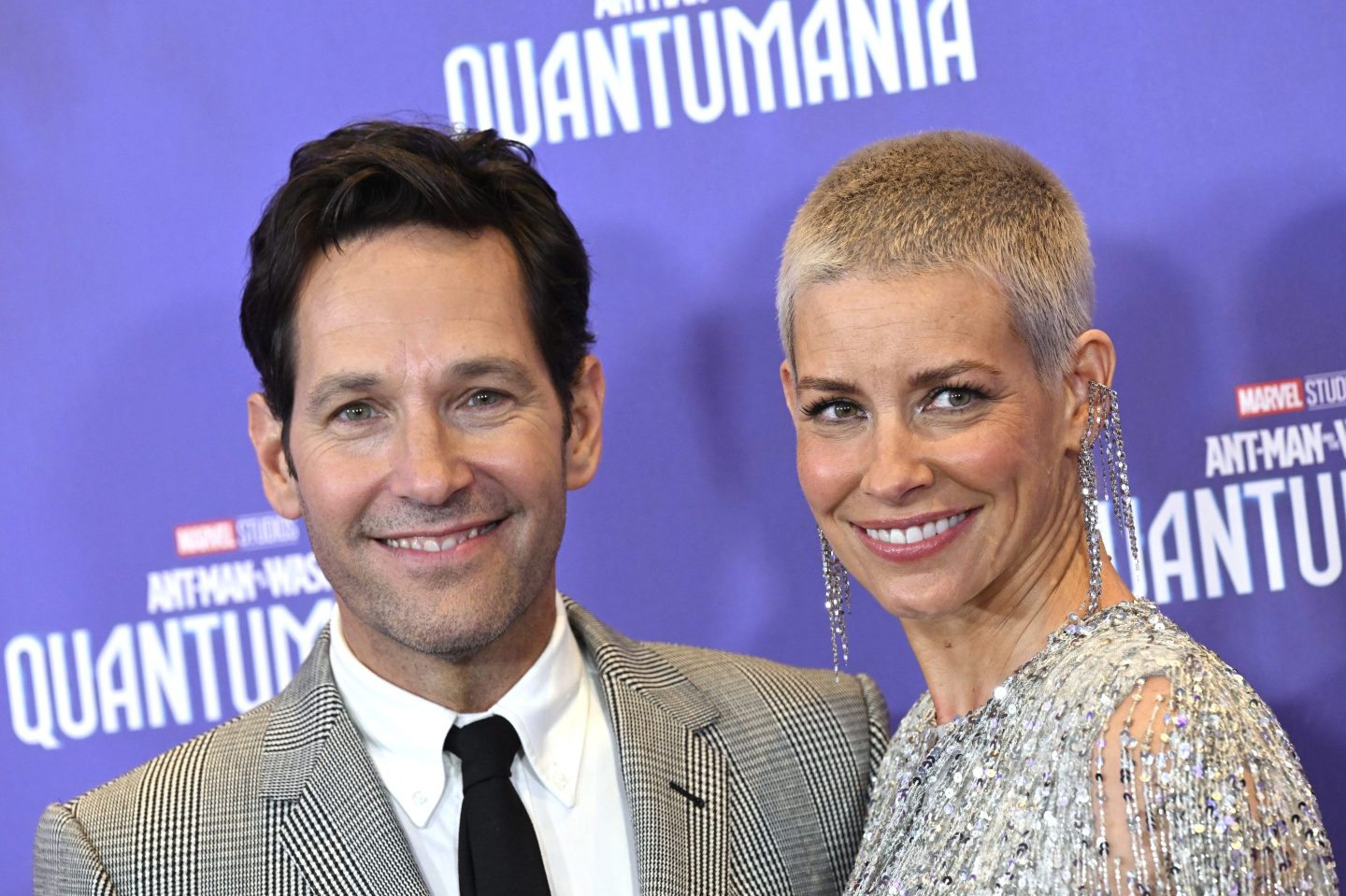
As a quantum scientist, I’m excited by how central the “Quantum Realm” is to the latest Ant-Man movie. It’s a great way to break down the barriers to a field that will impact our lives in the coming years.
So, how does the “real quantum realm” stack up? Let me take you on a Quantumania-inspired tour of the technologies and possibilities of quantum science. And even closer to my heart, how we make sure that women like Wasp, and under-represented groups more widely, can play a prominent part in the journey.
We won’t get lost in the ‘quantum realm’
In an earlier Ant-Man movie, the first Wasp, Janet van Dyne, got lost in the quantum realm–but quantum technology is already helping us find our way in the real one.
Quantum sensor technology is behind the GPS systems that we rely on for everything from the best shortcut to work to internet governance systems. The sensors’ accuracy at measuring time makes atomic clocks inside many GPS satellites tick–literally.
The sensors work by using the quantum properties of how particles behave at atomic scale to detect tiny movements or changes in gravitational, electric, or magnetic fields. This level of accuracy can provide a highly precise and stable measurement. Or for a clock: a super-reliable “tick”.
Accurate GPS is great, but the latest quantum sensor technologies will take us much further. Quantum-enabled Positioning, Navigation, and Timing systems (PNT) could transform navigation in environments where GPS doesn’t work–in space, for instance, or military environments where GPS could be an exploitable weakness. They’re also creating new ways to monitor environmental changes, make Earth observations from space, and forecast long-range weather–all of which provide data vital to industries from insurance to mining, as well as to global sustainability efforts. These advances are already helping scientists measure climate change and support policy change today.
Many PNT systems use cold-trapped atom sensors as “atomic accelorometers.” These use the wave-like nature of matter to detect tiny changes in gravity and acceleration. Another type of quantum sensor uses the way imperfections in diamonds emit light to image magnetic fields. It’s worth calling out because it’s non-toxic to living systems, so the healthcare potential is huge. For instance, current research includes detecting malaria-infected red blood cells to help stop this destructive disease in its tracks.
Quantum computers will be the portal to a whole new world of computing power
Back in 2019, a Google quantum computer took just 200 seconds to complete a theoretical task that Google estimated could take the fastest “classical” supercomputer (as we call non-quantum computers) 10,000 years.
If you think of how much computers have transformed our lives already, imagine how far this kind of supercharged calculating ability can take us. Quantum computers could help us develop new drugs and sustainable materials faster, manage power grids more efficiently, do better at detecting financial crime and much more.
The common thread is that all these activities involve analyzing a mind-blowing quantity of data and possible combinations. The science is complex, but in hugely simplified form, when computers harness the quantum properties of subatomic particles, they can consider all possible combinations in one execution. A classical computer has to consider each combination in turn–so way, way slower.
Unsurprisingly, creating practical machines that can do this at scale is almost as hard as the science itself. And the problem gets harder the bigger you make your quantum computer.
I’m still confident in their future, though, because of the progress we’ve made. Since Google’s 2019 achievement, we’ve reached other milestones many in the industry thought impossible. As a result, achieving generally useful quantum computers this decade is a viable possibility. We will feel the impact even sooner, thanks to a hybrid approach combining quantum theory, High Processing Computers, and artificial intelligence. Such an approach will supercharge classical problem-solving by tapping into quantum benefits, with exciting applications in biotech and other sectors.
Staying safe in the real ‘quantum realm’
The immense power of quantum computing is a threat as well as an opportunity. It could break current cybersecurity encryption methods.
Cryptographic algorithms are the backbone to the encryption systems we use today to keep our most sensitive data and systems secure. These algorithms are based on math problems that are too complex for classical computers but not for quantum computers. Cracking them would compromise the privacy and integrity of sensitive financial and health data, digital messaging systems, critical infrastructure, defense, and more.
Before anyone panics, it’s worth remembering that the threat is significant but not imminent. Quantum computers powerful enough to crack cryptographic encryption are still years away. Now is the ideal time for businesses and governments to prepare–replacing encryption systems is a sizeable infrastructure change that takes years for large organizations to implement. We can all sleep easier knowing that such changes are being considered and actioned proactively.
As organizations progress their quantum security preparations, the market for quantum risk technologies that aim to mitigate the threat is growing. The highest profile solutions include post-quantum cryptography (PQC) and quantum key distribution (QKD). It’s still early days for both of these technologies, and for other emerging solutions, but I’m certain we’ll hear more as the quantum transition gathers pace.
Don’t forget Wasp
As the pace increases, we need the right people on the quantum mission. Just like Wasp and Ant-Man’s partnership, a diversity of talent is central to our success.
I was the only female in my Ph.D. curriculum. I am still often the only female in the boardroom. Other women in quantum have written eloquently of similar experiences. We need to bring more diverse perspectives to the table for the same reasons as other science and technology (STEM) fields. Teams from diverse backgrounds create better solutions, are more likely to mitigate the risks of input bias and will encourage other under-represented groups into the field.
It’s a complex issue to tackle so I’ve been heartened by stats on women in STEM in Europe, where 52% of 74 million STEM workers in 2021 identified as female. More specifically to quantum, it’s good to see the U.S. government making commitments to quantum workforce development.
Every step counts–but there’s still a long way to go to attract the best and most diverse talent we can.
Ant-Man and the Wasp: Quantumania might present a fictional quantum realm, but I hope it inspires a new generation to get into field and help create the real one.
Kristin M. Gilkes, Ph.D., is EY’s global innovation quantum leader. The views reflected in this article are the views of the author and do not necessarily reflect the views of the global EY organization or its member firms.
The opinions expressed in Fortune.com commentary pieces are solely the views of their authors and do not necessarily reflect the opinions and beliefs of Fortune.
More must-read commentary published by Fortune:
- A soft landing is playing out—but optimism needs to be for the right reasons
- Overconfident tech CEOs have overpaid for ‘box tickers’ and ‘taskmasters.’ Here’s why the real ‘creators’ will survive the mass layoffs
- The U.S. has thwarted Putin’s energy blackmail. Europe says ‘Tanks a lot!’
- I am a DoorDash driver who’s been elected to the Colorado State House. Food delivery companies are gamifying your tips and making it harder for drivers to earn a living wage. Here’s what you can do about it
Learn how to navigate and strengthen trust in your business with The Trust Factor, a weekly newsletter examining what leaders need to succeed. Sign up here.