• Home
  • Latest
  • Fortune 500
  • Finance
  • Tech
  • Leadership
  • Lifestyle
  • Rankings
  • Multimedia
TechSemiconductors

Kansas will pony up $304 million to get new chip factory in government push to build domestic semiconductor capacity

By
John Hanna
John Hanna
and
The Associated Press
Down Arrow Button Icon
By
John Hanna
John Hanna
and
The Associated Press
Down Arrow Button Icon
February 3, 2023, 7:47 AM ET
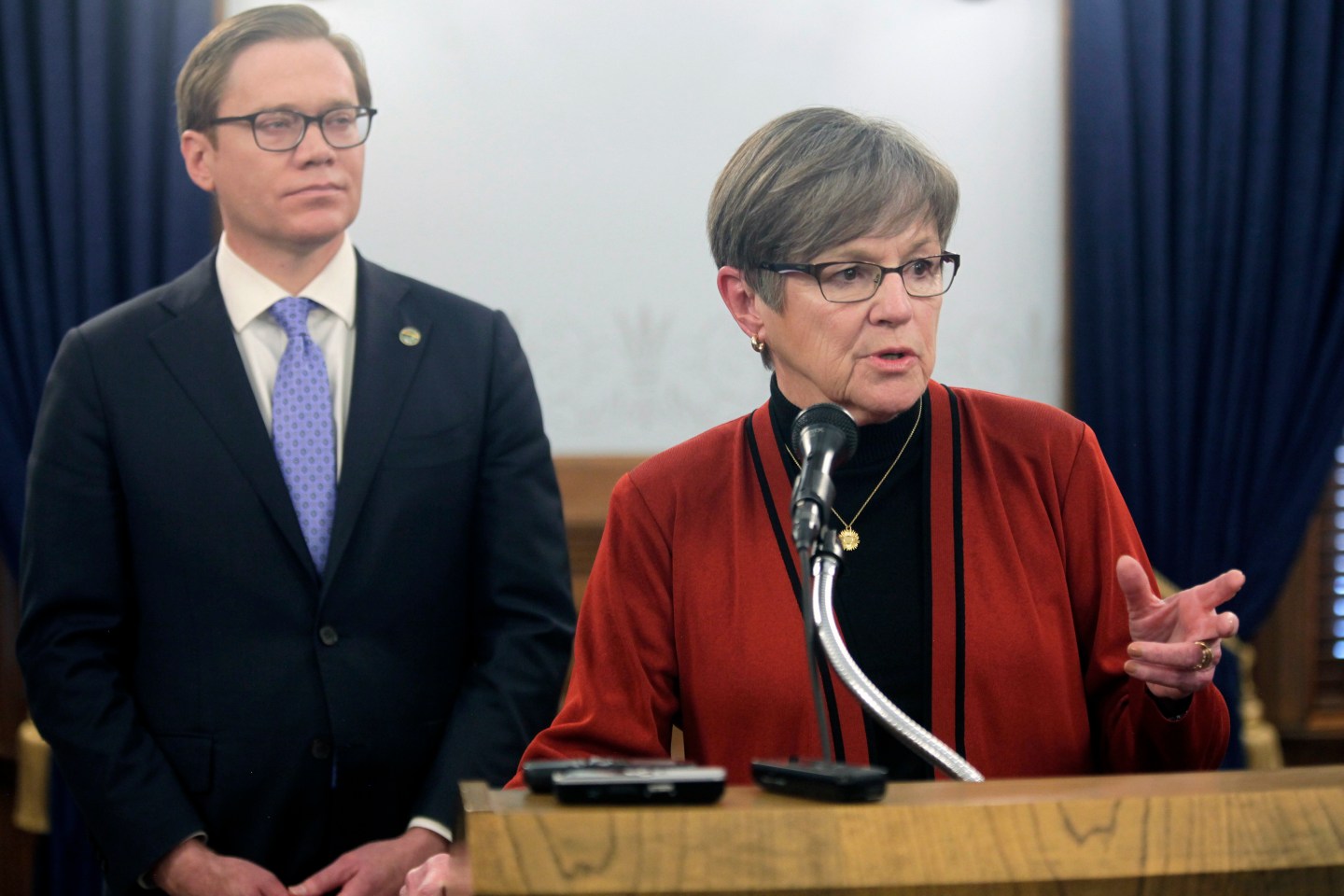
Kansas Gov. Laura Kelly discusses plans by Integra Technologies, of Wichita, to build a new, $1.8 billion semiconductor factory, during a news conference on Feb. 2, 2023, at the Statehouse in Topeka.
Kansas Gov. Laura Kelly discusses plans by Integra Technologies, of Wichita, to build a new, $1.8 billion semiconductor factory, during a news conference on Feb. 2, 2023, at the Statehouse in Topeka. John Hanna—AP

Kansas plans to give $304 million in taxpayer-funded incentives to a semiconductor company in its largest city to build a huge new factory, but the project won’t go forward without funds the U.S. government has promised for rebuilding the nation’s chip-making capacity.

Gov. Laura Kelly announced Thursday that Kansas has an agreement with Integra Technologies, based in Wichita, for a 10-year package of tax breaks and reimbursement of expenses. State officials said the new, $1.8 billion plant would cover 1 million square feet, have 2,000 employees and create 3,000 additional jobs among suppliers and other local businesses.

The announcement comes with the U.S. trying to reverse a loss of capacity for making the chips that are vital to smartphones, laptops and other modern-day conveniences, as well as automobiles and life-saving medical devices. Congress last year approved a measure that provides more than $52 billion in grants and other incentives for the semiconductor industry.

Kelly told reporters during a Statehouse news conference that the state’s incentives are crucial to attracting the federal funds and “making Kansas an essential part of our country’s national security efforts.”

“This advanced manufacturing facility is part of a national push to restore our semiconductor industry so that U.S. workers and businesses can compete and win in the race for the 21st Century,” Kelly said.

Integra CEO Brett Robinson would not say how much federal funding the company needs, only that there is “no commercially viable way” to do the project without it. He and state officials said other states were trying to attract the project, though they did not disclose the competitors.

“It’s not just critical to the United States and to security, but it’s critical to the supply chain,” said Kansas Senate President Ty Masterson, a Wichita-area Republican.

President Joe Biden pushed Congress last year to boost the U.S. semiconductor industry, because of a shortage of chips made worse by the global coronavirus pandemic and concerns about competing with international rivals, particularly China. There’s been a decades-long shift to cheaper-to-operate Asian chip plants, and the industry is now dependent on Taiwan, which China has long claimed as its own.

“If we were ever to lose, for a sustainable amount of time, access to the southeast Asian supply chain, what we just went through would pale in comparison,” Robinson said.

Integra, founded in 1983, has about 500 employees in Wichita and Silicon Valley and describes itself as the largest U.S. provider of the last two major assembly and testing steps in the chip manufacturing process. The new factory is expected to pay an average annual wage of $51,000, about 46% higher than the state’s average of roughly $35,000.

For Integra to receive its incentives, it must invest at least $1.5 billion in the new factory in the next five years and consistently provide the equivalent of 1,600 full-time jobs for 10 consecutive years.

The incentives are part of a program Kansas created last year to ramp up its efforts to compete with other states for new, large factories. Under that program, the state was allowed to offer up to $1 billion in incentives to a single company each in 2022 and 2023.

In July 2022, Kelly and other state officials announced that Panasonic Corp. plans to build a mega-factory to produce electric vehicle batteries for Tesla and other carmakers. The state lured the Japanese electronics giant’s project to the edge of the Kansas City area with incentives worth $829 million over 10 years, the most the state has ever offered.

The law allowing the incentives required top leaders of the Republican-controlled Legislature to sign off any deal between a company and the state Department of Commerce, which is led by Lt. Gov. David Toland, a Democrat like Kelly. The legislative leaders gave their approval just minutes ahead of the announcement, after meeting in private with Kelly for half an hour to review the agreement, with no opportunity for public review or input.

The law also requires Kansas to drop its corporate income tax rates by half a percentage point for each mega-deal. If the Integra project goes forward, the top rate would decline to 6% from 7%, saving all corporations roughly $100 million a year.

While both mega-projects have had bipartisan support, some lawmakers are critical of promising such big taxpayer-funded incentives to a single firm.

“We have not written the checks for this first project and they’re starting the second one without even knowing that it works,” state Senate tax committee Chair Caryn Tyson, a conservative Republican from eastern Kansas, said before Thursday’s announcement.

Learn how to navigate and strengthen trust in your business with The Trust Factor, a weekly newsletter examining what leaders need to succeed. Sign up here.

About the Authors
By John Hanna
See full bioRight Arrow Button Icon
By The Associated Press
See full bioRight Arrow Button Icon

Latest in Tech

AIchief executive officer (CEO)
Microsoft AI boss Suleyman opens up about his peers and calls Elon Musk a ‘bulldozer’ with ‘superhuman capabilities to bend reality to his will’
By Jason MaDecember 13, 2025
8 minutes ago
InvestingStock
There have been head fakes before, but this time may be different as the latest stock rotation out of AI is just getting started, analysts say
By Jason MaDecember 13, 2025
5 hours ago
Politicsdavid sacks
Can there be competency without conflict in Washington?
By Alyson ShontellDecember 13, 2025
6 hours ago
InnovationRobots
Even in Silicon Valley, skepticism looms over robots, while ‘China has certainly a lot more momentum on humanoids’
By Matt O'Brien and The Associated PressDecember 13, 2025
8 hours ago
Sarandos
Arts & EntertainmentM&A
It’s a sequel, it’s a remake, it’s a reboot: Lawyers grow wistful for old corporate rumbles as Paramount, Netflix fight for Warner
By Nick LichtenbergDecember 13, 2025
12 hours ago
Oracle chairman of the board and chief technology officer Larry Ellison delivers a keynote address during the 2019 Oracle OpenWorld on September 16, 2019 in San Francisco, California.
AIOracle
Oracle’s collapsing stock shows the AI boom is running into two hard limits: physics and debt markets
By Eva RoytburgDecember 13, 2025
13 hours ago

Most Popular

placeholder alt text
Economy
Tariffs are taxes and they were used to finance the federal government until the 1913 income tax. A top economist breaks it down
By Kent JonesDecember 12, 2025
2 days ago
placeholder alt text
Success
Apple cofounder Ronald Wayne sold his 10% stake for $800 in 1976—today it’d be worth up to $400 billion
By Preston ForeDecember 12, 2025
1 day ago
placeholder alt text
Success
40% of Stanford undergrads receive disability accommodations—but it’s become a college-wide phenomenon as Gen Z try to succeed in the current climate
By Preston ForeDecember 12, 2025
1 day ago
placeholder alt text
Economy
The Fed just ‘Trump-proofed’ itself with a unanimous move to preempt a potential leadership shake-up
By Jason MaDecember 12, 2025
1 day ago
placeholder alt text
Economy
For the first time since Trump’s tariff rollout, import tax revenue has fallen, threatening his lofty plans to slash the $38 trillion national debt
By Sasha RogelbergDecember 12, 2025
1 day ago
placeholder alt text
Success
Apple CEO Tim Cook out-earns the average American’s salary in just 7 hours—to put that into context, he could buy a new $439,000 home in just 2 days
By Emma BurleighDecember 12, 2025
1 day ago
Rankings
  • 100 Best Companies
  • Fortune 500
  • Global 500
  • Fortune 500 Europe
  • Most Powerful Women
  • Future 50
  • World’s Most Admired Companies
  • See All Rankings
Sections
  • Finance
  • Leadership
  • Success
  • Tech
  • Asia
  • Europe
  • Environment
  • Fortune Crypto
  • Health
  • Retail
  • Lifestyle
  • Politics
  • Newsletters
  • Magazine
  • Features
  • Commentary
  • Mpw
  • CEO Initiative
  • Conferences
  • Personal Finance
  • Education
Customer Support
  • Frequently Asked Questions
  • Customer Service Portal
  • Privacy Policy
  • Terms Of Use
  • Single Issues For Purchase
  • International Print
Commercial Services
  • Advertising
  • Fortune Brand Studio
  • Fortune Analytics
  • Fortune Conferences
  • Business Development
About Us
  • About Us
  • Editorial Calendar
  • Press Center
  • Work At Fortune
  • Diversity And Inclusion
  • Terms And Conditions
  • Site Map

© 2025 Fortune Media IP Limited. All Rights Reserved. Use of this site constitutes acceptance of our Terms of Use and Privacy Policy | CA Notice at Collection and Privacy Notice | Do Not Sell/Share My Personal Information
FORTUNE is a trademark of Fortune Media IP Limited, registered in the U.S. and other countries. FORTUNE may receive compensation for some links to products and services on this website. Offers may be subject to change without notice.