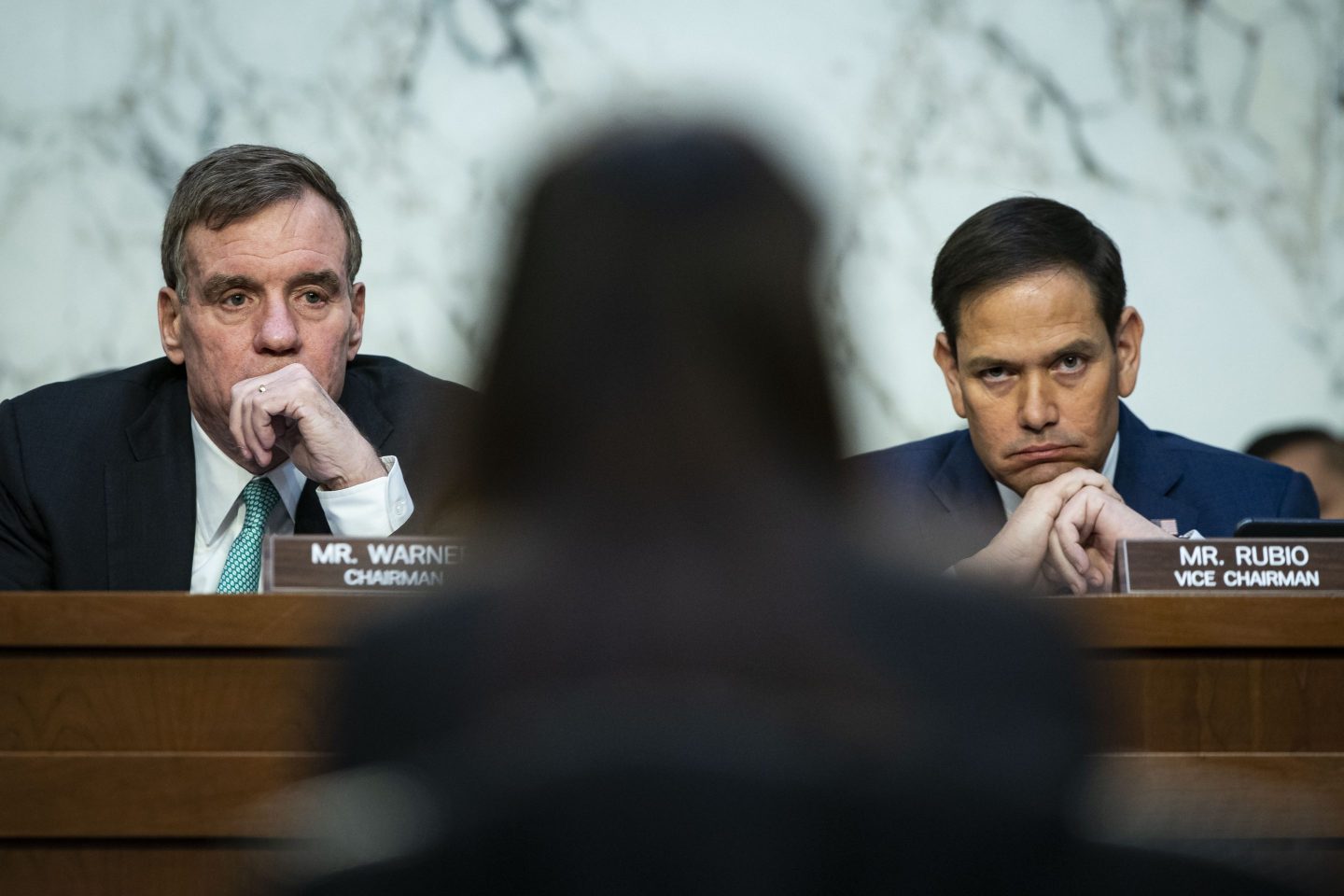
The two heads of the U.S. Senate Committee on Intelligence believe that Beijing influences what’s trending on TikTok, giving a new argument for curtailing the Chinese-owned social media platform as momentum builds among U.S. lawmakers for an outright ban of the app.
“The fact is, the algorithms that determine what you see on TikTok is determined out of Beijing by China,” Senator Mark Warner (D-Va.) claimed on CBS’s Face the Nation on Sunday evening.
Warner pointed to what videos trend in different locations. “If you look at what Chinese kids are seeing on their version of TikTok, which emphasizes science and engineering, versus what our kids and the kids around the world are seeing, it is dramatically different,” Warner said. ByteDance, the owners of TikTok, offer a similar short-video and live-streaming app in China called Douyin.
Senator Marco Rubio (R-Fla.), who joined Warner on CBS, argued that TikTok had data on “millions and millions of Americans,” which might give Chinese officials “the advantage of being able to shape American public opinion in a time of crisis,” and the ability to “steer the conversation in this country in any direction they want.”
Neither senator’s office immediately responded to a phone call requesting comment made outside of U.S. business hours.
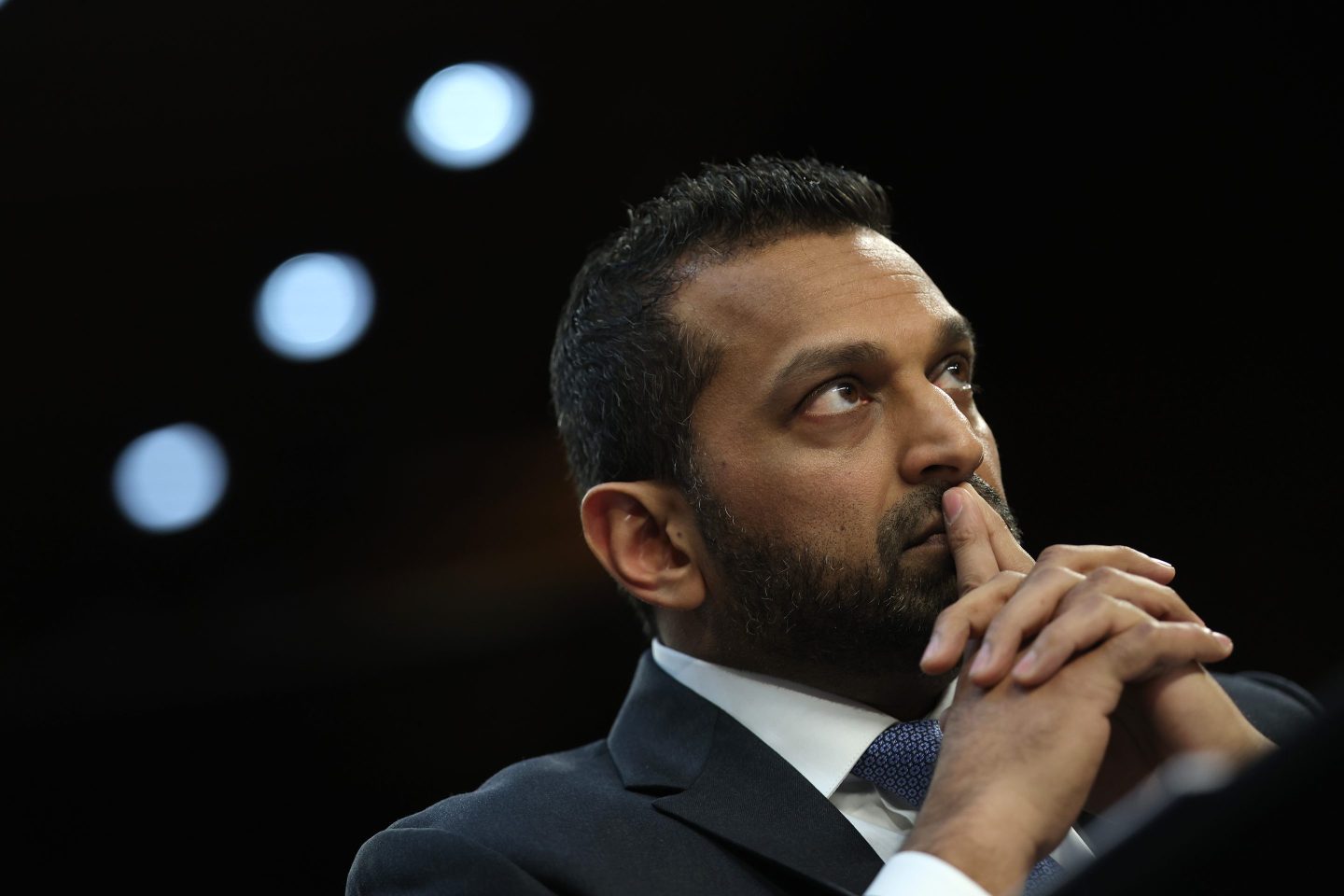
Warner and Rubio are echoing concerns from U.S. national security officials about Beijing’s alleged control over ByteDance’s recommendation algorithms. Last December, FBI director Christopher Wray expressed worries that Beijing’s influence of TikTok trends would allow it “to manipulate content, and if they want to, to use it for influence operations.”
TikTok is currently in the middle of negotiations with U.S. officials on how to reorganize its business to alleviate national security concerns.
“As Senators Warner and Rubio both made clear, they are not familiar with the technical aspects of our comprehensive proposal to address their national security concerns regarding data security and foreign influence over TikTok,” a TikTok spokesperson told Fortune, continuing that the company was “well underway” in implementing these changes.
“We stand ready to brief the Senators and their staff on our efforts to date and our additional commitments,” the spokesperson said.
Control and censorship
U.S. concerns about TikTok focus on its owner ByteDance and, in particular, the ease with which Chinese officials could lean on the Chinese tech company to share U.S. personal data.
In 2021, the Chinese government took a small stake in ByteDance’s China-based subsidiary, which also gave it the right to appoint one of its board members. Beijing is increasingly pursuing these so-called golden shares in Chinese tech companies to expand its oversight over the country’s large tech firms.
Chinese video platforms have to block content authorities deem to be harmful, which can range from content that denigrates the Chinese Communist Party to videos that promote excessive wealth or wasteful activities.
On Jan. 24, Beijing announced that it had started a monthlong campaign to suppress unwanted content, ostensibly to promote a “healthy, festive, and peaceful” internet after the Lunar New Year. The next day, ByteDance announced that it would subsidize influencers creating traditional Chinese content.
Will TikTok get banned?
The U.S. banned TikTok from devices issued by the federal government as part of last December’s omnibus bill. Almost 30 U.S. states have also banned the social media app from government devices, leading some public universities to block the app on campus internet networks.
Yet some in the U.S. Congress want to go further and pursue a nationwide ban of the social media app. Last week, Representative Michael McCaul (R-Tex.), who chairs the U.S. House Foreign Affairs Committee, pledged that the committee would vote on a nationwide TikTok ban next month.
The U.S. intelligence community may be divided on the value of a TikTok ban, whether nationwide or just on government devices. According to a report from Al Jazeera, Connecticut officials delayed a possible TikTok ban after FBI contacts said they “couldn’t find evidence” of any new information to share on the social media company, and that other state bans were based “on news reports and other open source information about China in general, not specific to TikTok.”
The Wall Street Journal reports that TikTok is pursuing a reorganization that asks U.S. tech company Oracle to house all its systems for serving content in the U.S., and that it would create a subsidiary devoted to U.S. data security, answerable to an outside board of directors that would report to the Committee on Foreign Investment in the United States, rather than to ByteDance.
Still, those plans might not be enough for U.S. lawmakers skeptical of any proposal that leaves ByteDance in charge. “It is nearly impossible for any Chinese company to comply with both Chinese law and our expectations in this country,” Rubio said on CBS.
“I don’t know how our national security interests and the operation of TikTok in this country, as long as it’s owned by ByteDance, can coexist,” he continued.