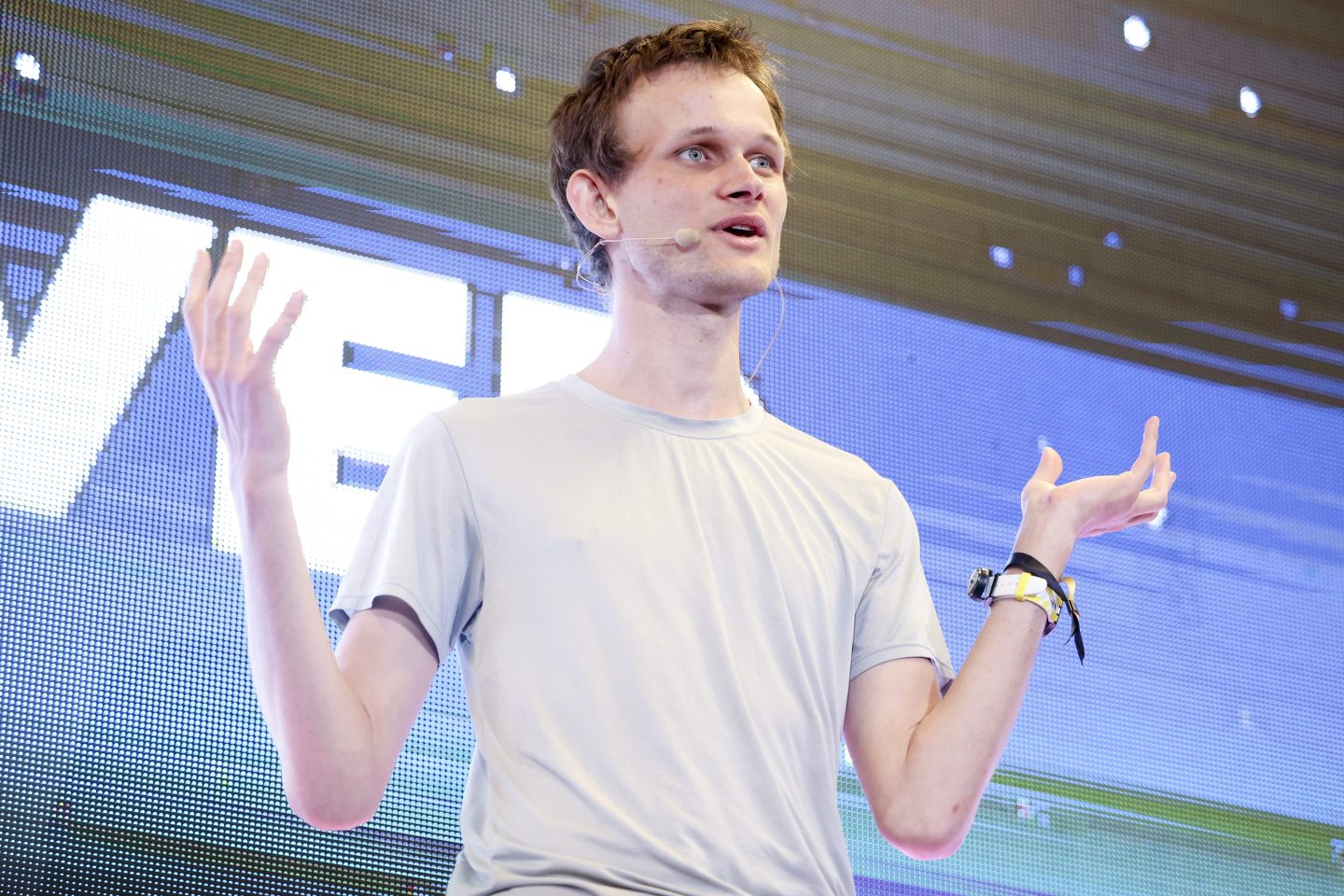
Vitalik Buterin is one of the most influential people in crypto. Nine years ago, he dreamed up Ethereum as a way to leverage the blockchain technology underlying Bitcoin for all sorts of uses beyond currency. Since then, it’s emerged as the bedrock layer of what advocates say will be a new, open-source, decentralized internet.
Meanwhile, even as the technology he invented is changing the world, Buterin has defied the stereotype of a crypto bro, focusing more on learning and ideas than on wealth and status. He recently visited Ukraine and spoke with Fortune contributor Anna Tutova, sharing his thoughts on everything from global politics to crypto’s potential to help people trapped in crisis situations and war. This includes Ukraine itself, which has reportedly received over $184 million in crypto donations—including $5 million from Buterin, who’s denounced Russia’s brutal and lawless invasion.
Buterin also discussed the latest developments in the world of Ethereum, including plans to make the platform more scaleable. Here is an edited version of their conversation.
Anna Tutova: Can you tell more about your trip to Kyiv? How did you like it? How was the conference?
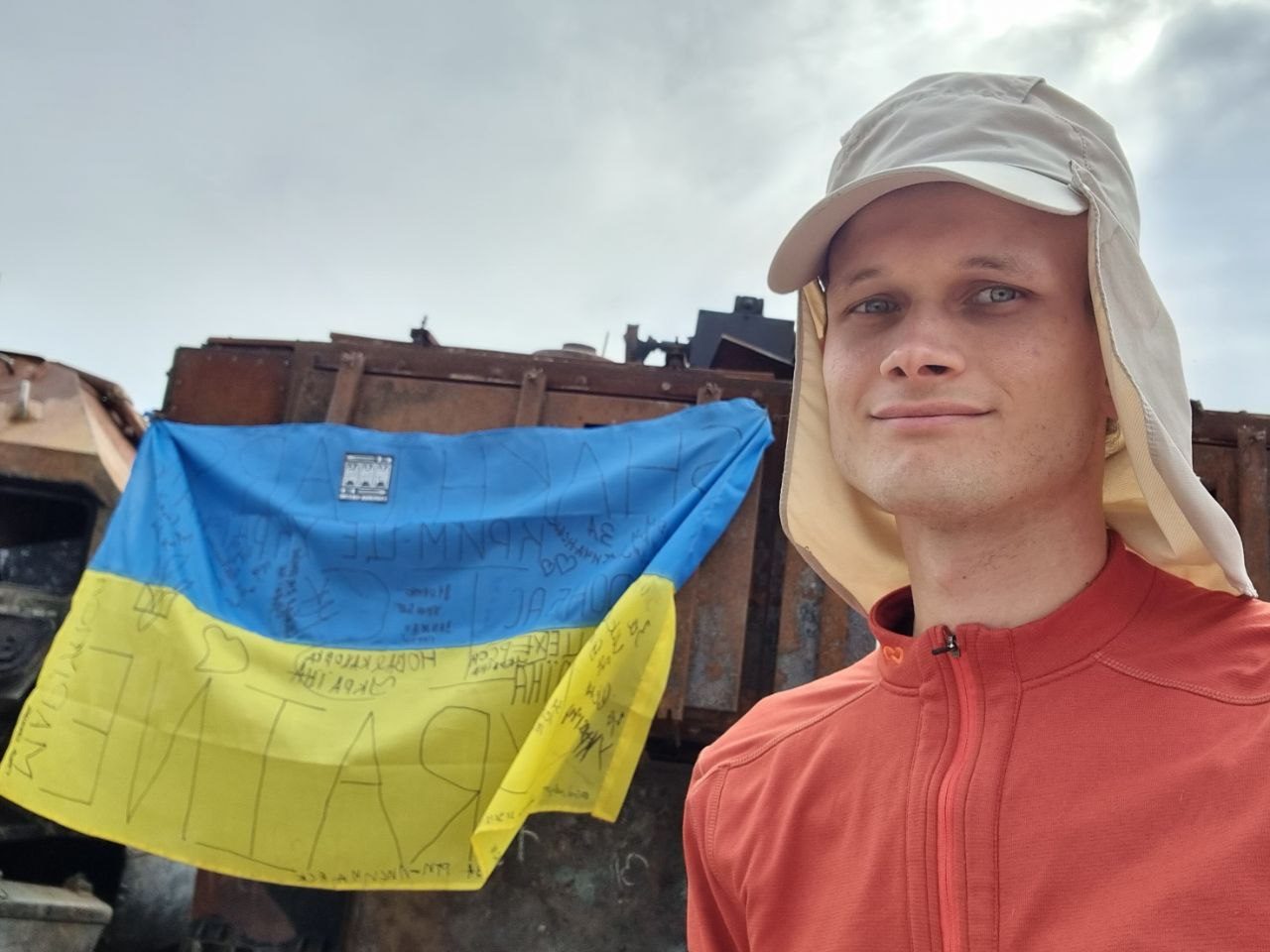
Vitalik Buterin: The trip to Kyiv itself was fascinating because I normally go to places by airplane and it’s just fairly fast and convenient. The airplanes are not landing in Ukraine while the war is going on. I came in by train from Warsaw, and that was this big, long 18-hour train ride, though it was also the most comfortable 18-hour train ride I’ve ever had.
We stayed at a hotel in the middle of town. I got a chance to see different parts of the city that day and the morning of the next day as well. Then I had a meeting with the vice prime minister of Ukraine and attended the Kyiv Tech Summit. I think one of the reasons I wanted to go was just I really wanted to see what kinds of things people would actually be working on in a tech summit in the middle of the war, what people would say, what kind of things people would be up to.
I got a chance to talk to some of the hackers. It was a small group, but it was definitely a very dedicated and devout group, there were people who were working on blockchain-based projects trying to do identity for refugees or cryptocurrency-based applications, etc. On a panel with government officials, we held some interesting discussions on cryptocurrency, blockchain technology, and how all of these different ideas could be valuable to Ukraine. It was not a large event, but it still felt like a very high-quality event. I thought it was a great community.
AT: Can you tell more which projects you liked there? What type of projects do you think are needed during this time of the war?
VB: People told me that cryptocurrency was very valuable as a way for the governments to get resources and supplies that they very urgently needed in the first couple of weeks when the war started, when none of the other financial systems was working and the foreign governments had not started bringing in supplies yet. And cryptocurrency continues to be important to a lot of the different groups, just as a form of fundraising and as a way of moving money to people.
Aside from cryptocurrency as money, I think digital identity applications are interesting. Because there are a lot of refugees who obviously left quickly without a lot of things, and they need some kind of a way to interact with the economy to prove that they are trustworthy, to prove something about themselves, so that people would be willing to work with them and to be able to give aid and goods and services to them. And it was interesting to see that people were starting to use pretty advanced ideas around zero-knowledge (ZK) stuff that I had been talking about for the last one to two years. There was also an interesting project to integrate the Ukrainian digital ID. And there was one group that was trying to create an integration between all of that into a Gitcoin passport.
AT: How did you like Kyiv?
VB: Kyiv was surprisingly easy as it looked like a normal European city. The government’s areas were definitely very militarized—there were some soldiers. And there were a lot of posters such as, “Be brave like Ukraine.” But aside from that it just seemed like people were going about their lives and going for groceries, going to restaurants, doing all the normal things. And one of the ways that people described it to me, it was almost just the act of continuing to live a normal life in the middle of invasion.
The food was great. One of the best sushi restaurants I’ve ever been to was the one in Kyiv. It was called Ikigai. And aside from that, we just had all kinds of food, some Ukrainian, some vegan-friendly, Georgian places. I was impressed. I’m definitely looking forward to coming back next time for longer.
AT: It sounds like you had a great trip. Was it scary for you when you were in Ukraine because of the war?
VB: I definitely did not know what to expect. I’m obviously following things on the Internet and on Twitter. I do theoretically know that Kyiv is about 450 kilometers away from the front line at this point. But at the same time, I did not know what to expect. So, are there going to be some kind of missile attacks? Like what would Ukrainian security itself look like? And just all kinds of very unknown, unknown things. But, in general, it ended up just being more normal in a lot of ways than I expected.
AT: How do you generally see the development of the crypto industry in Ukraine? You travel quite a lot, you see different countries, different jurisdictions. On which level is crypto in Ukraine?
VB: So, the Ukrainian crypto community in general is definitely strong. Even a lot of these projects that are known internationally to us, some of their founders are Ukrainian. I think NEAR Protocol is obviously a good example there.
The Ethereum foundation has a couple of Ukrainians. And a lot of just very good and very smart developers. And the other thing, which is interesting and unique, is the extent to which the government is very willing to participate in this space and try to be very active and forward-thinking.
It reminds me a lot of a trip to Estonia that I had about five years ago. Talking to the governments felt like talking to a startup. And Ukraine really gave me a very similar feeling. Also, I’ve been to Montenegro recently, even the governments there are trying to pass the blockchain law and try to be as blockchain friendly as possible. It seems like Eastern Europe is definitely a place where people really want to do things and the very active involvement of people in institutions and the government is interesting.
One contrast might be Latin America. I’ve also been very impressed by the crypto community, especially Argentina and Brazil. I was just on the east of Mexico about a month ago. And in that case, you definitely don’t see as much government attention.
AT: Let’s talk about Ethereum stuff. You recently achieved a big milestone, the Ethereum Merge, the transition from energy consuming proof-of-work to proof-of-stake, but let’s start with a more general question: How did you get into crypto?
VB: I first got into crypto back in 2011. I heard about Bitcoin on the internet. I heard about Bitcoin again from my dad, and I thought this is interesting. I went on the Bitcoin Forum and I started looking for people that would be willing to give me jobs that pay Bitcoin, and I found someone who was willing to pay five Bitcoins—which back then was $4—for every article that I would write for his blog. I started writing articles, and so I started my Bitcoin career as a writer. I did the Bitcoin magazine for two years.
In 2013, I dropped out of university and became a Bitcoin person full time. I also started my nomad adventure then—what I thought would just be a six-month trip around the world to explore all of the different Bitcoin communities. But then around the end of the trip I came up with the idea for Ethereum, and from then the trip just kept on getting more and more extended. And so, I’ve been sort of on the go about nine years now. But, I came up with the idea for theory after seeing some of the other ideas that other people had.
People in Israel, for example, would try to use the Bitcoin blockchain to do things other than just a Bitcoin currency. And I felt the idea was very interesting. I wanted to make an even-more-powerful and more-general-purpose version that people could build any applications on. So, I started Ethereum, and then the project just kept on growing.
AT: So what are your next steps to improve Ethereum scalability, and what are your next milestones?
VB: So Ethereum’s roadmap for scaling is this approach that we call a rollup-centric roadmap. It’s like a hybrid between the Bitcoin-like roadmap, where they basically say, “We’re not going to change Layer-1. Layer-1 is what it is going to be. But we are going to build second-layer things on top.” So, with Bitcoin there is the Lightning network, and we’re basically trying to scale entirely through these Layer-2 things that plug into Layer-1, but that work differently, so they have more scalability. This is versus a more EOS or Solana kind of approach to scale, which is basically focused on keeping everyone on Layer-1, but making the Layer-1 itself as powerful as possible.
People don’t want the network to become centralized, but people also understand the need for functionality. So, this rollup-centric roadmap makes some improvements to Layer-1 to make it possible to build these Layer-2 protocols that can support many more transactions. And then it’s up to the Layer-2 protocols to actually build the thing that supports those transactions. There are already a lot of these platforms: Optimism, Arbitrum, Scroll, Starkware, zkSync. As well Polygon, which started as a kind of more trusted and a little bit more centralized sidechain thing, but they hired these very good zero-knowledge teams and they’re on their way to becoming more like a rollup themselves.
AT: So, you mentioned a lot of zkEVM rollups and different Layer-2 solutions. What are your thoughts on zero-knowledge proofs and zkEVMS?
VB: ZK proofs as a technology are going to be as important as blockchains. I think, obviously, zero-knowledge proofs are really powerful in their ability to add privacy and add scalability to our blockchain applications. And the two technologies are very complementary. Because blockchains give you things like censorship resistance and a guarantee that rules are being followed, something like a smart contract. But in order to get those guarantees, blockchains sacrifice scalability, and they really sacrifice privacy. By default, you have basically no privacy on a blockchain. But then zero-knowledge proofs let you keep the censorship resistance and keep the guarantee that rules are being followed, but you get back scalability and you get back privacy. At some point, we are going to get to a world where we can just start adding ZK proofs to everything.
AT: I noticed that you support Scroll quite a lot.
VB: Yeah, they have a great team, great people, they’ve been working hard at making zkEVM possible. I think other teams are great too—the Starkware team has been working at this longer than everyone else, and I also have to thank them for just teaching me a lot of the math behind how zk-SNARKS work. They contributed a lot to the development of the whole space, and they’re also working on Cairo, which is their own programming language for Starks.
And there are projects, which are on top of Cairo, that are also making zkEVMs—ImmutableX and some of the products they’re building. In a lot of cases, there are very good compromises between decentralization and a kind of centralization that might be needed to make applications more efficient for the short term. I basically think that the Starkware idea of validiums would obviously be probably a better thing for institutions to be using than the private blockchains that everyone was excited about five years ago. So they’re doing lots of great stuff. The Polygon team contributed a lot and their zkEVM development is great as well. The Loopring team as well had zkEVM rollups running years ago, when no one else did. I’m very happy with the kind of community that we’ve built.
Anna Tutova is the CEO of Coinstelegram, a crypto media and public relations firm.
Our new weekly Impact Report newsletter examines how ESG news and trends are shaping the roles and responsibilities of today's executives. Subscribe here.