• Home
  • News
  • Fortune 500
  • Tech
  • Finance
  • Leadership
  • Lifestyle
  • Rankings
  • Multimedia
TechRobotics

Robots are coming—and it doesn’t look pretty for workers. Get ready for long hours, less pay, and fewer jobs

Will Daniel
By
Will Daniel
Will Daniel
Down Arrow Button Icon
Will Daniel
By
Will Daniel
Will Daniel
Down Arrow Button Icon
December 8, 2022, 4:07 PM ET
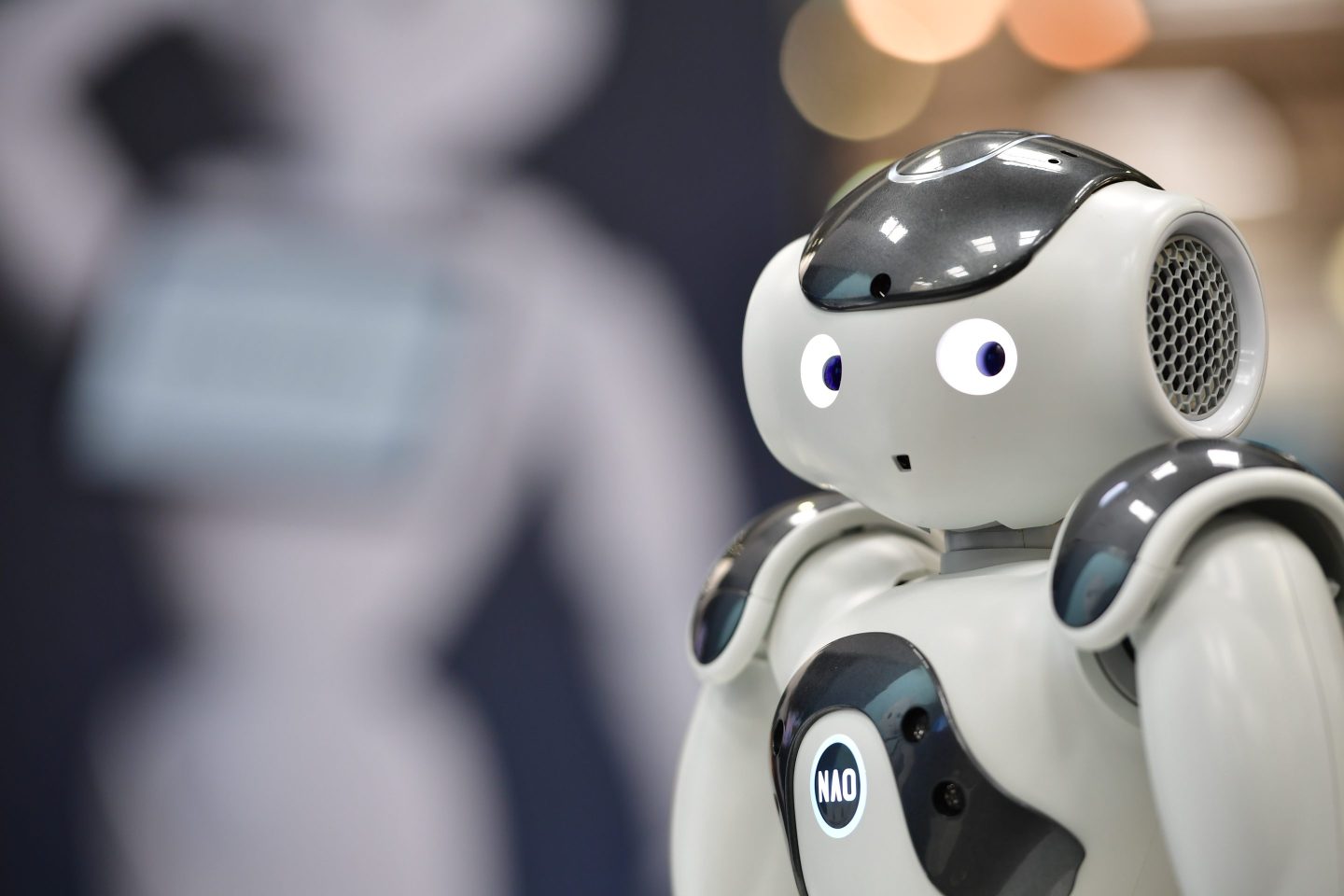
NAO, a humanoid robot, entertains visitors at the SoftBank Robotics stand at the 2018 CeBIT technology trade fair on June 12, 2018 in Hanover, Germany.
NAO, a humanoid robot, entertains visitors at the SoftBank Robotics stand at the 2018 CeBIT technology trade fair in Hannover, Germany.Alexander Koerner—Getty Images

Americans who worry about robots taking their jobs are just “fearmongers” who’ve watched too many movies, right?

Artificial intelligence, automation, and robotics will boost workers’ productivity and spur economic growth while creating new, higher-paying jobs—or at least that’s the argument.

But new research shows the rise of robots may not be as beneficial for workers as some claim. Automation could have positive impacts on economic growth and productivity, according to economists, but workers might not reap the rewards.

“Exposure to robots had negative effects on employment, leading some workers to drop out of the labor force and increasing unemployment,” economics professors Osea Giuntella of the University of Pittsburgh, Yi Lu of Tsinghua University, and Tianyi Wang of the University of Toronto wrote in a National Bureau of Economic Research paper released earlier this month.

The economists examined the effects of industrial robots on the Chinese labor market using data from over 15,000 families and found that the workforce struggled to “adjust” to the dramatic changes brought by robotics.

“Robot exposure led to a decline in labor force participation (–1%), employment (–7.5%), and hourly wages (–9%) of Chinese workers,” they wrote. “At the same time, among those who kept working, robot exposure increased the number of hours worked by 14%.”

China has leaned in to robotics and the automation of jobs for over a decade, especially in the industrial sector. The country has more industrial robots than any other, and just this year, it overtook the U.S. when it comes to the number of industrial robots per capita, according to the International Federation of Robotics.  

But for Chinese workers, the rise of robots hasn’t always been beneficial. Take the example of Apple’s main iPhone supplier, Foxconn, which replaced over 400,000 human jobs between 2012 and 2016 with robots in an automation push. 

The economists said that the evidence for short-term labor market woes caused by robotics in China is strong—and argued that’s especially bad news for developing economies.

The developing world’s undue burden

The developing world’s workers will likely feel the brunt of the rise of robotics and automation in the near term, the economists explained.

Many emerging market economies rely heavily on the agricultural and manufacturing sectors where automation and robotics are more likely to displace workers. And with a higher share of emerging market workers having only a high school education or less, it will take time for many to acquire the skills necessary to benefit from the new jobs brought by robotics, A.I., and automation. 

“The implications of robotization in emerging markets for jobs, growth, and inequality could be profound,” the economists wrote. “Without employment creation, automation, digitalization and labor-saving technologies may foster inequality.”

They went on to argue that developing nations may be faced with a decision between “increased productivity and potential higher economic inequality and social unrest” if they choose to continue automating away jobs with robots.

Finally, they said that there is still more research to do on whether long-term productivity improvements from robotics and automation will “translate into employment growth” someday, but for now, workers will likely continue to lose jobs to these new technologies.

Our new weekly Impact Report newsletter examines how ESG news and trends are shaping the roles and responsibilities of today’s executives. Subscribe here.


About the Author
Will Daniel
By Will Daniel
LinkedIn iconTwitter icon
See full bioRight Arrow Button Icon

Latest in Tech

AIMeta
It’s ‘kind of jarring’: AI labs like Meta, Deepseek, and Xai earned some of the worst grades possible on an existential safety index
By Patrick Kulp and Tech BrewDecember 5, 2025
3 hours ago
Elon Musk
Big TechSpaceX
Musk’s SpaceX discusses record valuation, IPO as soon as 2026
By Edward Ludlow, Loren Grush, Lizette Chapman, Eric Johnson and BloombergDecember 5, 2025
3 hours ago
data center
EnvironmentData centers
The rise of AI reasoning models comes with a big energy tradeoff
By Rachel Metz, Dina Bass and BloombergDecember 5, 2025
3 hours ago
netflix
Arts & EntertainmentAntitrust
Hollywood writers say Warner takeover ‘must be blocked’
By Thomas Buckley and BloombergDecember 5, 2025
3 hours ago
person
CybersecurityDigital
Dictionaries’ words of the year are trying to tell us something about being online in 2025
By Roger J. KreuzDecember 5, 2025
4 hours ago
Greg Peters
Big TechMedia
Top analyst says Netflix’s $72 billion bet on Warner Bros. isn’t about the ‘death of Hollywood’ at all. It’s really about Google
By Nick LichtenbergDecember 5, 2025
6 hours ago

Most Popular

placeholder alt text
Economy
Two months into the new fiscal year and the U.S. government is already spending more than $10 billion a week servicing national debt
By Eleanor PringleDecember 4, 2025
2 days ago
placeholder alt text
Success
‘Godfather of AI’ says Bill Gates and Elon Musk are right about the future of work—but he predicts mass unemployment is on its way
By Preston ForeDecember 4, 2025
1 day ago
placeholder alt text
Success
Nearly 4 million new manufacturing jobs are coming to America as boomers retire—but it's the one trade job Gen Z doesn't want
By Emma BurleighDecember 4, 2025
1 day ago
placeholder alt text
Success
Nvidia CEO Jensen Huang admits he works 7 days a week, including holidays, in a constant 'state of anxiety' out of fear of going bankrupt
By Jessica CoacciDecember 4, 2025
1 day ago
placeholder alt text
Real Estate
‘There is no Mamdani effect’: Manhattan luxury home sales surge after mayoral election, undercutting predictions of doom and escape to Florida
By Sasha RogelbergDecember 4, 2025
1 day ago
placeholder alt text
Economy
Tariffs and the $38 trillion national debt: Kevin Hassett sees ’big reductions’ in deficit while Scott Bessent sees a ‘shrinking ice cube’
By Nick LichtenbergDecember 4, 2025
1 day ago
Rankings
  • 100 Best Companies
  • Fortune 500
  • Global 500
  • Fortune 500 Europe
  • Most Powerful Women
  • Future 50
  • World’s Most Admired Companies
  • See All Rankings
Sections
  • Finance
  • Leadership
  • Success
  • Tech
  • Asia
  • Europe
  • Environment
  • Fortune Crypto
  • Health
  • Retail
  • Lifestyle
  • Politics
  • Newsletters
  • Magazine
  • Features
  • Commentary
  • Mpw
  • CEO Initiative
  • Conferences
  • Personal Finance
  • Education
Customer Support
  • Frequently Asked Questions
  • Customer Service Portal
  • Privacy Policy
  • Terms Of Use
  • Single Issues For Purchase
  • International Print
Commercial Services
  • Advertising
  • Fortune Brand Studio
  • Fortune Analytics
  • Fortune Conferences
  • Business Development
About Us
  • About Us
  • Editorial Calendar
  • Press Center
  • Work At Fortune
  • Diversity And Inclusion
  • Terms And Conditions
  • Site Map

© 2025 Fortune Media IP Limited. All Rights Reserved. Use of this site constitutes acceptance of our Terms of Use and Privacy Policy | CA Notice at Collection and Privacy Notice | Do Not Sell/Share My Personal Information
FORTUNE is a trademark of Fortune Media IP Limited, registered in the U.S. and other countries. FORTUNE may receive compensation for some links to products and services on this website. Offers may be subject to change without notice.