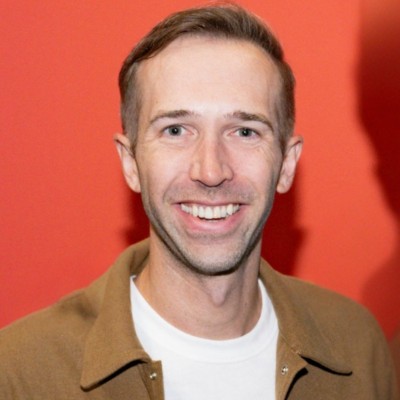
Eugen Rochko, the 29-year-old German software developer who six years ago created Twitter rival Mastodon out of frustration with the U.S. social network, has had quite a month. The chaos of Elon Musk’s Twitter takeover in late October has led millions of users to look for an alternative, and Mastodon has provided many with a familiar—though not identical—life raft. The influx of users is fueling Rochko’s ambition of Mastodon one day matching Twitter in size, but the founder and CEO is taking a decidedly anti-Musk approach to growing his decentralized platform—forbidding hate speech, banning ads, eschewing revenue, and abdicating hands-on control of the network. He remains Mastodon’s sole full-time employee.
Since Musk bought Twitter, Mastodon’s active user base has soared from 300,000 to 2.6 million. Donations to the crowdfunded network have more than quadrupled.
“I just want this trend to continue, and I want us to draw and be able to absorb the amount of active users that Twitter has,” Rochko says. “I don’t know if [Twitter] is a dying platform yet or not, but we would definitely like to be able to grow to its size and replace it someday.”
While that’s a grand ambition, Rochko is anything but a hyper-bullish tech bro. He says he’s been a bit “starstruck” in recent weeks as high-profile Twitter users like English actor Stephen Fry and master storyteller Neil Gaiman have abandoned Musk’s platform for his.
Even if Mastodon has gained celebrity endorsements and some mainstream appeal, it’s still not quite Twitter.
Unlike Twitter and Facebook, Mastodon doesn’t feature A.I.-driven content moderation—all that is done by human volunteers, as is much of the software development—nor does it carry advertising; brands can’t pay to boost a post. In fact, unlike those centralized services, Mastodon is not really one social network, but rather a federation of individual social networks that run the same code and are interoperable. You can sign up to one “instance” of Mastodon (Rochko’s is called Mastodon.social) that serves a particular community of users, or that has particular content moderation rules that are to your liking, and then follow people on other instances, or search for hashtagged subjects that will show you posts from across the so-called Fediverse.
There are instances for food and wine lovers, mathematicians (called Mathstodon, naturally), Glaswegians, and primary care workers. Even former Twitter workers have set up their own instance, called Macaw.
Until recently, there were few more than 2,000 of these Mastodon instances in the Fediverse. Now there are around 7,600. According to Rochko, the platform’s decentralized approach to expansion is allowing Mastodon to handle the sudden influx of users—in terms of both maintaining an acceptable quality of service and protecting users from abuse and spam, since each instance handles its own content moderation. “We want this load to be shared between as many different operators as possible for everything to stay fair and manageable,” he says.
He’s also eager to differentiate this kind of decentralization from the recent co-opting of the term by the NFT and cryptocurrency crowds, and is proud that Mastodon is “proving that decentralization is possible without any of this Web3 stuff.”
‘Twitter was on shaky ground’
Rochko—born in Russia in 1993 to Jewish parents who brought him to Germany in 2005—studied computer science at the University of Jena. He has used the handle “Gargron” since around the age of 10; it’s a portmanteau of “gargoyle” and “dragon,” conceived when his art teacher told him to come up with a signature that “you would put in a graphic-y style,” and it’s still how he is known on Mastodon.
Rochko started Mastodon in 2016, out of frustration with Twitter’s decision to block outside developers from creating services around its platform, and concern over its future.
“Twitter was on shaky ground and it wasn’t clear if it was going to survive financially or if it was going to be sold to Disney or Peter Thiel or someone else,” he says. “They reversed their policy on having an open app ecosystem. They started closing the [application programming interfaces] down, and it became clear it was a private platform controlled by a company that was vulnerable to being a single point of failure. I thought something so important shouldn’t be in the hands of a single corporation.”
For a long while, Mastodon was little more than an interesting project whose users skewed geeky. It was the most successful player in the push for decentralized social networking, but it certainly was no threat to Twitter, which currently has over 400 million monthly active users. As Rochko put it back in 2016, when presenting Mastodon to other developers on the popular Hacker News forum: “This isn’t a startup, it’s an open-source project. Most likely the Twitters and Facebooks will win, but people should have a viable choice… Plus, this is an incredibly fun project to be working on, to be quite honest.”
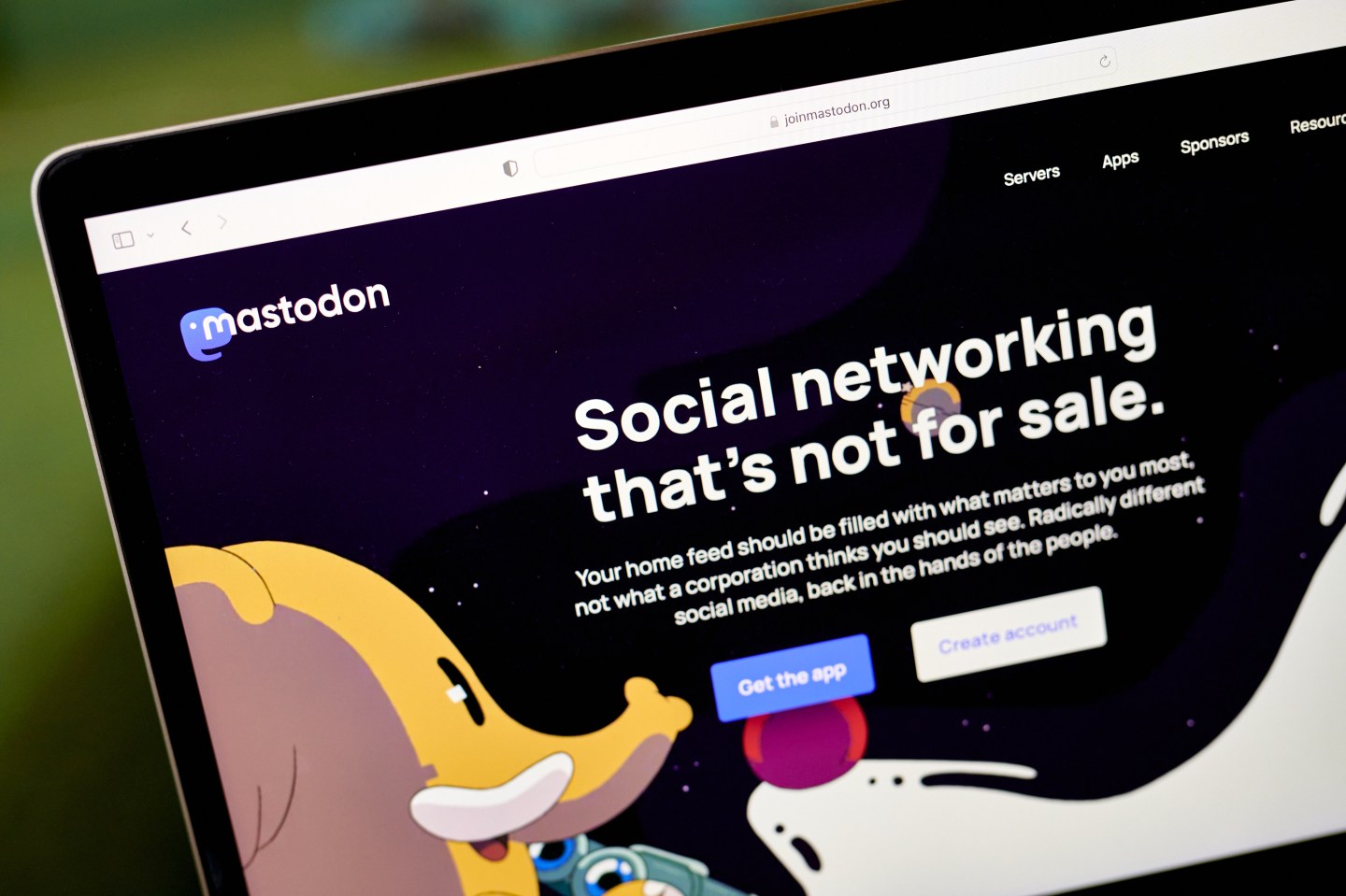
Rochko admits that as Mastodon has grown, the project has become more serious.
“When it becomes your livelihood, it’s difficult to approach it as just fun,” Rochko says. “A lot of people rely on what I’m doing… There are still fun parts—I’m a software developer at heart, and when I get to work on new features I am happy—but especially recently there’s just so much other CEO stuff to do that software development is no longer something I can focus on entirely. I have to wear many hats at the moment.”
In addition to employing Rochko, the German-registered Mastodon nonprofit pays a handful of contractors and agencies to handle app development, user experience design, and finance. Rochko is planning on hiring more employees “to take some of the load off me,” he says. That’s going to be easier now that donations to Mastodon on the crowdfunding site Patreon have leaped from $7,000 per month to $30,000. (Some other notable tech projects, like the Internet Archive and Raspberry Pi, also sponsor Mastodon.)
“You can project it to the future and say, Mastodon’s yearly budget is going to be this,” he says. “That’s not how my brain works. We’ll get there when we get there, and I’m not going to count our chickens before they’re hatched. It’s more now than before, and that’s good.”
The anti-Elon
It’s difficult to avoid the contrast between Rochko’s down-to-earth approach and that of Elon Musk, the world’s richest man, who is treating Twitter like the personal fiefdom it now is. The multibillionaire abruptly fired most of Twitter’s staff, urged users to vote for Republicans at the midterms, and suspended accounts for impersonating him, all of which contributed to the partial exodus from his platform.
Rochko is wary of the comparison. “[I]f you put it on a line of how big your bank account is—it’s definitely Elon Musk on the one hand and me on the other—but I don’t see myself in quite the same role as he is,” he says. “There is a lot less control that Mastodon the nonprofit company can exercise over the network. We develop the software and we have two servers…under our control. Outside of that, we can just give advice; we can’t control anything.
“So the importance of me as a person being in charge of this is a lot less than Elon Musk being in charge of all of Twitter. I don’t have the same power and financial influence, and I definitely don’t put myself on a pedestal in the same way. I’m not a public person.”
That lack of control is in some ways a defining feature of open-source projects, where anyone can take the underlying code and strike out on their own. Two of the most prominent far-right social networks—Gab and Donald Trump’s Truth Social—are based on Mastodon’s code but are disconnected from the wider network of Mastodon instances. Gab originally tried to be part of the Fediverse, but other instances’ moderators effectively blacklisted it by ensuring that users on their instances couldn’t see or interact with Gab posts. Truth Social never even tried to be interoperable with the Fediverse.
“I’m not happy about the fact that bad actors can take our work, our labor, our code and just run their own silos from it,” says Rochko, who has repeatedly denounced the far right on Mastodon. “But at the same time it’s just a nonnegotiable side effect of creating free and open-source software. It’s like making a car—you can’t control who’s going to drive it and for what purpose.”
However, if a Mastodon instance is going to be part of the Fediverse, it has to adhere to certain values that have been baked into the Mastodon community since the start, and that reflect a European approach to fundamental rights. Twitter takes a very American view that free speech trumps other rights, while Mastodon’s ground rules reflect the weight that Europe gives to human dignity, banning hate speech, sexism, racism, transphobia, and homophobia. Mastodon “is worldwide, but it is European-made and I think it’s nice to have a social media platform coming from Europe for once instead of from the U.S.,” he says.
Norms have developed over the years beyond Mastodon’s ground rules. So, as hordes of new users pour in from Twitter’s more freewheeling environment, there have inevitably been culture clashes.
One of the most significant has been around Mastodon’s content-warning feature. Unlike on Twitter, people can add content warnings to their posts about subjects like politics or race. Some instance operators—though not Rochko—encourage their users to employ the feature, which blocks the full post unless a reader clicks to unfurl it. Some Mastodon newcomers resent the warnings as an infringement on their free speech.
“I never felt compelled to put a content warning on politics or anything of the sort, and nobody has ever complained to me who followed me,” he says. “But I’ve also seen people trying to tone-police others, saying, ‘On Mastodon we do things this way,’ and I feel it’s dangerous for people to misrepresent themselves as speaking for the whole of Mastodon. I think people who are joining now have just as much right to bring their own customs and culture of how to post as the people who joined years ago.”