• Home
  • Latest
  • Fortune 500
  • Finance
  • Tech
  • Leadership
  • Lifestyle
  • Rankings
  • Multimedia
FinanceEconomy

Nouriel Roubini says it’s ‘mission impossible’ to avoid a hard landing, and we’ll get the worst of the 1970s and 2000s combined

By
Tristan Bove
Tristan Bove
Contributing Reporter
Down Arrow Button Icon
By
Tristan Bove
Tristan Bove
Contributing Reporter
Down Arrow Button Icon
November 8, 2022, 4:48 PM ET
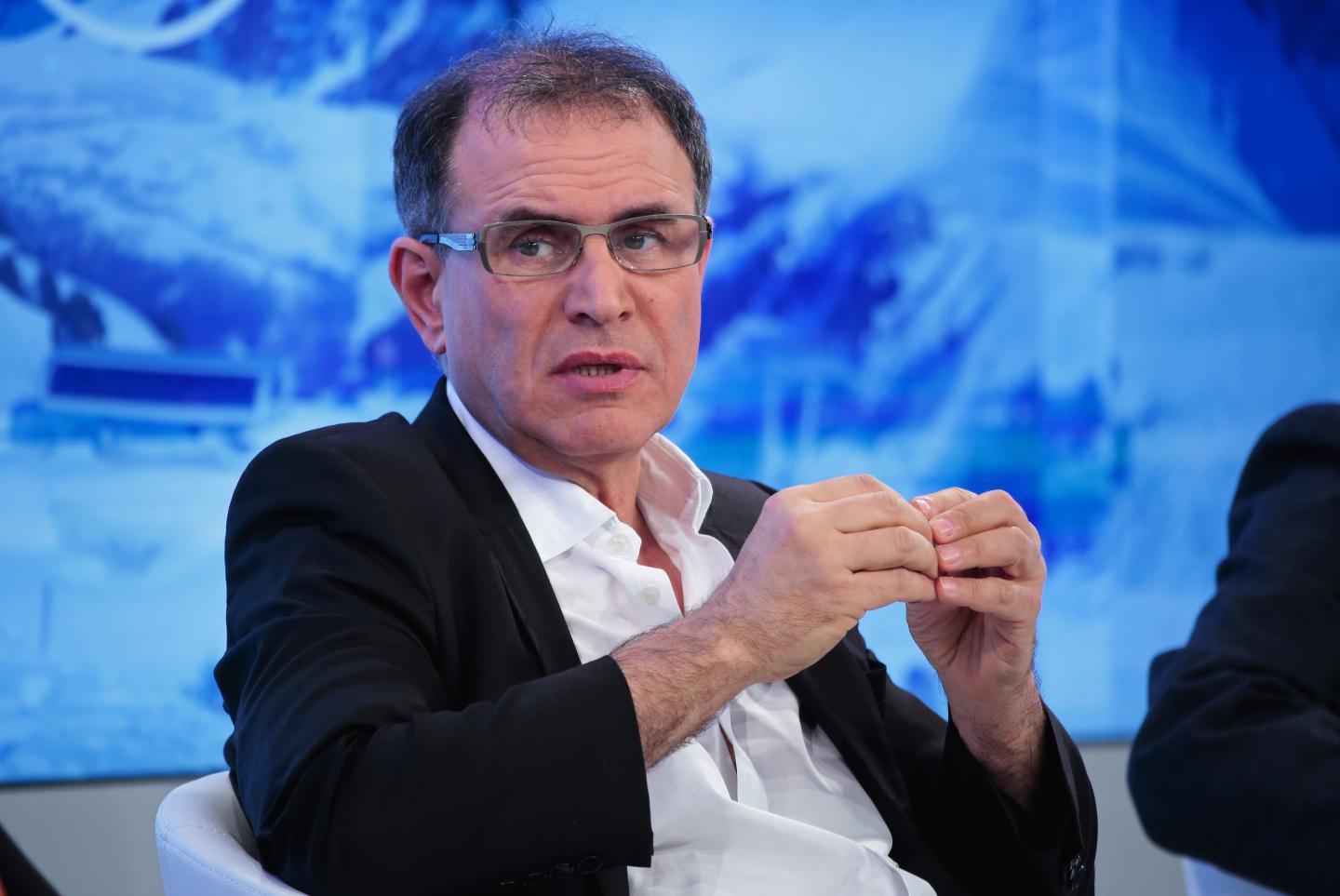
Economist Nouriel Roubini
A soft landing for the U.S. economy might be a pipe dream, according to Nouriel Roubini.Jason Alden/Bloomberg via Getty Images

The Federal Reserve is playing a complicated balancing act with huge implications. It’s trying to slow the economy bit by bit through interest rate hikes to reduce soaring inflation, while not tipping the economy into a recession.

Fed Chairman Jerome Powell still says it’s possible to cool the economy and keep employment stable—all without causing a severe downturn, in what would be a “soft landing.” 

But if history is any indication, a recession and an economic “hard landing” are all but guaranteed, says Nouriel Roubini, professor emeritus at New York University’s Stern School of Business and the CEO of Roubini Macro Associates. He earned the nickname “Dr. Doom” for his prophetic visions of looming economic downturns, including an accurate prediction of the 2008 housing crash and subsequent market crisis.

With the U.S. annual inflation rate as high as it is—8.2% in October—only a deep recession and a steep spike in unemployment might be enough to fix it, Roubini warned in a recent interview with Fortune.

“In U.S. history, over the last 60 years, there has never been an episode where inflation was above 5% and unemployment was below 5% [when] the Fed started raising rates and avoided a hard landing,” Roubini said. “History suggests it’s going to be near mission impossible to avoid a hard landing.”

But any continued economic downturn may result in something worse than higher unemployment, Roubini warned. Multiple factors could collide to create a recession that combines the elements of the two worst financial crises in recent U.S. history: the 1970s energy shocks and the 2008 financial crash.

Recession on the way

In September, Powell said that a “modest” increase in unemployment would signal that the Federal Reserve’s effort to tame inflation was succeeding, as higher unemployment means less of the competition for workers that has driven up wages and contributed to inflation over the past year as companies pass costs onto consumers through higher prices.

The U.S. unemployment rate in October was 3.7%, up from 3.5% in September—though still relatively low by historical standards. To bring today’s levels of inflation in check, unemployment may need to go much higher, and the Fed just doesn’t want to talk about it, said David Rubenstein, billionaire investor and cofounder of the Carlyle Group.

“He can’t quite say this, but if the unemployment rate goes up to 4% or 5% or 6%, inflation will [probably] be tamed a bit,” he said of Powell during a September interview with CNN. 

Former Treasury Secretary Larry Summers gave a similar estimate to the Financial Times last month, predicting that the Fed is “unlikely to achieve inflation stability without a recession of a magnitude that would take unemployment toward the 6% range.”

Roubini told Fortune that a recession is coming and will likely send unemployment much higher than its current level. 

But unlike the many banks and strategists that have forecast a mild recession, Roubini said that the coming downturn will not be “short and shallow” and is instead likely to be “severe and more protracted.” 

Worst of both worlds

Roubini warned that a confluence of factors—including rising national debt levels, supply-chain issues, and a global energy crisis—could bring together the worst of two historically bad economic downturns in the U.S.

“In some sense, we’re going to have maybe the worst of the 1970s and the worst of the post-GFC [Global Financial Crisis] period,” he said.

Roubini said that the coming recession has some similarities to the 1970s economic crisis that was largely caused by two oil supply shocks in 1973 and 1979, which led to high global oil prices and fuel shortages.

Today the world is in the grip of another global energy shock, this time with natural gas in the spotlight. The war in Ukraine has severely disrupted global energy markets, including severely limiting natural gas flows from Russia to Europe and sparking an energy crisis on the continent. Natural gas is expected to remain in low supply well into next year, while the war has also aggravated an oil crunch that started during the pandemic era.

“In the 1970s we had two negative supply shocks. Today we have many more than two,” Roubini said.

But a big difference with the 1970s—and a worrying parallel with the downturn of the late 2000s—is the soaring level of U.S. national debt, according to Roubini.

“[In the 1970s] we did not have high debt levels so there was no widespread debt crisis,” he said. “After the GFC there was a debt crisis to match the debt of households with the banks, mortgages, and the housing bubble gone bust.”

In 2022, after years of higher government spending and pandemic-era stimulus, the U.S. national debt has reached new heights. The U.S. government went on a borrowing spree in the earlier days of the pandemic to help shore up the economy as businesses faced closures and unemployment soared, but that borrowing has returned with a vengeance with the national debt topping $31 trillion for the first time last month.

“Today, we have negative supply shocks worse than the ’70s,” Roubini said. “And we have the worst of the GFC because the debt ratios are through the roof,” referring to today’s soaring national debt crisis and its similarities with U.S. debt in the late 2000s.

Roubini said that the resulting combination might push the U.S. economy into something even worse than a recession, as high inflation combined with slower economic growth due to high debt levels could lead to stagflation, a toxic mix of high prices and low-to-zero growth.

“You’re gonna get not only inflation, not only a recession, but what they call the Great Stagflationary Debt Crisis,” Roubini said. “You’re going to essentially have a combination of both, so it’s much worse than the ’70s and it’s probably as bad as during the GFC.”

Sign up for the Fortune Features email list so you don’t miss our biggest features, exclusive interviews, and investigations.
About the Author
By Tristan BoveContributing Reporter
LinkedIn iconTwitter icon
See full bioRight Arrow Button Icon

Latest in Finance

Finance
Lorem ipsum dolor sit amet, consectetur adipiscing elit, sed do eiusmod tempor incididunt ut labore et dolore magna aliqua. Ut enim ad minim veniam
By Fortune Editors
October 20, 2025
Finance
Lorem ipsum dolor sit amet, consectetur adipiscing elit, sed do eiusmod tempor incididunt ut labore et dolore magna aliqua. Ut enim ad minim veniam
By Fortune Editors
October 20, 2025
Finance
Lorem ipsum dolor sit amet, consectetur adipiscing elit, sed do eiusmod tempor incididunt ut labore et dolore magna aliqua. Ut enim ad minim veniam
By Fortune Editors
October 20, 2025
Finance
Lorem ipsum dolor sit amet, consectetur adipiscing elit, sed do eiusmod tempor incididunt ut labore et dolore magna aliqua. Ut enim ad minim veniam
By Fortune Editors
October 20, 2025
Finance
Lorem ipsum dolor sit amet, consectetur adipiscing elit, sed do eiusmod tempor incididunt ut labore et dolore magna aliqua. Ut enim ad minim veniam
By Fortune Editors
October 20, 2025
Finance
Lorem ipsum dolor sit amet, consectetur adipiscing elit, sed do eiusmod tempor incididunt ut labore et dolore magna aliqua. Ut enim ad minim veniam
By Fortune Editors
October 20, 2025

Most Popular

Finance
Lorem ipsum dolor sit amet, consectetur adipiscing elit, sed do eiusmod tempor incididunt ut labore et dolore magna aliqua. Ut enim ad minim veniam
By Fortune Editors
October 20, 2025
Finance
Lorem ipsum dolor sit amet, consectetur adipiscing elit, sed do eiusmod tempor incididunt ut labore et dolore magna aliqua. Ut enim ad minim veniam
By Fortune Editors
October 20, 2025
Finance
Lorem ipsum dolor sit amet, consectetur adipiscing elit, sed do eiusmod tempor incididunt ut labore et dolore magna aliqua. Ut enim ad minim veniam
By Fortune Editors
October 20, 2025
Finance
Lorem ipsum dolor sit amet, consectetur adipiscing elit, sed do eiusmod tempor incididunt ut labore et dolore magna aliqua. Ut enim ad minim veniam
By Fortune Editors
October 20, 2025
Finance
Lorem ipsum dolor sit amet, consectetur adipiscing elit, sed do eiusmod tempor incididunt ut labore et dolore magna aliqua. Ut enim ad minim veniam
By Fortune Editors
October 20, 2025
Finance
Lorem ipsum dolor sit amet, consectetur adipiscing elit, sed do eiusmod tempor incididunt ut labore et dolore magna aliqua. Ut enim ad minim veniam
By Fortune Editors
October 20, 2025
Fortune Secondary Logo
Rankings
  • 100 Best Companies
  • Fortune 500
  • Global 500
  • Fortune 500 Europe
  • Most Powerful Women
  • World's Most Admired Companies
  • See All Rankings
  • Lists Calendar
Sections
  • Finance
  • Fortune Crypto
  • Features
  • Leadership
  • Health
  • Commentary
  • Success
  • Retail
  • Mpw
  • Tech
  • Lifestyle
  • CEO Initiative
  • Asia
  • Politics
  • Conferences
  • Europe
  • Newsletters
  • Personal Finance
  • Environment
  • Magazine
  • Education
Customer Support
  • Frequently Asked Questions
  • Customer Service Portal
  • Privacy Policy
  • Terms Of Use
  • Single Issues For Purchase
  • International Print
Commercial Services
  • Advertising
  • Fortune Brand Studio
  • Fortune Analytics
  • Fortune Conferences
  • Business Development
  • Group Subscriptions
About Us
  • About Us
  • Press Center
  • Work At Fortune
  • Terms And Conditions
  • Site Map
  • About Us
  • Press Center
  • Work At Fortune
  • Terms And Conditions
  • Site Map
  • Facebook icon
  • Twitter icon
  • LinkedIn icon
  • Instagram icon
  • Pinterest icon

Latest in Finance

hegseth
CommentaryMilitary
America shot its arsenal empty in 2 wars. Now it needs Beijing’s permission to reload
By Steve H. Hanke and David M. WalkerApril 30, 2026
5 minutes ago
Two women look at the backs of two cleaning product packages.
RetailInflation
Your laundry bill is about to get more expensive—and Unilever says the Iran war is partly to blame
By Sasha RogelbergApril 30, 2026
28 minutes ago
AI’s entry-level hiring nightmare is another gift to boomers’ retirement plans
Personal FinancePersonal Finance Evergreen
AI’s entry-level hiring nightmare is another gift to boomers’ retirement plans
By Catherina GioinoApril 30, 2026
31 minutes ago
High earners are feeling the pain of wealth creep—and it’s leading to a new trade-off in their spending
Personal FinancePersonal Finance Evergreen
High earners are feeling the pain of wealth creep—and it’s leading to a new trade-off in their spending
By Catherina GioinoApril 30, 2026
37 minutes ago
TOPSHOT - Alphabet Inc. and Google CEO Sundar Pichai speaks during the inauguration of a Google Artificial Intelligence (AI) hub in Paris on February 15, 2024. (Photo by ALAIN JOCARD / AFP via Getty Images)
AIGoogle
Half of Google’s and Amazon’s ‘blowout AI profits’ came from a stake in Anthropic—not from their actual business
By Eva RoytburgApril 30, 2026
44 minutes ago
Premium card perks are ‘designed to create a win-win-win for everyone’ but customers are paying with heavy annual fees and data
Personal FinancePersonal Finance Evergreen
Premium card perks are ‘designed to create a win-win-win for everyone’ but customers are paying with heavy annual fees and data
By Catherina GioinoApril 30, 2026
47 minutes ago

Most Popular

Apple cofounder Ronald Wayne—whose stake would be worth up to $400 billion had he not sold it in 1976—says that at 91, he has no regrets
Success
Apple cofounder Ronald Wayne—whose stake would be worth up to $400 billion had he not sold it in 1976—says that at 91, he has no regrets
By Preston ForeApril 27, 2026
3 days ago
‘They left me no choice’: Powell isn’t going anywhere—blocking Trump from another Fed appointee
Banking
‘They left me no choice’: Powell isn’t going anywhere—blocking Trump from another Fed appointee
By Eva RoytburgApril 29, 2026
23 hours ago
Jamie Dimon gets candid about national debt: ‘There will be a bond crisis, and then we’ll have to deal with it’
Economy
Jamie Dimon gets candid about national debt: ‘There will be a bond crisis, and then we’ll have to deal with it’
By Eleanor PringleApril 29, 2026
1 day ago
‘The cost of compute is far beyond the costs of the employees’: Nvidia executive says right now AI is more expensive than paying human workers
AI
‘The cost of compute is far beyond the costs of the employees’: Nvidia executive says right now AI is more expensive than paying human workers
By Sasha RogelbergApril 28, 2026
2 days ago
Google Cloud revenue is now 18% of Alphabet's business. Is this the beginning of the end of Google's search identity?
Big Tech
Google Cloud revenue is now 18% of Alphabet's business. Is this the beginning of the end of Google's search identity?
By Alexei OreskovicApril 29, 2026
16 hours ago
‘Take the money and run’: Johns Hopkins economist Steve Hanke on why the UAE quit OPEC
Energy
‘Take the money and run’: Johns Hopkins economist Steve Hanke on why the UAE quit OPEC
By Shawn TullyApril 29, 2026
1 day ago

© 2026 Fortune Media IP Limited. All Rights Reserved. Use of this site constitutes acceptance of our Terms of Use and Privacy Policy | CA Notice at Collection and Privacy Notice | Do Not Sell/Share My Personal Information
FORTUNE is a trademark of Fortune Media IP Limited, registered in the U.S. and other countries. FORTUNE may receive compensation for some links to products and services on this website. Offers may be subject to change without notice.