
• Home
  • News
  • Fortune 500
  • Tech
  • Finance
  • Leadership
  • Lifestyle
  • Rankings
  • Multimedia
FinanceGoldman Sachs Group

Goldman Sachs’ anti-remote-work CEO has almost brought office work back to pre-pandemic levels—but insists he ‘doesn’t want rules’

Christiaan Hetzner
By
Christiaan Hetzner
Christiaan Hetzner
Senior Reporter
Down Arrow Button Icon
Christiaan Hetzner
By
Christiaan Hetzner
Christiaan Hetzner
Senior Reporter
Down Arrow Button Icon
October 19, 2022, 11:08 AM ET
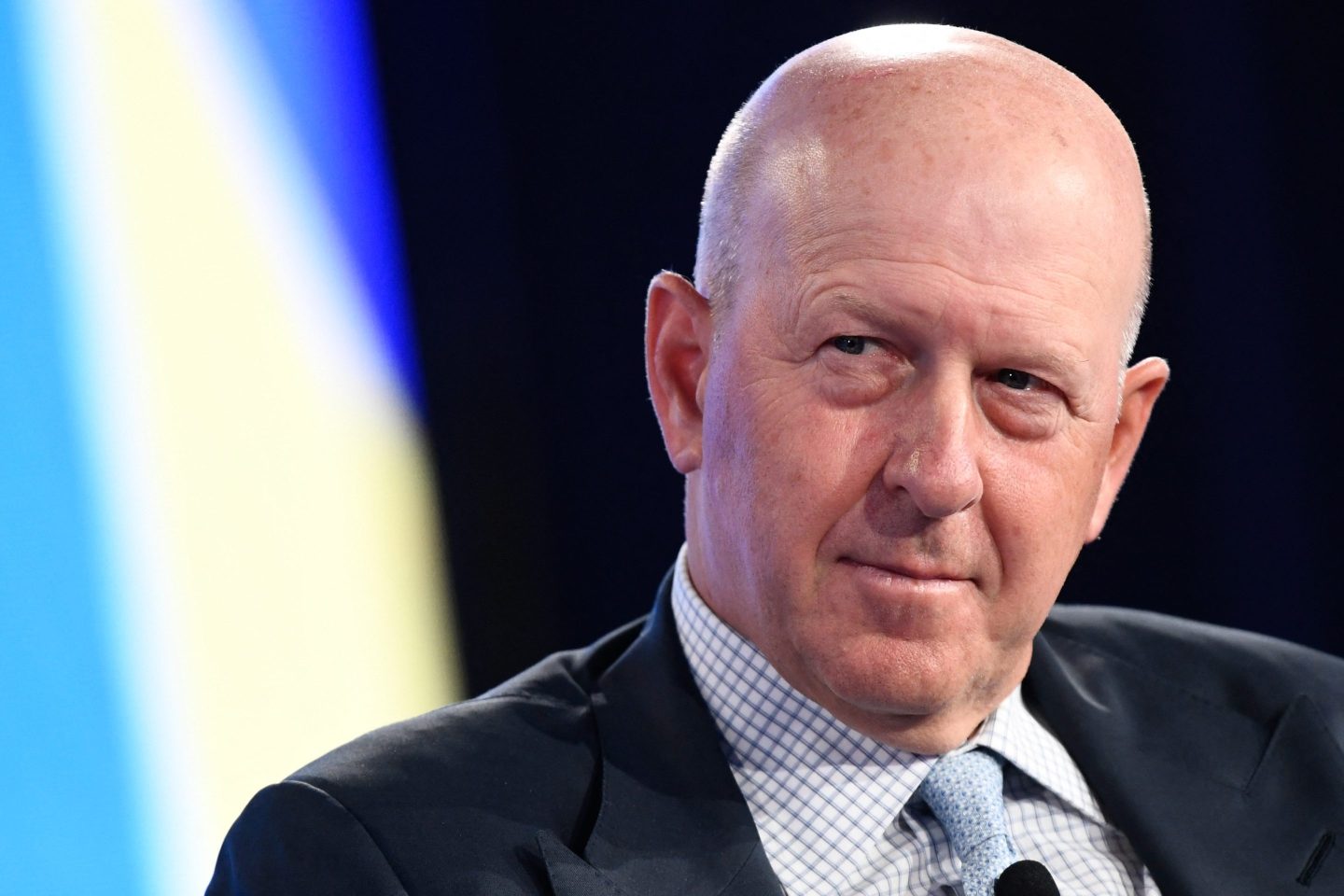
Goldman Sachs CEO David Solomon is a major opponent of working from home, believing it threatens the foundation of the veteran investment bank.
Goldman Sachs CEO David Solomon is a major opponent of working from home, believing it threatens the foundation of the veteran investment bank.PATRICK T. FALLON—AFP/Getty Images

An arch opponent of working from home, Goldman Sachs has nearly returned to the way things were prior to the outbreak of COVID. 

Wall Street’s unforgiving world of high finance has always differed fundamentally from the casual frat-boy attitude in Silicon Valley, so it comes as no surprise their difference of views on the subject of remote work are about as vast as the geographical distance separating them. 

Because of the more collaborative nature of arranging mergers or underwriting stock issues, investment banks have been pushing hard for staff to return to the office, and Goldman has been at the very forefront of the campaign.

“Before the pandemic about 75% of our people were in the office on any given day of the week. Today it’s about 65%, so we’re kind of operating close to the way we were,” said CEO David Solomon in an interview with CNBC’s Squawk <em>Box</em> on Tuesday.

That’s a major improvement over February when it reopened its U.S. offices following the Omicron wave and just half of the 10,000 workers at its New York headquarters returned.

The head of Goldman feels strongly that the bank would lose its identity over time as analysts and associates learning from veterans are a key factor to its long-standing success.

“If you break that all down and scatter it around…you start to fray the foundational things that make the place so unique,” Solomon told Fortune in March. “For Goldman Sachs to retain that cultural foundation, we have to bring people together.” 

Competitors and industry experts agree.

In Fortune’s latest list of the World’s Most Admired Companies, the voters who determine the rankings—top industry executives and directors, plus stock analysts who follow particular sectors—rated Goldman No. 1 in people management in its industry, ahead of JPMorgan Chase, Morgan Stanley, Bank of America, Citigroup, HSBC, and more.

Flexibility when you’re older

Solomon argues the need for a return to the office is explicitly due to the very young age and lack of experience found in many of its ultracompetitive workforce.

“We have an organization where 50% of people are in their twenties. They come to Goldman Sachs to learn, to meet people, to interact,” he told CNBC.

The bulk of them typically leave the bank within the first couple of years, so it is only when those employees reach their thirties and forties that there are higher degrees of flexibility, for example, to look after kids.  

“I don’t want rules,” continued Solomon. “I want a culture where we show up, serve our clients.”

Solomon said that meant mentoring his people so they work hard and strive for excellence.

His comments are not unlike those of Elon Musk, one of the rare CEOs out of Silicon Valley who insists on a blanket rule for all workers to be in the office, fearing otherwise their productivity won’t meet his high demands. 

The world’s richest human has said anyone who doesn’t come to the office “should pretend to work somewhere else.”

Sign up for the Fortune Features email list so you don’t miss our biggest features, exclusive interviews, and investigations.

About the Author
Christiaan Hetzner
By Christiaan HetznerSenior Reporter
Instagram iconLinkedIn iconTwitter icon

Christiaan Hetzner is a former writer for Fortune, where he covered Europe’s changing business landscape.

See full bioRight Arrow Button Icon

Latest in Finance

RetailConsumer Spending
U.S. consumers are so financially strained they put more than $1 billion on buy-now, pay later services during Black Friday and Cyber Monday
By Jeena Sharma and Retail BrewDecember 5, 2025
8 minutes ago
Elon Musk
Big TechSpaceX
SpaceX to offer insider shares at record-setting valuation
By Edward Ludlow, Eric Johnson, Loren Grush and BloombergDecember 5, 2025
8 minutes ago
data center
EnvironmentData centers
The rise of AI reasoning models comes with a big energy tradeoff
By Rachel Metz, Dina Bass and BloombergDecember 5, 2025
10 minutes ago
Personal FinanceLoans
5 ways to use a home equity line of credit (HELOC)
By Joseph HostetlerDecember 5, 2025
17 minutes ago
Netflix
InvestingAntitrust
Netflix–Warner Bros. deal sets pp $72 billion antitrust test
By Josh Sisco, Samuel Stolton, Kelcee Griffis and BloombergDecember 5, 2025
20 minutes ago
Schumer
Politicsnational debt
‘This is a bad idea made worse’: Senate Dems’ plan to fix Obamacare premiums adds nearly $300 billion to deficit, CRFB says
By Nick LichtenbergDecember 5, 2025
23 minutes ago

Most Popular

placeholder alt text
Economy
Two months into the new fiscal year and the U.S. government is already spending more than $10 billion a week servicing national debt
By Eleanor PringleDecember 4, 2025
1 day ago
placeholder alt text
Success
‘Godfather of AI’ says Bill Gates and Elon Musk are right about the future of work—but he predicts mass unemployment is on its way
By Preston ForeDecember 4, 2025
1 day ago
placeholder alt text
Success
Nearly 4 million new manufacturing jobs are coming to America as boomers retire—but it's the one trade job Gen Z doesn't want
By Emma BurleighDecember 4, 2025
1 day ago
placeholder alt text
Success
Nvidia CEO Jensen Huang admits he works 7 days a week, including holidays, in a constant 'state of anxiety' out of fear of going bankrupt
By Jessica CoacciDecember 4, 2025
1 day ago
placeholder alt text
Real Estate
‘There is no Mamdani effect’: Manhattan luxury home sales surge after mayoral election, undercutting predictions of doom and escape to Florida
By Sasha RogelbergDecember 4, 2025
1 day ago
placeholder alt text
Economy
Tariffs and the $38 trillion national debt: Kevin Hassett sees ’big reductions’ in deficit while Scott Bessent sees a ‘shrinking ice cube’
By Nick LichtenbergDecember 4, 2025
1 day ago
Rankings
  • 100 Best Companies
  • Fortune 500
  • Global 500
  • Fortune 500 Europe
  • Most Powerful Women
  • Future 50
  • World’s Most Admired Companies
  • See All Rankings
Sections
  • Finance
  • Leadership
  • Success
  • Tech
  • Asia
  • Europe
  • Environment
  • Fortune Crypto
  • Health
  • Retail
  • Lifestyle
  • Politics
  • Newsletters
  • Magazine
  • Features
  • Commentary
  • Mpw
  • CEO Initiative
  • Conferences
  • Personal Finance
  • Education
Customer Support
  • Frequently Asked Questions
  • Customer Service Portal
  • Privacy Policy
  • Terms Of Use
  • Single Issues For Purchase
  • International Print
Commercial Services
  • Advertising
  • Fortune Brand Studio
  • Fortune Analytics
  • Fortune Conferences
  • Business Development
About Us
  • About Us
  • Editorial Calendar
  • Press Center
  • Work At Fortune
  • Diversity And Inclusion
  • Terms And Conditions
  • Site Map

© 2025 Fortune Media IP Limited. All Rights Reserved. Use of this site constitutes acceptance of our Terms of Use and Privacy Policy | CA Notice at Collection and Privacy Notice | Do Not Sell/Share My Personal Information
FORTUNE is a trademark of Fortune Media IP Limited, registered in the U.S. and other countries. FORTUNE may receive compensation for some links to products and services on this website. Offers may be subject to change without notice.