U.K. Prime Minister Liz Truss isn’t the sole European head of government to attempt a screeching policy U-turn that embraces more fiscal spending, but she may remain the only one to be punished for it.
Germany, home to the fourth largest economy in the world, scrapped plans on Thursday to burden households this winter with higher energy costs that would enter into effect from October and instead agreed to provide €200 billion ($195 billion) in relief it will raise through fresh borrowing to shield businesses and consumers.
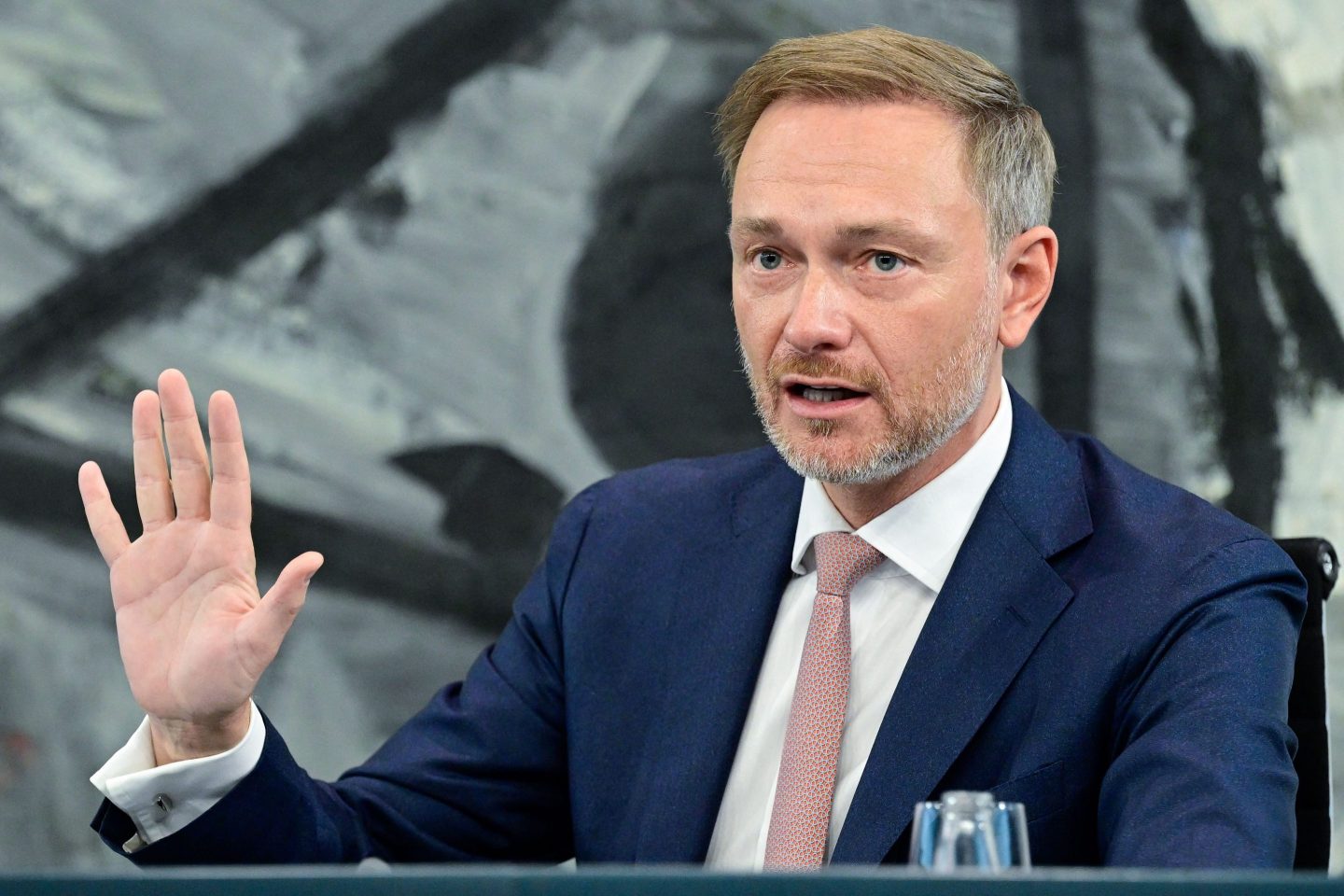
Finance Minister Christian Lindner blamed the reversal on Russia, arguing Germany found itself in the midst of an “energy war” and needed to do whatever it took to prevent lasting damage that would undermine the very foundation of its economy.
“We’re explicitly not following the example of Great Britain towards an expansive fiscal policy,” Lindner said on Thursday.
This is the third straight year in which the government in Berlin has declared a kind of force majeure that prevents it from meeting budgetary targets anchored in Germany’s constitution. Previous to the coronavirus pandemic, the country had generated a consistent fiscal surplus since 2014.
Yet by asserting his commitment to fiscal probity, Lindner managed to have his cake and eat it too. The measures, he said, would be both comprehensive yet targeted toward the crisis, effective in providing support and yet not inflationary in outcome.
Markets seemed to believe him.
Neither did the euro sell off sharply after Germany reversed course—indeed it’s trading higher to the U.S. dollar than it was on Wednesday—nor did government bond yields surge. The latter would indicate investors are demanding higher compensation for the risk of lending to Berlin.
The specifics of Lindner’s plan, which Deutsche Bank estimates as additional stimulus equivalent to 5.4% of forecast GDP, has yet to be fully published. It will lead to an additional fiscal strain on top of the €100 billion in emergency spending for defense as well as the €65 billion in previous support.
German daily tabloid Bild called the latest splurge of taxpayer money an “inconceivable sum” that may not solve the crisis, but acknowledged the stakes are high.
The Federation of German Industries said on Thursday unpredictable energy costs were taking a toll, warning the country’s economy was at the “beginning of a deep and long-lasting recession.”
Germany’s new fiscal relief plans are reminiscent of the growth-oriented “mini-budget” presented last week by the U.K. government.
Chancellor of the Exchequer Kwasi Kwarteng abandoned his predecessor’s plans for tax hikes, and instead announced the single biggest package of tax cuts in 50 years. While it was designed to stimulate an economy likely in recession, the unfunded nature of the proposal and its focus on relief for the very wealthy sunk the pound and forced the Bank of England to bail out the government.
Spooked by turmoil
Deutsche Bank argued the far more sanguine reaction by markets toward Germany was in part owing to Lindner making clear he would try to remain below the €200 billion earmarked in his new budget.
“This intention is in line with the experience of such massive packages during the COVID pandemic, for example, when the government at the end of the day did not put (all) its money where its mouth was,” it wrote in a note published on Thursday.
By comparison, Kwarteng had promptly sacked his department’s respected top civil service adviser upon taking office earlier this month in order to focus the thrust of his planned relief not on average households, but on the very top income earners in the U.K. economy.
The ensuing chaos in U.K. capital markets was only the latest in a string of policies by the ruling Conservatives that helped undermine their credibility as responsible stewards of the economy.
Previously the government enacted considerable trade barriers with the European Union, its largest market, to placate the powerful euroskeptic wing of the Conservative party. Simultaneously it failed to strike a free trade deal with the United States that could offset any of the damage.
Currently YouGov polls now predict an electoral wipeout for the Tories, with Labour leading the Conservatives by a historic margin of 33 points.
Lindner clearly was spooked by this week’s turmoil in London and was quick to assert his commitment for a return to balanced budgets next year.
“We want to send a clear signal to capital markets. Even if we are resorting to this rescue fund, Germany is committed to its stable and sustainable fiscal policy,” he tweeted on Thursday. “German sovereign bonds remain the gold standard for the world.”
Despite news that annual inflation rates had hit double digits in September, German 10-year bond yields rose just 6 basis points to 2.18% and actually eased back on Friday. This suggests capital markets believe consumer price hikes will cool, in part likely owing to deflationary effects from the forecast recession.
It also means, however, that Berlin can borrow at a substantially lower cost than either the U.K., whose equivalent gilts traded at rates of 4.14%, or the United States. Yields on the U.S. benchmark 10-year Treasury briefly hit 4% on Thursday, the steepest it has reached in 12 years.