
• Home
  • Latest
  • Fortune 500
  • Finance
  • Tech
  • Leadership
  • Lifestyle
  • Rankings
  • Multimedia

Trendingnow

1

The U.S. spent $30 billion to ditch textbooks for laptops and tablets: The result is the first generation less cognitively capable than their parents

2

Peter Thiel and other tech billionaires are publicly shielding their children from the products that made them rich

3

A Trump Account could make your kid a millionaire by 45—but financial experts say the app's projections come with a catch

1

The U.S. spent $30 billion to ditch textbooks for laptops and tablets: The result is the first generation less cognitively capable than their parents

2

Peter Thiel and other tech billionaires are publicly shielding their children from the products that made them rich

3

A Trump Account could make your kid a millionaire by 45—but financial experts say the app's projections come with a catch
Future of WorkRobots

Top AI economist who found ‘significant and disproportionate impact’ on entry-level jobs finds link between robots and minimum wage hikes

Nick Lichtenberg
By
Nick Lichtenberg
Nick Lichtenberg
Business Editor
Down Arrow Button Icon
Nick Lichtenberg
By
Nick Lichtenberg
Nick Lichtenberg
Business Editor
Down Arrow Button Icon
March 4, 2026, 4:56 PM ET
erik
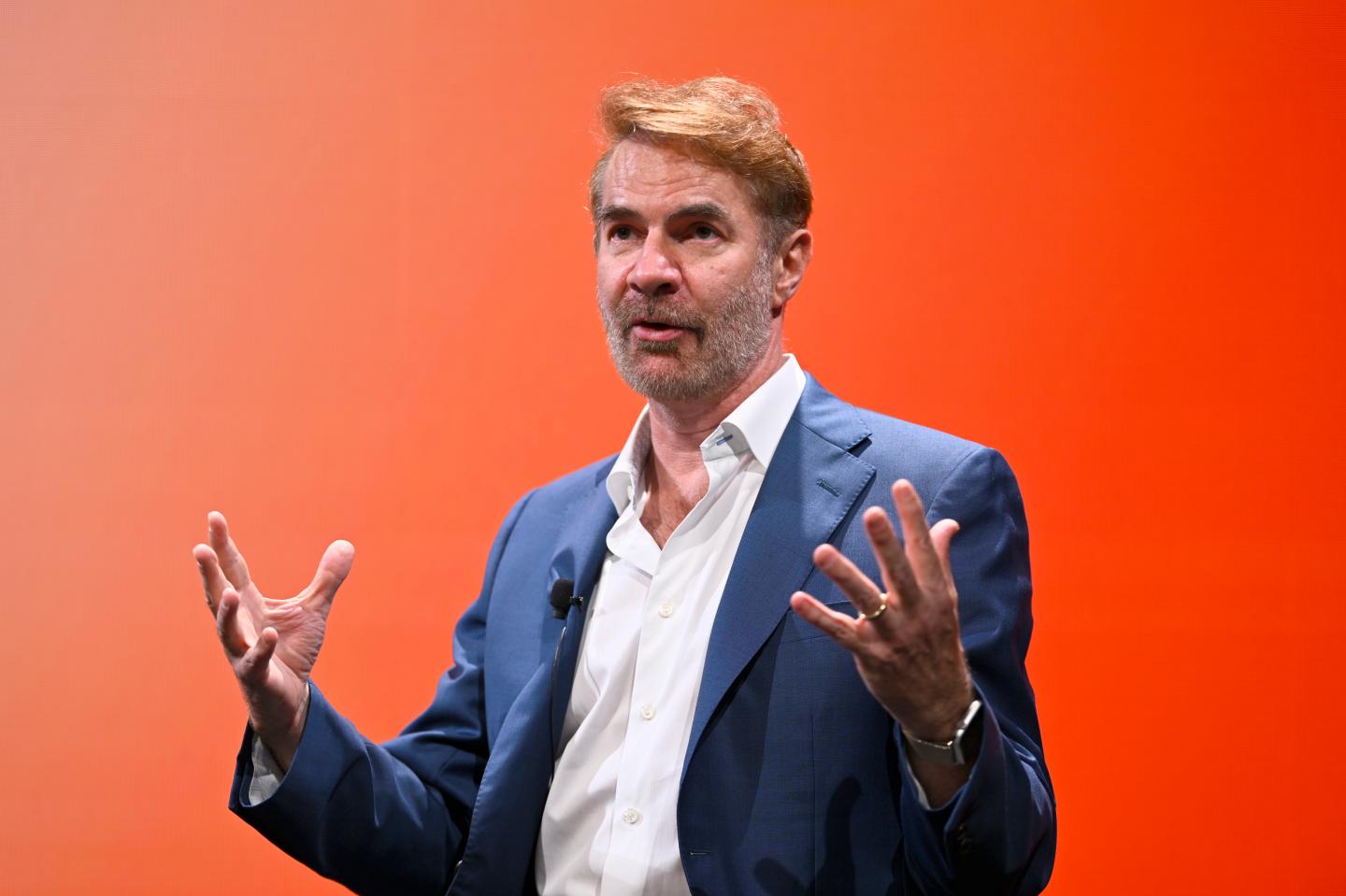
Erik Brynjolfsson participates in the panel "Digital Governance and the State of Democracy: Why Does it Matter?" onstage during Unfinished Live 2022 at The Shed on September 21, 2022 in New York City. Roy Rochlin/Getty Images for Unfinished Live
Add Fortune on Google for similar content.

Erik Brynjolfsson has spent the last several years building one of the most detailed empirical pictures of how technology is reshaping the American workforce—and the picture keeps getting darker for workers at the bottom of the corporate ladder.

Recommended Video

Last August, the Stanford economist, who has been a thought leader on artificial intelligence (AI) for years, made headlines when he and his team published a first-of-its-kind study revealing the AI revolution was already having a “significant and disproportionate impact on entry-level workers in the U.S. labor market,” particularly young people ages 22 to 25 in white-collar fields like software engineering and customer service.

Now, in a new working paper published through the National Bureau of Economic Research this February, Brynjolfsson and a team of co-authors have trained their lens on blue-collar America—and found minimum wage increases are accelerating the adoption of industrial robots on factory floors.​

Taken together, the two papers trace the outlines of a labor market transformation that is squeezing workers from both ends: AI encroaching from the top, automation moving in from the bottom.

The white-collar warning shot

The August 2025 study was built on an unusually powerful dataset—high-frequency payroll records from millions of American workers generated by ADP, the largest payroll software firm in the country. What Brynjolfsson and his co-authors found was striking: Since the widespread adoption of generative AI tools beginning in late 2022, employment for early-career workers in the most AI-exposed occupations fell by 13% on a relative basis, even after controlling for broader firm-level disruptions. Older, more experienced workers in the same fields, meanwhile, saw their employment hold steady or grow.​

The new study, co-authored with J. Frank Li of the University of British Columbia, Javier Miranda of Germany’s Halle Institute for Economic Research, Robert Seamans of NYU’s Stern School of Business, and Andrew J. Wang of Stanford, turns from algorithm to assembly line. Using confidential U.S. Census Bureau microdata linked to customs import records, the team tracked industrial robot adoption among roughly 240,000 single-unit U.S. manufacturing firms from 1992 to 2021—identifying robot adopters by the moment they began importing machines from overseas suppliers in Japan, Germany, and Switzerland.​

The central finding is precise and consistent: A 10% increase in the minimum wage is associated with an approximately 8% increase in the likelihood a manufacturing firm will adopt industrial robots, relative to the average adoption rate in the sample.​

“Firms subject to higher minimum wages are more likely to adopt robots,” the authors wrote, “even after controlling for observable firm and local economic characteristics.”

The logic mirrors the white-collar story, even if the mechanism is different, with the authors arguing these effects are “economically meaningful.” Just as AI becomes economically attractive when it can replace the codified work of a junior software engineer or customer service rep, an industrial robot becomes more attractive when the cost of the human doing repetitive assembly or welding goes up. In both cases, a rising price for labor at the lower end of the skill spectrum tilts the calculus toward machines.​

“While robots may enhance productivity,” Brynjolfsson and his authors wrote, “they may also alter the structure of employment, especially in low-wage sectors as typically found in manufacturing.”

A rigorous test

The manufacturing study’s most compelling evidence comes from a geographic quasi-experiment. Rather than simply comparing firms in high-wage states to those in low-wage states—an approach vulnerable to the objection that those states differ in countless other ways—the researchers focused specifically on companies located in counties that sit directly on state borders, comparing businesses on opposite sides of the same line. These firms face nearly identical local economies, labor markets, and industries. The only meaningful difference is which state’s minimum wage law applies to them.​

Under this stringent border-pair test, a 10% minimum wage increase was still associated with an 8.4% rise in robot adoption—a figure that held up across multiple regression specifications and closely matched the broader aggregate analysis the team conducted at the state level. The effect was robust to controls for firm size, age, industry, and whether a state had right-to-work laws on the books.​

A pattern across borders

The finding is not unique to the U.S. A study of Turkey found a sharp 33.5% minimum wage hike in 2016 drove medium and large firms to increase robot use, particularly in industries heavy with blue-collar, routine-task workers.

Research in China found similar dynamics from 2008 to 2012, with a 10% minimum wage increase raising the probability of robot adoption, with stronger effects at high-productivity and private-sector firms.

German researchers examining the country’s minimum wage introduction in 2015 found plants with high shares of simple manual workers in routine tasks were the most likely to respond by adopting robots.​

The policy tension

Brynjolfsson and his co-authors were measured in their conclusions, appropriately for a non-peer reviewed working paper. The manufacturing paper does not attempt to measure downstream employment effects—whether workers displaced by robots find new jobs, or at what wages—and the authors acknowledge robot adoption can sometimes correlate with higher firm-level productivity and even employment growth, as some international firm-level research has found.​

But on the central policy question—whether minimum wage increases drive automation—the evidence is now hard to dismiss. And given Brynjolfsson’s August finding AI is simultaneously eroding the entry-level white-collar labor market, policymakers face a compounding challenge: two distinct technologies, encroaching on two distinct segments of the workforce, through two distinct mechanisms, at the same time.

“Policymakers may wish to consider complementary strategies to mitigate potential displacement effects,” the authors wrote, “such as retraining programs or targeted support for small firms” a prescription that, in light of the parallel AI findings, may be arriving in timely fashion.​

For this story, Fortune journalists used generative AI as a research tool. An editor verified the accuracy of the information before publishing.

The Fortune 500 Innovation Forum will convene Fortune 500 executives, U.S. policy officials, top founders, and thought leaders to help define what’s next for the American economy, Nov. 16-17 in Detroit. Apply here.
About the Author
Nick Lichtenberg
By Nick LichtenbergBusiness Editor
LinkedIn icon

Nick Lichtenberg is business editor and was formerly Fortune's executive editor of global news.

See full bioRight Arrow Button Icon
Add Fortune on Google for similar content.

Latest in Future of Work

Finance
Lorem ipsum dolor sit amet, consectetur adipiscing elit, sed do eiusmod tempor incididunt ut labore et dolore magna aliqua. Ut enim ad minim veniam
By Fortune Editors
October 20, 2025
Finance
Lorem ipsum dolor sit amet, consectetur adipiscing elit, sed do eiusmod tempor incididunt ut labore et dolore magna aliqua. Ut enim ad minim veniam
By Fortune Editors
October 20, 2025
Finance
Lorem ipsum dolor sit amet, consectetur adipiscing elit, sed do eiusmod tempor incididunt ut labore et dolore magna aliqua. Ut enim ad minim veniam
By Fortune Editors
October 20, 2025
Finance
Lorem ipsum dolor sit amet, consectetur adipiscing elit, sed do eiusmod tempor incididunt ut labore et dolore magna aliqua. Ut enim ad minim veniam
By Fortune Editors
October 20, 2025
Finance
Lorem ipsum dolor sit amet, consectetur adipiscing elit, sed do eiusmod tempor incididunt ut labore et dolore magna aliqua. Ut enim ad minim veniam
By Fortune Editors
October 20, 2025
Finance
Lorem ipsum dolor sit amet, consectetur adipiscing elit, sed do eiusmod tempor incididunt ut labore et dolore magna aliqua. Ut enim ad minim veniam
By Fortune Editors
October 20, 2025

Most Popular

Finance
Lorem ipsum dolor sit amet, consectetur adipiscing elit, sed do eiusmod tempor incididunt ut labore et dolore magna aliqua. Ut enim ad minim veniam
By Fortune Editors
October 20, 2025
Finance
Lorem ipsum dolor sit amet, consectetur adipiscing elit, sed do eiusmod tempor incididunt ut labore et dolore magna aliqua. Ut enim ad minim veniam
By Fortune Editors
October 20, 2025
Finance
Lorem ipsum dolor sit amet, consectetur adipiscing elit, sed do eiusmod tempor incididunt ut labore et dolore magna aliqua. Ut enim ad minim veniam
By Fortune Editors
October 20, 2025
Finance
Lorem ipsum dolor sit amet, consectetur adipiscing elit, sed do eiusmod tempor incididunt ut labore et dolore magna aliqua. Ut enim ad minim veniam
By Fortune Editors
October 20, 2025
Finance
Lorem ipsum dolor sit amet, consectetur adipiscing elit, sed do eiusmod tempor incididunt ut labore et dolore magna aliqua. Ut enim ad minim veniam
By Fortune Editors
October 20, 2025
Finance
Lorem ipsum dolor sit amet, consectetur adipiscing elit, sed do eiusmod tempor incididunt ut labore et dolore magna aliqua. Ut enim ad minim veniam
By Fortune Editors
October 20, 2025
Fortune Secondary Logo
Rankings
  • 100 Best Companies
  • Fortune 500
  • Global 500
  • Fortune 500 Europe
  • Most Powerful Women
  • World's Most Admired Companies
  • See All Rankings
  • Lists Calendar
Sections
  • Finance
  • Fortune Crypto
  • Features
  • Leadership
  • Health
  • Commentary
  • Success
  • Retail
  • Mpw
  • Tech
  • Lifestyle
  • CEO Initiative
  • Asia
  • Politics
  • Conferences
  • Europe
  • Newsletters
  • Personal Finance
  • Environment
  • Magazine
  • Education
Customer Support
  • Frequently Asked Questions
  • Customer Service Portal
  • Privacy Policy
  • Terms Of Use
  • Single Issues For Purchase
  • International Print
Commercial Services
  • Advertising
  • Fortune Brand Studio
  • Fortune Analytics
  • Fortune Conferences
  • Business Development
  • Group Subscriptions
About Us
  • About Us
  • Press Center
  • Work At Fortune
  • Terms And Conditions
  • Site Map
  • About Us
  • Press Center
  • Work At Fortune
  • Terms And Conditions
  • Site Map
  • Facebook icon
  • Twitter icon
  • LinkedIn icon
  • Instagram icon
  • Pinterest icon

Latest in Future of Work

Brené Brown, author, researcher, and professor
Successmental health
Brené Brown warns American workers are not neurologically wired for this level of rapid change and instability: ‘People are not okay’
By Emma BurleighJuly 12, 2026
17 hours ago
Manufacturing worker on factory floor
SuccessFlexible work
Fortune 500 Land O’Lakes is letting workers choose what days and times they work—and the flex jobs are getting 25% more applicants than full-time gigs
By Emma BurleighJuly 12, 2026
17 hours ago
An older man sits at a table with a laptop in front of him with his chin resting on his hand.
Future of WorkRetirement
More tech workers are retiring early because they don’t want to deal with AI-related changes: ‘Many people believe it’s overblown’
By Sasha RogelbergJuly 12, 2026
22 hours ago
Family members sitting on a sofa together
EconomyLabor
More noncollege-educated men are living at home and falling out of the labor market, forcing a decline in marriages, all thanks to rising rents
By Catherina GioinoJuly 11, 2026
2 days ago
usa
Commentary250 Years of Innovation
For 250 years, work defined American identity. That era Is ending
By Keith Ferrazzi and Wendy SmithJuly 11, 2026
2 days ago
Hybrid‑work expert Nicholas Bloom says World Cup chaos and pricey commutes are turning July into the summer of remote work
Future of Workremote work
Hybrid‑work expert Nicholas Bloom says World Cup chaos and pricey commutes are turning July into the summer of remote work
By Marco Quiroz-GutierrezJuly 9, 2026
3 days ago

Most Popular

The U.S. spent $30 billion to ditch textbooks for laptops and tablets: The result is the first generation less cognitively capable than their parents
Innovation
The U.S. spent $30 billion to ditch textbooks for laptops and tablets: The result is the first generation less cognitively capable than their parents
By Sasha RogelbergJuly 12, 2026
17 hours ago
Peter Thiel and other tech billionaires are publicly shielding their children from the products that made them rich
Big Tech
Peter Thiel and other tech billionaires are publicly shielding their children from the products that made them rich
By Marco Quiroz-GutierrezJuly 12, 2026
17 hours ago
A Trump Account could make your kid a millionaire by 45—but financial experts say the app's projections come with a catch
Personal Finance
A Trump Account could make your kid a millionaire by 45—but financial experts say the app's projections come with a catch
By Sydney LakeJuly 12, 2026
18 hours ago
The U.S. and Iran can't agree on fully reopening the Strait of Hormuz. The solution could be straight out of the Old Testament
Middle East
The U.S. and Iran can't agree on fully reopening the Strait of Hormuz. The solution could be straight out of the Old Testament
By Jason MaJuly 11, 2026
1 day ago
Trump’s time is running out to avoid a nightmare Strait of Hormuz scenario
Energy
Trump’s time is running out to avoid a nightmare Strait of Hormuz scenario
By Jordan BlumJuly 12, 2026
22 hours ago
Wyoming officials say Meta’s 715,000-square-foot data center is responsible for contaminating its water system with a rare bacterium
Environment
Wyoming officials say Meta’s 715,000-square-foot data center is responsible for contaminating its water system with a rare bacterium
By Sasha RogelbergJuly 10, 2026
3 days ago

© 2026 Fortune Media IP Limited. All Rights Reserved. Use of this site constitutes acceptance of our Terms of Use and Privacy Policy | CA Notice at Collection and Privacy Notice | Do Not Sell/Share My Personal Information
FORTUNE is a trademark of Fortune Media IP Limited, registered in the U.S. and other countries. FORTUNE may receive compensation for some links to products and services on this website. Offers may be subject to change without notice.