• Home
  • News
  • Fortune 500
  • Tech
  • Finance
  • Leadership
  • Lifestyle
  • Rankings
  • Multimedia
natural disasaters
Europe

Floods and droughts could cost the global economy $5.6 trillion by 2050, report says

Will Daniel
By
Will Daniel
Will Daniel
Down Arrow Button Icon
Will Daniel
By
Will Daniel
Will Daniel
Down Arrow Button Icon
August 29, 2022, 1:24 PM ET
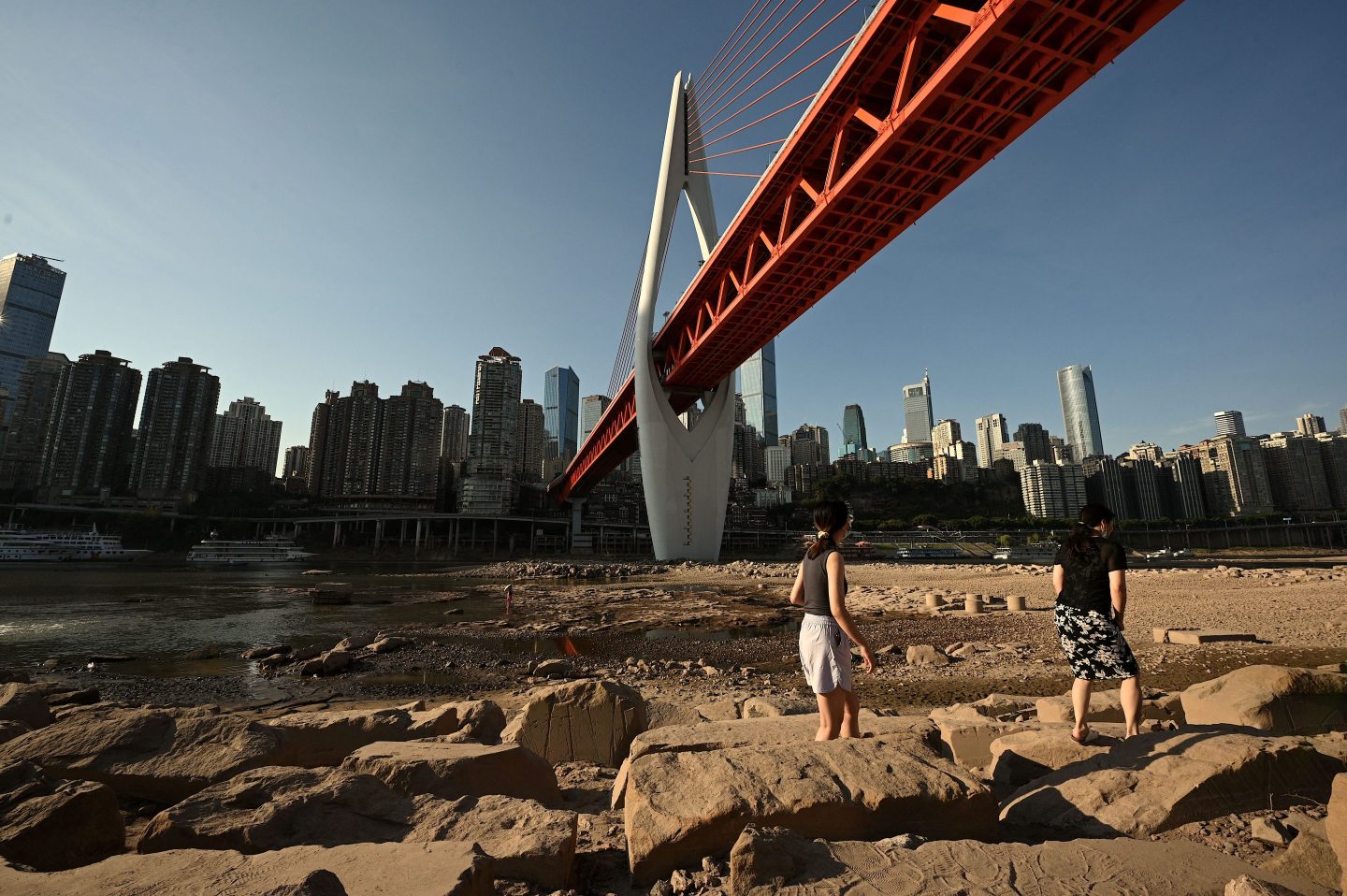
People on the dried-up riverbed of the Jialing River, a tributary of the Yangtze River, in China’s southwestern city of Chongqing on Aug. 24, 2022.
People on the dried-up riverbed of the Jialing River, a tributary of the Yangtze River, in China’s southwestern city of Chongqing on Aug. 24, 2022. Noel Celis—AFP/Getty Images

It’s been a devastating year for the global economy when it comes to natural disasters.

Flooding in Pakistan has forced millions from their homes and killed over 1,000 people. A deadly heat wave in China is having devastating effects on the country’s economy and supply chains. And the ongoing mega-drought on the West Coast of the U.S. is now the worst in 1,200 years, while another in Europe is impacting everything from coal and nuclear power plants to manufacturers’ supply chains. 

Now a new study shows the increasing frequency of water-related natural disasters is a trend that will only continue as climate change rages on over the coming decades. The cost to governments, businesses, and consumers will be severe.

Water-related natural disasters, from floods to droughts, could cause a $5.6 trillion hit to global gross domestic product (GDP) between 2022 and 2050, according to a new study from the professional services firm GHD. That’s quite the rise from the norm over the past 50 years.

Between 1970 and 2021, all natural disasters, not just those related to water, caused $3.64 trillion in losses worldwide, data from the World Meteorological Organization (WMO) shows. GHD’s climatologists predict that over the next 30 years, the U.S. alone could lose more than that—$3.7 trillion—due to only water-related natural disasters.

The study follows an April analysis by the Office of Management and Budget that shows the U.S. federal budget could take a $2 trillion hit annually by 2100 due to the impacts of climate change.

The pessimistic outlook from climatologists also comes on the back of one of the worst years in history as far as natural disasters. 

In 2021 alone, natural disasters caused $252 billion of economic damage worldwide, a 47% increase from 2020 and 66% above the average over the past two decades, according to the Emergency Events Database, which is maintained by the Centre for Research on the Epidemiology of Disasters.

A total of 432 catastrophic natural events were recorded last year, which is “considerably higher than the average,” researchers at the Emergency Events Database said in March. For example, there were 223 floods that were classified as natural disasters in 2021, up from an average of just 163 annually from 2001 to 2020.

The increase in the number, duration, and impact of natural disasters isn’t a new trend either. Over the past 50 years, climate and weather-related disasters have surged 400%, the WMO said in September. 

“The number of weather, climate, and water extremes [is] increasing and will become more frequent and severe in many parts of the world as a result of climate change,” WMO Secretary-General Petteri Taalas said in a 2021 report. “That means more heat waves, drought, and forest fires such as those we have observed recently in Europe and North America.”

Economic losses from these weather-related disasters increased sevenfold from the 1970s through 2019 as well, according to the United Nations. In 1970, the daily global economic impact from weather-related disasters was roughly $49 million. By 2019, that figure hit $383 million.

Sign up for the Fortune Features email list so you don’t miss our biggest features, exclusive interviews, and investigations.

About the Author
Will Daniel
By Will Daniel
LinkedIn iconTwitter icon
See full bioRight Arrow Button Icon

Latest in

PoliticsDonald Trump
National Park Service drops free admission on Martin Luther King Jr. Day and Juneteenth while adding Trump’s birthday
By David Klepper and The Associated PressDecember 6, 2025
9 hours ago
EconomyEurope
JPMorgan CEO Jamie Dimon says Europe has a ‘real problem’
By Katherine Chiglinsky and BloombergDecember 6, 2025
9 hours ago
PoliticsMilitary
Hegseth likens strikes on alleged drug boats to post-9/11 war on terror, saying Trump can order use of force ‘as he sees fit’
By David Klepper and The Associated PressDecember 6, 2025
10 hours ago
Elon Musk
Big TechSpaceX
SpaceX to offer insider shares at record-setting $800 billion valuation
By Edward Ludlow, Loren Grush, Lizette Chapman, Eric Johnson and BloombergDecember 6, 2025
10 hours ago
EconomyDebt
The most likely solution to the U.S. debt crisis is severe austerity triggered by a fiscal calamity, former White House economic adviser says
By Jason MaDecember 6, 2025
10 hours ago
Big TechApple
Apple rocked by executive departures, with chip chief at risk of leaving next
By Mark Gurman and BloombergDecember 6, 2025
12 hours ago

Most Popular

placeholder alt text
AI
Nvidia CEO says data centers take about 3 years to construct in the U.S., while in China 'they can build a hospital in a weekend'
By Nino PaoliDecember 6, 2025
15 hours ago
placeholder alt text
Big Tech
Mark Zuckerberg rebranded Facebook for the metaverse. Four years and $70 billion in losses later, he’s moving on
By Eva RoytburgDecember 5, 2025
2 days ago
placeholder alt text
Real Estate
The 'Great Housing Reset' is coming: Income growth will outpace home-price growth in 2026, Redfin forecasts
By Nino PaoliDecember 6, 2025
20 hours ago
placeholder alt text
Success
Nvidia CEO Jensen Huang admits he works 7 days a week, including holidays, in a constant 'state of anxiety' out of fear of going bankrupt
By Jessica CoacciDecember 4, 2025
3 days ago
placeholder alt text
Economy
The most likely solution to the U.S. debt crisis is severe austerity triggered by a fiscal calamity, former White House economic adviser says
By Jason MaDecember 6, 2025
10 hours ago
placeholder alt text
Asia
Despite their ‘no limits’ friendship, Russia is paying a nearly 90% markup on sanctioned goods from China—compared with 9% from other countries
By Jason MaNovember 29, 2025
7 days ago
Rankings
  • 100 Best Companies
  • Fortune 500
  • Global 500
  • Fortune 500 Europe
  • Most Powerful Women
  • Future 50
  • World’s Most Admired Companies
  • See All Rankings
Sections
  • Finance
  • Leadership
  • Success
  • Tech
  • Asia
  • Europe
  • Environment
  • Fortune Crypto
  • Health
  • Retail
  • Lifestyle
  • Politics
  • Newsletters
  • Magazine
  • Features
  • Commentary
  • Mpw
  • CEO Initiative
  • Conferences
  • Personal Finance
  • Education
Customer Support
  • Frequently Asked Questions
  • Customer Service Portal
  • Privacy Policy
  • Terms Of Use
  • Single Issues For Purchase
  • International Print
Commercial Services
  • Advertising
  • Fortune Brand Studio
  • Fortune Analytics
  • Fortune Conferences
  • Business Development
About Us
  • About Us
  • Editorial Calendar
  • Press Center
  • Work At Fortune
  • Diversity And Inclusion
  • Terms And Conditions
  • Site Map

© 2025 Fortune Media IP Limited. All Rights Reserved. Use of this site constitutes acceptance of our Terms of Use and Privacy Policy | CA Notice at Collection and Privacy Notice | Do Not Sell/Share My Personal Information
FORTUNE is a trademark of Fortune Media IP Limited, registered in the U.S. and other countries. FORTUNE may receive compensation for some links to products and services on this website. Offers may be subject to change without notice.