
• Home
  • Latest
  • Fortune 500
  • Finance
  • Tech
  • Leadership
  • Lifestyle
  • Rankings
  • Multimedia
semiconductor industry

The U.S. accused a Chinese MIT professor of spying. Now cleared, he helped discover what may be the ‘best semiconductor material ever found’

Nicholas Gordon
By
Nicholas Gordon
Nicholas Gordon
Asia Editor
Down Arrow Button Icon
Nicholas Gordon
By
Nicholas Gordon
Nicholas Gordon
Asia Editor
Down Arrow Button Icon
August 16, 2022, 5:32 AM ET
Updated August 18, 2022, 1:58 AM ET
The entrance to the Massachusetts Institute of Technology
A team of researchers from MIT and other institutions say they have proved that cubic boron arsenide performs better than silicon at conducting heat and electricity.Sergi Reboredo—VW Pics/Universal Images Group/Getty Images

A team of researchers has discovered what the Massachusetts Institute of Technology calls the “best semiconductor material ever found,” even better than silicon, the material used in just about every computer chip on earth.

In July, scientists from MIT, the University of Houston, and other institutions announced they had proved that cubic boron arsenide performs better than silicon at conducting heat and electricity, opening up new possibilities for smaller and faster chips. The team includes China-born professor Gang Chen, the former head of MIT’s Department of Mechanical Engineering, who was the subject of a yearlong investigation by the Department of Justice before the agency dropped espionage charges because of lack of evidence.

It could be decades before semiconductors based on cubic boron arsenide are used in commercially available chips—if they prove viable at all. But ultimately, the new material may help designers overcome the natural limits of current models to make better, faster, and smaller chips, and its discovery is the kind of research the U.S. risked missing out on with a now-disbanded crackdown on experts like Chen.

Cubic boron arsenide

Despite its ubiquity in the chip industry, silicon is not the best semiconductor out there. For one, it doesn’t conduct heat very well, meaning chips and consumer devices often need to include expensive cooling systems or risk overheating.

According to the July study, cubic boron arsenide conducts heat 10 times better than silicon. “Heat is a major bottleneck for electronics,” Jungwoo Shin, the study’s lead author, said in a press release accompanying the study, calling the new material a potential “game changer.” 

The study also revealed that cubic boron arsenide is better than silicon at conducting both electrons and its positively charged counterpart, the “electron hole.” The latter is an especially glaring weakness of silicon, limiting the speed of silicon-based semiconductors.

Chip designers are starting to bump up against the natural limits of silicon in their quest for smaller and faster chips. Researchers are publicly talking about the end of Moore’s Law, the 1975 prediction by Intel cofounder Gordon Moore that the number of transistors in a chip would double every two years, which has been a guiding star for the semiconductor industry ever since.

Researchers are exploring ways to squeeze more speed out of new computers through new materials for chips or new technologies like quantum computing. Materials like cubic boron arsenide—assuming they can be commercialized—might help designers keep making even smaller and faster computer chips.

But there’s still a long way to go until cubic boron arsenide can be used outside of the lab. The material has been made only in small batches, and researchers needed special equipment to study its properties, according to MIT. 

“Silicon is the workhorse of the entire industry,” Chen said in the release, noting that scientists have spent decades developing procedures to purify silicon to the levels needed for chip manufacturing, reaching 99.99999999% purity or the so-called ten-nines level. But the study noted that if future research could overcome the barriers to industrial production, cubic boron arsenide could become “a promising candidate for next-generation electronics.”

Spying charges dropped

The study is also a significant change in fortune for one of its prominent authors, Chen, who was a high-profile target of a Trump-era initiative to investigate accusations of Chinese espionage. 

The U.S. Department of Justice, through a program called the China Initiative, accused dozens of Chinese and Chinese American academics of hiding their ties to Chinese institutions in order to share advanced technologies with Beijing. 

Authorities arrested Chen, who was born in China and naturalized as a U.S. citizen in 2000, in January 2021. He was accused of failing to disclose ties to Chinese institutions on grant applications to the Department of Energy. “This was not just about greed, but about loyalty to China,” then–U.S. Attorney for Massachusetts Andrew Lelling alleged at the time.

The scientific community, especially at MIT, strongly criticized the arrest. MIT faculty, in an open letter, wrote that “the defense of Professor Chen is the defense of the scientific enterprise that we all hold dear—we are all Gang Chen.” 

The Department of Justice, under the Biden administration, dropped charges against Chen in January 2022 after DOE officials revealed that Chen was never required to make the disclosures he was accused of omitting. In a statement released when the charges were dropped, Chen accused the DOJ of continuing to bring “unwarranted fear to the academic community.” 

A month after dropping Chen’s case, the DOJ disbanded the China Initiative. “We helped give rise to a harmful perception that the department applies a lower standard to investigate and prosecute criminal conduct related to [China] or that we in some way view people with racial, ethnic, or familial ties to China differently,” said Assistant Attorney General for National Security Matthew Olsen at the time.

Scientists also argued that investigations like the one into Chen dissuaded academics—particularly those from China—from moving to the U.S., denying the U.S. the opportunity to benefit from their research. “It’s scaring away talent,” one MIT faculty member told WBUR in February.

Experts have pointed to the lack of skilled scientific and technical expertise as a major constraint on the U.S. drive to restore its prominence in research and development, including rebuilding its domestic semiconductor manufacturing industry. One study estimated that the U.S. would need to increase its chipmaking workforce by 50% to displace Asia as the center for chip manufacturing—talent that would need to come from overseas, including China. 

Correction, August 18, 2022: An earlier version of this article misattributed the source of some quotations.

Sign up for the Fortune Features email list so you don’t miss our biggest features, exclusive interviews, and investigations.


About the Author
Nicholas Gordon
By Nicholas GordonAsia Editor
LinkedIn iconTwitter icon

Nicholas Gordon is an Asia editor based in Hong Kong, where he helps to drive Fortune’s coverage of Asian business and economics news.

See full bioRight Arrow Button Icon

Latest in

Finance
Lorem ipsum dolor sit amet, consectetur adipiscing elit, sed do eiusmod tempor incididunt ut labore et dolore magna aliqua. Ut enim ad minim veniam
By Fortune Editors
October 20, 2025
Finance
Lorem ipsum dolor sit amet, consectetur adipiscing elit, sed do eiusmod tempor incididunt ut labore et dolore magna aliqua. Ut enim ad minim veniam
By Fortune Editors
October 20, 2025
Finance
Lorem ipsum dolor sit amet, consectetur adipiscing elit, sed do eiusmod tempor incididunt ut labore et dolore magna aliqua. Ut enim ad minim veniam
By Fortune Editors
October 20, 2025
Finance
Lorem ipsum dolor sit amet, consectetur adipiscing elit, sed do eiusmod tempor incididunt ut labore et dolore magna aliqua. Ut enim ad minim veniam
By Fortune Editors
October 20, 2025
Finance
Lorem ipsum dolor sit amet, consectetur adipiscing elit, sed do eiusmod tempor incididunt ut labore et dolore magna aliqua. Ut enim ad minim veniam
By Fortune Editors
October 20, 2025
Finance
Lorem ipsum dolor sit amet, consectetur adipiscing elit, sed do eiusmod tempor incididunt ut labore et dolore magna aliqua. Ut enim ad minim veniam
By Fortune Editors
October 20, 2025

Most Popular

Finance
Lorem ipsum dolor sit amet, consectetur adipiscing elit, sed do eiusmod tempor incididunt ut labore et dolore magna aliqua. Ut enim ad minim veniam
By Fortune Editors
October 20, 2025
Finance
Lorem ipsum dolor sit amet, consectetur adipiscing elit, sed do eiusmod tempor incididunt ut labore et dolore magna aliqua. Ut enim ad minim veniam
By Fortune Editors
October 20, 2025
Finance
Lorem ipsum dolor sit amet, consectetur adipiscing elit, sed do eiusmod tempor incididunt ut labore et dolore magna aliqua. Ut enim ad minim veniam
By Fortune Editors
October 20, 2025
Finance
Lorem ipsum dolor sit amet, consectetur adipiscing elit, sed do eiusmod tempor incididunt ut labore et dolore magna aliqua. Ut enim ad minim veniam
By Fortune Editors
October 20, 2025
Finance
Lorem ipsum dolor sit amet, consectetur adipiscing elit, sed do eiusmod tempor incididunt ut labore et dolore magna aliqua. Ut enim ad minim veniam
By Fortune Editors
October 20, 2025
Finance
Lorem ipsum dolor sit amet, consectetur adipiscing elit, sed do eiusmod tempor incididunt ut labore et dolore magna aliqua. Ut enim ad minim veniam
By Fortune Editors
October 20, 2025
Fortune Secondary Logo
Rankings
  • 100 Best Companies
  • Fortune 500
  • Global 500
  • Fortune 500 Europe
  • Most Powerful Women
  • Future 50
  • World’s Most Admired Companies
  • See All Rankings
Sections
  • Finance
  • Fortune Crypto
  • Features
  • Leadership
  • Health
  • Commentary
  • Success
  • Retail
  • Mpw
  • Tech
  • Lifestyle
  • CEO Initiative
  • Asia
  • Politics
  • Conferences
  • Europe
  • Newsletters
  • Personal Finance
  • Environment
  • Magazine
  • Education
Customer Support
  • Frequently Asked Questions
  • Customer Service Portal
  • Privacy Policy
  • Terms Of Use
  • Single Issues For Purchase
  • International Print
Commercial Services
  • Advertising
  • Fortune Brand Studio
  • Fortune Analytics
  • Fortune Conferences
  • Business Development
  • Group Subscriptions
About Us
  • About Us
  • Editorial Calendar
  • Press Center
  • Work At Fortune
  • Diversity And Inclusion
  • Terms And Conditions
  • Site Map
Fortune Secondary Logo
  • About Us
  • Editorial Calendar
  • Press Center
  • Work At Fortune
  • Diversity And Inclusion
  • Terms And Conditions
  • Site Map
  • Facebook icon
  • Twitter icon
  • LinkedIn icon
  • Instagram icon
  • Pinterest icon

Latest in

Middle EastIran
Iran sends conflicting signals on war, highlighting split between leaders looking to de-escalate vs. hard-liners bent on fighting the U.S. and Israel
By Jon Gambrell, Sam Mednick, Samy Magdy and The Associated PressMarch 7, 2026
4 hours ago
Middle EastIran
Trump says he ruled out having Kurdish forces join Iran war
By Maria Paula Mijares Torres and BloombergMarch 7, 2026
4 hours ago
EnergyOil
UAE and Kuwait start oil output cuts after Hormuz blockage
By Fiona MacDonald, Anthony Di Paola and BloombergMarch 7, 2026
5 hours ago
Middle EastIran
Trump grieves with families during return of soldiers killed in war in the Middle East
By Seung Min Kim, Julia Demaree Nikhinson and The Associated PressMarch 7, 2026
6 hours ago
EnergyIran
Forget the U.S. Navy, the best protection for ships traveling through the Strait of Hormuz may be claiming to be a ‘Chinese’ or ‘Muslim’ vessel
By Jason MaMarch 7, 2026
6 hours ago
North AmericaDrugs
Trump calls on regional leaders at ‘Shield of the Americas’ summit to use their militaries against drug cartels
By Aamer Madhani, Joshua Goodman, Alanna Durkin Richer and The Associated PressMarch 7, 2026
7 hours ago

Most Popular

placeholder alt text
AI
Shark Tank's Kevin O'Leary says if he were 25 today, he'd chase these two booming opportunities in the world of AI
By Marco Quiroz-GutierrezMarch 6, 2026
2 days ago
placeholder alt text
Economy
The Treasury may need to borrow an extra $1.6 trillion to cover the hole left by tariff ruling and pay a further $400 billion in debt interest
By Eleanor PringleMarch 6, 2026
2 days ago
placeholder alt text
Success
Gen Z graduates who majored in ‘AI-proof’ careers like pharmacy, biology, and education are making less than $50,000 after graduation
By Emma BurleighMarch 6, 2026
2 days ago
placeholder alt text
AI
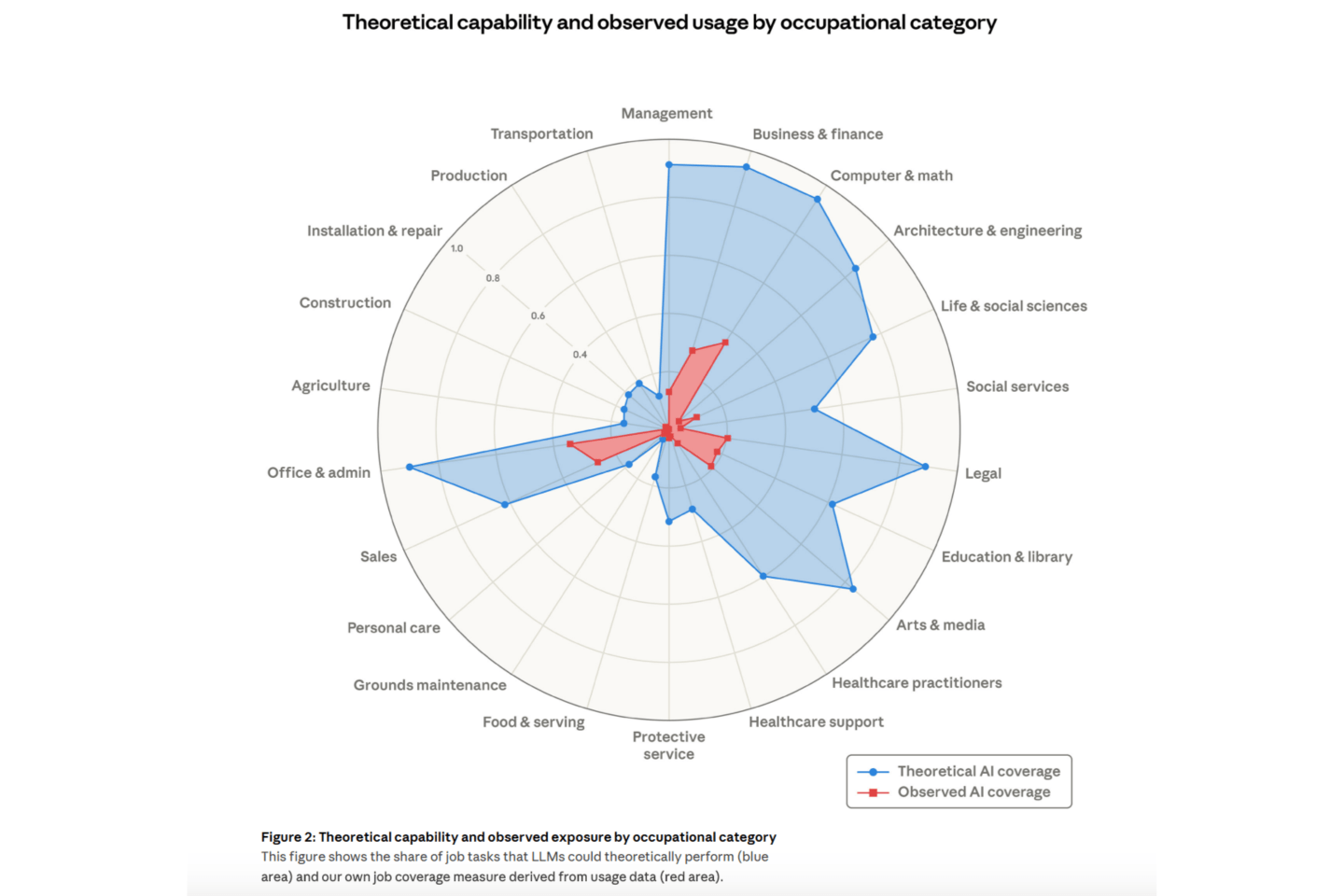
Anthropic just mapped out which jobs AI could potentially replace. A 'Great Recession for white-collar workers' is absolutely possible
By Jake AngeloMarch 6, 2026
2 days ago
placeholder alt text
AI
Nobel laureate Joe Stiglitz says not only can AI take your job, it’ll make the ‘tech bro’ class richer while doing so
By Catherina GioinoMarch 6, 2026
1 day ago
placeholder alt text
Economy
Trump's loss of $1.7 trillion in tariff revenue will send the national debt to $58 trillion by 2036, think tank projects
By Nick LichtenbergMarch 5, 2026
3 days ago

© 2026 Fortune Media IP Limited. All Rights Reserved. Use of this site constitutes acceptance of our Terms of Use and Privacy Policy | CA Notice at Collection and Privacy Notice | Do Not Sell/Share My Personal Information
FORTUNE is a trademark of Fortune Media IP Limited, registered in the U.S. and other countries. FORTUNE may receive compensation for some links to products and services on this website. Offers may be subject to change without notice.