• Home
  • Latest
  • Fortune 500
  • Finance
  • Tech
  • Leadership
  • Lifestyle
  • Rankings
  • Multimedia
EnvironmentClimate Emergency
Europe

‘Collective action or collective suicide’: U.N. chief issues a stark warning as heatwaves sear Europe, the U.S. and China

By
David Meyer
David Meyer
Down Arrow Button Icon
By
David Meyer
David Meyer
Down Arrow Button Icon
July 18, 2022, 8:22 AM ET
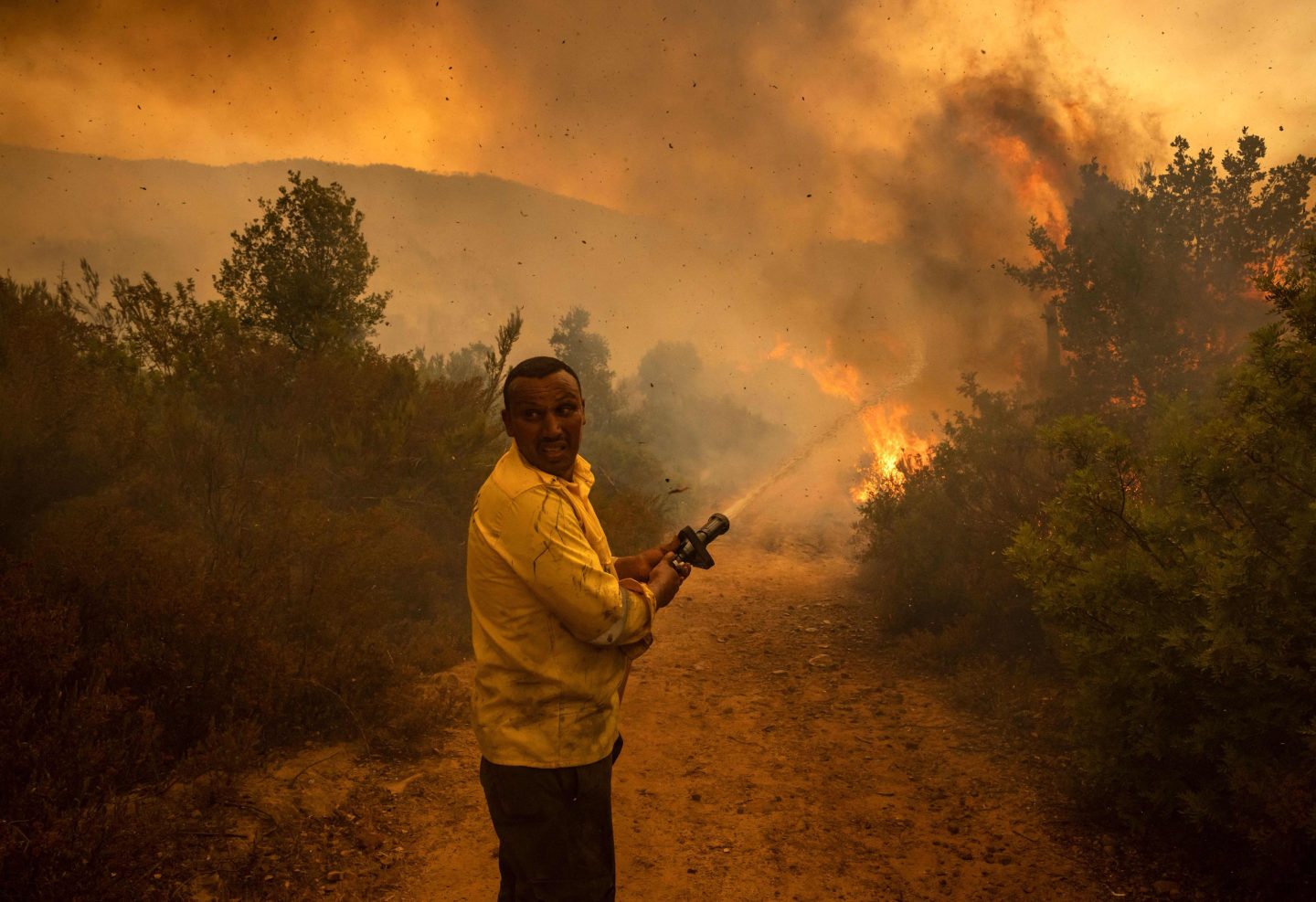
A forest ranger sprays water from a hose on a forest fire near the Moroccan city of Ksar el-Kebir in the Larache region, on July 15, 2022. (
A forest ranger sprays water from a hose on a forest fire near the Moroccan city of Ksar el-Kebir in the Larache region, on July 15, 2022. (Fadel Senna—AFP/Getty Images

As heatwaves scorch the U.S., Europe, China and other parts of the Northern Hemisphere this week, the head of the United Nations has a simple and scary message for the world: if we don’t take the climate emergency seriously, immediately, then we’re finished.

“This has to be the decade of decisive climate action. That means trust, multilateralism and collaboration,” António Guterres told climate ministers and negotiators from 40 countries, assembled in Berlin to discuss the crisis.

“We have a choice: Collective action or collective suicide,” the secretary-general said. “It is in our hands.”

The Berlin gathering, which runs through Tuesday, is a precursor to COP27⁠—this year’s installment of the annual U.N. Climate Change Conference will take place in Egypt in mid-November.

Last year’s COP26 conference in Glasgow, Scotland, did not yield any groundbreaking agreements. And in recent months, countries’ climate plans have been upended by an energy crisis largely resulting from Vladimir Putin’s Ukraine invasion.

Germany and Italy, for example, have had to reluctantly pause their coal phase-outs so they can keep the lights on despite reduced gas flows from Russia.

On Monday, Guterres said COP26 had ended with the aim of keeping global warming to 1.5 degrees Celsius “on life support.”

“Since then, [the 1.5°C goal’s] pulse has weakened further,” he warned. “Greenhouse gas concentrations, sea level rise and ocean heat have broken new records. Half of humanity is in the danger zone from floods, droughts, extreme storms and wildfires. No nation is immune. Yet we continue to feed our fossil fuel addiction.”

The U.N. chief said it was essential to “demonstrate at COP27 that a renewables revolution is underway,” with richer countries helping poorer countries to transition from coal to green energy—a deal last year between Germany and South Africa is seen as the template here.

Guterres also called for an urgent focus on adaptation, and urged a massive expansion of the extreme-weather early warning systems that are currently lacking in many parts of Africa, South Asia, and Central and South America.

Even in richer countries, adaptation is going to be difficult at best.

In the U.K., where the national weather office has issued its first ever Red warning for the start of this week, key parts of the infrastructure—from roads and railway lines to poorly insulated homes—are simply not made to handle temperatures that may surpass the existing heat record of 38.7°C (101.6°F).

Just to clear something up: yes, other countries have temperatures higher than what we are expecting and yes, “they seem to manage”.

But they manage because they get high temps much more regularly than us. Let me give some examples: (1/n)

— Jen Bartram 🐈‍⬛ (@JenBartram) July 16, 2022

Some warn that it’s not a viable option to focus on adaptation as the main answer to the climate crisis.

“It’s a legitimate question, could we just adapt to climate change?” said climate scientist Corinne Le Quéré—a key adviser to both the British and French governments—in a Financial Times interview published Monday. “And the answer is no. Because the warming continues. You cannot just adapt because the target keeps moving.”

“This unprecedented red warning for extreme heat is a wake-up call about the climate emergency,” Hannah Cloke, a natural hazards researcher at the University of Reading, said in a Friday statement.

“We have had heatwaves in the U.K. before, but the intensity of heat that has been forecast, which will either break U.K. records or at least get very close, is enough to kill people and animals, damage property, and hobble the economy.”

“Even as a climate scientist who studies this stuff, this is scary. This feels real. At the start of the week I was worried about my goldfish getting too hot. Now I’m worried about the survival of my family and my neighbors.”

Across the English Channel, the heatwave is forcing electricity giant EDF (which may soon be nationalized due to energy-crisis-related money troubles) to cut output at its nuclear power plants—the facilities cool their reactors using water from passing rivers, which are currently too warm for the power stations’ safety standards.

Wildfires are yet again raging across Portugal, Spain, France and Greece. Hundreds of people have already died in southern Europe, due to the high temperatures. On the other side of the Mediterranean, parts of northern Morocco are also ablaze.

Over in the U.S., record temperatures—as high as 110°F—are expected this week in parts of Texas, Oklahoma, and Kansas. The human-caused heatwave will intensify the drought in the region, while testing Texas’s beleaguered power grid.

Meanwhile, already-elevated temperatures in southern China are expected to soar from the middle of this week, reaching up to 107.6°F in provinces such as Fujian and Jiangxi—and it’s likely to stay hot all the way through late August, which is unusually long.

“Time is no longer on our side,” said Guterres in his Monday address. “We need to reduce emissions—now.”

Sign up for the Fortune Features email list so you don’t miss our biggest features, exclusive interviews, and investigations.

About the Author
By David Meyer
LinkedIn icon
See full bioRight Arrow Button Icon

Latest in Environment

mackenzie
Personal Financephilanthropy
‘This year, I really see education and climate’: Patterns in billionaire MacKenzie Scott’s massive giving emerge with time
By Thalia Beaty and The Associated PressDecember 11, 2025
2 days ago
Google DeepMind cofounder and CEO Demis Hassabis
AIU.K.
Google DeepMind agrees to sweeping partnership with U.K. government focused on science and clean energy
By Jeremy KahnDecember 10, 2025
2 days ago
InnovationBrainstorm AI
Rivian CEO says buying an EV isn’t a political choice, pointing out that R1 buyers are split evenly between Republicans and Democrats
By Jason MaDecember 10, 2025
3 days ago
AIBrainstorm AI
Google Cloud CEO lays out 3-part strategy to meet AI’s energy demands, after identifying it as ‘the most problematic thing’
By Jason MaDecember 8, 2025
4 days ago
Apple CEO Tim Cook wearing a white polo shirt and throwing up a peace sign
Big TechApple
Apple won’t be the same in 2026. Meet the company’s next generation of leaders and rising stars after its biggest executive exodus in years
By Dave SmithDecember 8, 2025
5 days ago
coal
EnvironmentCoal
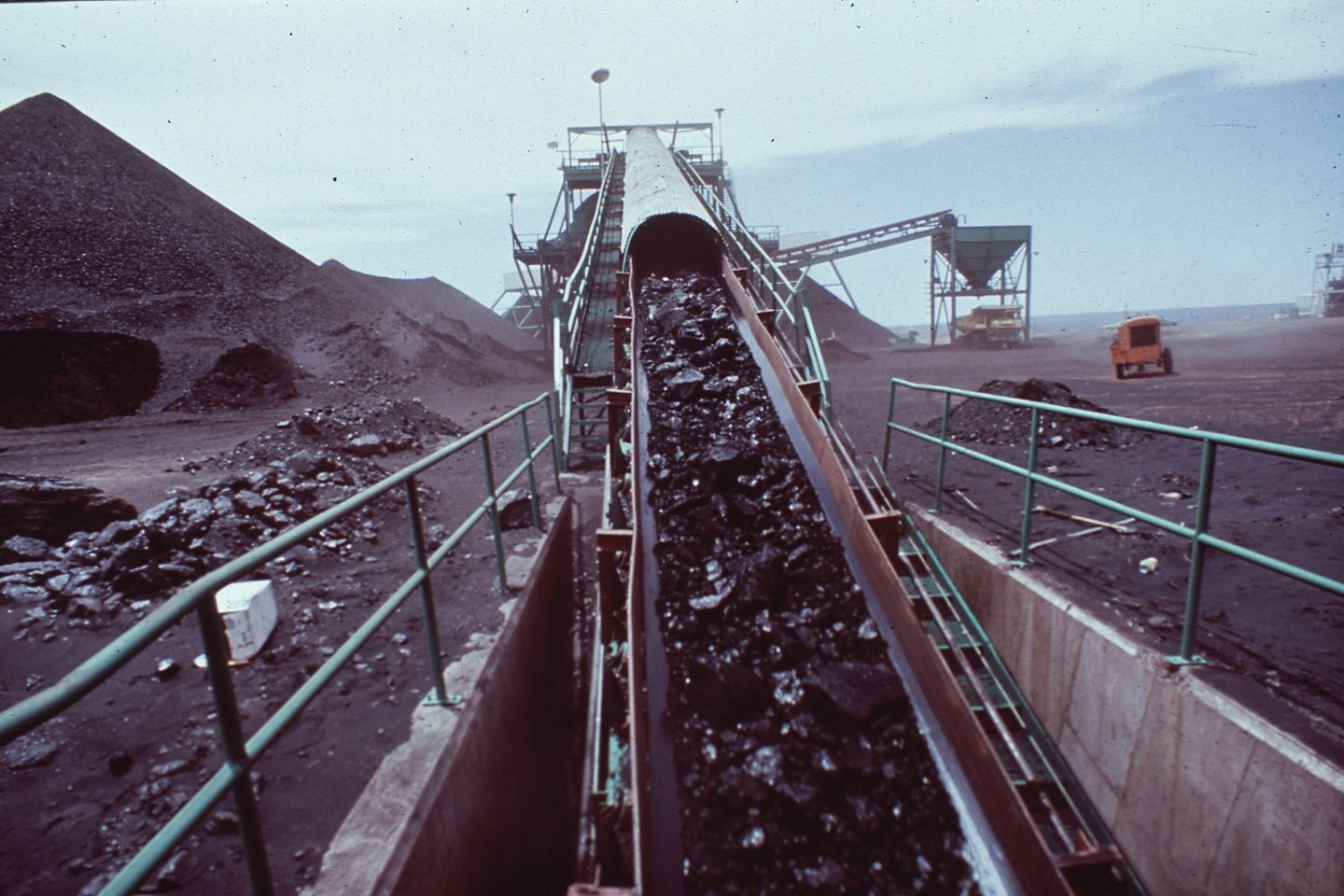
‘You have an entire culture, an entire community that is also having that same crisis’: Colorado coal town looks anxiously to the future
By Brittany Peterson, Jennifer McDermott and The Associated PressDecember 6, 2025
7 days ago

Most Popular

placeholder alt text
Economy
Tariffs are taxes and they were used to finance the federal government until the 1913 income tax. A top economist breaks it down
By Kent JonesDecember 12, 2025
1 day ago
placeholder alt text
Success
Apple cofounder Ronald Wayne sold his 10% stake for $800 in 1976—today it’d be worth up to $400 billion
By Preston ForeDecember 12, 2025
21 hours ago
placeholder alt text
Success
40% of Stanford undergrads receive disability accommodations—but it’s become a college-wide phenomenon as Gen Z try to succeed in the current climate
By Preston ForeDecember 12, 2025
20 hours ago
placeholder alt text
Success
At 18, doctors gave him three hours to live. He played video games from his hospital bed—and now, he’s built a $10 million-a-year video game studio
By Preston ForeDecember 10, 2025
3 days ago
placeholder alt text
Economy
For the first time since Trump’s tariff rollout, import tax revenue has fallen, threatening his lofty plans to slash the $38 trillion national debt
By Sasha RogelbergDecember 12, 2025
16 hours ago
placeholder alt text
Economy
The Fed just ‘Trump-proofed’ itself with a unanimous move to preempt a potential leadership shake-up
By Jason MaDecember 12, 2025
14 hours ago
Rankings
  • 100 Best Companies
  • Fortune 500
  • Global 500
  • Fortune 500 Europe
  • Most Powerful Women
  • Future 50
  • World’s Most Admired Companies
  • See All Rankings
Sections
  • Finance
  • Leadership
  • Success
  • Tech
  • Asia
  • Europe
  • Environment
  • Fortune Crypto
  • Health
  • Retail
  • Lifestyle
  • Politics
  • Newsletters
  • Magazine
  • Features
  • Commentary
  • Mpw
  • CEO Initiative
  • Conferences
  • Personal Finance
  • Education
Customer Support
  • Frequently Asked Questions
  • Customer Service Portal
  • Privacy Policy
  • Terms Of Use
  • Single Issues For Purchase
  • International Print
Commercial Services
  • Advertising
  • Fortune Brand Studio
  • Fortune Analytics
  • Fortune Conferences
  • Business Development
About Us
  • About Us
  • Editorial Calendar
  • Press Center
  • Work At Fortune
  • Diversity And Inclusion
  • Terms And Conditions
  • Site Map

© 2025 Fortune Media IP Limited. All Rights Reserved. Use of this site constitutes acceptance of our Terms of Use and Privacy Policy | CA Notice at Collection and Privacy Notice | Do Not Sell/Share My Personal Information
FORTUNE is a trademark of Fortune Media IP Limited, registered in the U.S. and other countries. FORTUNE may receive compensation for some links to products and services on this website. Offers may be subject to change without notice.