• Home
  • Latest
  • Fortune 500
  • Finance
  • Tech
  • Leadership
  • Lifestyle
  • Rankings
  • Multimedia
Environmentheat wave

Global heat waves are so bad that utilities are paying their customers to use less energy

By
Eamon Barrett
Eamon Barrett
Down Arrow Button Icon
By
Eamon Barrett
Eamon Barrett
Down Arrow Button Icon
July 15, 2022, 7:18 AM ET
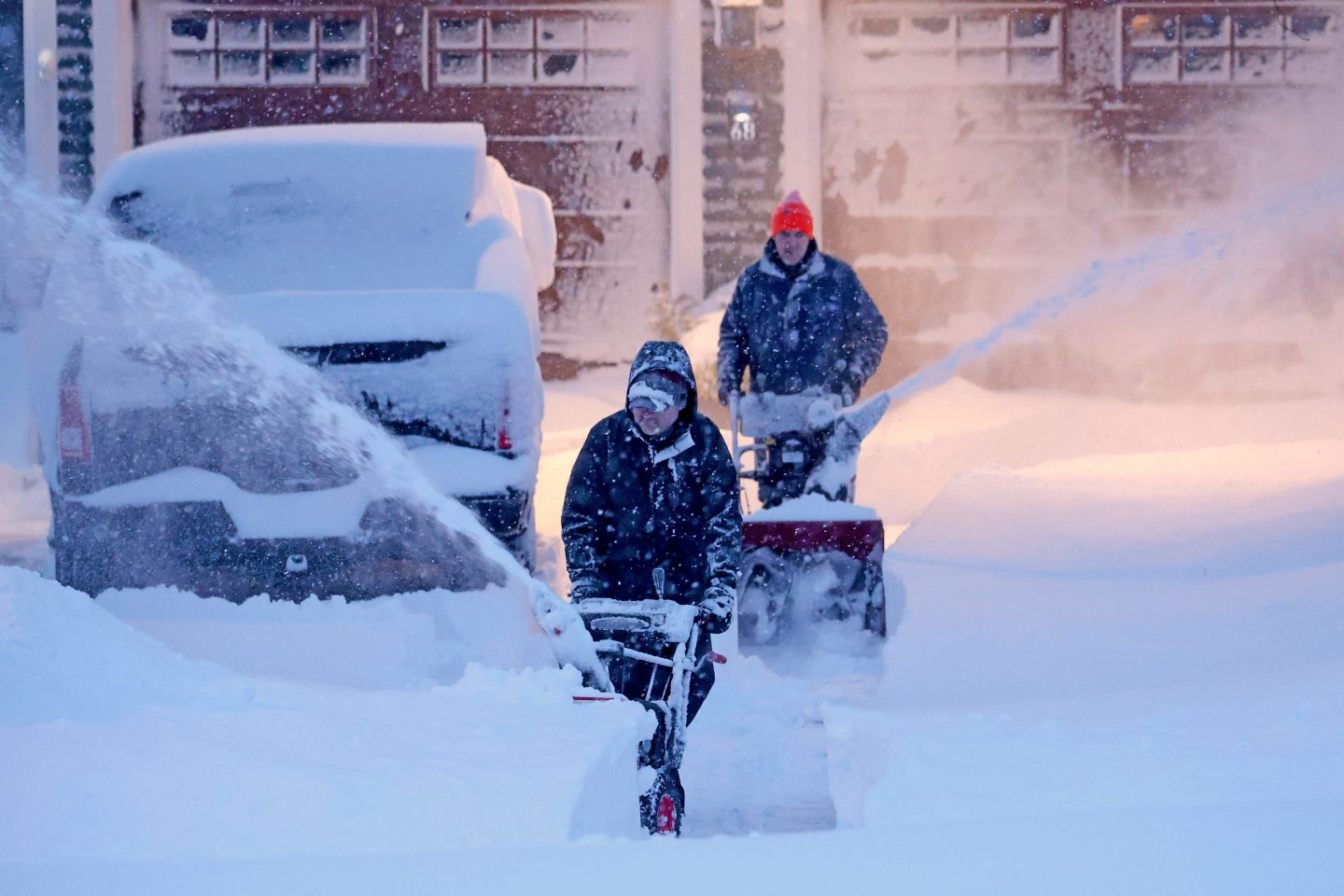
Heat waves are scorching China, Japan, the U.S., and the EU, running the risk of widespread blackouts.
Heat waves are scorching China, Japan, the U.S., and the EU, running the risk of widespread blackouts.He Penglei—China News Service/Getty Images

A scorching heat wave is blazing across China this week, delivering temperatures up to 42°C (105°F). In the southern city of Chongqing on Tuesday, tiles on a museum roof exploded in the midday heat after the sun melted the tar beneath. Meanwhile in Shanghai, where rising COVID cases this week risked another lockdown, health care workers in full-body hazmat suits have been photographed hugging blocks of ice to stay cool.

China isn’t the only country sweltering under the sun this week. Temperature records are being broken in Japan, the U.S., Australia, and across Europe too. 

The surging temperatures are causing spikes in energy demand, straining electrical grids to the limit as residents crank up the AC. And so, in order to prevent unexpected blackouts this surge could cause, utility operators across the world are turning to a desperate measure: paying their industrial customers compensation to shut down operations and go home.

Demand response

Managing an electrical grid is a delicate operation of matching supply with demand. Pumping too much electricity into a grid—where supply outstrips demand—overloads the system and causes blackouts. Providing too little electricity, on the other hand, means some customers won’t get served. 

To avoid the latter scenario, utilities are entering into “demand response agreements,” arrangements in which a utility customer agrees to reduce its own power usage—for a fee—in order to lower overall demand and free up electricity for the grid. 

Today, with climate change causing longer and fiercer heat waves more frequently, and with the shift to renewable energy reducing supply-side flexibility, utility operators are increasingly looking to demand response agreements to maintain balance in electricity networks. 

“These particular agreements are becoming more and more common, as the grid is evolving,” says Gary Lawrence, power and grid segment president at Schneider Electric. “And they’re evolving very fast in the U.S., the U.K., and Australia.”

In Hangzhou, a city south of Shanghai, textile manufacturers have begun to power down production lines to comply with a government notice to conserve energy after temperatures topped 105°F on Monday. One manufacturer told the South China Morning Post that there are “government subsidies for companies that cooperate with power restrictions” but didn’t provide details.

Some of China’s major manufacturing hubs suffered rolling blackouts last winter as a combination of high energy prices, low hydropower supply, and soaring demand for heating overloaded local grids. President Xi Jinping vowed this year to “never allow a major incident like large-scale power cuts to happen again.”

In Texas, where temperatures have hit 110°F, the Electric Reliability Council of Texas (ERCOT) has begun compensating Bitcoin miners for switching off their power-hungry rigs.

According to Lee Bratcher, president of the Texas Blockchain Council, “nearly all industrial-scale Bitcoin mining” operations in Texas had shut down their rigs as of Monday. Energy management service firm Voltus says miners can generate up to 10% of their annual revenue by providing shutdown services to the grid.

In Japan, which is experiencing its worst heat wave since 1875 with temperatures soaring above 95°F, the Tokyo Electric Power Co. (TEPCO) has agreed to subsidize manufacturers for reducing power demand so electricity can be rerouted to essential services.

In an email to Fortune, Japanese chip manufacturer Renesas said it had “entered into a ‘demand response agreement’ with TEPCO to cooperate with their energy saving measures,” meaning the company had agreed to reduce its energy consumption to increase supply on the grid. Renesas declined to provide details of the agreement.

Evolving worldwide—but lagging in Europe

According to the International Energy Agency (IEA), the volume of demand response agreements in place will need to increase 10-fold over 2020 levels to meet the net-zero carbon emissions by 2050 objective. But energy policy planners are still figuring out how to build the best incentive structures around demand response agreements so that enough industrial players sign up.

Ahead of a potentially devastating winter in Europe—where the war in Ukraine throttled an already gasping energy market—the U.K.’s National Grid is reportedly considering offering industries compensation of up to £6,000 ($7,000) per megawatt-hour saved, which is roughly seven times the amount power companies charge for the same amount used. (One megawatt-hour is roughly the amount of electricity 330 homes use in an average hour.)

One notable laggard in developing demand response systems is the EU, where temperatures this week have hit par with the 118°F heat in Death Valley.

Lawrence says many countries in the EU have regulatory frameworks that prevent (or fail to incentivize) data sharing among energy suppliers, grid operators, and end users, which is necessary for effectively managing demand response agreements. “To be frank, Europe is very, very behind the times,” he says.

Sign up for the Fortune Features email list so you don’t miss our biggest features, exclusive interviews, and investigations.

About the Author
By Eamon Barrett
LinkedIn iconTwitter icon
See full bioRight Arrow Button Icon

Latest in Environment

Finance
Lorem ipsum dolor sit amet, consectetur adipiscing elit, sed do eiusmod tempor incididunt ut labore et dolore magna aliqua. Ut enim ad minim veniam
By Fortune Editors
October 20, 2025
Finance
Lorem ipsum dolor sit amet, consectetur adipiscing elit, sed do eiusmod tempor incididunt ut labore et dolore magna aliqua. Ut enim ad minim veniam
By Fortune Editors
October 20, 2025
Finance
Lorem ipsum dolor sit amet, consectetur adipiscing elit, sed do eiusmod tempor incididunt ut labore et dolore magna aliqua. Ut enim ad minim veniam
By Fortune Editors
October 20, 2025
Finance
Lorem ipsum dolor sit amet, consectetur adipiscing elit, sed do eiusmod tempor incididunt ut labore et dolore magna aliqua. Ut enim ad minim veniam
By Fortune Editors
October 20, 2025
Finance
Lorem ipsum dolor sit amet, consectetur adipiscing elit, sed do eiusmod tempor incididunt ut labore et dolore magna aliqua. Ut enim ad minim veniam
By Fortune Editors
October 20, 2025
Finance
Lorem ipsum dolor sit amet, consectetur adipiscing elit, sed do eiusmod tempor incididunt ut labore et dolore magna aliqua. Ut enim ad minim veniam
By Fortune Editors
October 20, 2025

Most Popular

Finance
Lorem ipsum dolor sit amet, consectetur adipiscing elit, sed do eiusmod tempor incididunt ut labore et dolore magna aliqua. Ut enim ad minim veniam
By Fortune Editors
October 20, 2025
Finance
Lorem ipsum dolor sit amet, consectetur adipiscing elit, sed do eiusmod tempor incididunt ut labore et dolore magna aliqua. Ut enim ad minim veniam
By Fortune Editors
October 20, 2025
Finance
Lorem ipsum dolor sit amet, consectetur adipiscing elit, sed do eiusmod tempor incididunt ut labore et dolore magna aliqua. Ut enim ad minim veniam
By Fortune Editors
October 20, 2025
Finance
Lorem ipsum dolor sit amet, consectetur adipiscing elit, sed do eiusmod tempor incididunt ut labore et dolore magna aliqua. Ut enim ad minim veniam
By Fortune Editors
October 20, 2025
Finance
Lorem ipsum dolor sit amet, consectetur adipiscing elit, sed do eiusmod tempor incididunt ut labore et dolore magna aliqua. Ut enim ad minim veniam
By Fortune Editors
October 20, 2025
Finance
Lorem ipsum dolor sit amet, consectetur adipiscing elit, sed do eiusmod tempor incididunt ut labore et dolore magna aliqua. Ut enim ad minim veniam
By Fortune Editors
October 20, 2025
Rankings
  • 100 Best Companies
  • Fortune 500
  • Global 500
  • Fortune 500 Europe
  • Most Powerful Women
  • Future 50
  • World’s Most Admired Companies
  • See All Rankings
Sections
  • Finance
  • Leadership
  • Success
  • Tech
  • Asia
  • Europe
  • Environment
  • Fortune Crypto
  • Health
  • Retail
  • Lifestyle
  • Politics
  • Newsletters
  • Magazine
  • Features
  • Commentary
  • Mpw
  • CEO Initiative
  • Conferences
  • Personal Finance
  • Education
Customer Support
  • Frequently Asked Questions
  • Customer Service Portal
  • Privacy Policy
  • Terms Of Use
  • Single Issues For Purchase
  • International Print
Commercial Services
  • Advertising
  • Fortune Brand Studio
  • Fortune Analytics
  • Fortune Conferences
  • Business Development
About Us
  • About Us
  • Editorial Calendar
  • Press Center
  • Work At Fortune
  • Diversity And Inclusion
  • Terms And Conditions
  • Site Map

Latest in Environment

Elicker
LawCrime
New Haven mayor says police chief admitted to stealing money from department, accepts retirement
By The Associated PressJanuary 6, 2026
2 days ago
trump
PoliticsRare Earth Metal
Why Greenland appeals to Trump’s real-estate investor heart: location, location, location
By Danica Kirka and The Associated PressJanuary 6, 2026
2 days ago
data center
AIData centers
Angry town halls nationwide find a new villain: the data center driving up your electricity bill while fueling job-killing AI
By Marc Levy and The Associated PressJanuary 3, 2026
5 days ago
EnvironmentWhite House
‘I want nice, thin blood pouring through my heart'”: Trump talks health concerns, saying he takes more aspirin than recommended
By Michelle L. Price and The Associated PressJanuary 2, 2026
6 days ago
arctic
Environmentclimate
‘I opened her door and the wind caught me, and I went flying’: The U.S. Arctic air surge is sweeping northerners off their feet
By Holly Ramer and The Associated PressDecember 30, 2025
9 days ago
Tatiana
PoliticsObituary
Tatiana Schlossberg, granddaughter of JFK and cousin of Health Secretary RFK Jr., dies of cancer at 35
By Nick LichtenbergDecember 30, 2025
9 days ago

Most Popular

placeholder alt text
Law
Amazon is cutting checks to millions of customers as part of a $2.5 billion FTC settlement. Here's who qualifies and how to get paid
By Sydney LakeJanuary 6, 2026
2 days ago
placeholder alt text
Future of Work
AI layoffs are looking more and more like corporate fiction that's masking a darker reality, Oxford Economics suggests
By Nick LichtenbergJanuary 7, 2026
1 day ago
placeholder alt text
Economy
Mark Cuban on the $38 trillion national debt and the absurdity of U.S. healthcare: we wouldn't pay for potato chips like this
By Nick LichtenbergJanuary 6, 2026
2 days ago
placeholder alt text
Future of Work
'Employers are increasingly turning to degree and GPA' in hiring: Recruiters retreat from ‘talent is everywhere,’ double down on top colleges
By Jake AngeloJanuary 6, 2026
2 days ago
placeholder alt text
Success
MacKenzie Scott sends millions to nonprofit that supports anti-Israel and pro-Muslim groups, two of which are facing federal probes
By Sydney LakeJanuary 6, 2026
2 days ago
placeholder alt text
Personal Finance
Current price of silver as of Wednesday, January 7, 2026
By Joseph HostetlerJanuary 7, 2026
1 day ago

© 2025 Fortune Media IP Limited. All Rights Reserved. Use of this site constitutes acceptance of our Terms of Use and Privacy Policy | CA Notice at Collection and Privacy Notice | Do Not Sell/Share My Personal Information
FORTUNE is a trademark of Fortune Media IP Limited, registered in the U.S. and other countries. FORTUNE may receive compensation for some links to products and services on this website. Offers may be subject to change without notice.