• Home
  • Latest
  • Fortune 500
  • Finance
  • Tech
  • Leadership
  • Lifestyle
  • Rankings
  • Multimedia
Japan

Japan’s assassinated former prime minister Abe taught U.S. central bankers about stimulus checks and tried to solve the country’s ‘Lost Decades’

By
Colin Lodewick
Colin Lodewick
Down Arrow Button Icon
By
Colin Lodewick
Colin Lodewick
Down Arrow Button Icon
July 8, 2022, 3:52 PM ET
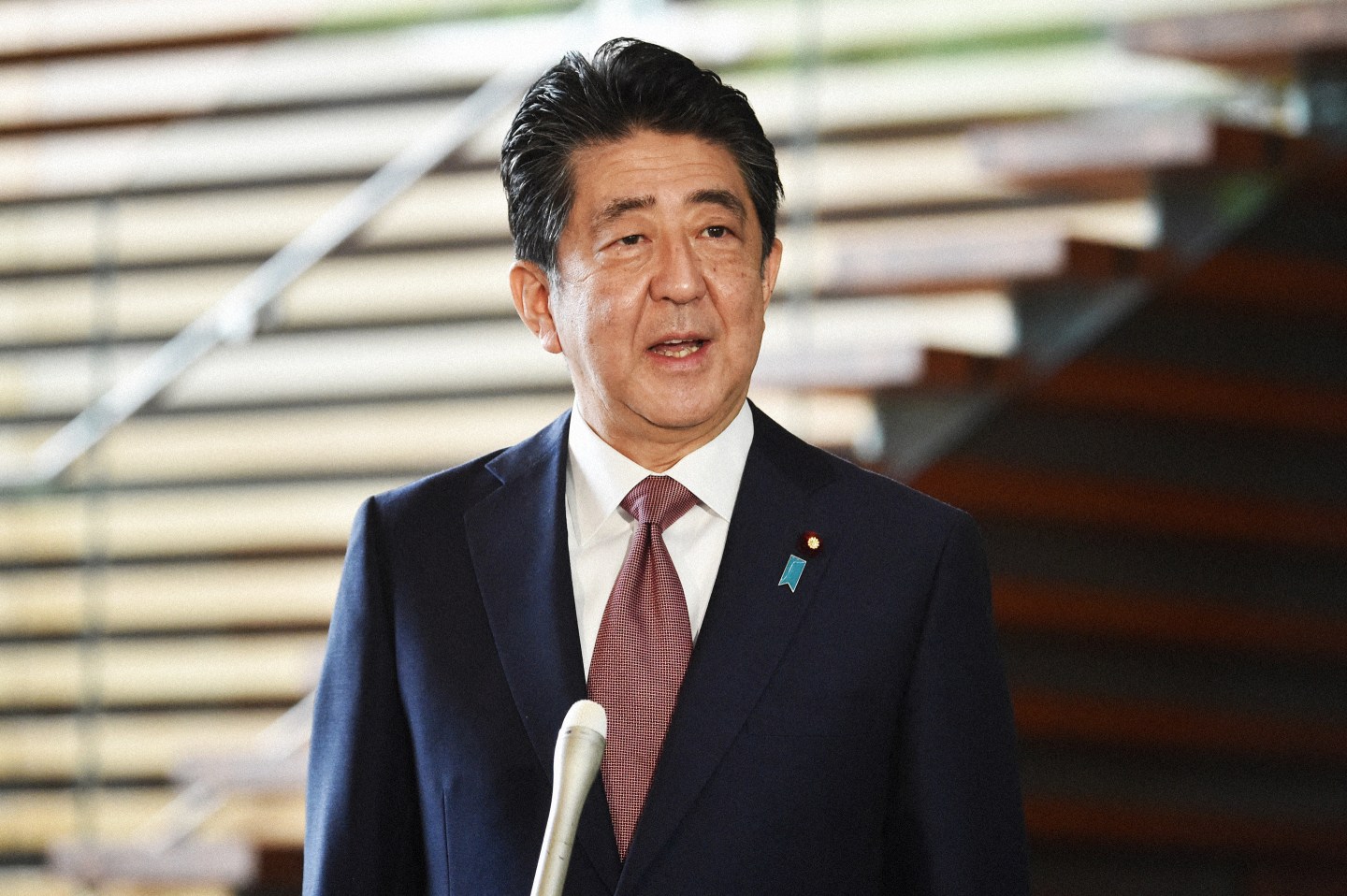
Shinzo Abe standing in front of a microphone speaking to the media.
Then Japanese Prime Minister Shinzo Abe spoke to the media at his office in Tokyo, Sept. 16, 2020. Kazuhiro Nogi—AFP/Getty Images

Japan’s former Prime Minister Shinzo Abe, assassinated on Friday, left a major mark on the country after spending years trying to craft its exit from decades of economic stasis.

Abe first assumed the role of prime minister in 2007, though he left after a year owing to complications with his health. He returned in 2012, serving until 2020 and becoming the country’s longest-serving prime minister. 

It was during his second term that he implemented the series of economic and foreign policy measures that would come to define his political legacy. 

“Abe’s economic programs, so-called Abenomics, tried to revive the Japanese economy, which had been relatively stagnant,” Joseph Nye, former President Bill Clinton’s assistant secretary of defense and former dean of Harvard’s Kennedy School, told Fortune. 

Prior to Abe becoming prime minister, Japan had endured several decades of sluggish economic growth—a period popularly known as the “Lost Decades.” The era began in 1991, when an economic bubble burst following years of inflated asset prices ranging from real estate to stocks. 

Abe’s economic policy agenda was composed of a “three arrows” approach to lead Japan out of its stagnation, consisting of fiscal stimulus, loose monetary policy by the Bank of Japan (BoJ), and structural reform addressing issues like a declining population and less competitive industries.

“Other prime ministers also tried, but Abe was a bit more successful,” says Nye. “It still didn’t restore Japan’s prior growth rate, but that was not in the cards anyway.” 

Throughout the 1980s, Japan led the world in terms of GDP growth, outpacing the U.S. Though Abe’s efforts were not totally successful, Nye says he did restore some dynamism to the country’s economy.

Of the three arrows, Abe’s monetary stance has been the most long-lasting, with the BoJ maintaining interest rates near 0.0% today even as central banks of other countries raise theirs to combat global inflation. The BoJ had enacted loose monetary policy for years prior to Abe taking office, in fact, by focusing on quantitative easing—the process by which a central bank purchases government bonds to inject liquidity into the market.

Abe’s fiscal policy also proved influential, however, especially as governments worldwide instituted major stimulus packages at the start of the pandemic. 

“After the initial success, over the longer term, it wasn’t so clear that Abe really had gotten Japan out of its economic doldrums,” says Steven Vogel, chair of the political economy program and professor of Asian studies and political science at the University of California, Berkeley. “It was his foreign policies that had more impact.”

Nye agrees. “His economic policies are important,” he says. “But his security policies are equally as important.” 

While in office, Abe worked to strengthen U.S.-Japan relations and expanded the country’s military and national security powers, which until then had been seriously limited by the country’s postwar constitution. He established the country’s National Security Council in 2013.

Adopted in 1946 under the auspices of Allied powers, Japan’s constitution includes an article through which the Japanese people “forever renounce war as a sovereign right” and limits retention of armed forces. Abe worked to amend that article, but barring public support, opted instead to reinterpret it in order to increase the country’s capacity for self-defense. 

“His interpretations eventually were accepted by the Diet and allowed the Japanese to cooperate a lot more closely with the U.S. in terms of planning for self-defense and the defense of East Asia,” says Nye. 

To do so, Abe needed to balance both domestic opinion and anxieties of other East Asian countries, assuring them that he was only interested in an obligation to help strengthen American defense measures.

“He succeeded in threading that needle,” says Nye. “I think that’s going to be what he’ll be known for in the history books 10 to 15 years from now.”

Sign up for the Fortune Features email list so you don’t miss our biggest features, exclusive interviews, and investigations.

About the Author
By Colin Lodewick
See full bioRight Arrow Button Icon

Latest in

Disney CEO Bob Iger in Los Angeles, California on November 20, 2025.(Photo: Unique Nicole/AFP/Getty Images)
NewslettersFortune Tech
Disney and OpenAI do a deal
By Andrew NuscaDecember 12, 2025
37 minutes ago
Trump
EconomyTariffs and trade
Tariffs are taxes and they were used to finance the federal government until the 1913 income tax. A top economist breaks it down
By Kent JonesDecember 12, 2025
1 hour ago
Former Meta COO Sheryl Sandberg
SuccessWomen
Sheryl Sandberg breaks down why it’s a troubling time for women in the workplace right now
By Emma BurleighDecember 12, 2025
1 hour ago
CommentaryLeadership
Leading the agentic enterprise: What the next wave of AI demands from CEOs
By François Candelon, Amartya Das, Sesh Iyer, Shervin Khodabandeh and Sam RansbothamDecember 12, 2025
2 hours ago
Economyeconomic outlook
Asia will get steady growth next year, defying global headwinds, says Mastercard’s chief APAC economist
By Angelica AngDecember 12, 2025
2 hours ago
NewslettersCEO Daily
Honest Company CEO Carla Vernón on being mentored by Walmart’s Doug McMillon
By Diane BradyDecember 12, 2025
2 hours ago

Most Popular

placeholder alt text
Success
At 18, doctors gave him three hours to live. He played video games from his hospital bed—and now, he’s built a $10 million-a-year video game studio
By Preston ForeDecember 10, 2025
2 days ago
placeholder alt text
Investing
Baby boomers have now 'gobbled up' nearly one-third of America's wealth share, and they're leaving Gen Z and millennials behind
By Sasha RogelbergDecember 8, 2025
4 days ago
placeholder alt text
Success
Palantir cofounder calls elite college undergrads a ‘loser generation’ as data reveals rise in students seeking support for disabilities, like ADHD
By Preston ForeDecember 11, 2025
20 hours ago
placeholder alt text
Economy
‘We have not seen this rosy picture’: ADP’s chief economist warns the real economy is pretty different from Wall Street’s bullish outlook
By Eleanor PringleDecember 11, 2025
1 day ago
placeholder alt text
Uncategorized
Transforming customer support through intelligent AI operations
By Lauren ChomiukNovember 26, 2025
16 days ago
placeholder alt text
Economy
‘Be careful what you wish for’: Top economist warns any additional interest rate cuts after today would signal the economy is slipping into danger
By Eva RoytburgDecember 10, 2025
2 days ago
Rankings
  • 100 Best Companies
  • Fortune 500
  • Global 500
  • Fortune 500 Europe
  • Most Powerful Women
  • Future 50
  • World’s Most Admired Companies
  • See All Rankings
Sections
  • Finance
  • Leadership
  • Success
  • Tech
  • Asia
  • Europe
  • Environment
  • Fortune Crypto
  • Health
  • Retail
  • Lifestyle
  • Politics
  • Newsletters
  • Magazine
  • Features
  • Commentary
  • Mpw
  • CEO Initiative
  • Conferences
  • Personal Finance
  • Education
Customer Support
  • Frequently Asked Questions
  • Customer Service Portal
  • Privacy Policy
  • Terms Of Use
  • Single Issues For Purchase
  • International Print
Commercial Services
  • Advertising
  • Fortune Brand Studio
  • Fortune Analytics
  • Fortune Conferences
  • Business Development
About Us
  • About Us
  • Editorial Calendar
  • Press Center
  • Work At Fortune
  • Diversity And Inclusion
  • Terms And Conditions
  • Site Map

© 2025 Fortune Media IP Limited. All Rights Reserved. Use of this site constitutes acceptance of our Terms of Use and Privacy Policy | CA Notice at Collection and Privacy Notice | Do Not Sell/Share My Personal Information
FORTUNE is a trademark of Fortune Media IP Limited, registered in the U.S. and other countries. FORTUNE may receive compensation for some links to products and services on this website. Offers may be subject to change without notice.