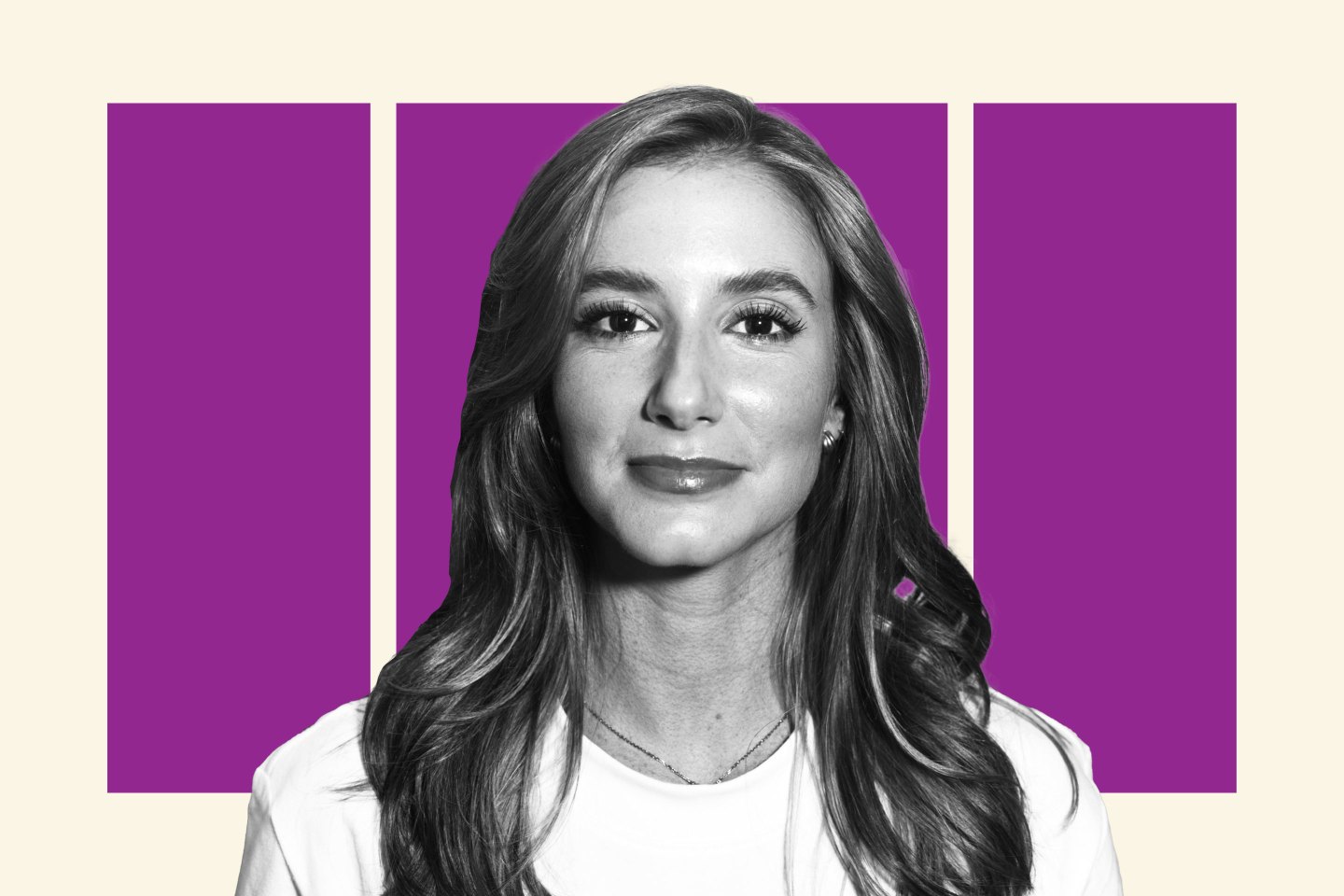
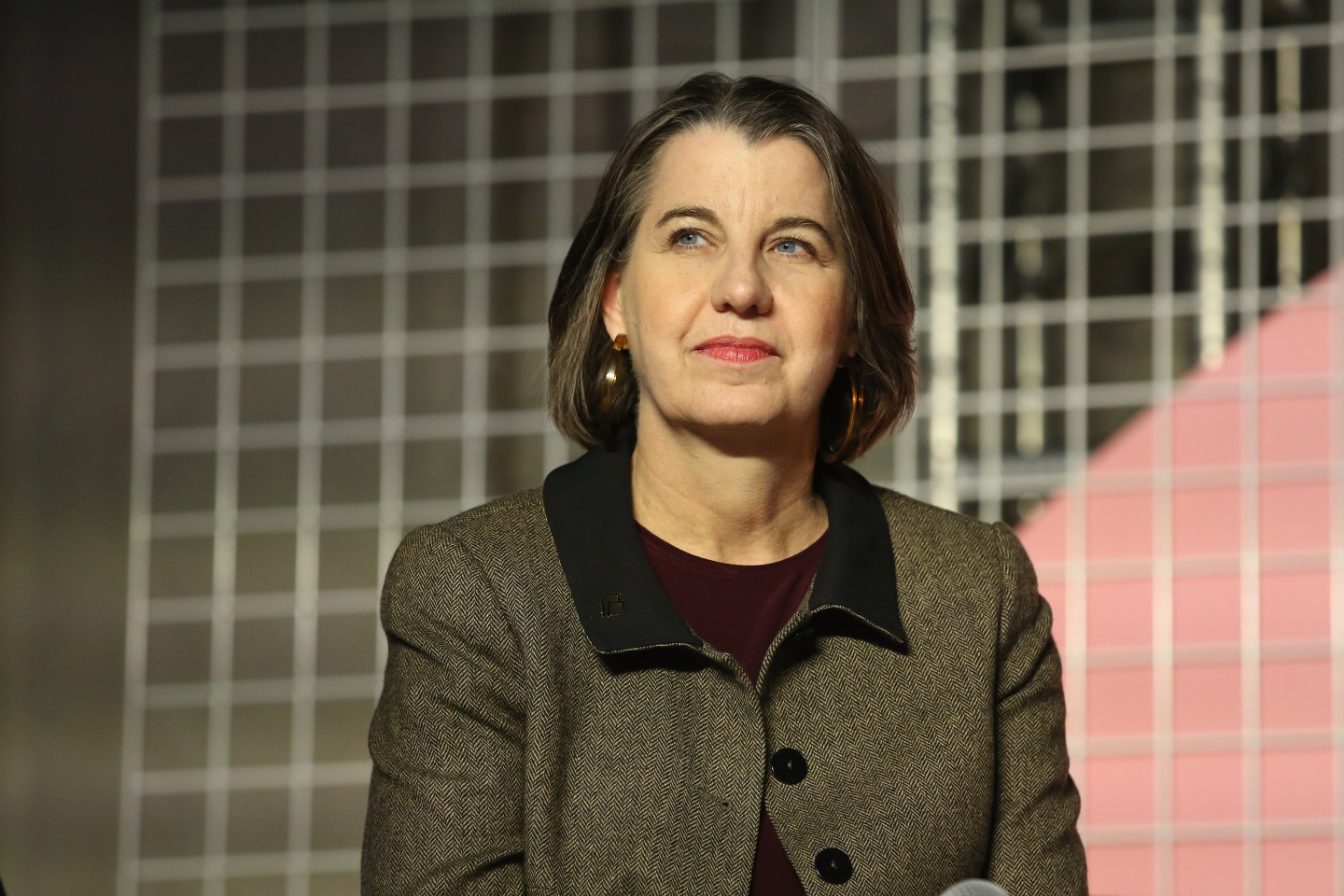
Dawn Laguens, the global strategy and innovation chief for Planned Parenthood, is furious.
I asked her to describe how she felt on the day. “Fury,” she tells me, describing the moment Roe v. Wade was overturned. “Because I knew what was happening to real women on the ground that moment, like people in waiting rooms, people in procedures. People who were sitting there scared and fearful and their government has just turned their back on them.”
Laguens, who has been with Planned Parenthood in various capacities for 25 years, has a message for employers: A wave is coming. “We’re hearing from so many employees, so many employee resource group leaders who are saying, ‘What do we need to do? What do we need to ask? Who do we ask? How do we ask it?’” she says.
The loss of federal abortion protection comes at a particularly difficult time for working women, families, and anyone who is facing an unwelcome pregnancy for any reason. Former Fortune editorial fellow Amiah Taylor reported on the anticipated fallout earlier this month.
“If we were to restrict women’s access to abortion, that means going back potentially decades to when we saw sharp declines in women’s labor force participation after giving birth to children,” Yana van der Meulen Rodgers, the faculty director for the Center for Women and Work at Rutgers University told her recently. “So I think this could mean a step back by 50 years, and diminishing all the progress women have made since they’ve had access to safe abortion services on a national level, starting in 1973.”
Losing the ability to choose when and if to have children—or managing the health risks associated with pregnancy—could have a devastating effect on certain populations.
“We already know that the people most impacted by a lack of access to abortion and all kinds of other health services, sexual and reproductive health, are Black, Brown, and other women of color, along with low-income people,” says Laguens. For anyone with inadequate health insurance, like those living in states that didn’t expand ACA coverage, the situation is particularly grim. “Black maternal mortality rate is already three times that of white women,” she says. “I’m afraid it’s all going to get worse.”
Losing abortion access will also impact workforce diversity.
Black women typically have the highest workforce participation in the U.S., according to the U.S. Department of Labor. “Black women are attractive job candidates because they are among the most educated groups in the country, but they also have the most to lose from abortion bans,” explains Taylor. The unintended pregnancy rate is 2.5 times higher for Black women, but wage disparities make it unlikely that they will be able to afford time off and inter-state travel to get the care they need. “Restricting access to abortion care could mean that women of color exit the labor force for good,” she says.
The pandemic has already pushed many working women to their limits.
As C. Nicole Mason, president and CEO of The Institute for Women’s Policy Research (IWPR), explains, “there are still 2 million fewer women in the workforce than two years ago at the start of the pandemic — caretaking responsibilities are a big part of that.” Losing Roe will make it even harder for women to return to the workforce, and that’s everybody’s problem.
According to IWPR research, state-level abortion restrictions already cost state economies $105 billion per year by reducing labor force participation. But removing restrictions would allow an additional 505,000 women (aged 15 to 44) to enter the labor force and earn about $3 billion annually. Currently-employed women would see $101.8 billion in higher annual earnings, with Black and Hispanic women seeing the biggest boost in workforce participation rates.
Employers need to weigh in, says Laguens. Planned Parenthood is hard at work on an upcoming campaign called Get Off The Fence. It’s designed to encourage employees to ask the right questions of their employers and will provide a public online dashboard to capture the answers.
There are three questions that all employees should be asking their employers, says Laguens.
“The first is, ‘what is the corporate abortion policy for employees and dependents?’” The second speaks more broadly to stakeholders. “What are you doing to support communities and consumers who believe in your brand and need abortion?” And finally, she says, ask about how they’re making their stance public. “We’re recommending employees also ask, ‘has our company signed the Don’t Ban Equality Pledge and if so, how are we promoting that?’”
The pledge was created in 2019 to encourage companies to stand up to state-based restrictions to abortion access. With a potential federal ban looming, care options could disappear entirely.
“There have been innumerable studies that have shown the economic gains that women have made as a result of access to both birth control and abortion, and that access to comprehensive sexual reproductive health allows for full participation in the workforce,” says Laguens. “This matters to both workers and to business.”
My colleague Emma Hinchliffe will be picking up the reporting on this campaign and documenting how employees are responding to the new abortion landscape in her essential newsletter, The Broadsheet. Please subscribe.
Ellen McGirt
@ellmcgirt
Ellen.McGirt@fortune.com
This edition of raceAhead was edited by Ashley Sylla.
On point
Join me for a look at what smart, high-performing organizations are doing to attract and retain talent. I’ll be joining CEO and author of Culture Renovation Kevin Oakes to discuss key findings from the new i4cp/Fortune study, The Talent Imperative. You’ll not be surprised to learn that flexibility, culture, and targeted benefits are winning the day when it comes to keeping employees happy and KPIs humming. The hour-long conversation takes place tomorrow, June 29, 2022 11:00 AM in Eastern Time. Register below.
The Talent Imperative with I4cp/Fortune
Victoria’s Secret pledges to increase the pool of Black suppliers The goal is to increase its supplier networks to include 15% Black-owned businesses and brands, a significant increase from its current level of less than 2%. The company is working with the Fifteen Percent Pledge organization to lay the groundwork for success. Find a Black-owned brand here.
Bloomberg
Diversifying Big Book The publishing industry has always been primarily white. But a still relatively new push to diversify ranks has already born fruit. This profile of Lisa Lucas, the first Black publisher in Pantheon’s 80-year history, tells the story. “I was used to being one of very few people of color in the room, but I had rarely had the experience of being the only one in certain rooms until I worked in publishing,” she said. Now? A new story begins.
New York Times
The simple joys of nature should be available to everyone In this poignant op-ed, writer and climber Michael Levy advocates for equitable access to the great outdoors. It turns out, a new online reservation system instituted by the National Park system for federally managed campgrounds has not made it easier for traditionally marginalized park visitors to plan a trip. In fact, he says, researchers from the University of Montana concluded that “online reservation systems present the unintended consequence of excluding low-income, and perhaps nonwhite, would-be campers.”
New York Times
On background
Abortion wasn’t the religious right’s catalyzing issue In fact, it was segregation that created the coalition that is shaping political life in the U.S. and beyond. “[I]t wasn’t until 1979—a full six years after Roe—that evangelical leaders, at the behest of conservative activist Paul Weyrich, seized on abortion not for moral reasons, but as a rallying cry to deny President Jimmy Carter a second term,” says author and Dartmouth professor Randall Ballmer. “Why? Because the anti-abortion crusade was more palatable than the religious right’s real motive: protecting segregated schools.” At issue was Green v. Kennedy, a 1970 decision that ended the tax-exempt status of private Christian schools known as “segregation academies,” and that continued to accept only white students in defiance of Brown v. Board of Education. Oh! And some remain open. And school segregation is getting worse.
Politico
Summer reading list
We’re already getting wonderful recommendations for our crowd-sourced summer reading list. As a reminder, I’m looking for fiction works, from any era or style, to give our imaginations a boost and offer a legitimate break from the news of the day. And I’m looking for one of two things.
- A book that helped you feel seen in a particularly powerful way.
- Alternatively, a book written by someone very different from you which has inspired you, or helped you better understand the lived experience of others.
My pick is The Book of Form and Emptiness, the glorious fourth novel by Ruth Ozeki, a Canadian-American Soto Zen priest who in an earlier life was an art director on low-budget horror films. That checks the “different from me” box in several delightful ways.
The novel recently won the Women’s Prize for Fiction, and deservedly so—it is an original and inspiring story of love, family, grief, and the power of books, elevated by Buddhist ideas. It follows the story of a 13-year-old boy who begins to hear the voices of the objects around him after the tragic death of his father. I loved it from the very first word.
You can use this short form to submit your recommendations.
Parting words
The whole trend of Scriptural teaching is toward racial understanding. Many use the Scriptures that were applied to Israel. It is true that God called Israel to be unique among the nations and told them to separate themselves from the evil nations round about them. But the white race cannot possibly claim to be the chosen race nor can the white race take for themselves promises that were applied to ancient Israel. . . Jim Crow must go. It is absolutely ridiculous to refuse food or a night’s lodging to a man on the basis of skin color. . . Modern communications and travel have made the entire world a neighborhood. Who is our neighbor? Jesus gave us the answer in the parable of the Good Samaritan, and yet the Samaritan showed who his neighbor was by helping a person of another race.
—Billy Graham, April 7, 1960, in response to the segregationist sentiments in the evangelical community
This is the web version of raceAhead, Fortune's daily newsletter on race, culture, and inclusive leadership. To get it delivered daily to your inbox, sign up here.