• Home
  • Latest
  • Fortune 500
  • Finance
  • Tech
  • Leadership
  • Lifestyle
  • Rankings
  • Multimedia
China

The U.S. enacted 2 new laws on trade with China this week that could increase strain on global supply chains

Nicholas Gordon
By
Nicholas Gordon
Nicholas Gordon
Asia Editor
Down Arrow Button Icon
Nicholas Gordon
By
Nicholas Gordon
Nicholas Gordon
Asia Editor
Down Arrow Button Icon
June 21, 2022, 6:05 AM ET

Global supply chains have yet to recover from the onset of the COVID pandemic, which caused massive delays and backlogs at ports as vital workers were stuck in lockdowns, quarantine, or hospitals. U.S. docks were among the worst hit, as the work-from-home trend fueled demand for imports, causing unprecedented logjams at West Coast ports.

According to the World Bank, ports on the U.S. West Coast remain the world’s least efficient. In the first week of 2022, a worker shortage coupled with increased shipments from China has pushed berth times at major ports on the West Coast to an average 10.9 days—twice the length of time ships spent waiting in dock during 2021.

Now two new policies implemented by the Biden administration within the past week will likely introduce more strain on domestic supply chains, as the White House moves to rewrite its trade relationship with China.

Forced labor

The Uyghur Forced Labor Prevention Act will go into effect this Tuesday, compelling U.S. importers to prove their China-sourced goods are free of forced labor tied to China’s Xinjiang province. Widespread accusations that Beijing has persecuted members of Xinjiang’s Uyghur minority population, forcing them to work in factories and fields, prompted Congress to pass the law near-unanimously in 2021. Beijing has denied the allegations.

The new law “requires companies to know where their goods are made down to the raw materials and verify it.” Laura Murphy, professor of human rights at Sheffield Hallam University, told Fortune. But being able to prove that a particular import contains no products from Xinjiang may be difficult for some companies, owing to the complexity of their supply chains and the difficulty of conducting independent audits in China.

Experts expect the new law to disrupt shipping between China and the U.S., at least in the short term, as customs officials look to seize shipments that violate the new law.

“If you’re wearing a shirt that’s made in China, or have a computer [with parts] made in China…you may see these goods inspected and seized in the near future,” Brandon Daniels, CEO of supply-chain platform Exiger, told Fortune.

Empty containers

Last Thursday, President Biden signed the Ocean Shipping Reform Act into law, days after Congress passed the bill with bipartisan support. Both Congress and the White House framed the law, which increases regulator oversight on shipping fees and cargo manifests, as an effort to relieve inflation and the supply-chain crisis.

But the Reform Act also targets one particular bugbear for the U.S.—container ships returning to China carrying empty containers instead of loaded up with American goods.

Shipping rates surged during the pandemic, in part as a result of the U.S. work-from-home drive ramped up demand for personal electronics. Shippers realized that returning from the U.S. to China empty-handed and quickly loading up on U.S.-bound imports for a second journey was more profitable than taking time to onboard American exports to China.

A May analysis from maritime research firm Sea-Intelligence found that so-called backhaul shipping—carrying goods from the U.S. to Asia—only made up 12% of the overall roundtrip rate charged by freighters, meaning shippers generated much less revenue carrying American exports.

A MarketWatch investigation in December 2021 found that 59% of outbound containers from the U.S.’s nine largest ports were empty in the first 10 months of the year. U.S. agricultural exports, like soybean, suffered. A 2021 survey of agricultural exporters estimated that 22% of U.S. agriculture exports were lost owing to a lack of export capacity.

The Reform Act would bar ocean carriers from “unreasonably refus[ing] cargo space accommodations when available, or resort[ing] to other unfair or unjustly discriminatory methods” (though it is still unclear what that would mean in practice), and would require shippers to tell the Federal Maritime Commission, which governs shipping into and out of the U.S., how many empty containers they carry on their vessels.

But pushing ships to carry more U.S. exports could have knock-on effects on the rest of the supply chain.

“Forcing the shipping lines to take cargo that they wouldn’t in a free market is not going to make the system move more smoothly,” says Alan Murphy, chief executive of industry analysts Sea-Intelligence. Under the law, ships might have to load up with exports before exiting U.S. ports, which will increase the workload at what are already the world’s least efficient ports.

Normally having the difference between a full or empty shipping container wouldn’t affect transit or delivery times, Murphy says. “Except right now, the system is stressed to the very edge.”

Sign up for the Fortune Features email list so you don’t miss our biggest features, exclusive interviews, and investigations.

About the Author
Nicholas Gordon
By Nicholas GordonAsia Editor
LinkedIn iconTwitter icon

Nicholas Gordon is an Asia editor based in Hong Kong, where he helps to drive Fortune’s coverage of Asian business and economics news.

See full bioRight Arrow Button Icon

Latest in

Finance
Lorem ipsum dolor sit amet, consectetur adipiscing elit, sed do eiusmod tempor incididunt ut labore et dolore magna aliqua. Ut enim ad minim veniam
By Fortune Editors
October 20, 2025
Finance
Lorem ipsum dolor sit amet, consectetur adipiscing elit, sed do eiusmod tempor incididunt ut labore et dolore magna aliqua. Ut enim ad minim veniam
By Fortune Editors
October 20, 2025
Finance
Lorem ipsum dolor sit amet, consectetur adipiscing elit, sed do eiusmod tempor incididunt ut labore et dolore magna aliqua. Ut enim ad minim veniam
By Fortune Editors
October 20, 2025
Finance
Lorem ipsum dolor sit amet, consectetur adipiscing elit, sed do eiusmod tempor incididunt ut labore et dolore magna aliqua. Ut enim ad minim veniam
By Fortune Editors
October 20, 2025
Finance
Lorem ipsum dolor sit amet, consectetur adipiscing elit, sed do eiusmod tempor incididunt ut labore et dolore magna aliqua. Ut enim ad minim veniam
By Fortune Editors
October 20, 2025
Finance
Lorem ipsum dolor sit amet, consectetur adipiscing elit, sed do eiusmod tempor incididunt ut labore et dolore magna aliqua. Ut enim ad minim veniam
By Fortune Editors
October 20, 2025

Most Popular

Finance
Lorem ipsum dolor sit amet, consectetur adipiscing elit, sed do eiusmod tempor incididunt ut labore et dolore magna aliqua. Ut enim ad minim veniam
By Fortune Editors
October 20, 2025
Finance
Lorem ipsum dolor sit amet, consectetur adipiscing elit, sed do eiusmod tempor incididunt ut labore et dolore magna aliqua. Ut enim ad minim veniam
By Fortune Editors
October 20, 2025
Finance
Lorem ipsum dolor sit amet, consectetur adipiscing elit, sed do eiusmod tempor incididunt ut labore et dolore magna aliqua. Ut enim ad minim veniam
By Fortune Editors
October 20, 2025
Finance
Lorem ipsum dolor sit amet, consectetur adipiscing elit, sed do eiusmod tempor incididunt ut labore et dolore magna aliqua. Ut enim ad minim veniam
By Fortune Editors
October 20, 2025
Finance
Lorem ipsum dolor sit amet, consectetur adipiscing elit, sed do eiusmod tempor incididunt ut labore et dolore magna aliqua. Ut enim ad minim veniam
By Fortune Editors
October 20, 2025
Finance
Lorem ipsum dolor sit amet, consectetur adipiscing elit, sed do eiusmod tempor incididunt ut labore et dolore magna aliqua. Ut enim ad minim veniam
By Fortune Editors
October 20, 2025
Fortune Secondary Logo
Rankings
  • 100 Best Companies
  • Fortune 500
  • Global 500
  • Fortune 500 Europe
  • Most Powerful Women
  • Future 50
  • World’s Most Admired Companies
  • See All Rankings
Sections
  • Finance
  • Fortune Crypto
  • Features
  • Leadership
  • Health
  • Commentary
  • Success
  • Retail
  • Mpw
  • Tech
  • Lifestyle
  • CEO Initiative
  • Asia
  • Politics
  • Conferences
  • Europe
  • Newsletters
  • Personal Finance
  • Environment
  • Magazine
  • Education
Customer Support
  • Frequently Asked Questions
  • Customer Service Portal
  • Privacy Policy
  • Terms Of Use
  • Single Issues For Purchase
  • International Print
Commercial Services
  • Advertising
  • Fortune Brand Studio
  • Fortune Analytics
  • Fortune Conferences
  • Business Development
  • Group Subscriptions
About Us
  • About Us
  • Editorial Calendar
  • Press Center
  • Work At Fortune
  • Diversity And Inclusion
  • Terms And Conditions
  • Site Map
Fortune Secondary Logo
  • About Us
  • Editorial Calendar
  • Press Center
  • Work At Fortune
  • Diversity And Inclusion
  • Terms And Conditions
  • Site Map
  • Facebook icon
  • Twitter icon
  • LinkedIn icon
  • Instagram icon
  • Pinterest icon

Latest in

Man with facial hair looking to the side wearing a suit and tie.
InvestingLarry Ellison
Oracle is under pressure from more than $100 billion in debt and massive layoffs as it pushes ahead with Larry Ellison’s 3-step transformation 
By Amanda GerutMarch 9, 2026
2 hours ago
EnergyIran
Stocks stage massive upside reversal as oil plunges after Trump says Iran war could be over soon
By Eva RoytburgMarch 9, 2026
2 hours ago
EnergyIran
Trump says war to end ‘very soon,’ floats removing oil sanctions
By Kate Sullivan, Josh Wingrove and BloombergMarch 9, 2026
2 hours ago
trump
CommentaryOil
Something will cause inflation to go up this year, but it’s not oil
By Steve H. Hanke and John GreenwoodMarch 9, 2026
6 hours ago
AIbehavioral economics
Nobel laureate Joseph Stiglitz warns AI’s hunger for internet comments could degrade the world’s ‘information ecosystem’
By Catherina GioinoMarch 9, 2026
6 hours ago
A woman in a red coat holds up a sign that says, “Shouldn’t hurt to be a nurse.”
EconomyLabor
Health care has been propping up a shaky labor market. For the first time in over four years, the sector shed thousands of jobs
By Sasha RogelbergMarch 9, 2026
6 hours ago

Most Popular

placeholder alt text
Real Estate
Billionaires Elon Musk and Mark Zuckerberg used mortgages to buy multimillion-dollar mansions. Here’s why that’s a savvy financial decision
By Sydney LakeMarch 9, 2026
11 hours ago
placeholder alt text
Success
Gen Z graduates who majored in ‘AI-proof’ careers like pharmacy, biology, and education are making less than $50,000 after graduation
By Emma BurleighMarch 6, 2026
3 days ago
placeholder alt text
AI
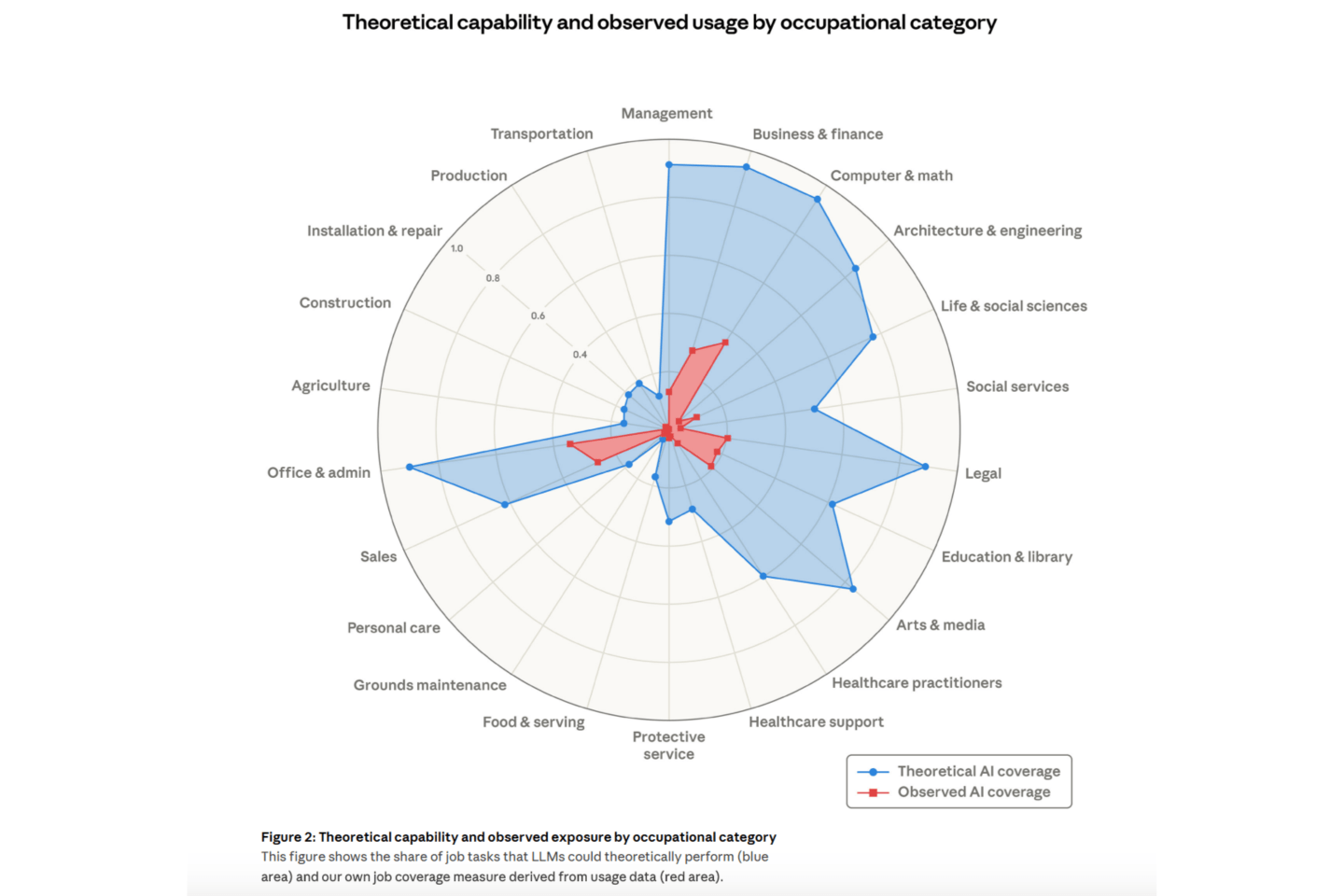
Anthropic just mapped out which jobs AI could potentially replace. A 'Great Recession for white-collar workers' is absolutely possible
By Jake AngeloMarch 6, 2026
3 days ago
placeholder alt text
Energy
Trump promised to fill America’s oil reserves ‘right to the top.’ A year later, oil has exceeded $100 and they’re still less than 60% full
By Tristan BoveMarch 9, 2026
9 hours ago
placeholder alt text
Success
This AI founder who quit her 9-to-5 law job has a warning for anyone dreaming of doing the same: 'I'm working harder now than I ever did'
By Emma BurleighMarch 8, 2026
2 days ago
placeholder alt text
Energy
Oil over $100, markets in free fall, and Iran's new supreme leader is Trump's 'worst case' scenario
By Jim EdwardsMarch 9, 2026
14 hours ago

© 2026 Fortune Media IP Limited. All Rights Reserved. Use of this site constitutes acceptance of our Terms of Use and Privacy Policy | CA Notice at Collection and Privacy Notice | Do Not Sell/Share My Personal Information
FORTUNE is a trademark of Fortune Media IP Limited, registered in the U.S. and other countries. FORTUNE may receive compensation for some links to products and services on this website. Offers may be subject to change without notice.