More than 750 companies have now announced at least a partial withdrawal from Russia after the country’s brutal invasion of Ukraine two months ago. Over 300 have pulled out completely.
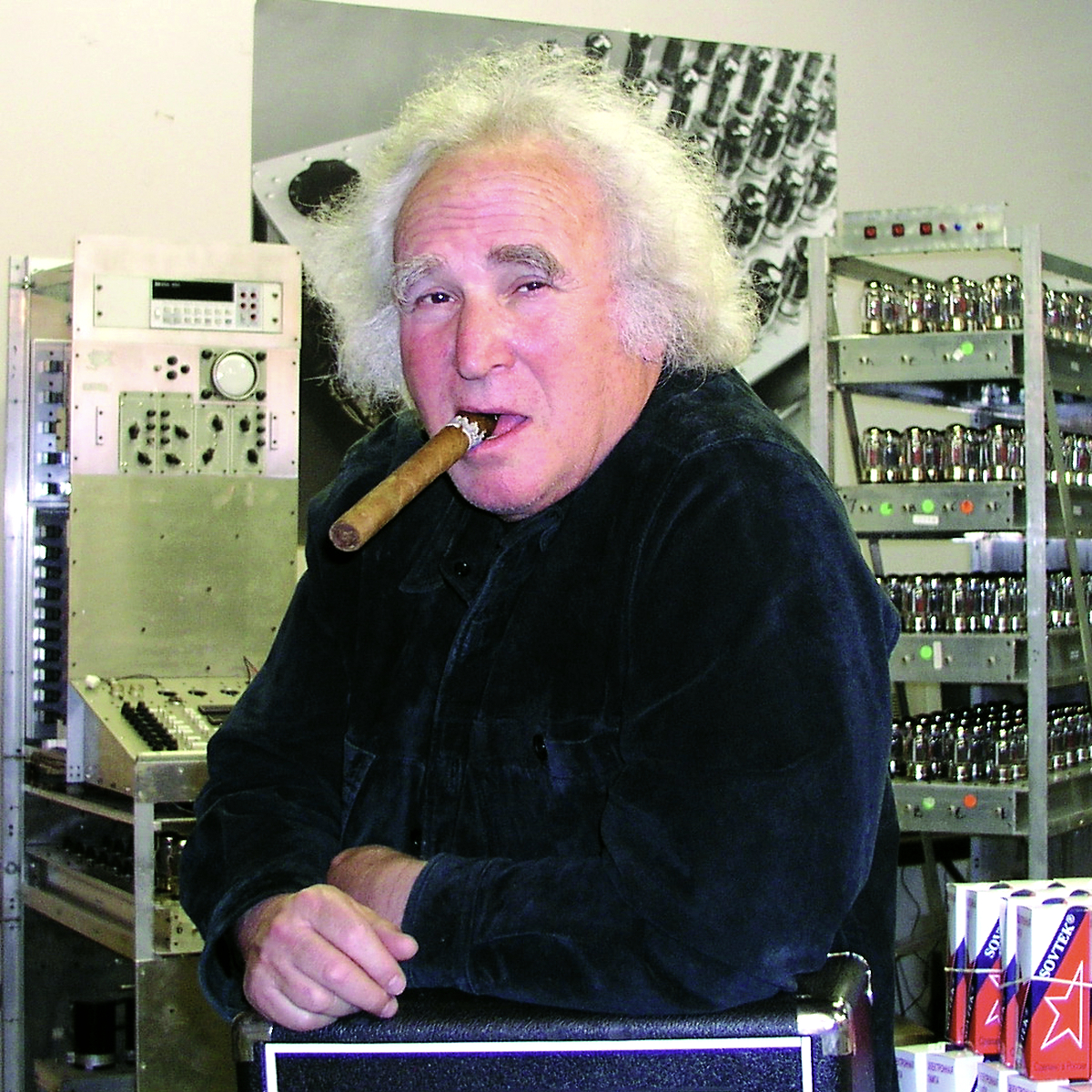
But Mike Matthews, one of the most influential figures in the sound of guitar music, won’t be adding his company, Electro-Harmonix (EHX), to that list anytime soon. “Absolutely not,” the former IBM computer salesman and Jimi Hendrix promoter told Fortune this week, when asked if he had considered selling his factory in Saratov in southwestern Russia.
The EHX founder and CEO—who has neither condemned nor supported Russia’s Ukrainian assault—said he has “no interest” in moving the factory, due in part to Russia’s low wages and weak environmental laws, but chiefly because the country offers rare expertise in building something that most of the rock world needs.
New York–based Electro-Harmonix is a seminal and still popular maker of effects pedals that have since the late 1960s shaped the tones of many of the world’s biggest bands. Without EHX’s Big Muff fuzz pedals, Pink Floyd’s David Gilmour couldn’t have produced those liquid solos and Smashing Pumpkins’ Billy Corgan wouldn’t have generated such snarling riffs. The company’s Deluxe Memory Man delay pedal gave The Edge his signature cascading echoes on early U2 albums. Nirvana’s Kurt Cobain counted on his EHX Small Clone chorus pedal to add an otherworldly dimension to his grunge-defining power chords.
However, pedal-making is not what drew Matthews to Russia in the early 1990s—a time when he was looking for new opportunities after union conflicts battered EHX’s pedal business in the U.S. Rather, he was attracted to the humble vacuum tube, a largely outdated piece of technology that remains extremely useful to the music business, but which has in recent times only been produced in Russia, China, and Slovakia.
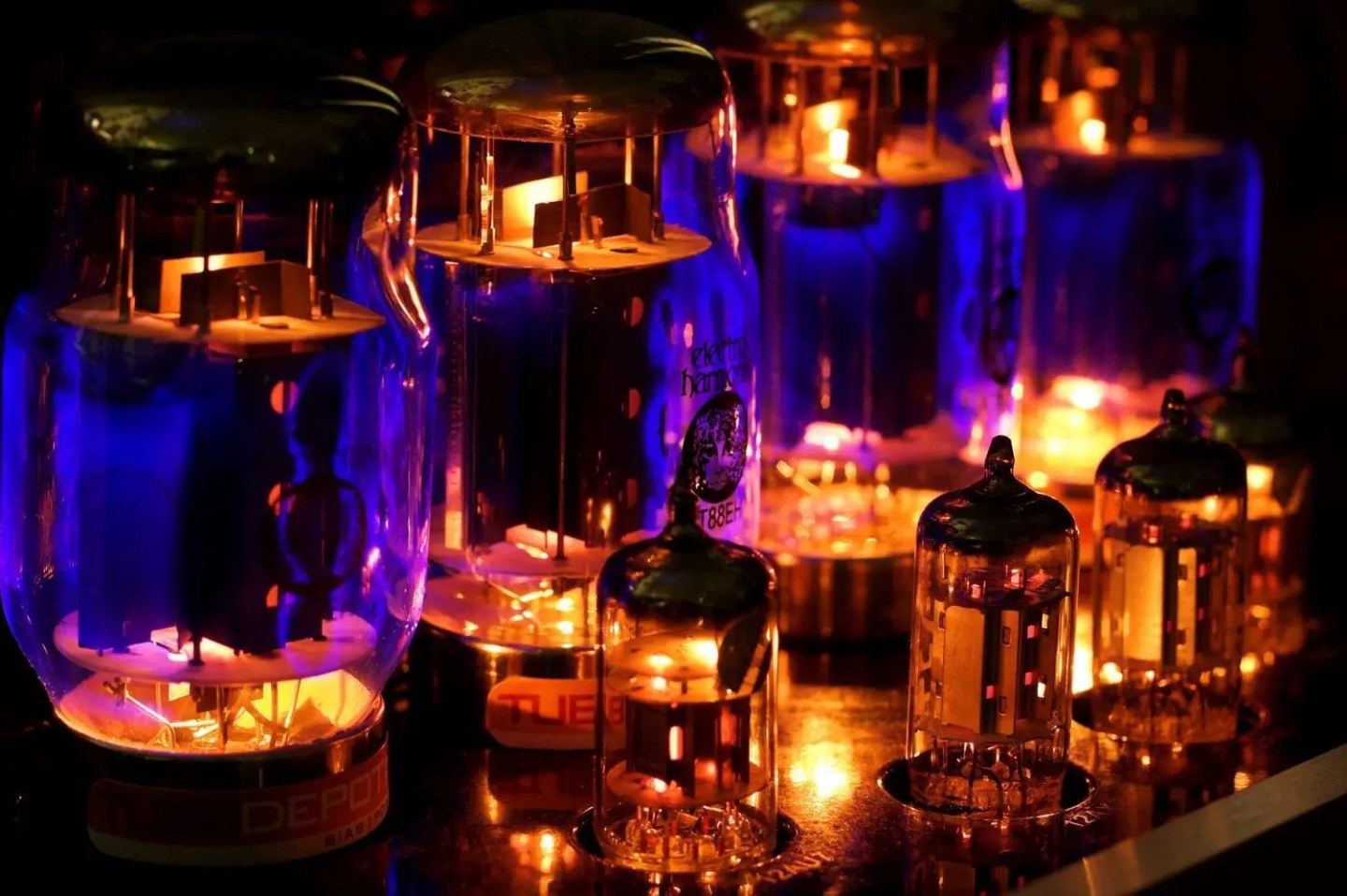
These sealed glass tubes, also known as valves, have since the early 20th century been mainly used to amplify audio signals. They were pivotal to the development of sound recording, radio and television broadcasting, and guitar amplifiers. In most traditional guitar amps, it’s the tubes that make the sound warm and, when the amp is set to “overdrive” the signal, provide crunchy distortion.
Tubes have another useful characteristic: Compared with transistors—the cheaper and generally far more practical components that long ago replaced them in most applications—they are much less likely to be damaged by sudden, enormous bursts of voltage, such as those produced by lightning strikes or nuclear explosions. That makes the tubes useful for military applications, which is why the Soviet Union kept producing them long after the rest of the world moved on to more modern technology in the 1960s. A type of vacuum tube was even used in the radar systems of the infamous Soviet MiG-25 interceptor, which was produced into the mid-1980s.
When the Soviet Union collapsed in the early 1990s, Matthews got into reselling Russian tubes to guitar-amp manufacturers before buying ExpoPul, the world’s biggest vacuum-tube factory, located in a former military industrial complex in Saratov.
The deal gave Matthews ownership of some of the world’s most highly regarded tube brands, such as Sovtek, Mullard, and Tung-Sol. Although EHX was by now back in the pedal game, tubes made up the bulk of its business. These components aren’t just used by musicians and ampmakers, either—around one-fifth of EHX’s tubes end up in high-end hi-fi systems, which are particularly big in Asian markets such as Singapore and Malaysia.
In the mid-2000s, Matthews fended off racketeers who were trying to steal his business—a common experience for companies operating in Russia at the time.
But this year presented EHX with a completely different kind of crisis.
In March, after Russia triggered massive sanctions by launching its full-scale invasion of Ukraine, President Vladimir Putin unveiled a list of around 200 Russian products that could no longer be exported. Vacuum tubes appeared to be on the list, so EHX reluctantly informed its customers that it could no longer ship any Russian products.
The loss of EHX’s Russian goods spelled disaster for the audio market because EHX currently has only one major competitor—a Slovakian company called JJ Electronic. A third big player, China’s Shuguang, had its factory shuttered in 2019 by government officials who wanted to repurpose the land; its new plant is still not up and running. So supply was already highly constrained.
“In just the last year, we’ve seen a doubling in tube prices, if you can get them at all,” said John La Grou, whose Californian manufacturer of high-end studio-equipment, Millennia Media, uses tubes.
However, two days after Matthews delivered his bad news, EHX’s Russian lawyers came back with a clarification: The ban applied to a non-audio-related type of vacuum tube, and the company was free to keep making and exporting its audio tubes to the wider world. There were new bureaucratic hurdles that slowed down the export process, but EHX joined the American Chamber of Commerce in Russia, which largely mitigated that problem.
And so, despite the bureaucracy and hefty tariffs that raise the price of its product in many countries (the U.S. and Canada levy a 35% tax), EHX is back to selling Russian tubes to the world and sending money back to its Russian business.
Even with those operational obstacles cleared, EHX’s stance contrasts the decision of Western peers like Apple, Google, Volkswagen, and Shell to pull out of Russia.
“I have no interest in moving the factory to any location,” Matthews said. “The key thing is the experience of the skilled workers [there].”
According to Matthews, Shuguang’s two-year shutdown cost the company many of its seasoned staff. (Fortune‘s attempts to reach Shuguang for comment were unsuccessful.) “To build tubes, it’s a handmade process, and some workers learn the skill and some don’t,” he said. Plus, highly specialized tube-making equipment could easily break if it’s moved, he said.
Matthews employs over 300 people in Russia, whereas his headcount back home in New York City is just 125. According to Matthews, that makes it unfair to compare his business to the Russia-fleeing likes of Pepsi and IKEA, for which Russia represents a much smaller part of operations. “For us, the vacuum tubes are a big portion of our business,” he said.
But the Russian workers and their rare skills aren’t Matthews’s only motivation for staying put. “In the U.S., wages are higher, and environmental controls on the waste [generated in the manufacturing process] are much more severe,” he said.
What does Matthews think about Russia’s widely condemned behavior in Ukraine? “We all hope this conflict or war or whatever you want to phrase it as, ends as quickly as possible,” he said, declining to comment further.
For now, audio vacuum tube buyers are limited to the output of EHX and JJ, the latter of which—a far smaller operation than EHX—has a reported lead time of at least 18 months for new orders.
However, the supply crunch may ease over time, due to the anticipated resurrection of Shuguang’s plant and because the March supply scare prompted some other players to eye the tube market.
Western Electric, a Rossville, Ga.–based audio-component firm that perpetuates the brand of an old AT&T electrical engineering subsidiary, is now looking to expand into production of the sorts of tubes that guitar amps need.
“The response from tube amp lovers around the world [to supply constraints] has been shocking. People are looking for something new, something made in the U.S.,” a Western Electric spokesperson told Fortune. “So we are deep in pre-production for the expansion project…. We’re still looking at a year or so before we reach volume. Our goal is to take the time needed to get it right.”
Sign up for the Fortune Features email list so you don’t miss our biggest features, exclusive interviews, and investigations.