• Home
  • Latest
  • Fortune 500
  • Finance
  • Tech
  • Leadership
  • Lifestyle
  • Rankings
  • Multimedia
Commentarycentral banks

The West froze Russia’s foreign reserves. Should Asia—with its even larger dollar hoard—be worried?

By
Vasuki Shastry
Vasuki Shastry
Down Arrow Button Icon
By
Vasuki Shastry
Vasuki Shastry
Down Arrow Button Icon
April 21, 2022, 7:30 PM ET
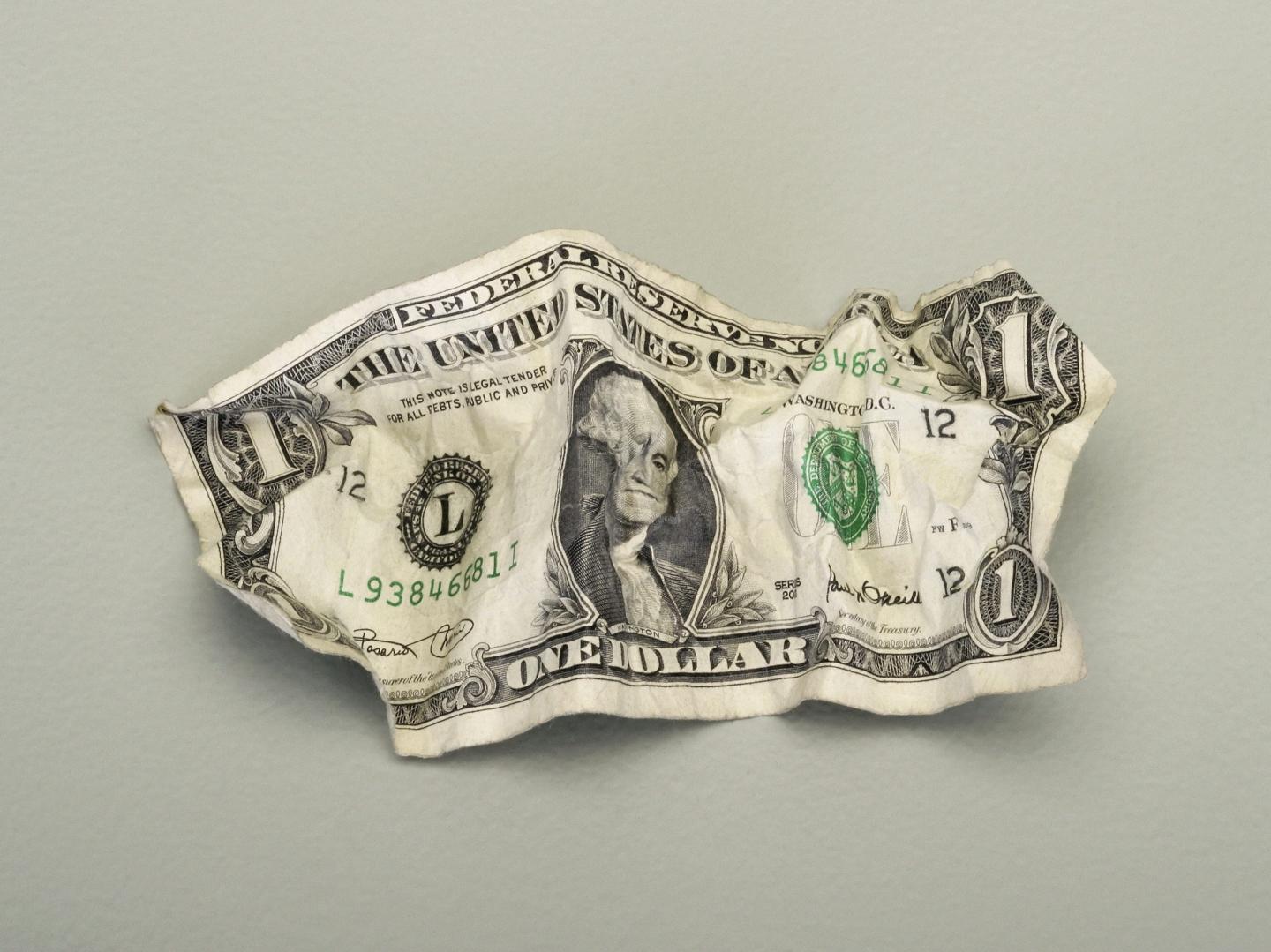
A crumpled U.S. dollar
In the wake of Western sanctions on Russia's foreign reserves, Vasuki Shastry asks whether Asia's foreign reserve holdings pose their own political risk for the reigon. Getty Images

In Asia, the size of a country’s foreign reserves is a source of pride. No conversation on economics is possible without someone boasting about how large their nation’s hoard of foreign currency is.

But the U.S. Treasury gave Asia’s bankers a rude awakening when it cut off access to about half of Russia’s $630 billion in reserves held in foreign banks, an action that should force Asian central bankers to re-evaluate their reserve holding strategy, and how that connects with their country’s foreign policy.

Any Asian central banker would likely tell you that the best protection against a potential economic or political crisis is their formidable holdings of foreign reserves—mostly in dollars, but increasingly in the Chinese yuan as well.

Asian countries have the world’s largest holdings of dollar reserves, a legacy of the 1997 Asian financial crisis where policymakers fretted about dollar shortages and free-falling local currencies. In reserve holdings, China towers above them all with a cash pile above $3 trillion but peers in the region have also been formidable accumulators, predominantly in the US dollar. They include Japan ($1.4 trillion), Singapore ($426 billion), India ($604 billion), and Taiwan ($550 billion).

Central bankers regard their foreign reserve holdings to be equivalent to cash-on-hand, withdrawn at a moment’s notice and deployed elsewhere at the press of a button. The U.S. move shows that assumption is wrong.

The U.S. Treasury and Department of Justice have not hesitated to use access to dollars as a powerful lever to influence behavior. Banks like HSBC, worrying that they’d lose the coveted license that enables banks to clear dollars for clients, paid hefty fines to U.S. regulators over allegations of money laundering.

The speed at which the Russian central bank lost access to its own reserves should make even the best-behaved nation nervous.

Complacency is the norm in Asia, which has not witnessed a full-blown inter-state war since the end of the war between China and Vietnam in 1979. Russia’s invasion of Ukraine has generated little attention in the region, compared with the wall-to-wall coverage in Europe and North America.

Some commentators have even pronounced the war to be a distant conflict with few direct implications for the region. Before the invasion, Indian scholar Sanjaya Baru supported India’s neutral stance on the issue and said that the Ukraine stand-off had many dimensions, and it was best for the European Union “to first try and sort these out.” Days after the invasion, the Philippines Defence Secretary Delfin Lorenzana, said “it’s none of our business to meddle in whatever they’re doing in Europe.”

But the Asian commentariat is wrong on the one metric that really matters to the region: economics. The U.S. and Europe have deployed tools of economic warfare—crippling sanctions that cut Russia’s financial system from the dollar-based global economy. Tools like these, regardless of who wields them, will have wide ramifications for Asia, a region even more connected with the world than fossil-fuel-addled Russia. More trade and investment flows into and out of Asia—even if you exclude China—than any other region in the world.

In any future conflict, will the region be forced to take sides? If tensions between the U.S. and China really accelerate, what will Asia do—and will it be ready to incur the wrath of either the U.S. or China in the process?

Singapore and Japan’s willingness to join the U.S. and Europe in sanctioning Russia is instructive. In a pointed announcement, Singapore’s foreign ministry noted that the “sovereignty, political independence, and territorial integrity” of all countries, “big and small,” must be respected. Given the modest size of its trade and investment exposure to Russia, Singapore could perhaps afford to take the moral high ground.

But Singapore would be constrained in a hypothetical choice between the U.S. and China, as both countries are among its top five trading partners, with China on top. Singapore is not alone: other Asian countries are dependent on the two major powers.

While Asian leaders may declare that they don’t wish to take sides in a future U.S.-China conflict, sitting on the fence could compromise their ability to access hundreds of billions of dollars in reserve holdings. That would test the longstanding Asian inclination to stay neutral.

Vasuki Shastry is an Associate Asia Fellow at Chatham House. A former journalist, he had a long career at the International Monetary Fund, Standard Chartered Bank, and Singapore’s central bank. He is the author of Has Asia Lost It? Dynamic Past, Turbulent Future.

Never miss a story: Follow your favorite topics and authors to get a personalized email with the journalism that matters most to you.

About the Author
By Vasuki Shastry
See full bioRight Arrow Button Icon

Latest in Commentary

Finance
Lorem ipsum dolor sit amet, consectetur adipiscing elit, sed do eiusmod tempor incididunt ut labore et dolore magna aliqua. Ut enim ad minim veniam
By Fortune Editors
October 20, 2025
Finance
Lorem ipsum dolor sit amet, consectetur adipiscing elit, sed do eiusmod tempor incididunt ut labore et dolore magna aliqua. Ut enim ad minim veniam
By Fortune Editors
October 20, 2025
Finance
Lorem ipsum dolor sit amet, consectetur adipiscing elit, sed do eiusmod tempor incididunt ut labore et dolore magna aliqua. Ut enim ad minim veniam
By Fortune Editors
October 20, 2025
Finance
Lorem ipsum dolor sit amet, consectetur adipiscing elit, sed do eiusmod tempor incididunt ut labore et dolore magna aliqua. Ut enim ad minim veniam
By Fortune Editors
October 20, 2025
Finance
Lorem ipsum dolor sit amet, consectetur adipiscing elit, sed do eiusmod tempor incididunt ut labore et dolore magna aliqua. Ut enim ad minim veniam
By Fortune Editors
October 20, 2025
Finance
Lorem ipsum dolor sit amet, consectetur adipiscing elit, sed do eiusmod tempor incididunt ut labore et dolore magna aliqua. Ut enim ad minim veniam
By Fortune Editors
October 20, 2025

Most Popular

Finance
Lorem ipsum dolor sit amet, consectetur adipiscing elit, sed do eiusmod tempor incididunt ut labore et dolore magna aliqua. Ut enim ad minim veniam
By Fortune Editors
October 20, 2025
Finance
Lorem ipsum dolor sit amet, consectetur adipiscing elit, sed do eiusmod tempor incididunt ut labore et dolore magna aliqua. Ut enim ad minim veniam
By Fortune Editors
October 20, 2025
Finance
Lorem ipsum dolor sit amet, consectetur adipiscing elit, sed do eiusmod tempor incididunt ut labore et dolore magna aliqua. Ut enim ad minim veniam
By Fortune Editors
October 20, 2025
Finance
Lorem ipsum dolor sit amet, consectetur adipiscing elit, sed do eiusmod tempor incididunt ut labore et dolore magna aliqua. Ut enim ad minim veniam
By Fortune Editors
October 20, 2025
Finance
Lorem ipsum dolor sit amet, consectetur adipiscing elit, sed do eiusmod tempor incididunt ut labore et dolore magna aliqua. Ut enim ad minim veniam
By Fortune Editors
October 20, 2025
Finance
Lorem ipsum dolor sit amet, consectetur adipiscing elit, sed do eiusmod tempor incididunt ut labore et dolore magna aliqua. Ut enim ad minim veniam
By Fortune Editors
October 20, 2025
Fortune Secondary Logo
Rankings
  • 100 Best Companies
  • Fortune 500
  • Global 500
  • Fortune 500 Europe
  • Most Powerful Women
  • World's Most Admired Companies
  • See All Rankings
  • Lists Calendar
Sections
  • Finance
  • Fortune Crypto
  • Features
  • Leadership
  • Health
  • Commentary
  • Success
  • Retail
  • Mpw
  • Tech
  • Lifestyle
  • CEO Initiative
  • Asia
  • Politics
  • Conferences
  • Europe
  • Newsletters
  • Personal Finance
  • Environment
  • Magazine
  • Education
Customer Support
  • Frequently Asked Questions
  • Customer Service Portal
  • Privacy Policy
  • Terms Of Use
  • Single Issues For Purchase
  • International Print
Commercial Services
  • Advertising
  • Fortune Brand Studio
  • Fortune Analytics
  • Fortune Conferences
  • Business Development
  • Group Subscriptions
About Us
  • About Us
  • Press Center
  • Work At Fortune
  • Terms And Conditions
  • Site Map
  • About Us
  • Press Center
  • Work At Fortune
  • Terms And Conditions
  • Site Map
  • Facebook icon
  • Twitter icon
  • LinkedIn icon
  • Instagram icon
  • Pinterest icon

Latest in Commentary

valerie
CommentaryLayoffs
Tesla’s former HR chief: the AI layoff panic Is built on a false premise—here’s what most workers need to know
By Valerie Capers WorkmanMay 1, 2026
1 hour ago
tamas
CommentaryPolymarket
SEON CEO: Prediction markets can forecast the future. Can they survive their own manipulation problem?
By Tamas KadarMay 1, 2026
4 hours ago
sundar
Commentary250 Years of Innovation
America at 250: immigration and the making of an innovative nation
By Nasser KazeminyMay 1, 2026
6 hours ago
Derek Kilmer
CommentaryEconomics
The U.S. economy is booming — just not where 50 million Americans live
By Derek KilmerMay 1, 2026
6 hours ago
hegseth
CommentaryMilitary
America shot its arsenal empty in 2 wars. Now it needs Beijing’s permission to reload
By Steve H. Hanke and Jeffrey WengApril 30, 2026
21 hours ago
Duncan Tait, CEO of Inchcape
Europecar manufacturing
“Competition is good for the industry”. Inchcape CEO’s case for optimism in automotive’s next chapter
By Duncan TaitApril 30, 2026
24 hours ago

Most Popular

China dominates the world's lithium supply. The U.S. just found 328 years' worth in its own backyard
North America
China dominates the world's lithium supply. The U.S. just found 328 years' worth in its own backyard
By Jake AngeloApril 30, 2026
20 hours ago
Apple cofounder Ronald Wayne—whose stake would be worth up to $400 billion had he not sold it in 1976—says that at 91, he has no regrets
Success
Apple cofounder Ronald Wayne—whose stake would be worth up to $400 billion had he not sold it in 1976—says that at 91, he has no regrets
By Preston ForeApril 27, 2026
4 days ago
Accenture's Julie Sweet blew up 50 years of company history. She says the hardest part is still ahead
Conferences
Accenture's Julie Sweet blew up 50 years of company history. She says the hardest part is still ahead
By Nick LichtenbergApril 29, 2026
2 days ago
America shot its arsenal empty in 2 wars. Now it needs Beijing's permission to reload
Commentary
America shot its arsenal empty in 2 wars. Now it needs Beijing's permission to reload
By Steve H. Hanke and Jeffrey WengApril 30, 2026
21 hours ago
Google Cloud revenue is now 18% of Alphabet's business. Is this the beginning of the end of Google's search identity?
Big Tech
Google Cloud revenue is now 18% of Alphabet's business. Is this the beginning of the end of Google's search identity?
By Alexei OreskovicApril 29, 2026
2 days ago
Exclusive: America's largest Black-owned bank launches podcast with mission to unlock hidden shame holding back generational wealth
Banking
Exclusive: America's largest Black-owned bank launches podcast with mission to unlock hidden shame holding back generational wealth
By Nick LichtenbergApril 29, 2026
2 days ago

© 2026 Fortune Media IP Limited. All Rights Reserved. Use of this site constitutes acceptance of our Terms of Use and Privacy Policy | CA Notice at Collection and Privacy Notice | Do Not Sell/Share My Personal Information
FORTUNE is a trademark of Fortune Media IP Limited, registered in the U.S. and other countries. FORTUNE may receive compensation for some links to products and services on this website. Offers may be subject to change without notice.