• Home
  • Latest
  • Fortune 500
  • Finance
  • Tech
  • Leadership
  • Lifestyle
  • Rankings
  • Multimedia
Commentaryfed policy

Climate change mitigation is vital–but it’s not part of the Fed’s mandate

By
Christian Lundblad
Christian Lundblad
Down Arrow Button Icon
March 17, 2022, 1:24 PM ET
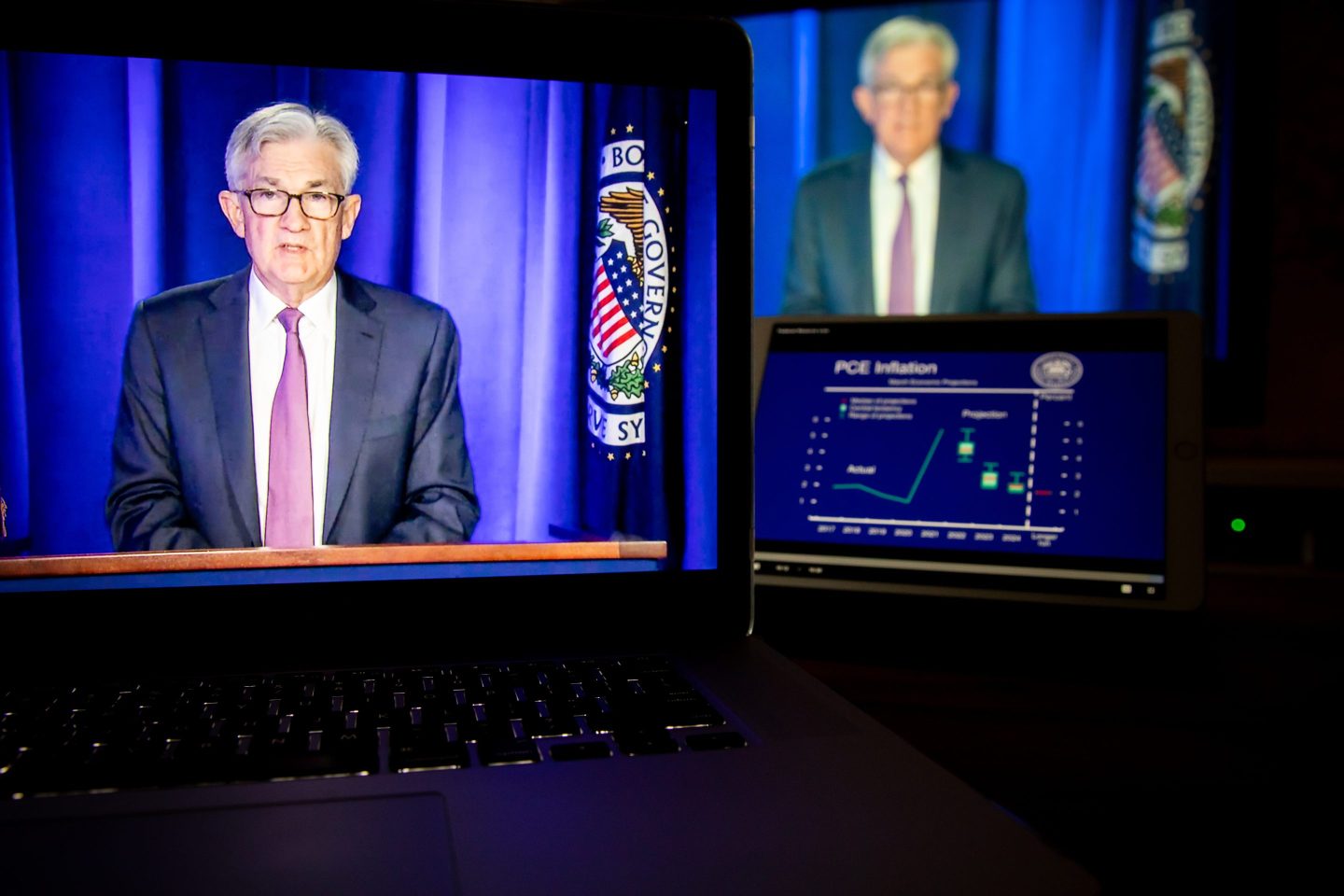
Jerome Powell, chairman of the U.S. Federal Reserve, speaks at a news conference on March 16. The Federal Reserve raised interest rates by a quarter percentage point and signaled hikes at all six remaining meetings this year to tackle rising inflation.
Jerome Powell, chairman of the U.S. Federal Reserve, speaks at a news conference on March 16. The Federal Reserve raised interest rates by a quarter percentage point and signaled hikes at all six remaining meetings this year to tackle rising inflation.Michael Nagle—Bloomberg/Getty Images

The Biden administration’s efforts to refocus the Federal Reserve Board’s priorities face significant headwinds, with one nominee for the board recently stepping aside given insufficient Senatorial support. 

Part of the controversy reflects a new topic that has arisen regarding the extent to which the Fed should add climate risk to its purview.

In his latest speech, Fed Chair Jerome Powell did not mention environmental concerns–they were overshadowed by rising inflation, energy costs, and a challenging global context.

Rather than continually trying to outsource its job, Congress should be leading the charge against climate change through legislation.  

To get it right, a clear understanding of the presumed policy is required. Is the idea to include climate risk as an input to assess financial stability more holistically? Many have previously promoted the construction of a climate-related stress test. 

Or, as promoted by the more progressive wing of the Democratic Party, are we instead discussing a marked shift in the regulation of financial institutions to force them to serve as a mechanism to promote climate risk mitigation policy? 

Are we talking about climate risk as an input to bank regulation or bank regulation as an input to climate risk mitigation? If the intention really is the latter, we need to better appreciate how this could work. 

The Fed has two main functions–monetary policy and financial stability. Any climate-related monetary policy objective would reflect a significant shift relative to the Fed’s current inflation and labor market mandates. Leaving aside the fact that Congress would have to formally legislate such an alteration, the Fed is ill-equipped to tackle climate mitigation in the context of its traditional monetary policy toolbox. There is already significant disagreement regarding the appropriateness of the Fed’s current policy stance.

There is also the danger of the politicization of our central bank. This is not a trivial issue: The Fed’s independence allows it to swiftly respond to economic conditions in a technocratic manner largely free of political influence. A real–or even perceived–erosion of that independence will do nothing but impair its ability to operate when needed. As a cautionary tale, academic research clearly documents a link between high inflation and the lack of central bank independence.

Another angle for central bank climate considerations relates to the Fed’s other role in financial stability. Policies that incorporate climate risk into bank supervision calculations seem reasonable.

However, proposals such as the adjustment of capital adequacy regulation that would require banks to hold more capital against lending tied to borrowers that are negatively contributing to climate change are more problematic. Such a modification of capital adequacy risk-weights would simply join a colossal jumble of regulatory complexity that can be easily gamed with sizable unintended consequences for systemic risk. How confident can we be that the disincentives for bank lending would correctly identify borrowers tied to climate risk?

None of these concerns can justify Congress’ abdication of its responsibility to attack the very real issue of climate change. The avenue for the most effective climate policy is through formal legislation. Congress can force the largest contributors to climate risk to bear the costs of their actions. A direct carbon tax is likely to be far more effective. 

With an appreciation for the fact that the largest carbon producers reside outside the U.S., a carbon tax policy would need to address the cross-border nature of the issue carefully and credibly.  The Fed has virtually no direct role to play in cross-border economic activity.

Ideally, the Federal Reserve would appropriately calculate the financial stability risks of climate change. Doing more than that could damage the institution’s credibility or unintentionally distort to the allocation of capital. 

The lingering question is how do we seriously tackle the challenges of climate change when Congress is simply inactive? It’s not easy, but we need to be very careful in how we go about trying to circumvent those very real political limitations.

Prof. Christian Lundblad is the Richard Levin Distinguished Professor of Finance at UNC and director of research at the Kenan Institute of Private Enterprise.  He formerly served as a financial economist at the Federal Reserve Board in Washington, D.C.

More must-read commentary published by Fortune:

  • Stop asking women how we manage work-life balance. Most of us don’t
  • It’s not a Great Resignation–it’s a Great Rethink
  • The media’s racial bias is also happening off screen
  • The Great Business Retreat matters in Russia today–just as it mattered in 1986 South Africa
  • Offices are obsolete—and so are the managers who insist you must go back
Never miss a story: Follow your favorite topics and authors to get a personalized email with the journalism that matters most to you.
About the Author
By Christian Lundblad
See full bioRight Arrow Button Icon

Latest in Commentary

Finance
Lorem ipsum dolor sit amet, consectetur adipiscing elit, sed do eiusmod tempor incididunt ut labore et dolore magna aliqua. Ut enim ad minim veniam
By Fortune Editors
October 20, 2025
Finance
Lorem ipsum dolor sit amet, consectetur adipiscing elit, sed do eiusmod tempor incididunt ut labore et dolore magna aliqua. Ut enim ad minim veniam
By Fortune Editors
October 20, 2025
Finance
Lorem ipsum dolor sit amet, consectetur adipiscing elit, sed do eiusmod tempor incididunt ut labore et dolore magna aliqua. Ut enim ad minim veniam
By Fortune Editors
October 20, 2025
Finance
Lorem ipsum dolor sit amet, consectetur adipiscing elit, sed do eiusmod tempor incididunt ut labore et dolore magna aliqua. Ut enim ad minim veniam
By Fortune Editors
October 20, 2025
Finance
Lorem ipsum dolor sit amet, consectetur adipiscing elit, sed do eiusmod tempor incididunt ut labore et dolore magna aliqua. Ut enim ad minim veniam
By Fortune Editors
October 20, 2025
Finance
Lorem ipsum dolor sit amet, consectetur adipiscing elit, sed do eiusmod tempor incididunt ut labore et dolore magna aliqua. Ut enim ad minim veniam
By Fortune Editors
October 20, 2025

Most Popular

Finance
Lorem ipsum dolor sit amet, consectetur adipiscing elit, sed do eiusmod tempor incididunt ut labore et dolore magna aliqua. Ut enim ad minim veniam
By Fortune Editors
October 20, 2025
Finance
Lorem ipsum dolor sit amet, consectetur adipiscing elit, sed do eiusmod tempor incididunt ut labore et dolore magna aliqua. Ut enim ad minim veniam
By Fortune Editors
October 20, 2025
Finance
Lorem ipsum dolor sit amet, consectetur adipiscing elit, sed do eiusmod tempor incididunt ut labore et dolore magna aliqua. Ut enim ad minim veniam
By Fortune Editors
October 20, 2025
Finance
Lorem ipsum dolor sit amet, consectetur adipiscing elit, sed do eiusmod tempor incididunt ut labore et dolore magna aliqua. Ut enim ad minim veniam
By Fortune Editors
October 20, 2025
Finance
Lorem ipsum dolor sit amet, consectetur adipiscing elit, sed do eiusmod tempor incididunt ut labore et dolore magna aliqua. Ut enim ad minim veniam
By Fortune Editors
October 20, 2025
Finance
Lorem ipsum dolor sit amet, consectetur adipiscing elit, sed do eiusmod tempor incididunt ut labore et dolore magna aliqua. Ut enim ad minim veniam
By Fortune Editors
October 20, 2025
Rankings
  • 100 Best Companies
  • Fortune 500
  • Global 500
  • Fortune 500 Europe
  • Most Powerful Women
  • Future 50
  • World’s Most Admired Companies
  • See All Rankings
Sections
  • Finance
  • Leadership
  • Success
  • Tech
  • Asia
  • Europe
  • Environment
  • Fortune Crypto
  • Health
  • Retail
  • Lifestyle
  • Politics
  • Newsletters
  • Magazine
  • Features
  • Commentary
  • Mpw
  • CEO Initiative
  • Conferences
  • Personal Finance
  • Education
Customer Support
  • Frequently Asked Questions
  • Customer Service Portal
  • Privacy Policy
  • Terms Of Use
  • Single Issues For Purchase
  • International Print
Commercial Services
  • Advertising
  • Fortune Brand Studio
  • Fortune Analytics
  • Fortune Conferences
  • Business Development
About Us
  • About Us
  • Editorial Calendar
  • Press Center
  • Work At Fortune
  • Diversity And Inclusion
  • Terms And Conditions
  • Site Map

Latest in Commentary

Norbert Jung
Commentary
Factory 2030 runs on more than code. As a CEO, I see the power of agentic AI—and the trust gap that we must close
By Norbert JungDecember 17, 2025
1 hour ago
TD Jakes
CommentaryReligion
To heal a divided nation, America’s next chapter must rediscover a common unity
By T.D. JakesDecember 16, 2025
22 hours ago
tree
CommentaryInflation
Colorado is suffering from Christmas Tree inflation because Denver imports most of them—from North Carolina and the Pacific Northwest
By Ali Besharat and The ConversationDecember 16, 2025
23 hours ago
Charles Lamanna
CommentaryMicrosoft
I lead Microsoft’s enterprise AI agent strategy. Here’s what every company should know about how agents will rewrite work
By Charles LamannaDecember 15, 2025
2 days ago
Julian Braithwaite is the Director General of the International Alliance for Responsible Drinking
CommentaryProductivity
Gen Z is drinking 20% less than Millennials. Productivity is rising. Coincidence? Not quite
By Julian BraithwaiteDecember 13, 2025
4 days ago
carbon
Commentaryclimate change
Banking on carbon markets 2.0: why financial institutions should engage with carbon credits
By Usha Rao-MonariDecember 13, 2025
4 days ago

Most Popular

placeholder alt text
Economy
America's $38 trillion national debt 'exacerbates generational imbalances' with Gen Z and millennials paying the price, warns think tank
By Eleanor PringleDecember 16, 2025
1 day ago
placeholder alt text
Success
Meetings are not work, says Southwest Airlines CEO—and he’s taking action, by blocking his calendar every afternoon from Wednesday to Friday 
By Preston ForeDecember 15, 2025
2 days ago
placeholder alt text
Success
'I had to take 60 meetings': Jeff Bezos says 'the hardest thing I've ever done' was raising the first million dollars of seed capital for Amazon
By Dave SmithDecember 15, 2025
2 days ago
placeholder alt text
Innovation
An MIT roboticist who cofounded bankrupt Roomba maker iRobot says Elon Musk's vision of humanoid robot assistants is 'pure fantasy thinking'
By Marco Quiroz-GutierrezDecember 16, 2025
22 hours ago
placeholder alt text
Future of Work
The job market is so bad, people in their 40s are resorting to going back to school instead of looking for work
By Sydney LakeDecember 16, 2025
1 day ago
placeholder alt text
Politics
Exclusive: After citations against Elon Musk’s Boring Company were suddenly withdrawn, federal regulators are now investigating Nevada OSHA
By Jessica MathewsDecember 16, 2025
12 hours ago

© 2025 Fortune Media IP Limited. All Rights Reserved. Use of this site constitutes acceptance of our Terms of Use and Privacy Policy | CA Notice at Collection and Privacy Notice | Do Not Sell/Share My Personal Information
FORTUNE is a trademark of Fortune Media IP Limited, registered in the U.S. and other countries. FORTUNE may receive compensation for some links to products and services on this website. Offers may be subject to change without notice.