Russia has invaded Ukraine.
As I type these words, a Russian convoy some 40 miles long is making its way to the besieged Ukrainian capital of Kyiv. Brutal images of war and death are filling feeds and airwaves. A real-time fog of war has descended on the world, and observers struggle to process events on the ground while deadly scenarios are anticipated and discussed.
But some besieged are more precious than others.
CBS senior foreign correspondent Charlie D’Agata inadvertently spoke for many when he characterized Ukraine as a place where bad things don’t happen to good people. “[Ukraine] isn’t a place, with all due respect, like Iraq or Afghanistan, that has seen conflict raging for decades. This is a relatively civilized, relatively European—I have to choose those words carefully, too—city, where you wouldn’t expect that or hope that it’s going to happen.”
D’Agata was not alone.
ITV News correspondent Lucy Watson was condemned for her remarks while reporting from a train station in Kyiv. “Now the unthinkable has happened to them. This is not a developing third-world nation. This is Europe.”
And Watson was not alone—the Washington Post has a horrifying round-up of similar musings here.
For brevity’s sake, let’s ignore the fact that Europe has a centuries-long history of barbaric behavior, expertly exported around the globe. (Not to mention the longstanding tension between Russia and Ukraine.) But this fundamental point—which war-torn communities do “we” identify with and why—has added an important element to the ongoing coverage of the invasion of Ukraine.
“We have been trained to accept the suffering of communities of color, to accept their killings as natural, to understand their precarious risk to premature death as unfortunate but rational,” tweeted Noura Erakat, a human rights attorney and associate professor at Rutgers University, in the Department of Africana Studies and the Program in Criminal Justice. As a broad concept, “Eurocentric” societies are civilized. “Orientalist” ones are not. “[T]his is the work of colonialism & racism. These structures train us to expect them to die.”
Ukraine? They’re just like us. Iraq, Afghanistan, Syria, Palestine? Less so. (Rwanda? Haiti? Don’t try my patience.)
All of this is further complicated by a secondary crisis, as people try to flee. Turns out, Black people also live in Ukraine.
Stories and videos organized under the #AfricansinUkraine hashtag show African immigrants who were living and working in Ukraine being held up at the border, denied access to aid and transportation, forced to walk for hours in the cold, and enduring racist discrimination and treatment. Similar stories have been heard from refugees of south Asian and Mediterranean origins. From Baaz News: “Sikhs waiting to cross the Poland-Ukraine border but have noticed preference being given to white refugees. Some have been waiting for 3 days now and believe it may be Ukraine holding them back due to India’s stance on the #UkraineRussiaConflict.”
Jessica, a Nigerian woman studying in Ukraine told the BBC about her harrowing escape to Hungary. “I was begging. The official literally looked me in the eye and said, in his language: ‘Only Ukrainians, that is all. If you are Black, you must walk.’”
D’Agata apologized for his report the next day, an important sign that there are plenty of people listening for the not-so-casual racism embedded in many conversations about the war. Left unaddressed, they can be deeply harmful.
Rana Khoury, a research associate at Princeton University focusing on conflict and displacement told NPR that these ideas impact policy. “We certainly do see it play out in terms of the politics of refugee reception in the idea of whose burden should it be to take refugees who are from the global South, the Middle East, Africa, versus, you know, who is welcome and who can be brought in here.”
At the most basic level, this reckoning in framing is an opportunity to examine the kind of thinking that’s been fueling conflict and inequity for centuries. Even during wartime, the work must be done.
“I think it’s really critical that we look at that duality, and we question why that is,” says Mahdis Keshavarz, a board member with the Arab and Middle Eastern Journalists Association. It’s not just for reporters, it’s for anyone who engages, shares, or amplifies critical news. “You know, looking and seeing why African migrants aren’t allowed to cross into Hungary is just as valid as just asking why Ukrainians are.”
Before I go: I want to hear from you! Please take a few minutes to complete this short raceAhead survey.
Ellen McGirt
@ellmcgirt
Ellen.McGirt@fortune.com
This edition of raceAhead was edited by Wandy Felicita Ortiz.
On Point
Black communities, political groups around the world pledge support for Black Ukrainian refugees The pressure is helping. All-Party Parliamentary Group for Africa, chaired by Labour MP Chi Onwurah, promised to keep on the story. “The APPG is looking into these worrying reports and will be raising them with UK Government. If there are specific examples/issues to be included, let us know.” From video evidence, first-hand reports, and from those in contact with ... Nigerian consular officials, there have been unfortunate reports of Ukrainian police and security personnel refusing to allow Nigerians to board buses and trains heading towards Ukraine-Poland border,” said Nigerian president, Muhammadu Buhari, yesterday. “All who flee a conflict situation have the same right to safe passage under UN convention and the colour of their passport or their skin should make no difference.”
Independent
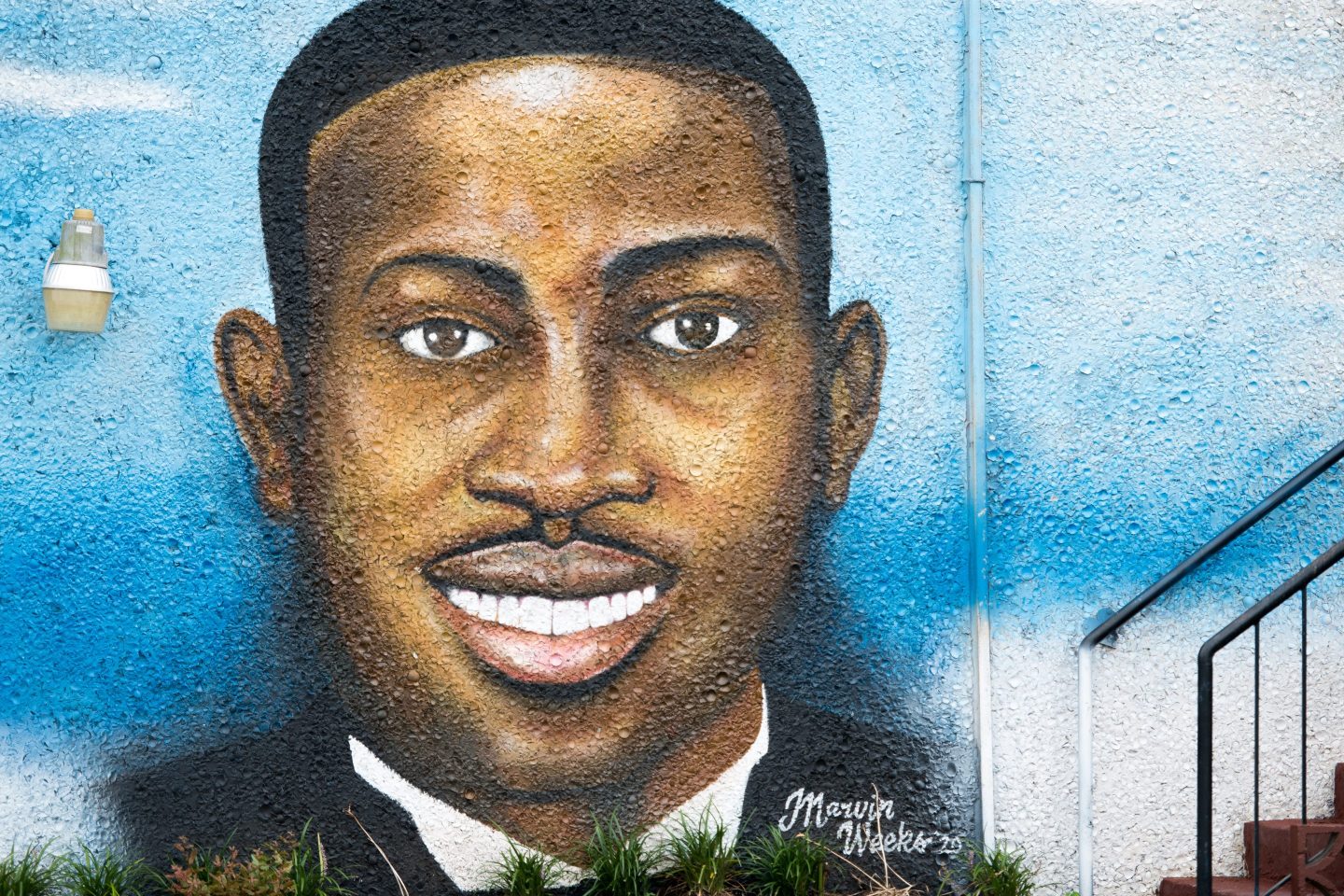
Meet the lone Black juror for the trial of Ahmaud Arbery’s murderers Marcus Ransom, 35, told the New York Times that every night he went back to his hotel room and prayed. “Honestly, I just prayed for everyone. For the jury. For Ahmaud’s family. Even the defendants.” He also cried in court, forced to watch the video of a mortally injured Arbery as he bled on the ground. Again, when he saw a video of one of the defendants mocking a young Black boy as he danced. That said he brought an open mind, a faithful heart, and a lived experience close enough to Arbery’s to understand the assignment. “Just seeing that it was so much hatred that they had, not only for Ahmaud but to other people of the Black race,” he said. “It was a lot to take in.”
New York Times
How the Congressional Black Caucus prepares for a nomination And not just any nomination. It took barely six days after Justice Stephen G. Breyer announced his plan to retire for members of the CBC to set up a “war room” to prepare to support the nomination of the person who would take his place. Now that we know her name—federal Judge Ketanji Brown Jackson—Rep. Joyce Beatty (D-Ohio), chair of the CBC, made the work of the war room explicit. First, that CBC members would stay “laser-focused” on ensuring that Jackson “receives a full and fair hearing before the Senate Judiciary Committee.” And then, the facts. “We are also prepared to combat anyone who may use personal attacks or bigoted language to discredit Judge Jackson,” she said in a statement. “Sadly, we know that Black women in positions of power often face the ugliest forms of racist and sexist attacks. Despite this, in the immortal words of Dr. Martin Luther King, Jr., ‘we shall overcome because the arc of the moral universe is long, but it bends toward justice.’”
Washington Post
On Background
How to keep more women in the executive pipeline Rita Gunther McGrath, an associate professor at Columbia Business School, offers eight ways to keep more women on the path to corporate leadership. Some emphasize selection, like masking gender in the early stages of hiring or using anonymized screening tools to evaluate work. Others are behavioral tweaks, like enforcing a no-interrupting rule in meetings. One interesting one is the PowerPoint ban, as it can hold women back in strategy meetings. “[the] medium falls victim to the same barriers that prevent women from getting their ideas heard in other contexts,” she writes. Amazon only uses written documents for meetings–it helps illuminate the thinking behind the concepts and provides a permanent record of where ideas came from.
Wall Street Journal blog
The hidden history of racism in atomic research European scientists, fleeing Hitler’s rise, flocked to the U.S. in the 1940s. Many joined the Manhattan Project and the quest to create atomic weaponry. African American scientists were welcomed by the refugees in facilities up north, but when the Oak Ridge, Tenn. lab was constructed in the Jim Crow South, Black scientific talent was no longer welcomed by the community. The European scientists were shocked, says a University of Chicago professor: "Many were foreign-born and so the whole idea of discrimination against Blacks was repugnant.” Click through for the inspiring story of J. Ernest Wilkins Jr. the Black prodigy who worked with Enrico Fermi at the famous Chicago Metallurgical Laboratory, before his research moved south without him.
Knox News
Mood board
This is the web version of raceAhead, Fortune's daily newsletter on race, culture, and inclusive leadership. To get it delivered daily to your inbox, sign up here.