Germany’s next government—known as a “traffic light” coalition due to the three parties’ colors—almost has the green light to take power. Negotiations have concluded, and it’s now down to party members to approve the coalition agreement that was unveiled Wednesday.
The agreement covers what Germany’s government will do in the next four years. The minimum wage will go up to €12 ($13.45) an hour, the voting age will drop from 18 to 16, the phase-out of coal will be brought forward to 2030, and investments in renewable energy will soar. House-building will be boosted and rent caps tightened. Dual citizenship will be allowed and cannabis will be legalized. There won’t be any tax rises (apart from carbon taxes), but there also won’t be any cuts to pensions.
Olaf Scholz of the center-left Social Democrats (SPD, red) will be Germany’s next chancellor, and his party will control the economic-development, employment, health and defense ministries. The coveted finance ministry will go to the liberal, center-right Free Democrats (FDP, yellow), which will also get the justice, transport and digital infrastructure, and education ministries. And, along with the foreign, agriculture and environment ministries, the Greens will also helm a new super-ministry that coordinates both the German economy and the country’s climate policy.
“We have negotiated intensively, but with trust, in the last days and weeks,” Scholz said at a press conference. Indeed, the negotiations were marked by a general lack of leaks, indicating good cooperation.
Scholz said his future cabinet will campaign intensively over the next ten days to secure the support of all three parties with the goal of forming the first traffic light coalition at a federal level. “What unites us is the desire to hold the country together, improve it and to achieve progress—this is not politics of the lowest common denominator,” he said.
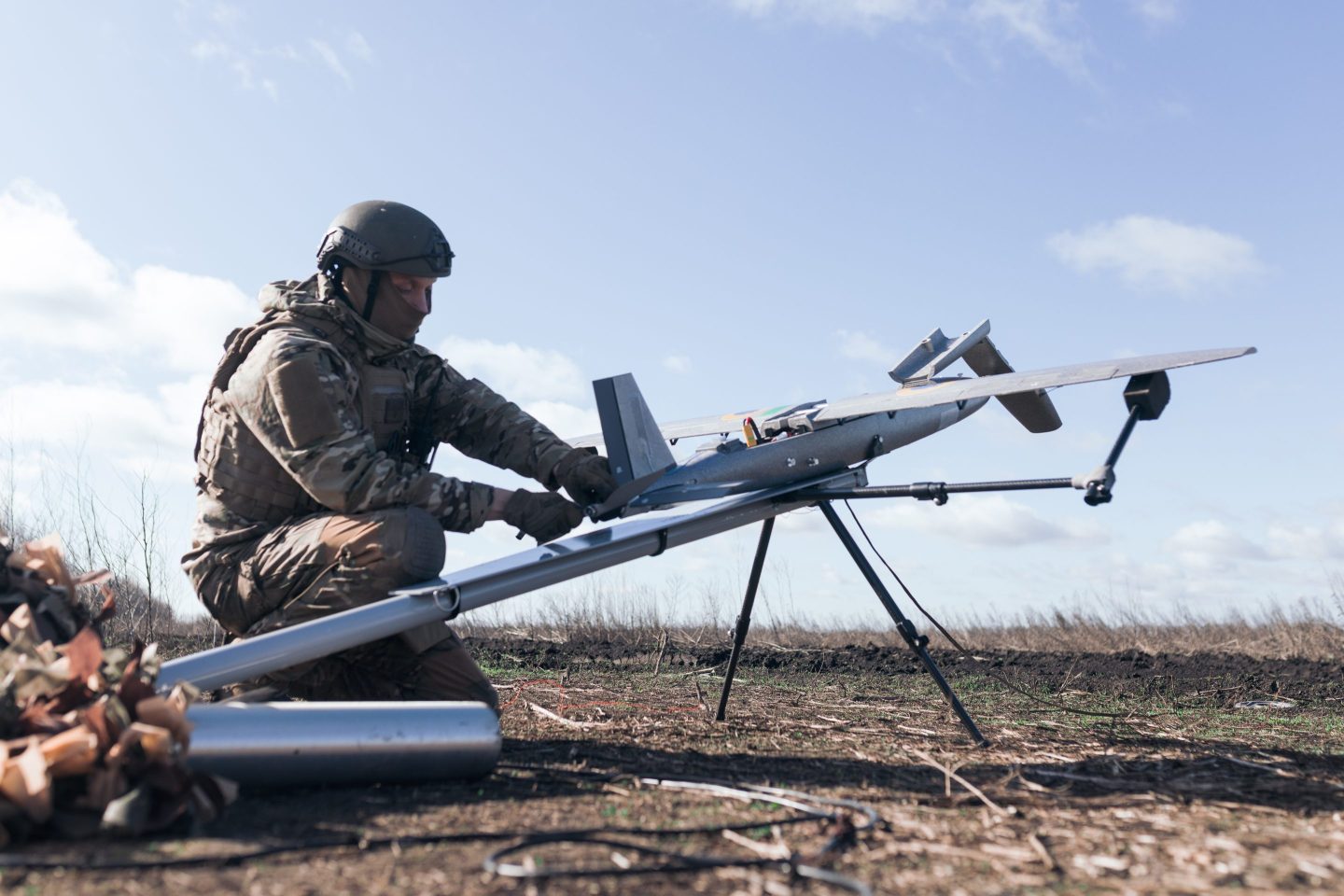
The coalition says it will boost Germany’s research and development budget from 3.2% of gross domestic product (GDP). It is also aiming to boost defense spending from around 1.6% to 2%, which would bring Germany in line with its NATO commitments. The country’s arms export policy will become more strict, and it won’t export surveillance technologies to repressive regimes. The coalition backs the use of armed drones, but not autonomous weapons.
The FDP and Greens are both very keen on digital rights, so the coalition agreement opposes mass online surveillance and face recognition in public spaces, and backs a right to use encryption. The new government is also promising not to deploy “hackbacks” as a means of cyber-defense.
The Greens will get to nominate Germany’s next member of the European Commission. The current German member is Ursula von der Leyen, the Commission’s president, who is a conservative from the CDU party of outgoing Chancellor Angela Merkel. Von der Leyen’s term ends in 2024.
The Greens will on Thursday start seeking its membership’s approval for the agreement, both online and by post. The SPD and FDP will put it up for vote at their party conferences on Dec. 4 and 5 respectively, clearing the way for Scholz to be installed as chancellor by Dec. 8, little more than a week before Merkel would have been able to claim the status of Germany’s longest-serving postwar leader from the late Helmut Kohl.
Compromises
As is the nature of coalition-building, every party has had to compromise to reach an agreement. The Greens, for example, would very much like to see Europe adopt looser fiscal rules, but have had to cede the finance ministry to the FDP in order to hang on to their core territory of climate policy.
The parties have not yet detailed who gets which position, but FDP leader Christian Lindner is very likely to be the new finance minister. He is widely seen as a fiscal hawk, though he recently dismissed that classification as “too wooden.” Annelena Baerbock, who stood as the Greens’ candidate for chancellor, will reportedly become foreign minister, while her co-leader Robert Habeck (who reportedly wanted to be finance minister) will likely head up the new economy and climate super-ministry, while also becoming vice-chancellor.
But, while there has naturally been some political drama in the new coalition’s formation—and while the Greens and FDP are far from being natural partners in certain areas—some observers do not expect to see great changes.
“We expect the new government to continue the gradual tilt towards more government spending on pensions and investment as well as a green transformation that has been the hallmark of the last eight years of Merkel’s 16-year reign as chancellor,” said Berenberg Bank’s chief economist, Holger Schmieding, in a Wednesday note.
Schmieding also criticized the depiction of Lindner as a hawk, arguing that the FDP leader “probably had to agree to toe a common coalition line on key issues”, and pointing out that the current German finance minister—Scholz, whose SPD has been in coalition with Merkel’s CDU for three of her four terms—”is not exactly known as having been unusually soft on domestic and European fiscal issues.”
Climate policy
Scholz said the government would support its manufacturing industry, the backbone of its export strength, in its transition to net-zero production. “We will ensure that in the future the most advanced technology continues to be made in Germany,” the designated chancellor told reporters.
Ever since the European Commission first announced plans to be carbon neutral by 2050, German businesses have gradually had a change of heart. On Wednesday, BASF said it would accelerate efforts to reduce CO2 emissions from its global chemical plants, currently voracious consumers of fossil fuel-based energy.
One key area under contention is exiting coal earlier than 2038, following a divisive and much maligned compromise reached nearly three years ago. Under the agreement just reached, the three partners said that wanted to “ideally” bring this forward to 2030 by lowering the extensive legal and bureaucratic hurdles that block utilities from investing in new sources of green energy.
German electricity provider RWE, a major consumer of locally mined lignite coal, earlier this month warned it could take a year before a new compromise might be reached.
“This is a complex issue that touches upon the security of the power supply and has social ramifications (for the affected coal mining communities),” CEO Markus Krebber told reporters. “Without an expansion in the grid and in renewable, we won’t succeed, since we as a company cannot achieve this on our own.”
Grid operator and power retailer E.On meanwhile earlier this week said it was confident a federal government in which the climate-conscious Greens and the business-focused FDP both served would facilitate the economy’s switch to clean, sustainable prosperity.
“A new traffic light government can make our life much easier and dramatically improve the chances of success for the energy transition if it takes the necessary measures, for example in the permitting process,” CEO Leonhard Birnbaum told reporters on Tuesday. “We need the time this takes to be halved—not just in extraordinary cases but for all projects, including renewables, grid and infrastructure.”
Asked about whether the new government failed young voters by not committing to a firm lignite coal exit by 2030, FDP boss Lindner replied by saying Germany would serve as a role model for the international community since its efforts would be unparalleled among all wealthy industrial nations.
“This coalition agreement is the most ambitious program to protect the climate of any industrial nation,” said Lindner. “In effect we will only be limited by the possibilities of physics and technology. Everything that is economically or politically feasible is in this deal.”
Subscribe to Fortune Daily to get essential business stories straight to your inbox each morning.