• Home
  • Latest
  • Fortune 500
  • Finance
  • Tech
  • Leadership
  • Lifestyle
  • Rankings
  • Multimedia

Trendingnow

1

Trump, who has repeatedly called climate change fake, is now threatening Brazil with tariffs over the deforestation of the Amazon

2

Current price of oil as of June 8, 2026

3

Gen Zers are arriving at college unable to even read a sentence—professors warn it could lead to a generation of anxious and lonely graduates

1

Trump, who has repeatedly called climate change fake, is now threatening Brazil with tariffs over the deforestation of the Amazon

2

Current price of oil as of June 8, 2026

3

Gen Zers are arriving at college unable to even read a sentence—professors warn it could lead to a generation of anxious and lonely graduates
CommentarySingapore

Why Singapore’s sometimes messy reopening matters—to the city, and the world

By
Devadas Krishnadas
Devadas Krishnadas
Down Arrow Button Icon
By
Devadas Krishnadas
Devadas Krishnadas
Down Arrow Button Icon
October 27, 2021, 8:30 PM ET
Devadas Krishnadas, CEO of the Future-Moves Group and author of “Confronting COVID-19,” writes that Singapore’s reopening could sustain—or hamper—the city’s status as a role model for the rest of the world.
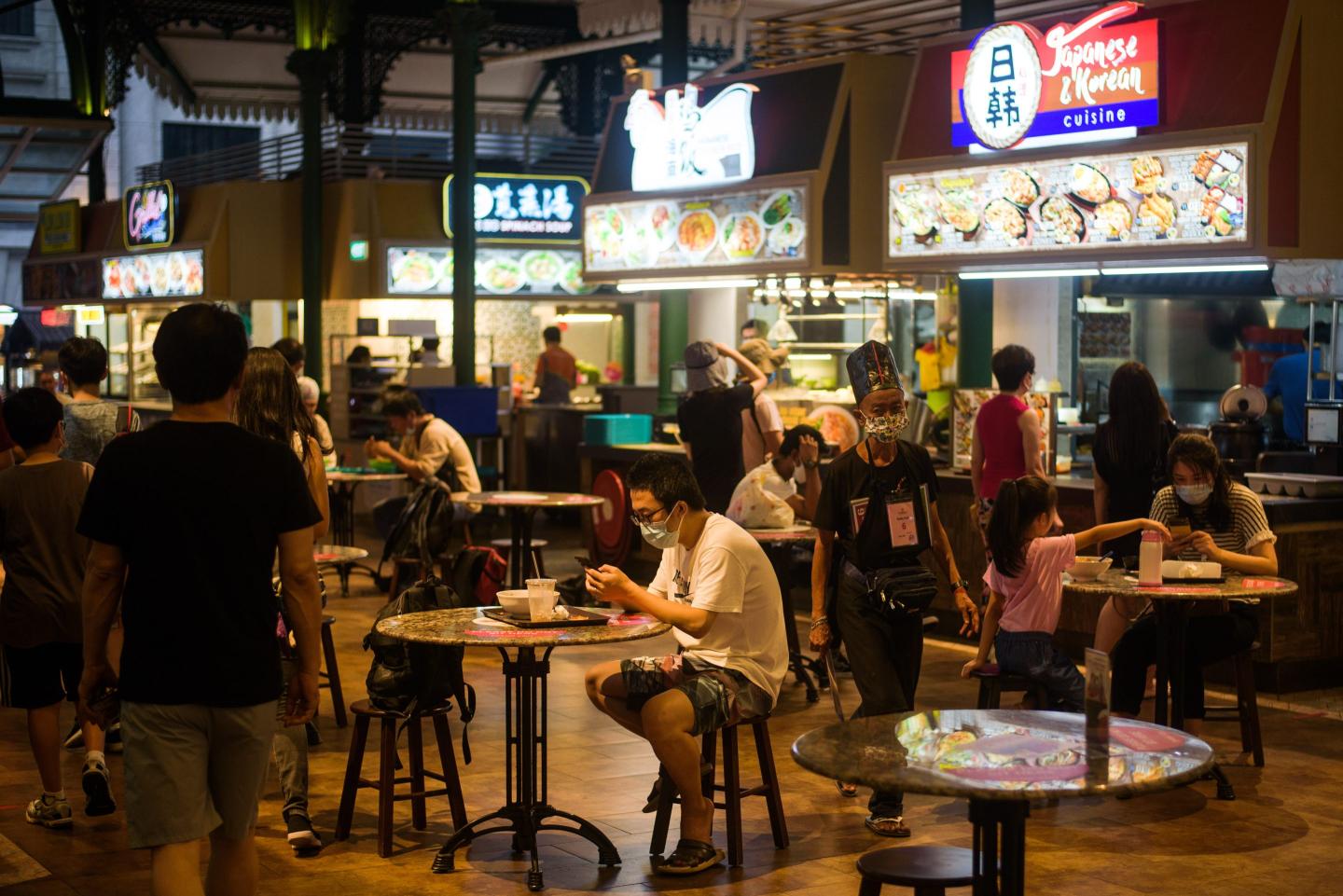
Devadas Krishnadas, CEO of the Future-Moves Group and author of “Confronting COVID-19,” writes that Singapore’s reopening could sustain—or hamper—the city’s status as a role model for the rest of the world. Joseph Nair—NurPhoto/Getty Images

Singaporeans were looking forward to the lifting of current restrictions, originally due to end on Oct. 24. Instead, on Oct. 20, the government decided to extend restrictions—such as constraints on social gatherings and mandating work from home—by an additional month, citing the potential strain on health care capacity.

A close analysis of the data shows that a significant proportion of the cases that require acute care come from the 6% of the population who are unvaccinated despite being eligible, the most vulnerable portion of whom are seniors. Thus, Singaporeans are asking why they are being held hostage by a minority, whose choice is placing a huge externality on the rest of the nation.

Singapore has a tough path to tread. Domestically, it is trying to determine whether it will rely on policy “nudges”—such as requiring the unvaccinated to pay their own health care costs or mandating vaccination—or stutter in limbo with ever-extending restrictions. Yet the city is also trying to open its borders to international travel and events.

Government statements, like the speech delivered by Prime Minister Lee Hsien Loong on Oct. 9, show the desire to pivot to a “living with the virus” approach that allows the city-state to reopen domestically and internationally. Lee’s speech was followed by the announcement of a Home Recovery Programme for those with mild or no symptoms and the opening up of eight more countries to “Vaccinated Travel Lanes” in addition to the two already activated.

The clarity from leaders like the prime minister is important. When a surge in COVID cases had prompted health authorities to reimpose some social distancing restrictions, some observers—including me—argued that these policy shifts showed a city government unsure of its COVID strategy. Foreign outlets including Bloomberg and the New York Times suggested there were divisions in the government.

Singapore’s reputation as a pragmatic nation—which may be floundering a little in the wake of its policy shifts—will be bolstered by a safe and well thought out reopening. The city has long been a case study for economic and social success, with an unrivaled commitment to free trade, and is the go-to strategic partner for trade between East and West.

These achievements were built upon and helped to build a reputation for effective government and efficient public administration. The rest of the world not only looks upon Singapore with envy, and for lessons learned, but as an example of what good government can achieve.

Yet the unforgiving truth is that while Singapore survives based on its relevance to the global economy, the global economy can thrive without Singapore. As the world begins to consider what a post-pandemic world looks like, the city needs a deft strategy to ensure it keeps its place in the global economy.

And, perhaps, Singapore will sustain its status as a role model for other nations and governments. The prime minister’s speech, meant for a domestic audience, has global repercussions: The international business community, capital markets, and strategic partners have a stake in the continuity of the “Singapore Story.”

How Singapore manages the COVID-19 pandemic thus matters both for its own sake, and for so many other stakeholders beyond its shores.

Singapore was originally held up internationally as the “gold standard” in managing COVID owing to its initial low case numbers. Yet matters took a nosedive as the pandemic swept through crowded migrant worker dormitories, a development that was followed by a seven-week lockdown, euphemistically called a “circuit breaker.” Singapore also instituted travel restrictions; those who left were not allowed to return to Singapore easily, for fear they would import the virus.

This containment strategy to limit the transmissibility of the virus worked: Community cases plunged in the latter half of 2020.

But it had consequences.

Singapore’s economy endured its deepest recession in its independent history, with a contraction of 5.8% despite a fiscal stimulus of just over 100 billion Singapore dollars. And in September of this year, the government announced that, for the first time since 1970, Singapore’s population had shrunk, by 4.1%, largely due to a drop in nonresidents amid the COVID-19 pandemic.

Singapore introduced an unprecedented five budgets in 2020, with more than 100 billion Singapore dollars in economic support and stimulus as countercyclical measures.

Despite a slow start owing to limited supply, Singapore’s vaccination program has picked up the pace recently, reaching an 84% full vaccination rate as of publication. Yet daily case numbers have risen, leading to multiple episodes of “Heightened Alerts,” with restrictions on numbers of those dining out and the imposition of default work-from-home arrangements for businesses. Of greatest concern is the fact that ICU occupancy now fluctuates between 79% and 84%. Singapore is now rolling out booster shots for all above the age of 30.

Clearly, keeping with the 2020 containment strategy was unsustainable. The Delta variant is far more transmissible, making it much more difficult to contain. The aggressive containment strategy had several social and economic costs, especially on the small- and medium-size enterprises that make up 99% of its firms and employ 73% of its residents. And finally, Singapore’s vaccination success ironically means little room left to expand protection.

Singapore is not the only country considering ways to open up. Our neighbor Malaysia has just embraced a strategy of “living with the virus,” setting out a path to remove barriers to intrastate and international travel. Australia—with travel restrictions so tough that even its own citizens couldn’t enter at times—has now pledged an aggressive strategy of opening to international travel by November. Thailand, dependent on tourists for its economy, is exploring ways to let visitors back into the country.

Singapore built its reputation on being farsighted, taking bold steps, making hard choices, resiliency in the face of crisis, and, above all, pragmatism. Singapore’s reopening strategy would be an opportunity to show that this reputation remains intact. Or it may inadvertently show the world a different Singapore: one that is indecisive, lacking both foresight and fortitude.

Devadas Krishnadas is founder and CEO of the Future-Moves Group, a Singapore-based management consultancy. He was previously a policy official with the Singapore government. He is also the author of Confronting COVID-19: A Strategic Playbook for Leaders and Decision Makers.

More must-read commentary published by Fortune:

  • Government intervention is more of an American tradition than we care to admit
  • Great workplace design can combat the ‘Great Resignation’
  • Coursera and the uncertain future of higher education
  • Ukraine wants to build a top crypto jurisdiction, not the Wild West
  • To fix the planet’s broken food systems, we must count their hidden costs

Subscribe to Eastworld for insight on what’s dominating business in Asia, delivered free to your inbox.

About the Author
By Devadas Krishnadas
See full bioRight Arrow Button Icon

Latest in Commentary

Finance
Lorem ipsum dolor sit amet, consectetur adipiscing elit, sed do eiusmod tempor incididunt ut labore et dolore magna aliqua. Ut enim ad minim veniam
By Fortune Editors
October 20, 2025
Finance
Lorem ipsum dolor sit amet, consectetur adipiscing elit, sed do eiusmod tempor incididunt ut labore et dolore magna aliqua. Ut enim ad minim veniam
By Fortune Editors
October 20, 2025
Finance
Lorem ipsum dolor sit amet, consectetur adipiscing elit, sed do eiusmod tempor incididunt ut labore et dolore magna aliqua. Ut enim ad minim veniam
By Fortune Editors
October 20, 2025
Finance
Lorem ipsum dolor sit amet, consectetur adipiscing elit, sed do eiusmod tempor incididunt ut labore et dolore magna aliqua. Ut enim ad minim veniam
By Fortune Editors
October 20, 2025
Finance
Lorem ipsum dolor sit amet, consectetur adipiscing elit, sed do eiusmod tempor incididunt ut labore et dolore magna aliqua. Ut enim ad minim veniam
By Fortune Editors
October 20, 2025
Finance
Lorem ipsum dolor sit amet, consectetur adipiscing elit, sed do eiusmod tempor incididunt ut labore et dolore magna aliqua. Ut enim ad minim veniam
By Fortune Editors
October 20, 2025

Most Popular

Finance
Lorem ipsum dolor sit amet, consectetur adipiscing elit, sed do eiusmod tempor incididunt ut labore et dolore magna aliqua. Ut enim ad minim veniam
By Fortune Editors
October 20, 2025
Finance
Lorem ipsum dolor sit amet, consectetur adipiscing elit, sed do eiusmod tempor incididunt ut labore et dolore magna aliqua. Ut enim ad minim veniam
By Fortune Editors
October 20, 2025
Finance
Lorem ipsum dolor sit amet, consectetur adipiscing elit, sed do eiusmod tempor incididunt ut labore et dolore magna aliqua. Ut enim ad minim veniam
By Fortune Editors
October 20, 2025
Finance
Lorem ipsum dolor sit amet, consectetur adipiscing elit, sed do eiusmod tempor incididunt ut labore et dolore magna aliqua. Ut enim ad minim veniam
By Fortune Editors
October 20, 2025
Finance
Lorem ipsum dolor sit amet, consectetur adipiscing elit, sed do eiusmod tempor incididunt ut labore et dolore magna aliqua. Ut enim ad minim veniam
By Fortune Editors
October 20, 2025
Finance
Lorem ipsum dolor sit amet, consectetur adipiscing elit, sed do eiusmod tempor incididunt ut labore et dolore magna aliqua. Ut enim ad minim veniam
By Fortune Editors
October 20, 2025
Fortune Secondary Logo
Rankings
  • 100 Best Companies
  • Fortune 500
  • Global 500
  • Fortune 500 Europe
  • Most Powerful Women
  • World's Most Admired Companies
  • See All Rankings
  • Lists Calendar
Sections
  • Finance
  • Fortune Crypto
  • Features
  • Leadership
  • Health
  • Commentary
  • Success
  • Retail
  • Mpw
  • Tech
  • Lifestyle
  • CEO Initiative
  • Asia
  • Politics
  • Conferences
  • Europe
  • Newsletters
  • Personal Finance
  • Environment
  • Magazine
  • Education
Customer Support
  • Frequently Asked Questions
  • Customer Service Portal
  • Privacy Policy
  • Terms Of Use
  • Single Issues For Purchase
  • International Print
Commercial Services
  • Advertising
  • Fortune Brand Studio
  • Fortune Analytics
  • Fortune Conferences
  • Business Development
  • Group Subscriptions
About Us
  • About Us
  • Press Center
  • Work At Fortune
  • Terms And Conditions
  • Site Map
  • About Us
  • Press Center
  • Work At Fortune
  • Terms And Conditions
  • Site Map
  • Facebook icon
  • Twitter icon
  • LinkedIn icon
  • Instagram icon
  • Pinterest icon

Latest in Commentary

tim
CommentaryAirline industry
Merlin CTO: autonomy can rebuild the foundation of aviation — and national security
By Tim BurnsJune 9, 2026
8 hours ago
dewar
CommentaryLeadership
I founded McKinsey’s CEO practice: Here’s why operational excellence is a liability right now
By Carolyn DewarJune 9, 2026
9 hours ago
250
Commentary250 Years of Innovation
America turns 250. Its greatest innovation was never a product — it was a system that let anyone build one
By Keith KrachJune 7, 2026
2 days ago
retirement
CommentaryRetirement
Retiring at 62 costs the average American $250,000. Here’s the math (and the neuroscience) that explain why
By Jon SabesJune 7, 2026
2 days ago
da
CommentaryIPOs
The short seller’s argument nobody on the coming mega IPO roadshow wants you to make
By Bhaskar ChakravortiJune 7, 2026
2 days ago
bs
CommentaryCalifornia
I’ve sold property on California’s Central Coast for decades. The buyers chasing ranch and winery estates are after more than a lifestyle
By Lindsey HarnJune 6, 2026
3 days ago

Most Popular

Trump, who has repeatedly called climate change fake, is now threatening Brazil with tariffs over the deforestation of the Amazon
Environment
Trump, who has repeatedly called climate change fake, is now threatening Brazil with tariffs over the deforestation of the Amazon
By Sasha RogelbergJune 8, 2026
1 day ago
Current price of oil as of June 8, 2026
Personal Finance
Current price of oil as of June 8, 2026
By Joseph HostetlerJune 8, 2026
1 day ago
Gen Zers are arriving at college unable to even read a sentence—professors warn it could lead to a generation of anxious and lonely graduates
Success
Gen Zers are arriving at college unable to even read a sentence—professors warn it could lead to a generation of anxious and lonely graduates
By Preston ForeJune 7, 2026
2 days ago
Pentagon accuses Alibaba, Baidu and BYD, three of China's biggest companies, of supporting the Chinese military
Asia
Pentagon accuses Alibaba, Baidu and BYD, three of China's biggest companies, of supporting the Chinese military
By Kate O'Keeffe and BloombergJune 8, 2026
21 hours ago
'We didn’t see this coming': Wall Street eats its forecasts as stocks sell off globally on fear of AI bubble ahead of SpaceX IPO
Economy
'We didn’t see this coming': Wall Street eats its forecasts as stocks sell off globally on fear of AI bubble ahead of SpaceX IPO
By Jim EdwardsJune 8, 2026
1 day ago
'The golden years are not golden': Boomers are hoarding most of America's wealth and power because they're terrified of outliving their money
Economy
'The golden years are not golden': Boomers are hoarding most of America's wealth and power because they're terrified of outliving their money
By Nick LichtenbergJune 7, 2026
2 days ago

© 2026 Fortune Media IP Limited. All Rights Reserved. Use of this site constitutes acceptance of our Terms of Use and Privacy Policy | CA Notice at Collection and Privacy Notice | Do Not Sell/Share My Personal Information
FORTUNE is a trademark of Fortune Media IP Limited, registered in the U.S. and other countries. FORTUNE may receive compensation for some links to products and services on this website. Offers may be subject to change without notice.