Ben Dreyfuss needed a comforter. And the actor and writer (and son of Oscar-winner Richard), who had recently moved to Sun Valley, Idaho, expected to get a satisfactory one at a good price on the same timetable that we’ve all become used to receiving consumer goods: right away.
It didn’t work out. In what became a lengthy Twitter thread, he raged that he couldn’t find an affordable comforter locally, and no online options could deliver quickly enough. “You want something on Amazon?” he groused. “Congrats, it will be here in a week.” His only option, Dreyfuss claimed, was to make a 150-mile roundtrip to the nearest Bed Bath & Beyond—“a societal failure” sparked by a stressed supply chain and 15 years of e-commerce wiping out local business.
Dreyfuss was promptly roasted—it didn’t help that he also framed his beef as a function of “small town Idaho” life; Sun Valley’s posh ski resorts don’t exactly typify rural Middle America. But let’s face it: Many of us have likely felt a similar frustration in recent weeks. The supply chain really is stressed, and that is part of what is causing consumers to do something that reverses decades of determined and sophisticated efforts by big business and technology. It is forcing us to wait. Six months for a refrigerator, nine months for a couch; some gamers are still having trouble getting hold of a PS5, which came out nearly a year ago.
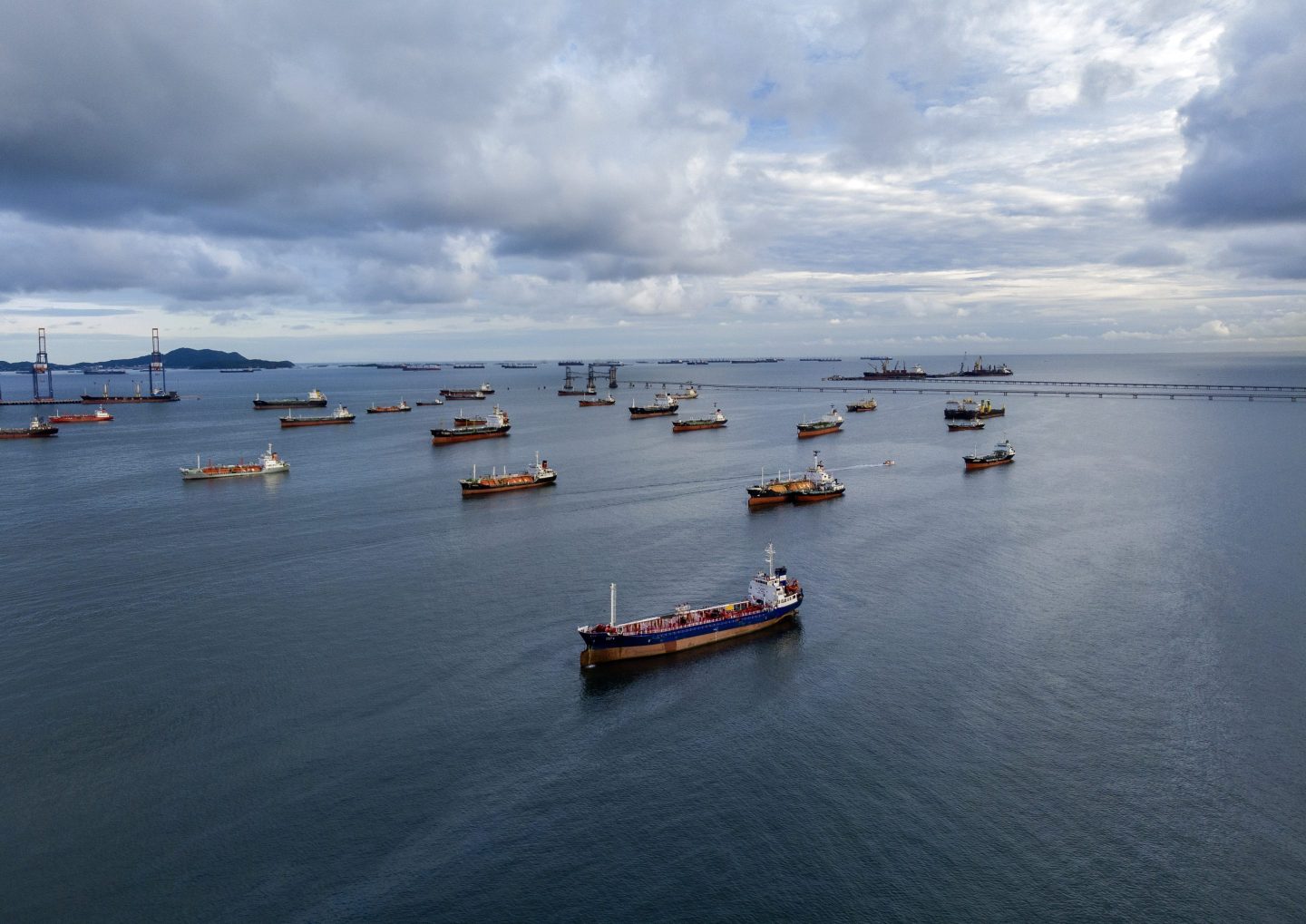
Supply-chain woes aren’t the only culprit, but they’ve directed unprecedented attention toward the elaborate manufacturing and transportation networks that enable modern commerce. Inventories are thin; factories across Asia have been slowed or paused by COVID-19 issues; cargo ships are logjammed at ports from Long Beach to Savannah. Big retailers like Walmart, Costco, and Home Depot have chartered their own ships to keep shelves stocked. You need to finish your holiday shopping by, well, yesterday: Experts expect slowed delivery of everything from toys and gizmos (particularly anything that involves a semiconductor chip, notoriously in short supply) to home COVID test kits. When the Port of Los Angeles recently moved to 24-hour operations, it was announced by President Biden, an indicator that consumer inconvenience has become a de facto political issue.
People aren’t just upset about waiting for goods. Customers have been acting out, venting about long waits at restaurants or flight delays. This is contributing to an epic number of service workers leaving their jobs, fueling the record quitting of the so-called Great Resignation labor squeeze—which of course ultimately leads to thin staffing that results in more waiting. One benchmark: Bloomberg columnist Tara Lachapelle recently cited a research note from Stephens Inc. claiming that this summer Domino’s delivery times “abruptly and surprisingly spiked 30%,” and have not recovered, likely due to a driver shortage. Even the post office is slowing some deliveries as part of a cost-cutting scheme.
You can think of this waiting boom as a form of “shadow inflation.” That’s when instead of raising prices, companies give you less for the amount you’re used to paying. Maybe that means a subtly smaller candy bar. Or maybe it means increased wait times. Some car sellers, for instance, are warning potential buyers to be flexible, because getting the exact color and make they want is going to take a while: Vehicle shortages are expected to stretch into next year.
That said, maybe the most underrated factor in the return of waiting is that the supply-side snarls are coinciding with a demand-side explosion, as consumers continue to spend on their pent-up desire for everything from appliances and durable goods to experiences and services. Our demand for stuff evidently continues unabated, despite higher prices, shortages, and the Delta variant. Retail sales (including restaurants and bars along with clothing and home-goods stores and the like) rose again in September, contrary to expectations. “People are willing to spend; it’s just a question if they can find the items,” an economist at S&P Global told the New York Times.
That’s why this moment is shining a spotlight on how important not waiting has become to consumers. We have come to expect to get what we want ASAP because that’s what companies have trained us to expect. A defining characteristic of the past century of selling has been the honing of technology and logistics to shorten the time between the spark of your desire and the delivery of its satisfaction. Amazon’s trajectory is an obvious stand-in for the broader phenomenon: Its “everything store,” with its proposition of infinite variety, has fully merged with a zeal to satisfy instant-gratification urges. Thus the fleets of Amazon Prime vans that have swiftly become as familiar as Fedex or UPS trucks. And thus the outrage when a shopper discovers he might have to wait a week for a comforter, even though it wasn’t so long ago that the speedy delivery of home goods was a dazzling innovation—not something akin to a human right.
The pandemic accelerated the trend even more. With options for entertainment or release curtailed, retail therapy went online. Many got even more used to a “frictionless” economy: You want something, you tap your phone a few times, and it’s on its way to your door. Both e-commerce and delivery businesses ramped up to meet and exceed demand for maximum speed in bringing customers everything from cheeseburgers to printers to lumber. Ultimately, it really did seem like waiting a week for a comforter was somehow unthinkable, for consumers, at least. “Technology has insulated the upper classes from the physical labor that enables their lifestyle,” Melissa Swift of the consulting firm Mercer told Axios recently.
While no-wait culture has had negative consequences on the environment, on labor, and perhaps on our psyches, it won’t be easy to reverse. There is some evidence that supply-chain stress has peaked, but even if that’s the case, it will take months to wind things back to normal-ish. The labor squeeze, meanwhile, is expected to last for years. For now, we are being forced to learn to wait again. But the cycle won’t really break without a change in consumer expectations. Can we really learn to accept that you can’t always get what you want immediately? We’ll have to wait and see.
Subscribe to Fortune Daily to get essential business stories straight to your inbox each morning.