• Home
  • Latest
  • Fortune 500
  • Finance
  • Tech
  • Leadership
  • Lifestyle
  • Rankings
  • Multimedia
CommentaryEspionage

When intelligence agencies co-opt business, the consequences can be deadly

By
Stephen Davis
Stephen Davis
Down Arrow Button Icon
By
Stephen Davis
Stephen Davis
Down Arrow Button Icon
September 23, 2021, 8:30 PM ET
Investigative journalist Stephen Davis, author of "Flight 149", writes of the risks that come when intelligence operations use private-sector resources.
Investigative journalist Stephen Davis, author of "Flight 149", writes of the risks that come when intelligence operations use private-sector resources. Jason Alden—Bloomberg/Getty Images

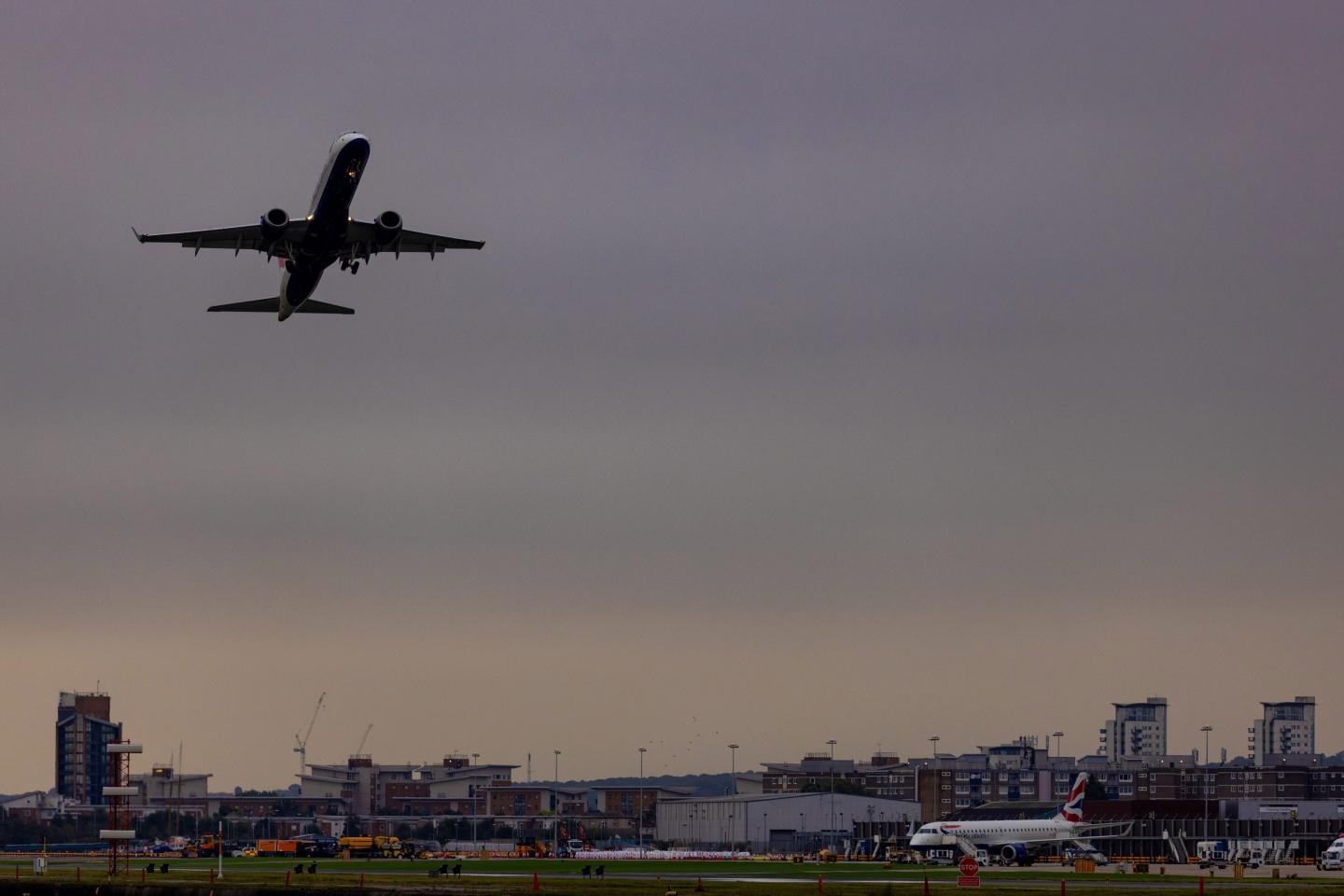
An airport besieged by those desperate to leave as extremists take over the country. The United States, the United Kingdom and their allies deploying aircraft for a mass evacuation. The capital’s airport is the only way out.

This isn’t Kabul in 2021, but Tehran in 1979 in the wake of Iran’s Islamic Revolution. Amidst the chaos, a British Airways VC10 flew to Tehran with a crew from the airline’s QRS (quick response standby) team. They were told they were being deployed to fly a 747 with passengers out of Iran.

They were not told that they were also carrying out an extremely risky assignment: picking up a secret military team.

It did not go to plan. The flight was delayed, and years later many of the crew remember vividly the terror of being trapped in a city with hostile crowds and their death chants.

The incident, revealed in my book, Flight 149, is just one of many examples of a civilian craft being used for intelligence purposes, examples that I’ve uncovered in my years of investigative reporting.

British Airways was a nationalized carrier then; it could be argued that doing the government’s bidding was part of its role.

But what about now?

The lines between the state and corporations are increasingly blurred in the fields of security and intelligence. Governments are using private contractors to do work previously done by the official military, and intelligence services are still using civilian means of transport, often with dire consequences for passengers and crew who are not informed of the dangers.

All of these operations are classified. I have reported only historic examples to protect my intelligence sources, but the same type of missions still happen today.

The U.S. and U.K. use groups that are officially off the books—a Delta Force or SAS soldier who through a shuffling of the paperwork is contracted to a private security company. Russia does the same thing. The Wagner network operates in the Ukraine and many other parts of the world, officially not part of the Russian government but likely directed by the Kremlin.

Who takes responsibility for a mission where the private assets of a company are used by a government for national security purposes, for a military or intelligence operation with no official or legal connection to that government?

For example, the ferry Estonia, which sank in 1994 with 852 lives lost, was being used to transport highly sensitive military equipment taken from Russia to the West, via Sweden.

An investigation I did with Scandinavian journalists made worldwide headlines in 2020 with the revelation that there was a hole in the side, possibly caused by an explosion.

A Discovery Channel series demolished the official version of events and I was able to reveal that the Russians found out about the smuggling and warned Western intelligence, who carried on. The Swedish government has said it will consider a new inquiry, while other western intelligence agencies have refused to comment.

While the cause of the sinking is still unknown, this was still a case of civilians being used as cover for an intelligence operation. 

In Flight 149, I reveal another blatant case of the use of civilian transport for secret missions.  

In August 1990 I had become interested in rumors about a passenger flight—British Airways Flight 149—which had landed in Kuwait after it was invaded by Iraqi troops.  

It was the only plane to land in Kuwait that night. All the passengers and crew were eventually taken hostage, used as human shields and suffered terribly in captivity.

My investigations uncovered that the plane was carrying a military intelligence team and its captain, it turned out, was an asset for Mi6, British intelligence. The U.K. government has refused to comment on the new revelations in my book, instead referring back to a statement 23 years ago that they did not seek to “exploit” the flight.

Three decades later, British Airways (BA) still has serious questions to answer. During the course of my long investigation BA has provided a number of contradictory statements—at one stage saying they no longer had a copy of the passenger list, then later admitting that they did.

But they have been adamant on one key point—that they had been advised by the U.K. government that it was safe to fly to Kuwait that fateful night.

But Tony Paice, who was the Mi6 station chief in Kuwait in August 1990, and one of my prime sources in Flight 149, broke cover last month to challenge BA’s story. Paice claimed that he had specifically warned BA that the flight was likely to land just as the Iraqis were invading.

Since then, new sources have come forward to say that BA tried to stop the crew talking about what happened, and actively sought to suppress the publication of depositions given by BA staff in a Texas court case.

BA and the U.K. government have refused to comment further.

An Mi6 source explained to me the cozy relationship between British Airways and the intelligence services. BA, he said, is known to the service as “Bucks Fizz” and any mission would always involve co-opting the pilot.

These type of black ops missions are much more common than is realized; all governments are fond of them because they provide deniability, but they blur the lines in ways that have serious potential consequences for the companies involved.

This is an enormous challenge for victims, journalists and international institutions seeking accountability.

French, American and British passengers sued BA in their home countries over the Flight 149 fiasco, yet while the French and American passengers succeeded in winning compensation, the British passengers did not. The House of Lords in 1996 dismissed appeals against British Airways, saying the airline did not have a case to answer under the Warsaw Convention, which ensures all passengers on a plane are treated equally in the event of death or injury after an airline accident, regardless of their nationality.

Would the revelation that the passengers and crew had deliberately been placed in harm’s way have made a difference to the Law Lords?

One would hope so.

And, at the very least, the financial and reputational costs for corporations if things go wrong is potentially catastrophic. As one Mi6 source told me: if the cover-up of Flight 149 had been revealed, British Airways might not have survived.

Stephen Davis has been a newspaper editor, foreign editor, and award-winning TV current affairs producer, and has designed and run journalism degree programs in the U.K. and Australia. He is the author of Flight 149: A Hostage Crisis, a Secret Special Forces Unit, and the Origins of the Gulf War, published by Public Affairs earlier this year.

More must-read commentary published by Fortune:

  • Net zero isn’t enough. We need to get to net negative
  • How to become a sustainability leader—and create sustainable value
  • E-commerce’s COVID boost is a wake-up call for Asia’s policymakers
  • The U.S. is taking decisive action against cybercrime
  • Businesses should open their doors to Afghan allies and refugees

Subscribe to Fortune Daily to get essential business stories straight to your inbox each morning.

About the Author
By Stephen Davis
See full bioRight Arrow Button Icon

Latest in Commentary

Finance
Lorem ipsum dolor sit amet, consectetur adipiscing elit, sed do eiusmod tempor incididunt ut labore et dolore magna aliqua. Ut enim ad minim veniam
By Fortune Editors
October 20, 2025
Finance
Lorem ipsum dolor sit amet, consectetur adipiscing elit, sed do eiusmod tempor incididunt ut labore et dolore magna aliqua. Ut enim ad minim veniam
By Fortune Editors
October 20, 2025
Finance
Lorem ipsum dolor sit amet, consectetur adipiscing elit, sed do eiusmod tempor incididunt ut labore et dolore magna aliqua. Ut enim ad minim veniam
By Fortune Editors
October 20, 2025
Finance
Lorem ipsum dolor sit amet, consectetur adipiscing elit, sed do eiusmod tempor incididunt ut labore et dolore magna aliqua. Ut enim ad minim veniam
By Fortune Editors
October 20, 2025
Finance
Lorem ipsum dolor sit amet, consectetur adipiscing elit, sed do eiusmod tempor incididunt ut labore et dolore magna aliqua. Ut enim ad minim veniam
By Fortune Editors
October 20, 2025
Finance
Lorem ipsum dolor sit amet, consectetur adipiscing elit, sed do eiusmod tempor incididunt ut labore et dolore magna aliqua. Ut enim ad minim veniam
By Fortune Editors
October 20, 2025

Most Popular

Finance
Lorem ipsum dolor sit amet, consectetur adipiscing elit, sed do eiusmod tempor incididunt ut labore et dolore magna aliqua. Ut enim ad minim veniam
By Fortune Editors
October 20, 2025
Finance
Lorem ipsum dolor sit amet, consectetur adipiscing elit, sed do eiusmod tempor incididunt ut labore et dolore magna aliqua. Ut enim ad minim veniam
By Fortune Editors
October 20, 2025
Finance
Lorem ipsum dolor sit amet, consectetur adipiscing elit, sed do eiusmod tempor incididunt ut labore et dolore magna aliqua. Ut enim ad minim veniam
By Fortune Editors
October 20, 2025
Finance
Lorem ipsum dolor sit amet, consectetur adipiscing elit, sed do eiusmod tempor incididunt ut labore et dolore magna aliqua. Ut enim ad minim veniam
By Fortune Editors
October 20, 2025
Finance
Lorem ipsum dolor sit amet, consectetur adipiscing elit, sed do eiusmod tempor incididunt ut labore et dolore magna aliqua. Ut enim ad minim veniam
By Fortune Editors
October 20, 2025
Finance
Lorem ipsum dolor sit amet, consectetur adipiscing elit, sed do eiusmod tempor incididunt ut labore et dolore magna aliqua. Ut enim ad minim veniam
By Fortune Editors
October 20, 2025
Fortune Secondary Logo
Rankings
  • 100 Best Companies
  • Fortune 500
  • Global 500
  • Fortune 500 Europe
  • Most Powerful Women
  • World's Most Admired Companies
  • See All Rankings
  • Lists Calendar
Sections
  • Finance
  • Fortune Crypto
  • Features
  • Leadership
  • Health
  • Commentary
  • Success
  • Retail
  • Mpw
  • Tech
  • Lifestyle
  • CEO Initiative
  • Asia
  • Politics
  • Conferences
  • Europe
  • Newsletters
  • Personal Finance
  • Environment
  • Magazine
  • Education
Customer Support
  • Frequently Asked Questions
  • Customer Service Portal
  • Privacy Policy
  • Terms Of Use
  • Single Issues For Purchase
  • International Print
Commercial Services
  • Advertising
  • Fortune Brand Studio
  • Fortune Analytics
  • Fortune Conferences
  • Business Development
  • Group Subscriptions
About Us
  • About Us
  • Press Center
  • Work At Fortune
  • Terms And Conditions
  • Site Map
  • About Us
  • Press Center
  • Work At Fortune
  • Terms And Conditions
  • Site Map
  • Facebook icon
  • Twitter icon
  • LinkedIn icon
  • Instagram icon
  • Pinterest icon

Latest in Commentary

tillis
CommentaryCongress
Thom Tillis: Free markets built American prosperity. Government intervention puts it at risk
By Thom Tillis and John StanfordApril 30, 2026
46 minutes ago
iran
CommentaryIran
The Strait of Hormuz is a data problem, not just a military one
By Erik Bethel and Ami DanielApril 30, 2026
1 hour ago
hollywood
CommentaryMarketing
I spent 20 years learning to navigate an industry. Then I built a campaign for the man who’s dismantling it
By Matti YahavApril 29, 2026
20 hours ago
aging
HealthLongevity
We’re the CEOs of Peloton and the Hospital for Special Surgery. Living longer isn’t enough, we need to live better, too
By Bryan T. Kelly and Peter SternApril 29, 2026
21 hours ago
gen z
Commentarydisruption
AI won’t kill your job — it will kill the path to your first one
By Jeffrey Sonnenfeld, Stephen Henriques, Johan Griesel, Andrew Alam-Nist and Peter YuApril 29, 2026
22 hours ago
greer
CommentaryTariffs
No, tariffs are not strengthening the economy
By Alex DuranteApril 29, 2026
23 hours ago

Most Popular

Apple cofounder Ronald Wayne—whose stake would be worth up to $400 billion had he not sold it in 1976—says that at 91, he has no regrets
Success
Apple cofounder Ronald Wayne—whose stake would be worth up to $400 billion had he not sold it in 1976—says that at 91, he has no regrets
By Preston ForeApril 27, 2026
3 days ago
‘Take the money and run’: Johns Hopkins economist Steve Hanke on why the UAE quit OPEC
Energy
‘Take the money and run’: Johns Hopkins economist Steve Hanke on why the UAE quit OPEC
By Shawn TullyApril 29, 2026
1 day ago
‘The cost of compute is far beyond the costs of the employees’: Nvidia executive says right now AI is more expensive than paying human workers
AI
‘The cost of compute is far beyond the costs of the employees’: Nvidia executive says right now AI is more expensive than paying human workers
By Sasha RogelbergApril 28, 2026
2 days ago
Jamie Dimon gets candid about national debt: ‘There will be a bond crisis, and then we’ll have to deal with it’
Economy
Jamie Dimon gets candid about national debt: ‘There will be a bond crisis, and then we’ll have to deal with it’
By Eleanor PringleApril 29, 2026
23 hours ago
‘They left me no choice’: Powell isn’t going anywhere—blocking Trump from another Fed appointee
Banking
‘They left me no choice’: Powell isn’t going anywhere—blocking Trump from another Fed appointee
By Eva RoytburgApril 29, 2026
15 hours ago
More than two-thirds of U.S. schools say they’re unable to afford the cost of student free lunch—and MAHA’s dietary guidelines may make it worse
Economy
More than two-thirds of U.S. schools say they’re unable to afford the cost of student free lunch—and MAHA’s dietary guidelines may make it worse
By Sasha RogelbergApril 29, 2026
1 day ago

© 2026 Fortune Media IP Limited. All Rights Reserved. Use of this site constitutes acceptance of our Terms of Use and Privacy Policy | CA Notice at Collection and Privacy Notice | Do Not Sell/Share My Personal Information
FORTUNE is a trademark of Fortune Media IP Limited, registered in the U.S. and other countries. FORTUNE may receive compensation for some links to products and services on this website. Offers may be subject to change without notice.