• Home
  • Latest
  • Fortune 500
  • Finance
  • Tech
  • Leadership
  • Lifestyle
  • Rankings
  • Multimedia
Commentarydigital transformation

E-commerce’s COVID boost is a wake-up call for Asia’s policymakers

By
James Lambert
James Lambert
and
Anh Tran
Anh Tran
Down Arrow Button Icon
By
James Lambert
James Lambert
and
Anh Tran
Anh Tran
Down Arrow Button Icon
September 22, 2021, 8:00 PM ET
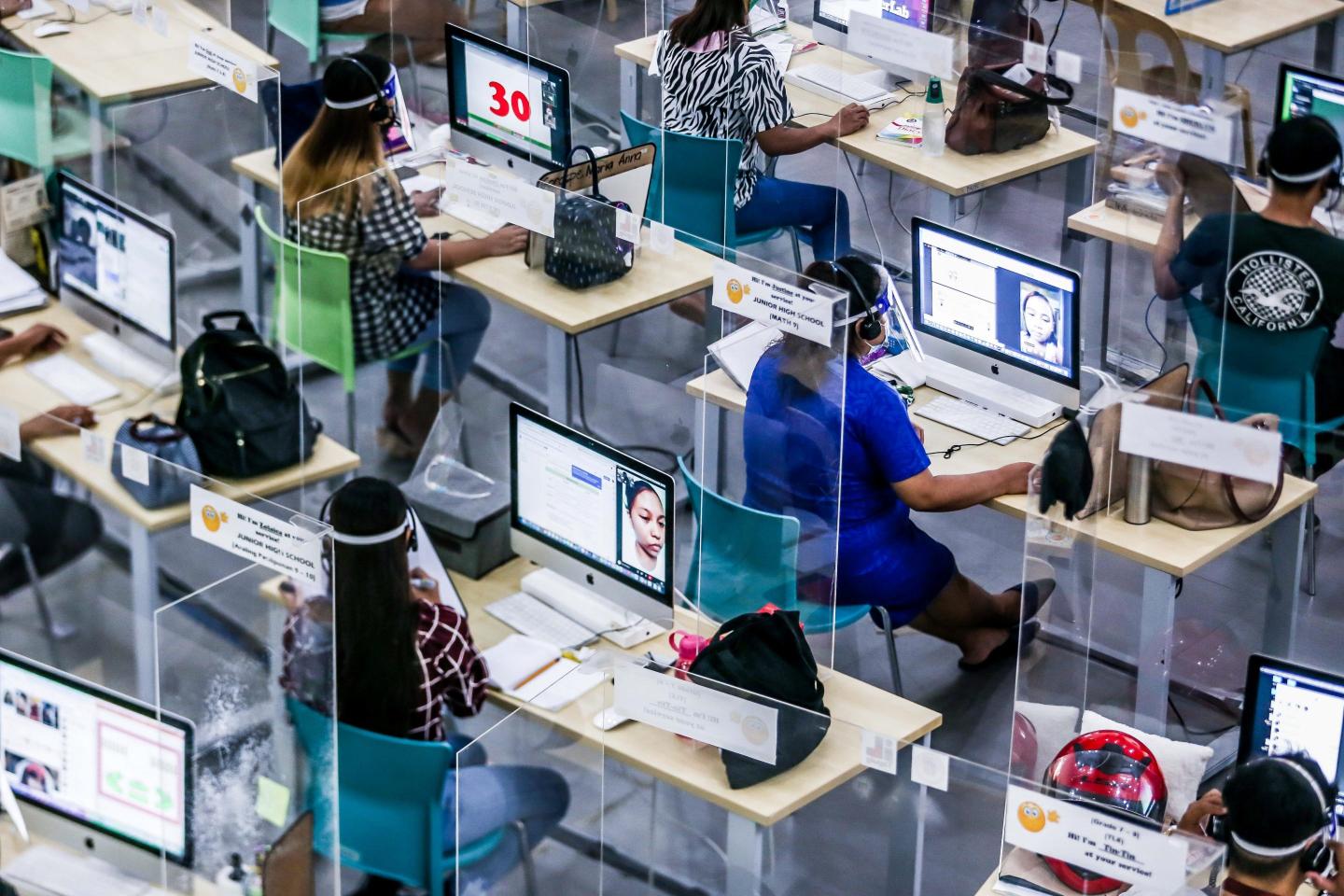
James Lambert and Anh Tran write that Southeast Asia’s digitalization can be a boon to the region’s governments—if only they can determine how to measure it.
James Lambert and Anh Tran write that Southeast Asia’s digitalization can be a boon to the region’s governments—if only they can determine how to measure it.Rouelle Umali—Xinhua/Getty Images

The Asian digital economy has reached a watershed moment in the wake of the COVID-19 pandemic. From major retailers to startup entrepreneurs, the Internet is now the primary tool for businesses to understand their markets and to sell their goods and services.

It is no secret that lockdowns caused an irreversible step change in the digitalization of commerce. But there is a growing danger that policymakers will miss the window to exploit the economic growth potential this shift represents because they have such a poor grasp of what is going on in the digital economy.

More than half of the world’s consumers have increased their online shopping because of the pandemic—and particularly in emerging markets. This was true for 80% of Chinese and 50% of South Korean consumers, according to a recent survey by the United Nations. As professor Erik Brynjolfsson of Stanford University recently described it: “The pandemic has compressed a decade’s worth of digital innovation…into less than a year.”

The digital transformation of the past 18 months is striking because the digital laggards are finally getting on board. Organizations that were reluctant to adopt digital solutions, from small family businesses to big banks, realized they could no longer postpone the inevitable. From museums to restaurants, businesses have fought to survive by investing in digital technologies and transforming business operations to bring their product offerings online.

This acceleration in e-commerce matters because it is the gateway to a host of productivity enhancing digital spillovers. Studies show it leads to improvements in digital infrastructure, financial inclusion, ICT skills, and business regulation. At the same time, e-commerce fuels a virtuous cycle of innovation, as “big data” feeds new ideas and applications in artificial intelligence.

Yet Asian governments risk missing these benefits. As the crisis landed in 2020, Asian governments correctly prioritized short-term responses to the pandemic. Now, as they look to the future, it is more challenging to address the longer-term strategic requirements for a sustainable post-COVID recovery.

There is a grave lack of understanding of the scale of e-commerce activity and the operations of the digital economy. In fact, there is no consensus in the region on what the digital economy is, and no one quite understands how large it has grown.  As the late management consultant Peter Drucker is reputed to have said: “If you can’t measure it you can’t manage it.”

Official statistics are designed to account for the more traditional aspects of the digital economy: hardware and telecom equipment manufacturing and the information and services sectors. But they paint a woefully inadequate picture of the more dynamic, fast-growing trends, such as digital intermediary platforms, cloud-based digital service providers, and digital content providers. These are the technological innovations that are disrupting old business models, expanding market frontiers and making workforces more productive—but they require a conducive policy environment to flourish in.

When policymakers are blind to the value generation and jobs growth in these dynamic sectors, it limits their ability to support digital entrepreneurs and tech startups and ultimately leads to a loss of competitiveness for local businesses. R&D investment strategies are ill-informed, regulators cannot track their effectiveness, and digital entrepreneurs and tech startups are not given the space and support that would help get them off the ground.

If governments are serious about leveraging the digital economy to fuel economic growth, they need to upgrade their understanding of what is taking place within it. This is no mean feat, but it starts with quite simple changes to the questionnaires in established statistics collection instruments, such as annual business surveys, labor force surveys, and household surveys.

The modern digital economy brings new questions about ICT capital expenditure, the money businesses are spending on digital services, the share of sales via digital platforms, and the skills composition of the workforce. This would lead to valuable insights into the scale and trajectory of the digital economy.

The U.S. Bureau of Economic Analysis has constructed a digital satellite account to measure the U.S. digital economy, including robust statistics on e-commerce activity, digital infrastructure, and the provision of digital services. In August 2021, the digital ministers of the G20 reaffirmed their pledge to harness the potential of “digitalization for a resilient, strong, sustainable, and inclusive recovery.” There is a path forward, but these words are scarcely—or only extremely slowly—translated into action.

Asian businesses are riding the wave of digitalization, propelled by an acceleration in e-commerce in the past 18 months. The longer-term economic recovery will depend on successfully leveraging the power of the digital economy. If Asian economies cannot build the statistical foundation to do that, they will fall behind the economies that can.

James Lambert is director of economic consulting in Asia for Oxford Economics. Anh Tran is an Oxford Economics economist.

More must-read commentary published by Fortune:

  • Net zero isn’t enough. We need to get to net negative
  • How to become a sustainability leader—and create sustainable value
  • E-commerce’s COVID boost is a wake-up call for Asia’s policymakers
  • The U.S. is taking decisive action against cybercrime
  • Businesses should open their doors to Afghan allies and refugees

Subscribe to Eastworld for insight on what’s dominating business in Asia, delivered free to your inbox.

About the Authors
By James Lambert
See full bioRight Arrow Button Icon
By Anh Tran
See full bioRight Arrow Button Icon

Latest in Commentary

Finance
Lorem ipsum dolor sit amet, consectetur adipiscing elit, sed do eiusmod tempor incididunt ut labore et dolore magna aliqua. Ut enim ad minim veniam
By Fortune Editors
October 20, 2025
Finance
Lorem ipsum dolor sit amet, consectetur adipiscing elit, sed do eiusmod tempor incididunt ut labore et dolore magna aliqua. Ut enim ad minim veniam
By Fortune Editors
October 20, 2025
Finance
Lorem ipsum dolor sit amet, consectetur adipiscing elit, sed do eiusmod tempor incididunt ut labore et dolore magna aliqua. Ut enim ad minim veniam
By Fortune Editors
October 20, 2025
Finance
Lorem ipsum dolor sit amet, consectetur adipiscing elit, sed do eiusmod tempor incididunt ut labore et dolore magna aliqua. Ut enim ad minim veniam
By Fortune Editors
October 20, 2025
Finance
Lorem ipsum dolor sit amet, consectetur adipiscing elit, sed do eiusmod tempor incididunt ut labore et dolore magna aliqua. Ut enim ad minim veniam
By Fortune Editors
October 20, 2025
Finance
Lorem ipsum dolor sit amet, consectetur adipiscing elit, sed do eiusmod tempor incididunt ut labore et dolore magna aliqua. Ut enim ad minim veniam
By Fortune Editors
October 20, 2025

Most Popular

Finance
Lorem ipsum dolor sit amet, consectetur adipiscing elit, sed do eiusmod tempor incididunt ut labore et dolore magna aliqua. Ut enim ad minim veniam
By Fortune Editors
October 20, 2025
Finance
Lorem ipsum dolor sit amet, consectetur adipiscing elit, sed do eiusmod tempor incididunt ut labore et dolore magna aliqua. Ut enim ad minim veniam
By Fortune Editors
October 20, 2025
Finance
Lorem ipsum dolor sit amet, consectetur adipiscing elit, sed do eiusmod tempor incididunt ut labore et dolore magna aliqua. Ut enim ad minim veniam
By Fortune Editors
October 20, 2025
Finance
Lorem ipsum dolor sit amet, consectetur adipiscing elit, sed do eiusmod tempor incididunt ut labore et dolore magna aliqua. Ut enim ad minim veniam
By Fortune Editors
October 20, 2025
Finance
Lorem ipsum dolor sit amet, consectetur adipiscing elit, sed do eiusmod tempor incididunt ut labore et dolore magna aliqua. Ut enim ad minim veniam
By Fortune Editors
October 20, 2025
Finance
Lorem ipsum dolor sit amet, consectetur adipiscing elit, sed do eiusmod tempor incididunt ut labore et dolore magna aliqua. Ut enim ad minim veniam
By Fortune Editors
October 20, 2025
Fortune Secondary Logo
Rankings
  • 100 Best Companies
  • Fortune 500
  • Global 500
  • Fortune 500 Europe
  • Most Powerful Women
  • World's Most Admired Companies
  • See All Rankings
  • Lists Calendar
Sections
  • Finance
  • Fortune Crypto
  • Features
  • Leadership
  • Health
  • Commentary
  • Success
  • Retail
  • Mpw
  • Tech
  • Lifestyle
  • CEO Initiative
  • Asia
  • Politics
  • Conferences
  • Europe
  • Newsletters
  • Personal Finance
  • Environment
  • Magazine
  • Education
Customer Support
  • Frequently Asked Questions
  • Customer Service Portal
  • Privacy Policy
  • Terms Of Use
  • Single Issues For Purchase
  • International Print
Commercial Services
  • Advertising
  • Fortune Brand Studio
  • Fortune Analytics
  • Fortune Conferences
  • Business Development
  • Group Subscriptions
About Us
  • About Us
  • Press Center
  • Work At Fortune
  • Terms And Conditions
  • Site Map
  • About Us
  • Press Center
  • Work At Fortune
  • Terms And Conditions
  • Site Map
  • Facebook icon
  • Twitter icon
  • LinkedIn icon
  • Instagram icon
  • Pinterest icon

Latest in Commentary

hoskins
Commentaryoffices
Gensler Co-Chair: Hot-desking was supposed to save money. It may be costing you your culture
By Diane HoskinsApril 30, 2026
59 minutes ago
tillis
CommentaryCongress
Thom Tillis: Free markets built American prosperity. Government intervention puts it at risk
By Thom Tillis and John StanfordApril 30, 2026
2 hours ago
iran
CommentaryIran
The Strait of Hormuz is a data problem, not just a military one
By Erik Bethel and Ami DanielApril 30, 2026
3 hours ago
hollywood
CommentaryMarketing
I spent 20 years learning to navigate an industry. Then I built a campaign for the man who’s dismantling it
By Matti YahavApril 29, 2026
22 hours ago
aging
HealthLongevity
We’re the CEOs of Peloton and the Hospital for Special Surgery. Living longer isn’t enough, we need to live better, too
By Bryan T. Kelly and Peter SternApril 29, 2026
23 hours ago
gen z
Commentarydisruption
AI won’t kill your job — it will kill the path to your first one
By Jeffrey Sonnenfeld, Stephen Henriques, Johan Griesel, Andrew Alam-Nist and Peter YuApril 29, 2026
23 hours ago

Most Popular

Apple cofounder Ronald Wayne—whose stake would be worth up to $400 billion had he not sold it in 1976—says that at 91, he has no regrets
Success
Apple cofounder Ronald Wayne—whose stake would be worth up to $400 billion had he not sold it in 1976—says that at 91, he has no regrets
By Preston ForeApril 27, 2026
3 days ago
‘Take the money and run’: Johns Hopkins economist Steve Hanke on why the UAE quit OPEC
Energy
‘Take the money and run’: Johns Hopkins economist Steve Hanke on why the UAE quit OPEC
By Shawn TullyApril 29, 2026
1 day ago
‘The cost of compute is far beyond the costs of the employees’: Nvidia executive says right now AI is more expensive than paying human workers
AI
‘The cost of compute is far beyond the costs of the employees’: Nvidia executive says right now AI is more expensive than paying human workers
By Sasha RogelbergApril 28, 2026
2 days ago
Jamie Dimon gets candid about national debt: ‘There will be a bond crisis, and then we’ll have to deal with it’
Economy
Jamie Dimon gets candid about national debt: ‘There will be a bond crisis, and then we’ll have to deal with it’
By Eleanor PringleApril 29, 2026
1 day ago
‘They left me no choice’: Powell isn’t going anywhere—blocking Trump from another Fed appointee
Banking
‘They left me no choice’: Powell isn’t going anywhere—blocking Trump from another Fed appointee
By Eva RoytburgApril 29, 2026
16 hours ago
More than two-thirds of U.S. schools say they’re unable to afford the cost of student free lunch—and MAHA’s dietary guidelines may make it worse
Economy
More than two-thirds of U.S. schools say they’re unable to afford the cost of student free lunch—and MAHA’s dietary guidelines may make it worse
By Sasha RogelbergApril 29, 2026
1 day ago

© 2026 Fortune Media IP Limited. All Rights Reserved. Use of this site constitutes acceptance of our Terms of Use and Privacy Policy | CA Notice at Collection and Privacy Notice | Do Not Sell/Share My Personal Information
FORTUNE is a trademark of Fortune Media IP Limited, registered in the U.S. and other countries. FORTUNE may receive compensation for some links to products and services on this website. Offers may be subject to change without notice.