The budgets of homebuilders and DIYers alike were absolutely crushed this spring as the price of lumber soared 300% above its pre-pandemic price tag. Amid that upheaval, some in the wood and construction industries even questioned if lumber prices would remain elevated permanently.
But not only has the lumber bubble popped, it has given up all of its gains. Since peaking at $1,515 per thousand board feet in May, framing lumber prices are down 72% to $418. That puts the price of lumber firmly back in its recent historical trading range of $350 to $500.
Simply put: Exorbitant lumber prices aren’t the new normal.
How did we get here? Well, you can’t boil the historic lumber run and its subsequent collapse down to one or two factors. Instead, it was a perfect storm put into motion during the early days of the COVID-19 crisis.
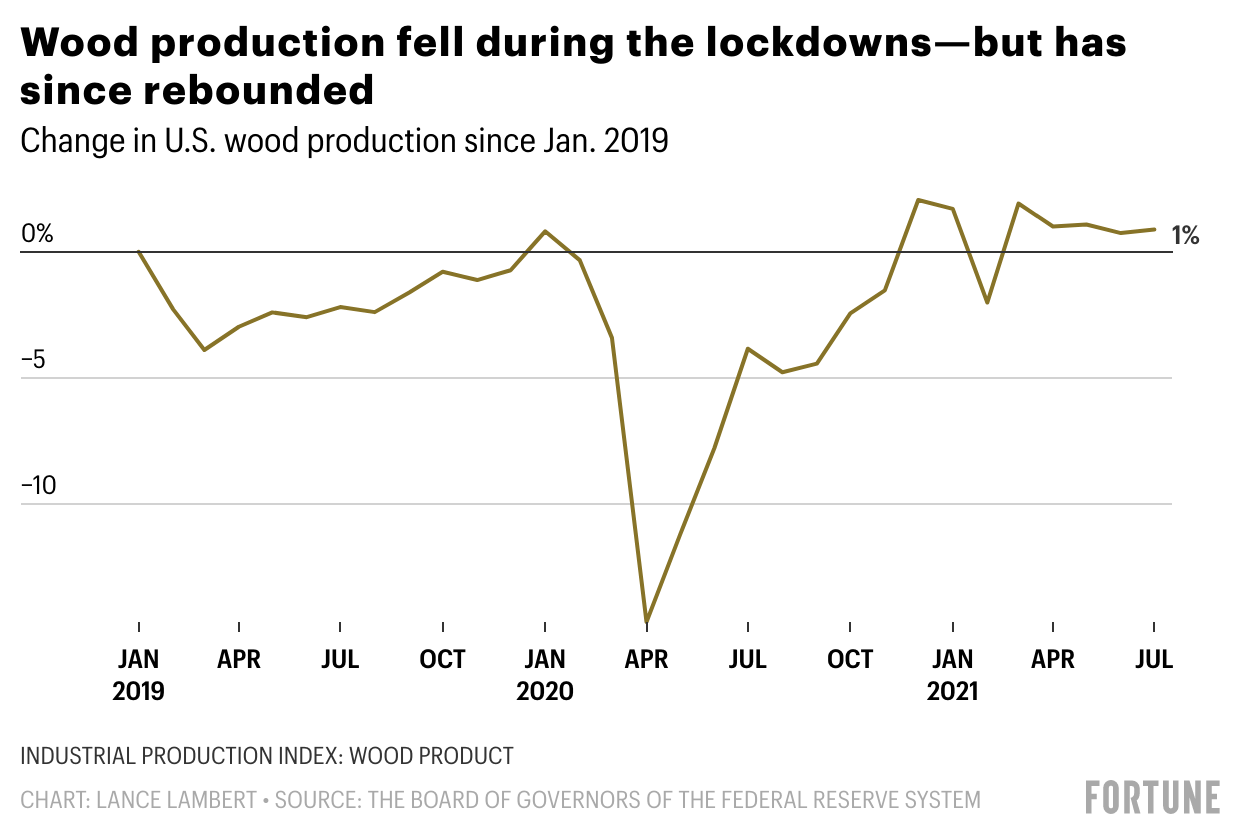
In the face of shutdowns and economic doom, North American sawmills slammed the breaks on production in spring 2020. By April 2020, U.S. wood production was down 15% from 2019 levels. Sawmills and lumberyards didn’t want to get stuck holding inventory as they did during the 2008 housing crash. So they also unloaded inventory at a discount.
But they were taken off guard when demand suddenly roared back just weeks into the crisis in spring 2020. And catching up wasn’t easy: As the pandemic lingered on, sawmills struggled to find workers. That worker shortage stalled sawmills’ ability to ramp up production to meet soaring demand.
What caused the surge in demand? When the pandemic struck in spring 2020, in-person real estate showings all but dried up. The industry feared a housing bust would soon follow. But the opposite occurred: The housing market went on a historic run—with median list prices up 23% since February 2020.
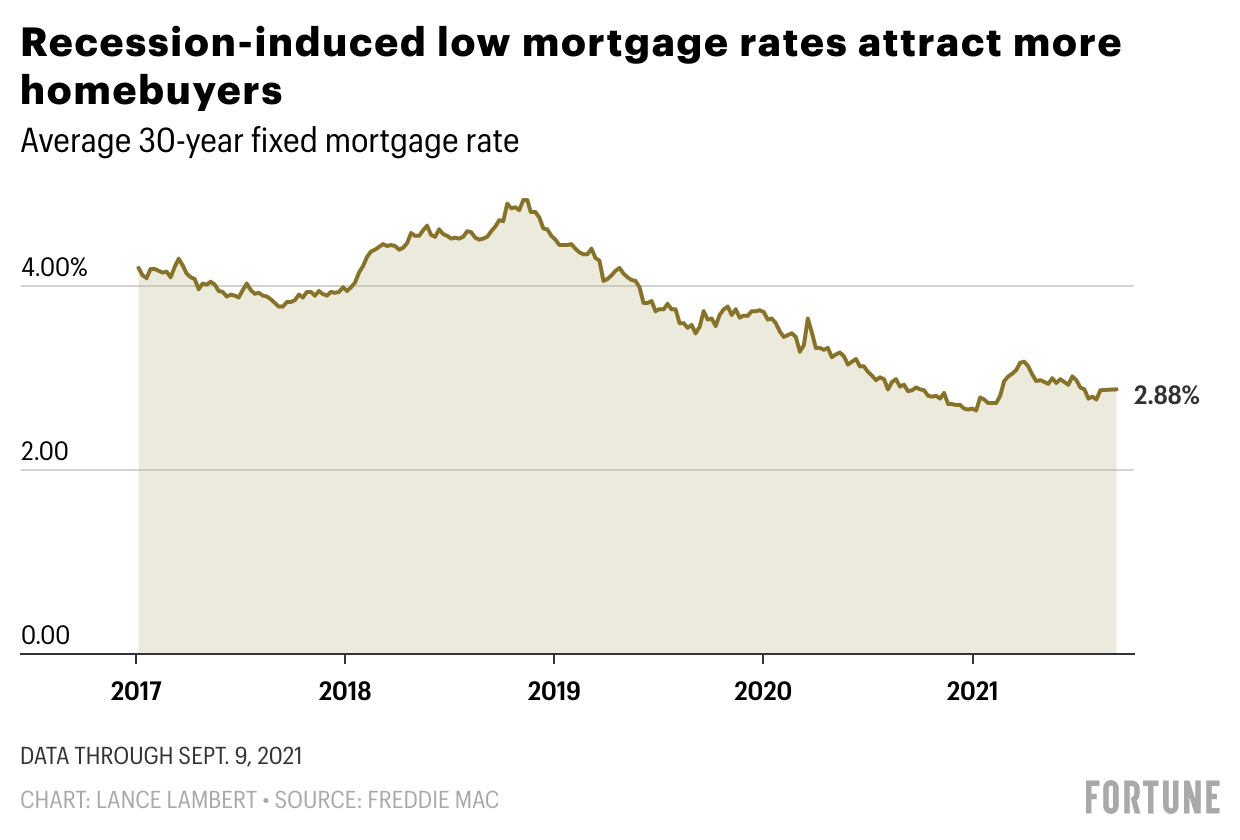
Similar to the lumber boom, housing had its own perfect storm that created a frenzy. Recession-induced low mortgage rates made it easier for buyers to stretch their budget further. Renters who realized they would no longer have to spend five days a week in the office started to buy abodes in more affordable suburbs and exurbs. That frenzy was only intensified by the fact we’re amid the five-year window of the largest millennial birth years: Those born between 1989 and 1993 are hitting their thirties—an all-important age marker when first-time homebuying really takes off.
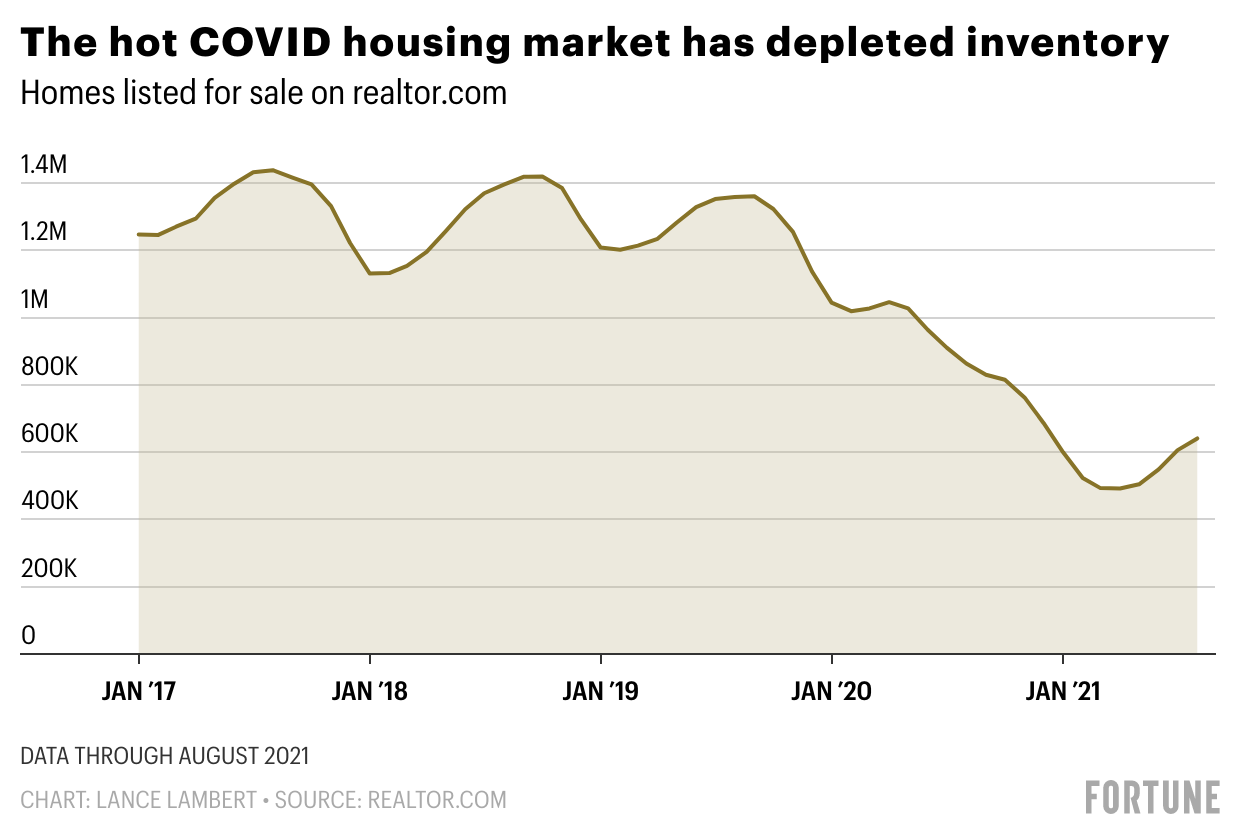
Thanks to the housing craze, many of the available homes for sale were scooped up. By April 2021, the number of U.S. homes for sale was down 53% from the year prior. That took inventory to a more than a 40-year low. It also meant the 2021 housing market was one of the tightest—and most competitive—on record.
And that ultralow existing housing inventory had a big impact on lumber.
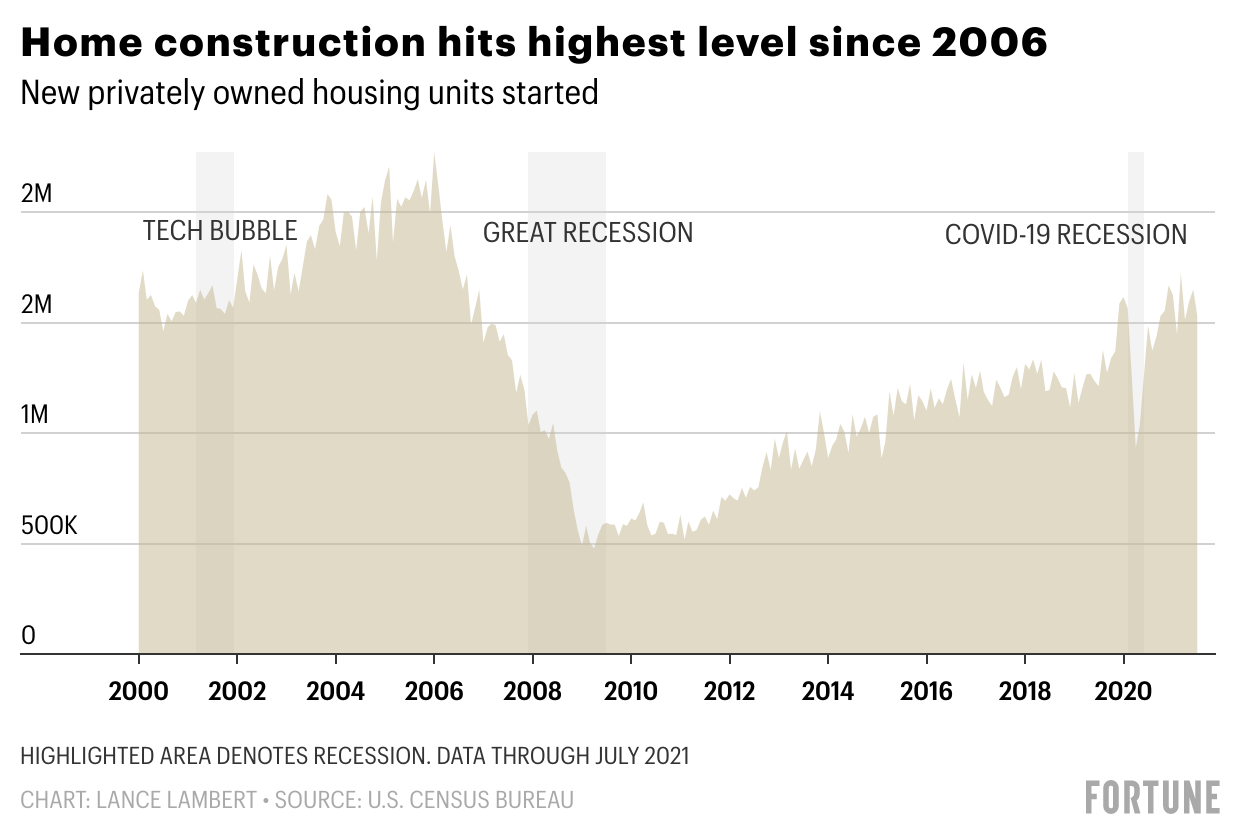
With existing home inventory depleted, homebuyers had no choice but to turn to homebuilders. That created a speedy rebound in residential construction. By March 2021, monthly housing starts were at 1.7 million—the highest level since 2006. Of course, all that building caused demand for framing lumber, OSB (oriented strand board), and plywood to soar.
“The housing market went berserk in 2020 following a brief pause. Consumers, enthusiastic about low interest rates and propelled into homebuying after spending more time at home, were scooping up available properties left and right. Builders responded to the increased demand by rushing to build as many homes as possible,” said Ali Wolf, chief economist at Zonda, a housing market research firm. “The problem became that the mills paused production during the March and April slowdown and were caught off guard by the quick turnaround in housing and the increased demand.”
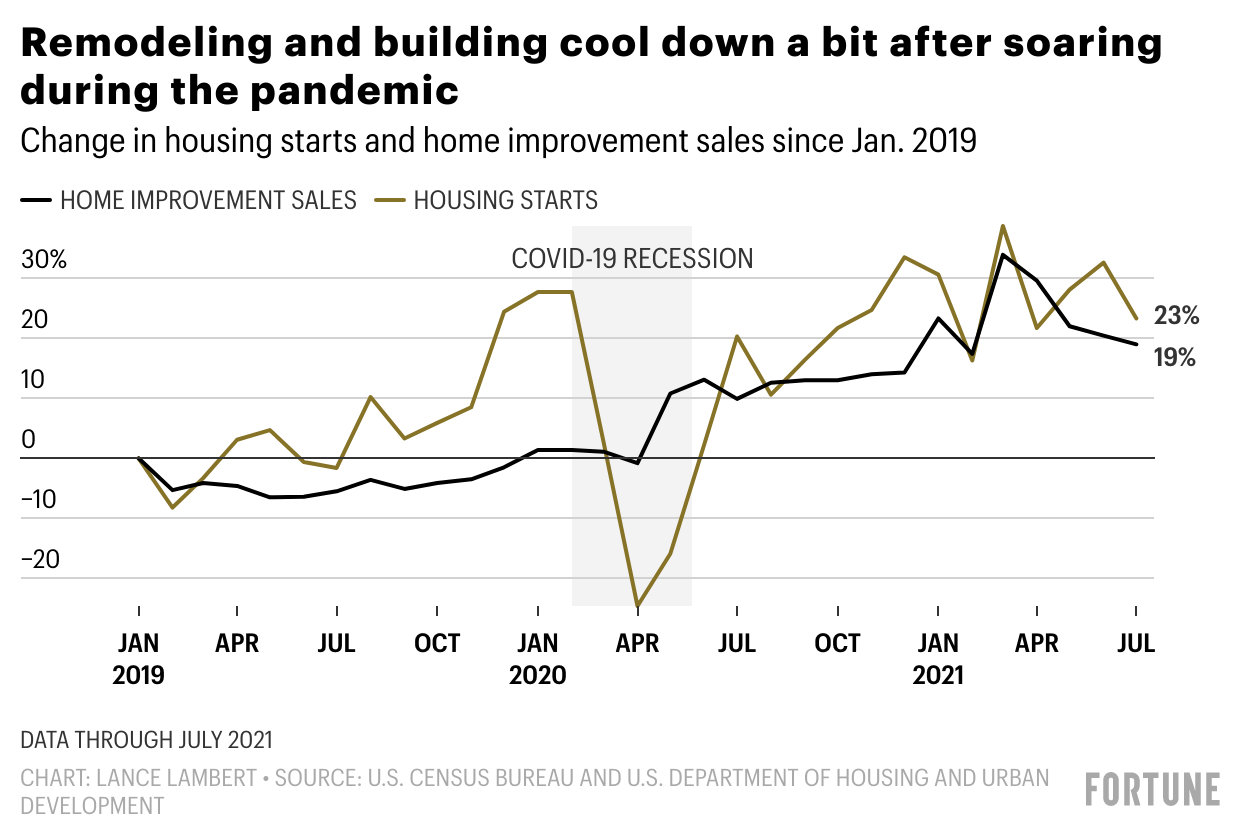
This construction boom didn’t just happen in homebuilding: When the pandemic first struck, bored cooped-up Americans rushed to lumberyards and big-box stores to buy materials for do-it-yourself projects. By March 2021, home improvement sales were at an all-time high—up 34% from 2019 levels.
As construction and remodeling soared, so did lumber prices. But by late spring this year, those hiked-up lumber prices were crushing the budgets of both builders and remodelers.
On May 12—two weeks before the lumber bubble reached its peak—Fortune told readers that lumber supply “can grow only so fast, so in order for prices to correct, demand needs to weaken.” Ultimately, that’s exactly what happened: The lumber bubble popped once buyers got fed up with astronomical prices.
Since peaking in March 2021, housing starts and home-improvement sales are down 11% and 11.1%, respectively. Some homebuilders, like Konter Quality Homes in Savannah, even stopped taking new orders and building this year as a result of record wood prices.
“The culprit [of the correction] was the demand side. In May, homebuilders got repriced for the third quarter—for the first time seeing the full brunt of $1,700 lumber [futures]—and completely hit the brakes,” Stinson Dean, CEO of Deacon Lumber, told Fortune. “The supply side couldn’t supply 1.7 million new home starts…That was the real problem.”
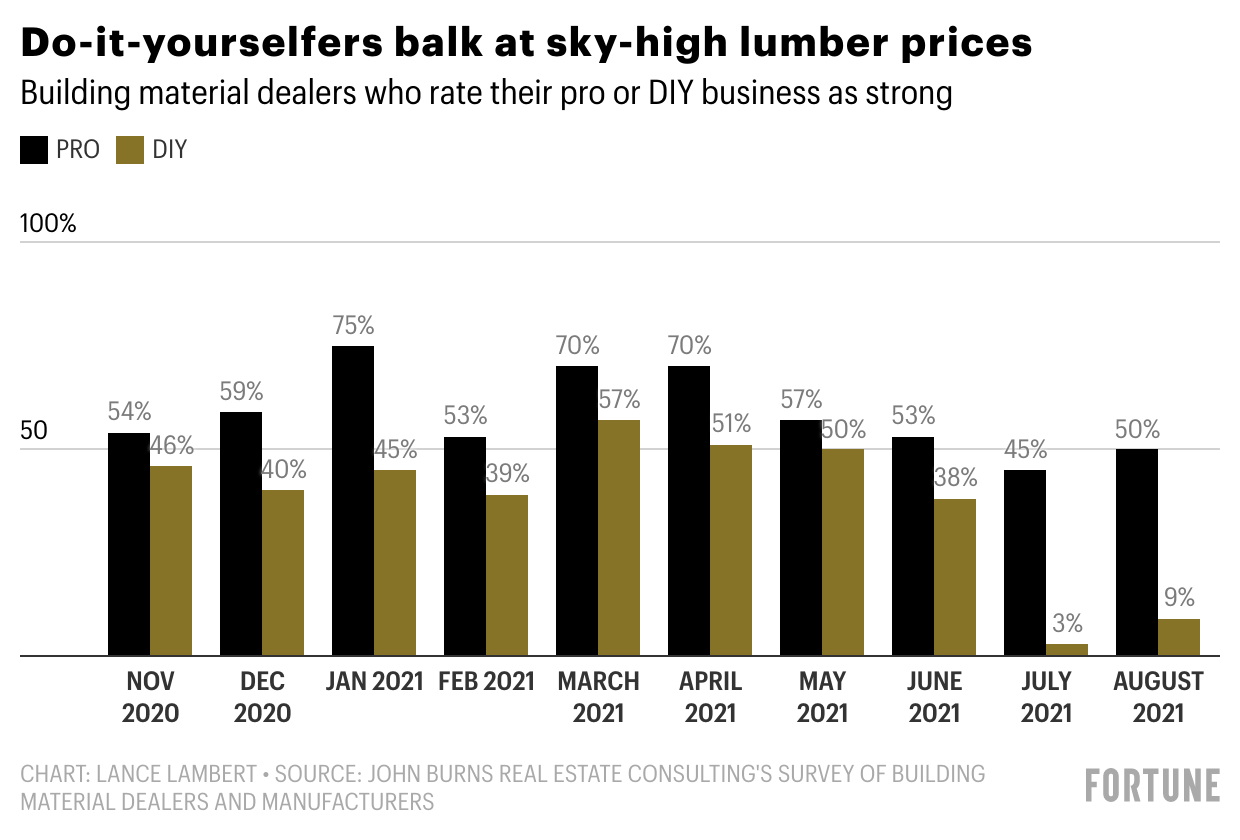
But the sharpest pullback isn’t in homebuilding. Instead, it happened in the aisles of places like Home Depot and Lowe’s. Once lumber prices were up over 300%, the do-it-yourselfer market simply dried up.
“Sticker shock is forcing some projects to be postponed, to wait for material prices to come back down,” said Dustin Jalbert, a senior economist at Fastmarkets RISI, where he covers the lumber market.
In March 2021, 57% of building material suppliers rated their DIY sale segment as “strong,” according to a survey by real estate firm John Burns Real Estate Consulting. By July, just 3% of suppliers rated their DIY sales as “strong.”
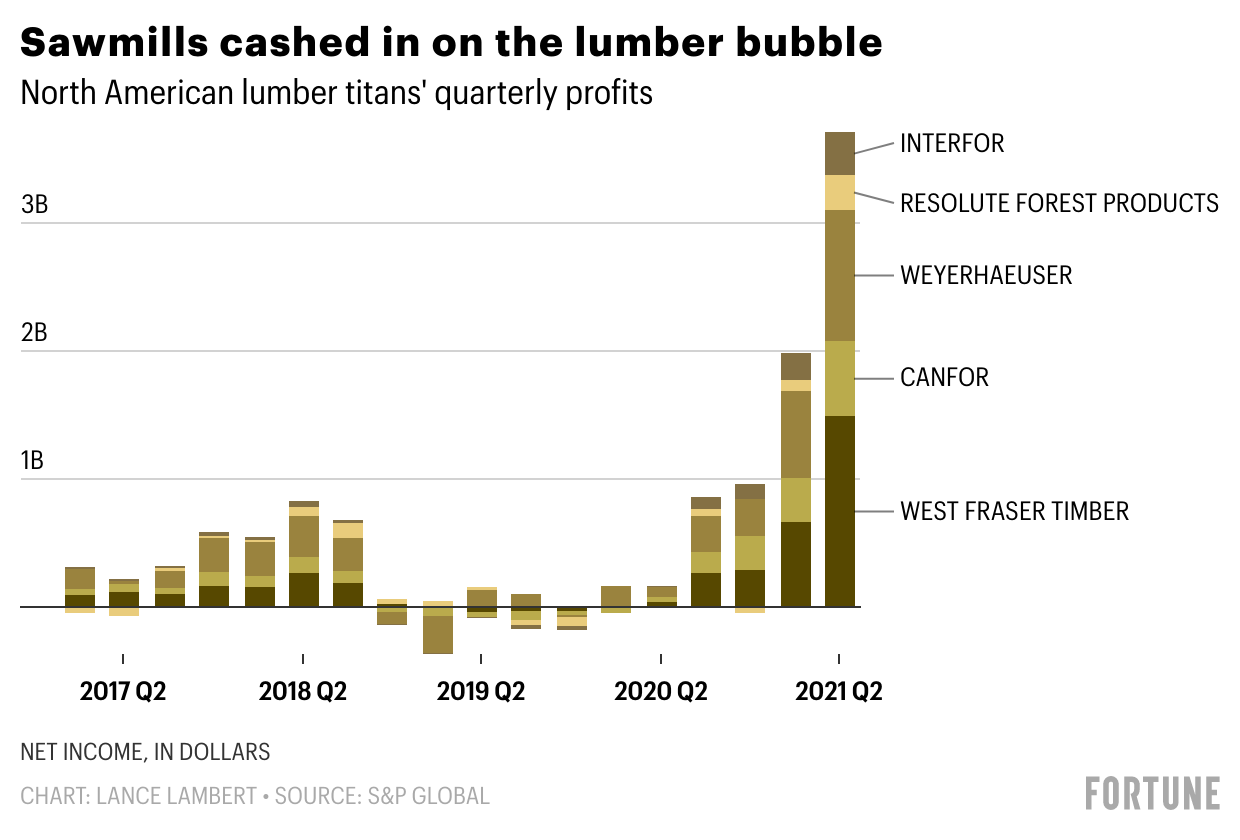
The lumber run was great for the timber industry. Just look at their bottom lines: The combined net profits of the five largest publicly traded North American lumber producers soared 2,218% between the second quarter of 2020 ($160 million) and the same quarter in 2021 ($3.7 billion).
Eager to cash in on the lumber run, sawmills rushed to increase production. Softwood lumber production in the U.S. Pacific Northwest and British Columbia—the epicenter of North American lumber—is fairly restrained. So instead, loggers raced to cut down more Southern yellow pine, which is plentiful in the U.S. South. British Columbia–based lumber giants—including Canfor, West Fraser Timber, and Interfor—announced expansions in the South earlier this year.
Between April 2020 and April 2021, U.S. industrial wood production rebounded 18%. While modest—just 1% above 2019 levels—it occurred at the same time buyers finally started to balk at record prices. More supply and less demand is, of course, the perfect recipe for a price correction.
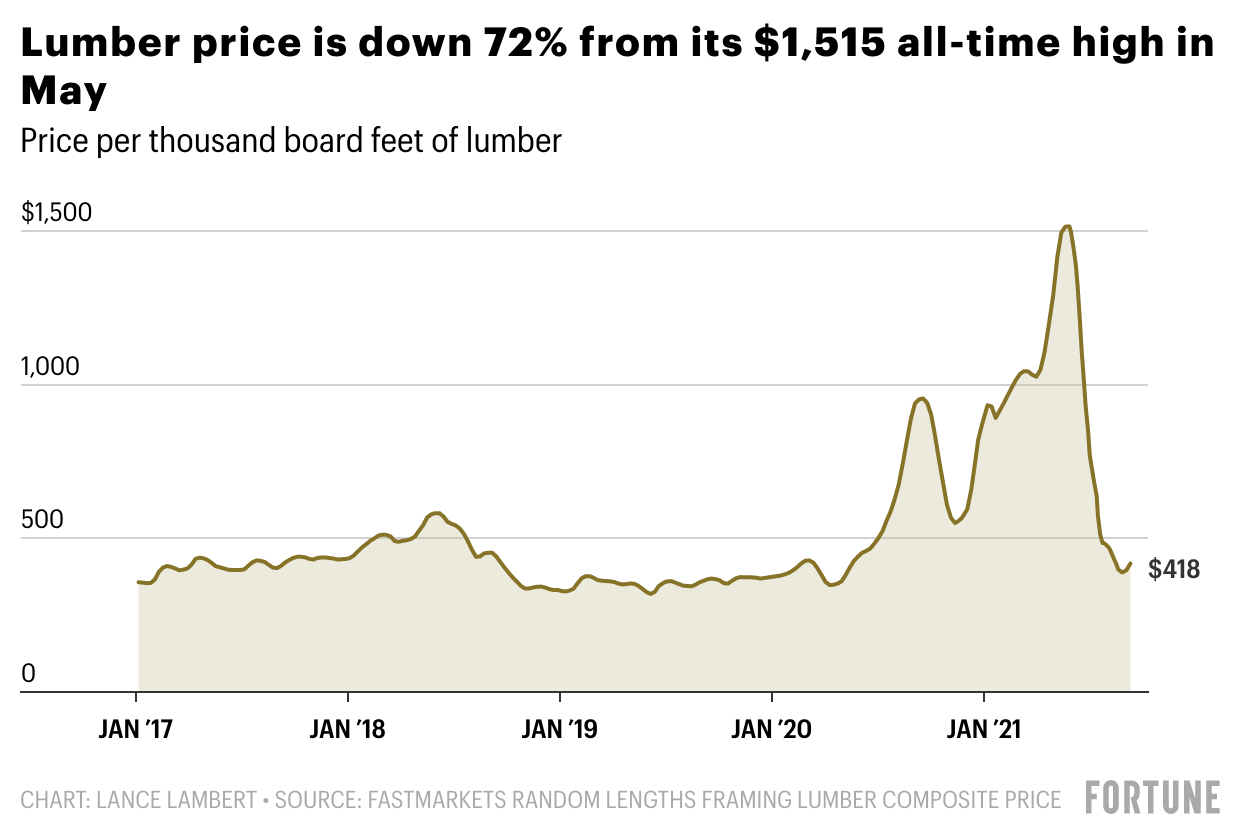
For 13 consecutive weeks—between May 28 and Aug. 27—the wholesale price of lumber fell this year. But industry insiders tell Fortune the correction may be over now as lumber seems to have found its trading floor. Over the past two weeks, the price has notched up $29 to $418 per thousand board feet.
Where are prices headed? The industry consensus is that we won’t see another spring 2021–level run. However, many do expect to see prices rise again this fall and winter.
“Prices have stabilized, and we are expecting a very busy fall season. With the most recent North American curtailments, logistic issues, and pandemic-related supply constraints, we expect significant upward pressure as we move forward,” Andy Goodman, CEO of Sherwood Lumber, told Fortune.
There’s also a lot of sidelined buyers. Watching big boxes cut prices week after week this summer, many DIYers held out waiting for the best discounts. Now that the wholesale drop appears to be priced in on the retail side, some of these home remodelers might rush back in to buy. (Some recent polling suggests that is exactly what is about to happen.)
“I think there will be a pretty good bounce from current levels in the [lumber] cash market [this fall],” said Jalbert of Fastmarkets RISI. “Not quite double though. But it’s hard to say how high it will go.”
Subscribe to Fortune Daily to get essential business stories delivered straight to your inbox each morning.