A good-natured peasant recognizable by a chocolate-colored coat and three-cornered hat, the plump Gianduja, a theatrical character who hailed from the countryside near Turin, had predictable weaknesses for pretty girls, wine, and (perhaps above all) sweets. When most theaters in northern Italy scaled back or closed amid the Napoleonic wars in the early 1800s, Gianduja survived—after a transformation.
Before those military campaigns, Turin had been one of Europe’s chocolate capitals. But French naval blockades made cacao from South America scarce, and prices for essential raw materials skyrocketed. Around then, Turin’s chocolatiers began mixing the limited cacao they could get their hands on with hazelnuts, which were common in the area. The mixture created a thick paste that took its shape after being squeezed between two spoons, resembling a side of the chocolate-loving Gianduja’s tricorn hat. The treats became known as Giandujas.
Gianduja, the theater character, slowly fell out of fashion, even though the delicate sweets named for him are still sold in modest quantities in Italy, and in specialty shops further afield. But the chocolate-hazelnut combination they popularized went on to become a global phenomenon. You probably know it as Nutella.
Heavier than the Empire State Building
The numbers surrounding Nutella are staggering. Gruppo Ferrero, the company that makes Nutella, uses around a quarter of the world’s total supply of hazelnuts. According to the company, Nutella is now sold in 160 countries, and total annual production has topped 400,000 tons—more than the weight of the Empire State Building. If laid out side by side, the 770 million containers of Nutella Ferrero produces each year would circle the equator nearly twice.
Not surprisingly, those numbers are a major sweetener for the company’s bottom line. Ferrero’s revenues last year topped €12.3 billion ($14.5 billion), an 8% year-on-year increase. Locked down at home with nowhere to go, the world ate a lot of Nutella and Ferrero’s other sweets.
Meanwhile, profits topped €223 million, a slight increase over the previous year. (Those numbers are based on the company’s entire portfolio, which also includes Ferrero Rocher chocolates, Kinder chocolate eggs, and Tic Tac mints. But Nutella is the company’s most successful product.)
Now that the world is out of lockdown, the privately held Ferrero is using its muscle on the acquisition trail, buying U.K. cookie makers Fox’s Biscuits and Burton’s Biscuit Co. for a combined £610 million ($840 million).
But that success is not without complications. Hazelnuts make up just 13% of the recipe for Nutella—sugar, palm oil, cocoa, and milk powder are the other key ingredients—but this ingredient is without a doubt the hardest part to come by.
Turkey is the world’s leading producer, but political issues and labor controversies in the country, including low wages and charges of child labor, create reputational risks for those procuring its hazelnuts. In late 2019, for example, the popular Italian nationalist politician Matteo Salvini, who many times had sung the praises of Nutella on social media, declared he would no longer buy the product because it used Turkish hazelnuts.
Italy’s climate, of course, is perfectly suited for hazelnuts. But the annual Italian yield runs a distant second among global hazelnut suppliers—not nearly enough to satisfy Ferrero’s needs. And even if it did, the company says, antitrust laws prevent it from simply gobbling up the majority of the country’s output.
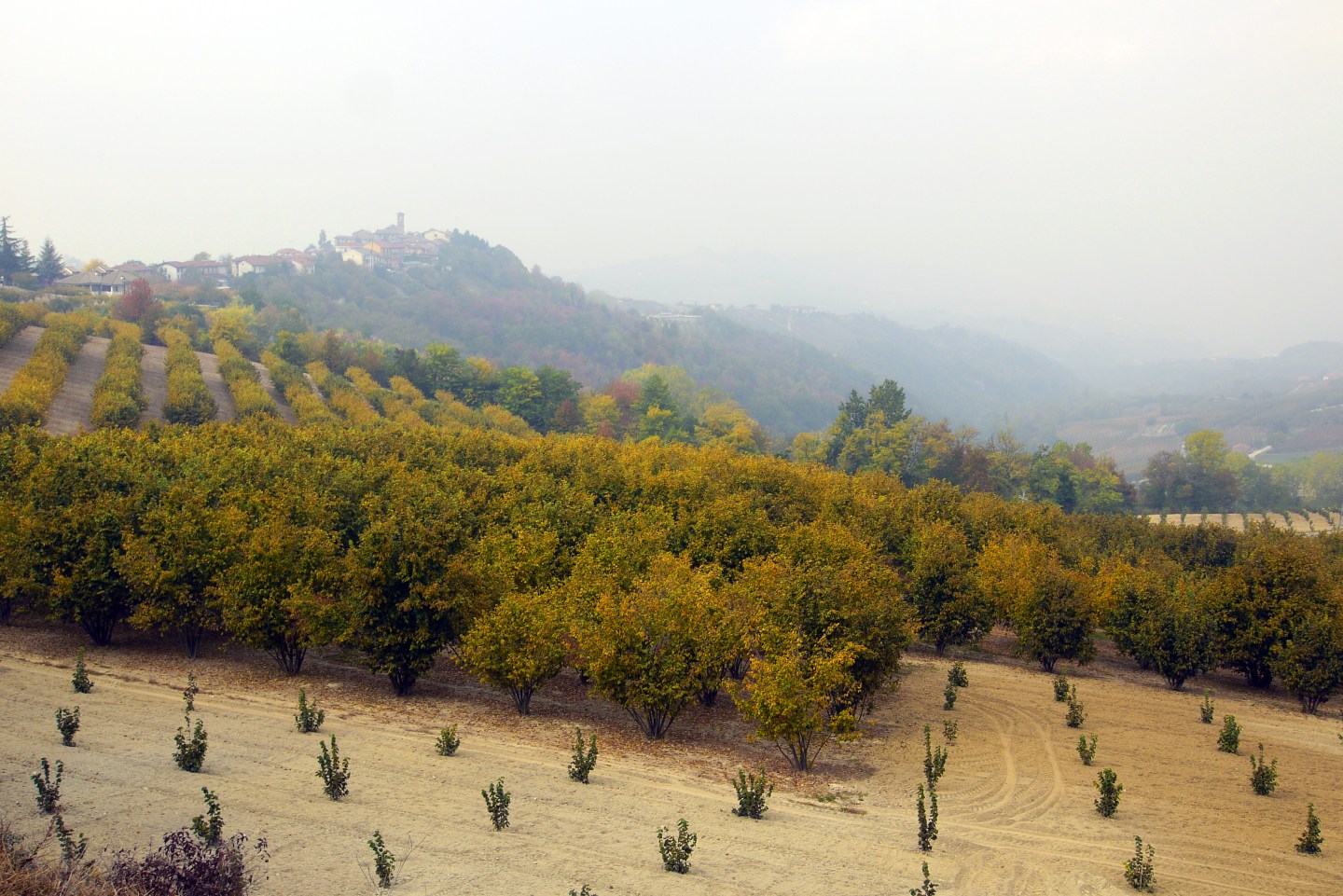
Ferrero does not own or operate any hazelnut farms—a point that the company was quick to point out to Fortune—but it has run into a mountain of opposition for an initiative it backs called “Progetto Nocciola Italia.”
The Italian Hazelnut Project sounds like the kind of corporate sourcing initiative Nutella fans the world over would cheer—the company has set out guidelines for quality and sustainable hazelnut cultivation with an aim to ultimately increase Italy’s production by a third.
But many farmers see the three-year-old plan differently.
As the ravages of climate change intensify, scientists and conservationists the world over fear the incessant rise of monoculture crops—particularly corn, soy, and rice, but also wine grapes—favored by the agriculture industry and their biggest customers. It’s not just the lack of biodiversity scientists fear, but how such intensive farming practices can contribute to the degradation and loss of a natural ecosystem.
Last year, opposition to Ferrero’s Italian Hazelnut Project prompted a no-thank-you open letter from farmers and local political leaders titled “Progetto Nocciola Italia? No Grazie” that gained widespread media coverage in Italy. The letter said the “intensive cultivation of hazelnuts” was a threat to the “environment and biodiversity.” More damningly, the letter referred to new hazelnut fields as “open-pit mines with intensive monocultures, high environmental impacts…and frequent use of pesticide, fungicide, fertilizer, and herbicide treatments.”
Nuts as far as the eye can see
Not all farmers use such dramatic language to decry the program, but there is little doubt that the company’s insatiable appetite for hazelnuts is having far-reaching impacts in Italy’s three main hazelnut cultivation areas: north of Rome, south of Turin, and east of Naples. Farmers there say the strong demand is driving up prices for land, and limiting agricultural diversity.
“Ten years ago you used to see olives, grapes, peaches, chestnuts, growing between the plots of hazelnuts,” Cesare Mecarelli, a third-generation hazelnut farmer living near Viterbo, north of Rome, told Fortune. “Now it’s just hazelnuts as far as you can see.”
Mecarelli, whose farm is called Azienda Agricola Mecarelli, doesn’t sell the hazelnuts he grows to Ferrero or any other multinational (Italian pasta maker Barilla and Swiss chocolatier Nestlé are also big buyers in the area). Instead, he markets and sells his own hazelnut products, including a range of spreads containing from 40% to 100% hazelnuts.
He added he still has a few olive trees on his 30-hectare (75-acre) farm, though only enough to produce olive oil for family and friends. Mecarelli said he doesn’t blame others being drawn to hazelnut production: The plants, as far as most agronomists and farmers know, aren’t particularly susceptible to disease, and are fairly easy to grow. Even more so, the demand for quality hazelnuts is reliable with prices steadily climbing over time.
But, he admits, the hazelnut push is creating a noticeable market distortion.
“It doesn’t make economic sense to grow anything else around here,” Mecarelli said. “If you pull up a few hectares of hazelnuts to plant something else, you’ll end up working harder and earning less.”
Famiano Crucianelli, president of the Via Amerina bio-district that includes the hazelnut production area around Viterbo, is more critical. He said problems stem from monocultures and from production areas spreading beyond their natural limits, which includes slopes on volcanic soil at altitudes from about 300 to 600 meters (1,000 to 2,000 feet) above sea level.
“There are no problems with hazelnuts, per se. The problems come when there’s no variety, which is always bad for the land,” he said, before describing a kind of monoculture time bomb for the region.
“If we keep this up, in 20 or 30 years it’ll be difficult for even grass to grow. It’s also a problem when hazelnuts are planted too close to sea level, where they need a lot more water and more resources to thrive.
“What we have now is a good thing that’s gone on too far,” Crucianelli said. “It’s a predictable tale that, unless we do something to stop it, it will end badly.”
Meanwhile, in a statement provided to Fortune, Ferrero defends the Progetto Nocciola Italia initiative as “an opportunity for farmers to diversify and/or reconvert their activities,” as well as to “prevent noncultivated agricultural land from being abandoned.”
“Through our Progetto Nocciola Italia, we have developed an approach to hazelnut cultivation founded on the principle of creating a quality sustainable Italian hazelnut value chain,” the company says.
Subscribe to Fortune Daily to get essential business stories straight to your inbox each morning.