• Home
  • Latest
  • Fortune 500
  • Finance
  • Tech
  • Leadership
  • Lifestyle
  • Rankings
  • Multimedia
Commentary

How to prepare supply chains for the next global crisis

By
Ngozi Okonjo-Iweala
Ngozi Okonjo-Iweala
and
Patrick Verkooijen
Patrick Verkooijen
Down Arrow Button Icon
By
Ngozi Okonjo-Iweala
Ngozi Okonjo-Iweala
and
Patrick Verkooijen
Patrick Verkooijen
Down Arrow Button Icon
August 4, 2021, 1:00 PM ET

From our morning coffee to the COVID-19 vaccines some of us have been lucky enough to receive, supply chains make modern life possible. But as we have discovered in the past year, they are vulnerable to disruption.

When the pandemic struck, lockdowns and border restrictions upended the flow of raw materials, components, and finished goods across multi-country production networks. But after the initial shocks, supply chain operations were quick to resume. Trade became a lifeline for moving food, raw materials, and medical supplies around the world. Even as the value of global merchandise trade shrank by 8% in 2020, amid the worst economic recession since the 1930s, the value of trade in medical products grew by 16%.

Sudden shocks create dramatic headlines, such as a giant container ship stuck in the Suez Canal. But a slower-moving set of threats comes from climate change. When sea levels rise and ports flood, or water scarcity causes crop yields and hydroelectric production to fall, the damage is lasting. 

As climate change intensifies, open trade will be essential to bring essential climate-adaptation goods and services to where they are needed. Consider coffee. Estimates are that climate change will halve the suitable growing area for the crop, endangering the livelihoods of more than 100 million people. In response, development agencies and international brands are working with farmers to shift to heat- and drought-resistant varietals and introduce farming methods that save on water and fertilizer. 

Nonagricultural supply chains are also vulnerable to climate-induced disruption. McKinsey estimates that by 2040, semiconductor supply chains in Southeast Asia will be two to four times more vulnerable to intense hurricanes.

International trade must start taking climate risk seriously, and this means investing in resilience now. As we have seen over the pandemic, international trade and supply chains help maintain access to critical supplies in a crisis. 

International cooperation will be crucial. Early in the pandemic, reopening borders to trade helped avert a food crisis. As climate threats intensify, governments must keep working together. One way to enhance cooperation would be for states to craft a new framework for trade during a global crisis. Cooperation between the public and private sectors would also help with assessing and responding to long-term climate risks.

Companies have begun investing in climate adaptation as an insurance mechanism. For example, Seagate, a semiconductor manufacturer, and Fujikura, an electrical equipment manufacturer, have both invested in making their factories in Thailand more flood-proof after a 2011 disaster wiped out production. Studies indicate that companies that include climate science in their risk assessments do better at mitigating supply chain risks.

More open trade would help accelerate the deployment of cutting-edge technologies for climate change adaptation and mitigation. Lowering tariffs and nontariff barriers would lead to increased specialization, scale, and competition in these environmental goods and services. This would lower the costs for all countries to get to net zero and adapt to a hotter world. 

An encouraging example of this is the Agreement on Climate Change, Trade, and Sustainability (ACCTS) initiated by Costa Rica, Fiji, Iceland, New Zealand, and Norway in 2019. The five countries aim to use trade rules to tackle environmental degradation by eliminating fossil fuel subsidies, removing tariffs on environmental goods such as wind turbines and solar panels, and developing guidelines for eco-labeling.

Trade and investment for climate adaptation will help future-proof our economies. Making supply chains more resilient to climate change will almost certainly make us better prepared for the next shocks, whatever the source.

Ngozi Okonjo-Iweala is director-general of the World Trade Organization. 

Patrick Verkooijen is CEO of the Global Center on Adaptation.

Subscribe to Fortune Daily to get essential business stories straight to your inbox each morning.

About the Authors
By Ngozi Okonjo-Iweala
See full bioRight Arrow Button Icon
By Patrick Verkooijen
See full bioRight Arrow Button Icon

Latest in Commentary

Finance
Lorem ipsum dolor sit amet, consectetur adipiscing elit, sed do eiusmod tempor incididunt ut labore et dolore magna aliqua. Ut enim ad minim veniam
By Fortune Editors
October 20, 2025
Finance
Lorem ipsum dolor sit amet, consectetur adipiscing elit, sed do eiusmod tempor incididunt ut labore et dolore magna aliqua. Ut enim ad minim veniam
By Fortune Editors
October 20, 2025
Finance
Lorem ipsum dolor sit amet, consectetur adipiscing elit, sed do eiusmod tempor incididunt ut labore et dolore magna aliqua. Ut enim ad minim veniam
By Fortune Editors
October 20, 2025
Finance
Lorem ipsum dolor sit amet, consectetur adipiscing elit, sed do eiusmod tempor incididunt ut labore et dolore magna aliqua. Ut enim ad minim veniam
By Fortune Editors
October 20, 2025
Finance
Lorem ipsum dolor sit amet, consectetur adipiscing elit, sed do eiusmod tempor incididunt ut labore et dolore magna aliqua. Ut enim ad minim veniam
By Fortune Editors
October 20, 2025
Finance
Lorem ipsum dolor sit amet, consectetur adipiscing elit, sed do eiusmod tempor incididunt ut labore et dolore magna aliqua. Ut enim ad minim veniam
By Fortune Editors
October 20, 2025

Most Popular

Finance
Lorem ipsum dolor sit amet, consectetur adipiscing elit, sed do eiusmod tempor incididunt ut labore et dolore magna aliqua. Ut enim ad minim veniam
By Fortune Editors
October 20, 2025
Finance
Lorem ipsum dolor sit amet, consectetur adipiscing elit, sed do eiusmod tempor incididunt ut labore et dolore magna aliqua. Ut enim ad minim veniam
By Fortune Editors
October 20, 2025
Finance
Lorem ipsum dolor sit amet, consectetur adipiscing elit, sed do eiusmod tempor incididunt ut labore et dolore magna aliqua. Ut enim ad minim veniam
By Fortune Editors
October 20, 2025
Finance
Lorem ipsum dolor sit amet, consectetur adipiscing elit, sed do eiusmod tempor incididunt ut labore et dolore magna aliqua. Ut enim ad minim veniam
By Fortune Editors
October 20, 2025
Finance
Lorem ipsum dolor sit amet, consectetur adipiscing elit, sed do eiusmod tempor incididunt ut labore et dolore magna aliqua. Ut enim ad minim veniam
By Fortune Editors
October 20, 2025
Finance
Lorem ipsum dolor sit amet, consectetur adipiscing elit, sed do eiusmod tempor incididunt ut labore et dolore magna aliqua. Ut enim ad minim veniam
By Fortune Editors
October 20, 2025
Fortune Secondary Logo
Rankings
  • 100 Best Companies
  • Fortune 500
  • Global 500
  • Fortune 500 Europe
  • Most Powerful Women
  • Future 50
  • World’s Most Admired Companies
  • See All Rankings
Sections
  • Finance
  • Fortune Crypto
  • Features
  • Leadership
  • Health
  • Commentary
  • Success
  • Retail
  • Mpw
  • Tech
  • Lifestyle
  • CEO Initiative
  • Asia
  • Politics
  • Conferences
  • Europe
  • Newsletters
  • Personal Finance
  • Environment
  • Magazine
  • Education
Customer Support
  • Frequently Asked Questions
  • Customer Service Portal
  • Privacy Policy
  • Terms Of Use
  • Single Issues For Purchase
  • International Print
Commercial Services
  • Advertising
  • Fortune Brand Studio
  • Fortune Analytics
  • Fortune Conferences
  • Business Development
About Us
  • About Us
  • Editorial Calendar
  • Press Center
  • Work At Fortune
  • Diversity And Inclusion
  • Terms And Conditions
  • Site Map
Fortune Secondary Logo
  • About Us
  • Editorial Calendar
  • Press Center
  • Work At Fortune
  • Diversity And Inclusion
  • Terms And Conditions
  • Site Map
  • Facebook icon
  • Twitter icon
  • LinkedIn icon
  • Instagram icon
  • Pinterest icon

Latest in Commentary

solomon
CommentaryDEI
Goldman’s board kills DEI — and that’s not a terrible thing
By Betsy AtkinsFebruary 22, 2026
15 hours ago
jesse
CommentaryDEI
A decade ago, I had a front row seat as Jesse Jackson held big tech firms accountable for being overwhelmingly white and male
By Brennan Nevada JohnsonFebruary 22, 2026
16 hours ago
werfel
CommentaryTaxes
Former IRS Commissioner: Here’s how we used AI to create immediate value when taxpayers scrutinized every dollar
By Danny WerfelFebruary 22, 2026
17 hours ago
taylor
CommentaryMarketing
How fandom became culture’s power center — and a blueprint for Gen Z’s economic influence
By Reid LitmanFebruary 21, 2026
2 days ago
igor
CommentaryMarkets
If the recent AI and crypto shocks upset you, you’re tracking the wrong cycle
By Igor PejicFebruary 21, 2026
2 days ago
ceos
CommentaryTariffs and trade
We heard CEOs rip into Trump’s tariffs behind the scenes and the Supreme Court just vindicated them
By Jeffrey Sonnenfeld, Steven Tian and Stephen HenriquesFebruary 20, 2026
2 days ago

Most Popular

placeholder alt text
Innovation
The U.S. spent $30 billion to ditch textbooks for laptops and tablets: The result is the first generation less cognitively capable than their parents
By Sasha RogelbergFebruary 21, 2026
2 days ago
placeholder alt text
Economy
New Fed report proves Milton Friedman and Joe Biden understood something vital about immigration—and explains why growth may sputter under Trump
By Shawn TullyFebruary 22, 2026
17 hours ago
placeholder alt text
Big Tech
Peter Thiel and other tech billionaires are publicly shielding their children from the products that made them rich
By Marco Quiroz-GutierrezFebruary 21, 2026
2 days ago
placeholder alt text
Startups & Venture
'I have a chip on my shoulder.' Phoebe Gates wants her $185 million AI startup Phia to succeed with 'no ties to my privilege or my last name'
By Sydney LakeFebruary 21, 2026
2 days ago
placeholder alt text
Success
40% of Stanford undergrads receive disability accommodations—but it's become a college-wide phenomenon as Gen Z try to succeed in the current climate
By Preston ForeFebruary 21, 2026
2 days ago
placeholder alt text
Success
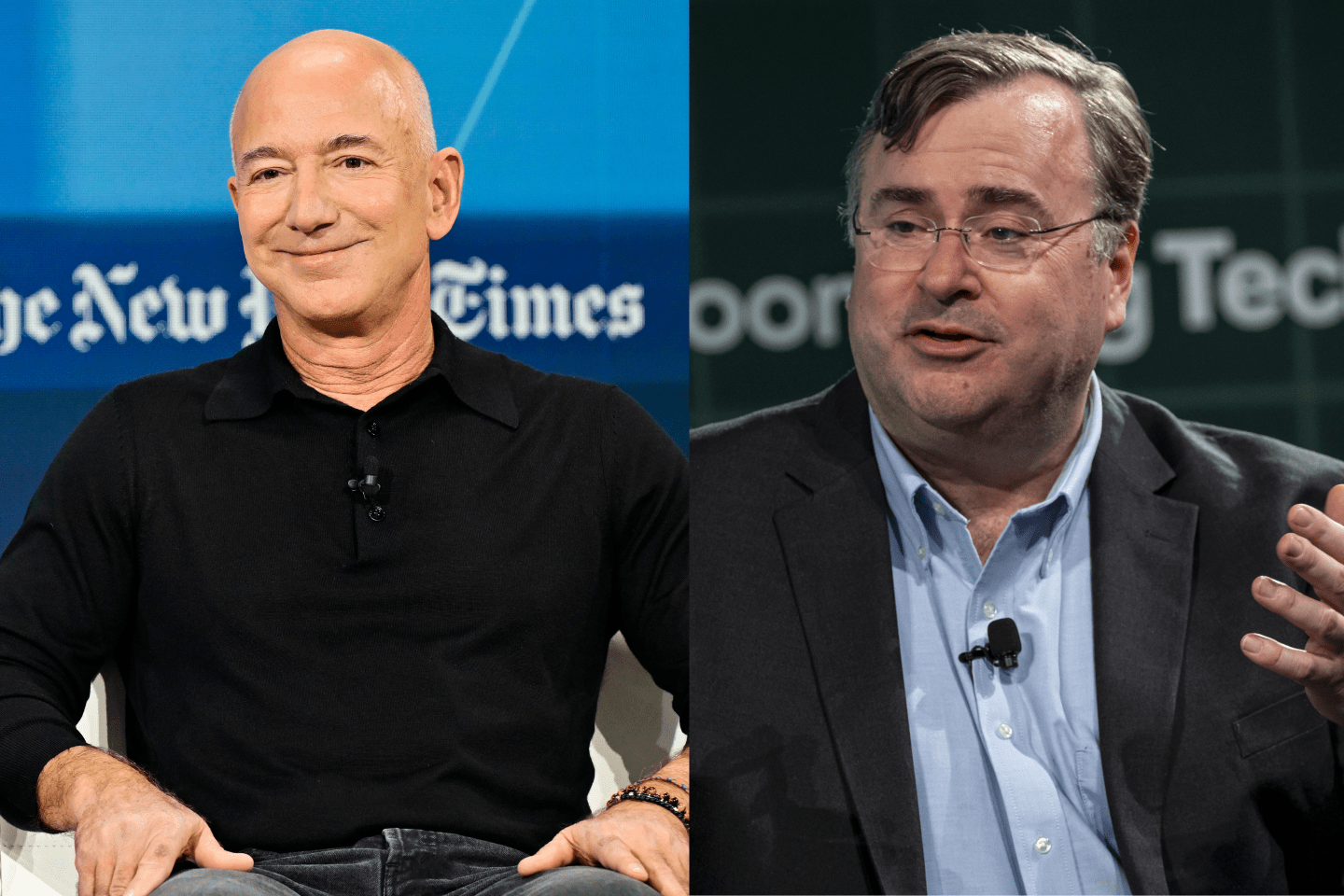
Billionaire bosses like Jeff Bezos and Reid Hoffman denounce work-life balance—and some think working nonstop is key to success
By Emma BurleighFebruary 20, 2026
2 days ago

© 2026 Fortune Media IP Limited. All Rights Reserved. Use of this site constitutes acceptance of our Terms of Use and Privacy Policy | CA Notice at Collection and Privacy Notice | Do Not Sell/Share My Personal Information
FORTUNE is a trademark of Fortune Media IP Limited, registered in the U.S. and other countries. FORTUNE may receive compensation for some links to products and services on this website. Offers may be subject to change without notice.