• Home
  • News
  • Fortune 500
  • Tech
  • Finance
  • Leadership
  • Lifestyle
  • Rankings
  • Multimedia
CommentaryCoronavirus

What the NFL’s vaccination policy says about the inescapability of politics

By
Tim Elcombe
Tim Elcombe
Down Arrow Button Icon
By
Tim Elcombe
Tim Elcombe
Down Arrow Button Icon
July 29, 2021, 3:00 PM ET
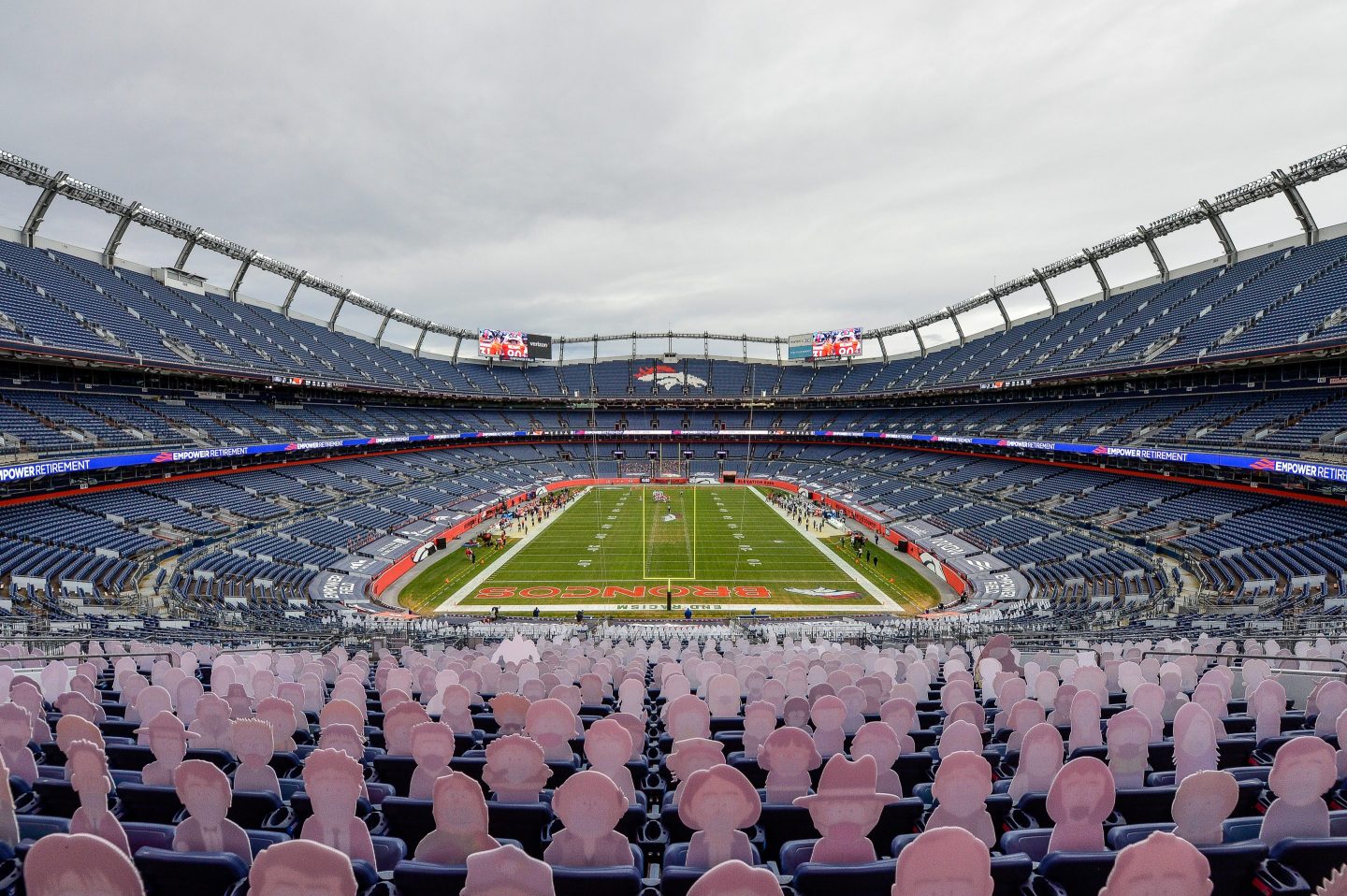
The NFL's new rules around COVID vaccination inevitably wade into politics, where the league doesn't want to go, writes Tim Elcombe.
The NFL's new rules around COVID vaccination inevitably wade into politics, where the league doesn't want to go, writes Tim Elcombe.Dustin Bradford—Icon Sportswire via Getty Images

The NFL’s recent announcement that teams will forfeit games and players will go unpaid if unvaccinated COVID outbreaks result in cancellations has, unsurprisingly, led to a range of responses. On one side, many coaches, administrators, and players applaud the proactive policy to ensure the 2021–2022 NFL season resists pandemic-related disruptions. Conversely, some players are angered by the proposed penalties for refusing vaccination for ideological or health reasons.

Effectively, the NFL has been placed in a no-win situation. Come out with a stringent vaccination requirement and pushback will be fierce; be lax and the Delta variant may wreak havoc on the season and open the league to criticism for its lack of social accountability.

Being placed in such tricky situations is relatively new territory for powerful sport governing bodies like the NFL. In the past, the NFL would simply make the decision in the best interest of the league and its primary commercial and media stakeholders. So what changed? Why must such an institutional force have to tiptoe around the issue?

Over the past decade the overt politicization of symbols, gestures, and actions has become more prevalent, such as standing for national anthems and public health measures. Within this charged political landscape, athletes feel more empowered to take ideological stands. 

Previously, powerful governing bodies like the NFL and the International Olympic Committee (IOC) could quash athlete protests. After John Carlos and Tommie Smith’s famous Black Power salute at the 1968 Mexico City Olympics, the IOC (via the U.S. Olympic Committee) sent the Americans home from the games. More recently, Colin Kaepernick’s pre-game national anthem protest resulted in what he alleges was an informal banishment from the league. 

But athletes like Kaepernick can now circumvent the powerful controls of the league and its affiliated media and corporate partners. Social media allows athletes to connect directly with the public. The NFL had little control over its messaging and could not censure Kaepernick directly.

The combination of the deep politicization of everything and the empowerment of the activist athlete means sport can no longer stay apolitical. Motivated athletes understand this, and realize they can use national anthems or medal ceremonies to stage highly visible protests. The popping of the apolitical bubble has extended into the stands, with previously united spectators now raging against one another over pre-game kneeling and athlete vaccinations.

It was within this context that the NFL deliberated over its vaccination decision. From the outside, it appears the league employed three strategies.

First, following the lead of the English Premier League (EPL), the NFL has taken a “blurry-eyed” approach to this political hand grenade. When EPL athletes decided to take the knee before games across the 2020–2021 season, critics tied the gesture to controversial stances by the Black Lives Matter movement. Unable to stop the gesture, the EPL launched its own “No Room for Racism” campaign to disassociate the league from a particular political entity. 

By broadly standing against racism, some of the ideologically charged elements of the players’ actions were diluted. Squint hard enough and you can see the NFL’s support of vaccination advocates. Yet the blurriness of the NFL’s position on vaccinations avoids all formal affiliations with the White House or pro-vax movements.

Second, the NFL is employing a “full circle” strategy—tackling a political issue by framing it as a sporting issue. The vaccination policy, in effect, is designed to protect the game by reducing COVID disruptions. By using this logic, the NFL is attempting—albeit unconvincingly—to avoid the political fray.

Finally, the NFL has strategically downloaded the issue to players, teams, and stakeholders by pitting ideology against cold realism. For players taking hard ideological stands, their decisions may result in severe consequences for not only themselves, but teammates and the franchise. In effect, the NFL has forced those refusing vaccines to choose between freedom and consequence. 

Some may continue to hold strong, but their political commitments will be seriously tested. The NFL has successfully created this pressure point without mandating vaccinations—and therefore has navigated as well as it can this political minefield.

Tim Elcombe is a kinesiology and physical education faculty member at Wilfrid Laurier University and a fellow at Balsillie School of International Affairs.

Subscribe to Fortune Daily to get essential business stories straight to your inbox each morning.

About the Author
By Tim Elcombe
See full bioRight Arrow Button Icon

Latest in Commentary

Steve Milton is the CEO of Chain, a culinary-led pop-culture experience company founded by B.J. Novak and backed by Studio Ramsay Global.
CommentaryFood and drink
Affordability isn’t enough. Fast-casual restaurants need a fandom-first approach
By Steve MiltonDecember 5, 2025
19 hours ago
Paul Atkins
CommentaryCorporate Governance
Turning public companies into private companies: the SEC’s retreat from transparency and accountability
By Andrew BeharDecember 5, 2025
19 hours ago
Matt Rogers
CommentaryInfrastructure
I built the first iPhone with Steve Jobs. The AI industry is at risk of repeating an early smartphone mistake
By Matt RogersDecember 4, 2025
2 days ago
Jerome Powell
CommentaryFederal Reserve
Fed officials like the mystique of being seen as financial technocrats, but it’s time to demystify the central bank
By Alexander William SalterDecember 4, 2025
2 days ago
Rakesh Kumar
CommentarySemiconductors
China does not need Nvidia chips in the AI war — export controls only pushed it to build its own AI machine
By Rakesh KumarDecember 3, 2025
3 days ago
Rochelle Witharana is Chief Financial and Investment Officer for The California Wellness Foundation
Commentarydiversity and inclusion
Fund managers from diverse backgrounds are delivering standout returns and the smart money is slowly starting to pay attention
By Rochelle WitharanaDecember 3, 2025
3 days ago

Most Popular

placeholder alt text
Economy
Two months into the new fiscal year and the U.S. government is already spending more than $10 billion a week servicing national debt
By Eleanor PringleDecember 4, 2025
2 days ago
placeholder alt text
Success
‘Godfather of AI’ says Bill Gates and Elon Musk are right about the future of work—but he predicts mass unemployment is on its way
By Preston ForeDecember 4, 2025
2 days ago
placeholder alt text
Success
Nearly 4 million new manufacturing jobs are coming to America as boomers retire—but it's the one trade job Gen Z doesn't want
By Emma BurleighDecember 4, 2025
2 days ago
placeholder alt text
Success
Nvidia CEO Jensen Huang admits he works 7 days a week, including holidays, in a constant 'state of anxiety' out of fear of going bankrupt
By Jessica CoacciDecember 4, 2025
2 days ago
placeholder alt text
Real Estate
‘There is no Mamdani effect’: Manhattan luxury home sales surge after mayoral election, undercutting predictions of doom and escape to Florida
By Sasha RogelbergDecember 4, 2025
2 days ago
placeholder alt text
Economy
Tariffs and the $38 trillion national debt: Kevin Hassett sees ’big reductions’ in deficit while Scott Bessent sees a ‘shrinking ice cube’
By Nick LichtenbergDecember 4, 2025
2 days ago
Rankings
  • 100 Best Companies
  • Fortune 500
  • Global 500
  • Fortune 500 Europe
  • Most Powerful Women
  • Future 50
  • World’s Most Admired Companies
  • See All Rankings
Sections
  • Finance
  • Leadership
  • Success
  • Tech
  • Asia
  • Europe
  • Environment
  • Fortune Crypto
  • Health
  • Retail
  • Lifestyle
  • Politics
  • Newsletters
  • Magazine
  • Features
  • Commentary
  • Mpw
  • CEO Initiative
  • Conferences
  • Personal Finance
  • Education
Customer Support
  • Frequently Asked Questions
  • Customer Service Portal
  • Privacy Policy
  • Terms Of Use
  • Single Issues For Purchase
  • International Print
Commercial Services
  • Advertising
  • Fortune Brand Studio
  • Fortune Analytics
  • Fortune Conferences
  • Business Development
About Us
  • About Us
  • Editorial Calendar
  • Press Center
  • Work At Fortune
  • Diversity And Inclusion
  • Terms And Conditions
  • Site Map

© 2025 Fortune Media IP Limited. All Rights Reserved. Use of this site constitutes acceptance of our Terms of Use and Privacy Policy | CA Notice at Collection and Privacy Notice | Do Not Sell/Share My Personal Information
FORTUNE is a trademark of Fortune Media IP Limited, registered in the U.S. and other countries. FORTUNE may receive compensation for some links to products and services on this website. Offers may be subject to change without notice.










