
Carbon credits are rapidly entering our lives—trading the type of credits you might buy when booking a flight could be a $100-billion-a-year market by 2050, the Institute of International Finance’s CEO has just predicted. But do you know what carbon credits are and how they work?
Millions of individuals buy them to offset the CO2 emissions of various activities, such as renting a car or flying (cost for Los Angeles to New York on United Airlines: $4.01). You can give them as gifts ($4.99 per 1,000 pounds of CO2 abated at terrapass.com). At some companies they’re a significant cost, at others a major revenue source. Tesla sold $518 million of carbon credits in its latest quarter, accounting for nearly all its pre-tax profit. About $273 billion of credits were traded globally last year.
But what is actually being bought and sold?
What is a carbon credit?
A carbon credit, sometimes called a carbon offset, is a tradeable certificate or permit allowing the owner to emit a given amount of CO2. There are two kinds, compliance credits and voluntary credits.
Tesla sells compliance credits. Most developed economies and some emerging economies regulate several CO2-emitting activities (production of autos, cement, chemicals, electricity, plastics, steel, many others). To encourage development of low-emission vehicles, for example, the U.S., EU, and other governments impose emission limits on automakers. Companies that over-comply are awarded carbon credits, which they can sell to companies that don’t comply fully. In recent years, Tesla, Toyota, and Honda have been sellers of credits; General Motors, Ford, and Stellantis (the amalgam of Chrysler, Fiat, and France’s PSA) have been buyers.
Who else buys them?
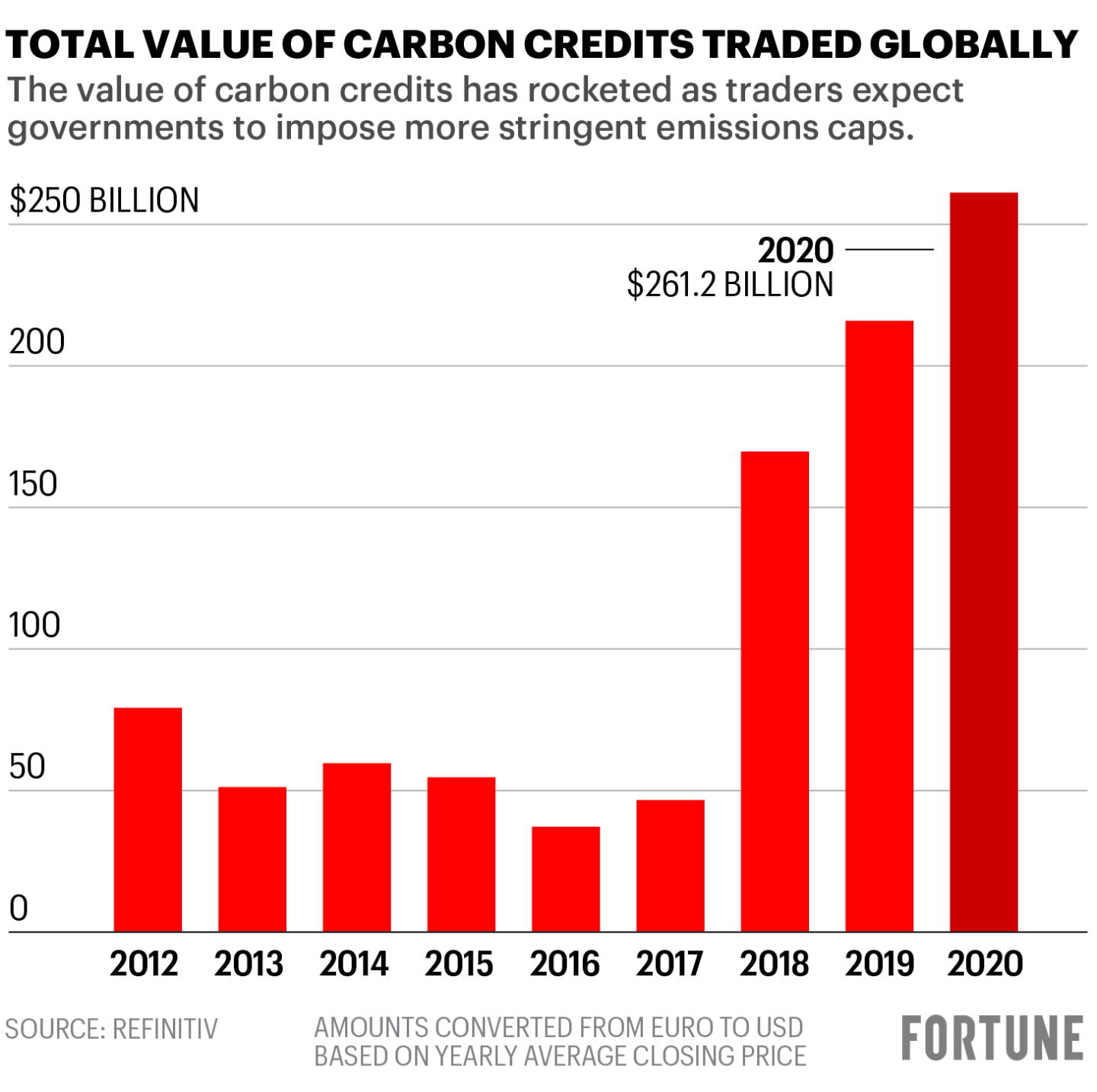
CO2-emitting businesses aren’t the only buyers and sellers of compliance credits. The credits trade in open markets, so anyone can participate. Hedge funds trade carbon credits, which can be volatile assets; the price of EU credits plunged from €24 to €15 last March when the pandemic hit, then roared to €30 in August when the EU said emissions rules would become more stringent. The total value of credits traded has quintupled over the past five years as traders foresee tightened emissions caps worldwide.
How do voluntary carbon credits work?
Carbon credits of the other type, voluntary credits, are the kind you might buy when you book a flight. They’re called voluntary because, while you may feel responsible for the emissions you cause, you don’t need a permit. Instead you check a box as part of your purchase and pay a small extra amount that you’re assured will help fund a project that offsets the CO2 emissions you’re about to cause.
That’s starkly different from compliance credits, which are government-mandated, specifically defined, and independently audited. Voluntary credits take myriad forms involving a wide range of activities and offer varying levels of assurance that they are what they say. They are by no means equal to one another in eco-friendliness.
If I buy a carbon offset, how does it help the environment?
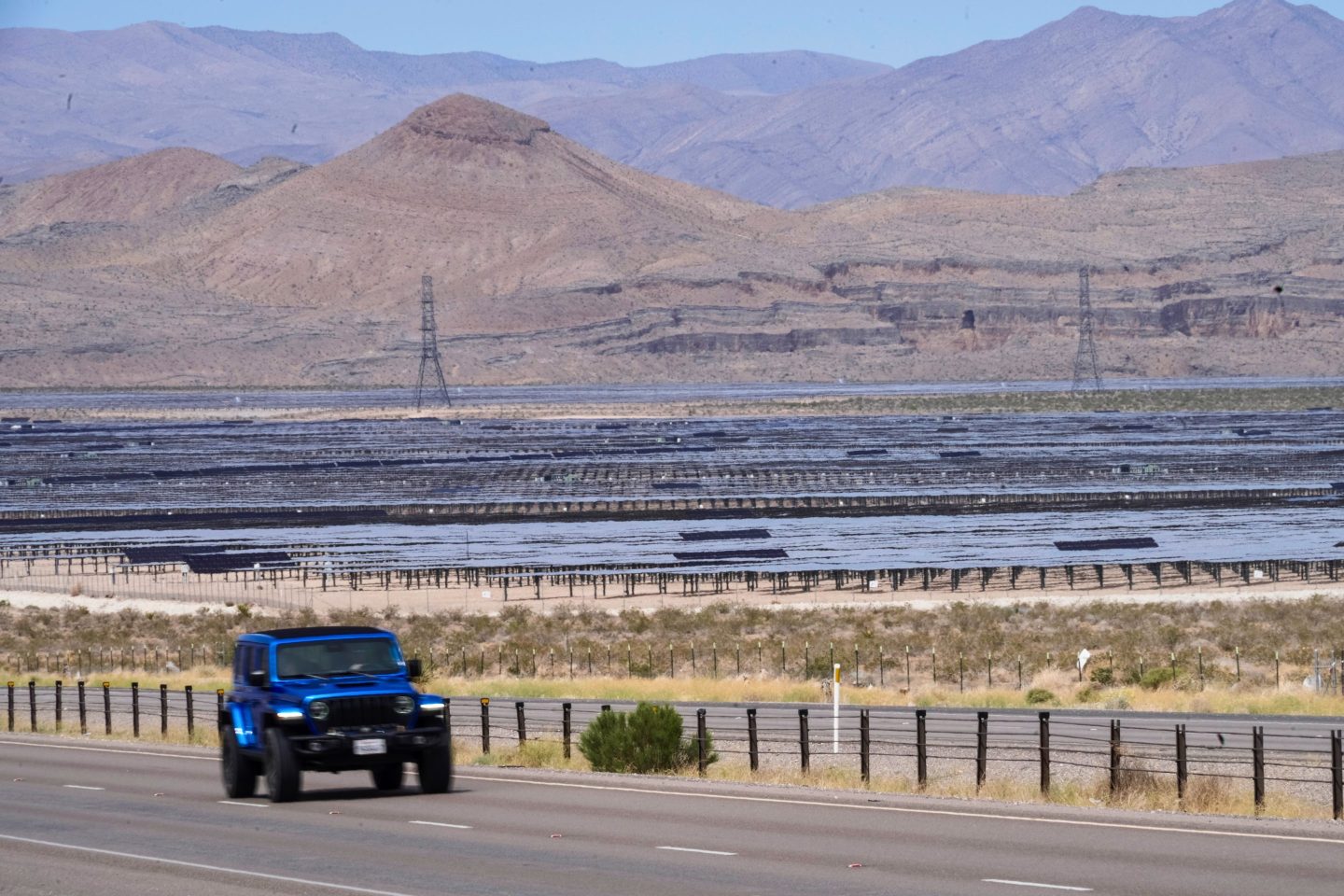
These credits fund projects that take CO2 out of the air, such as planting trees, or projects that block CO2-emitting activities that otherwise would have happened, for example by building a solar power plant that takes the place of a coal-fired plant. But buyer beware. Tree-planting is a popular offset project with a strong feel-good factor, but “it’s just not a legitimate offset” says MIT professor John Sterman, who researches environmental sustainability. “When you take a flight, you’re putting carbon into the atmosphere right now. But the tree is going to take 50 to 150 years to grow and remove that carbon. Every day that that CO2 is in the air, climate change gets worse.”
Do carbon offsets make a difference?
Another major concern is whether the offsetting activity would have happened even without revenue from the sale of carbon offsets. If the answer is yes—if the project is not truly “additional,” in carbon offset terminology—then the associated offset is meaningless. Builders of a solar power plant may sell carbon offsets, but if the builders would have built the plant anyway, especially as solar power becomes cheap enough to compete with conventional sources, then the offsets haven’t accomplished anything. “For an activity or project to be additional,” explains a guidebook from the GHG Management Institute and the Stockholm Environment Institute, “the possibility to sell carbon offset credits must play a decisive (‘make or break’) role in the decision to implement it.” Whether that happened is hard for outsiders to know.
Who certifies carbon offsets?
Several independent certification organizations—including American Carbon Registry, Climate Action Reserve, The Gold Standard—vouch for the quality of voluntary carbon offsets. When you’re offered an offset, you may not be told if the offset is certified, and if it is, by whom. Without that information, think twice before you click.
Will carbon credits move the needle?
Carbon credits will remain important for decades, but they’re only a partial solution to the challenge of reducing greenhouse gas emissions. “There are people out there who erroneously suggest that if we just planted a lot of trees, we could solve the climate problem,” says Sterman. “That’s not true. There’s no way to meet the emissions reduction targets we have to meet if you don’t cut the emissions from burning of fossil fuels as quickly and as cheaply as possible, ultimately to zero—where ‘ultimately’ is no later than mid-century.” The role of credits is to help us get from here to there.
Subscribe to Fortune Daily to get essential business stories straight to your inbox each morning.