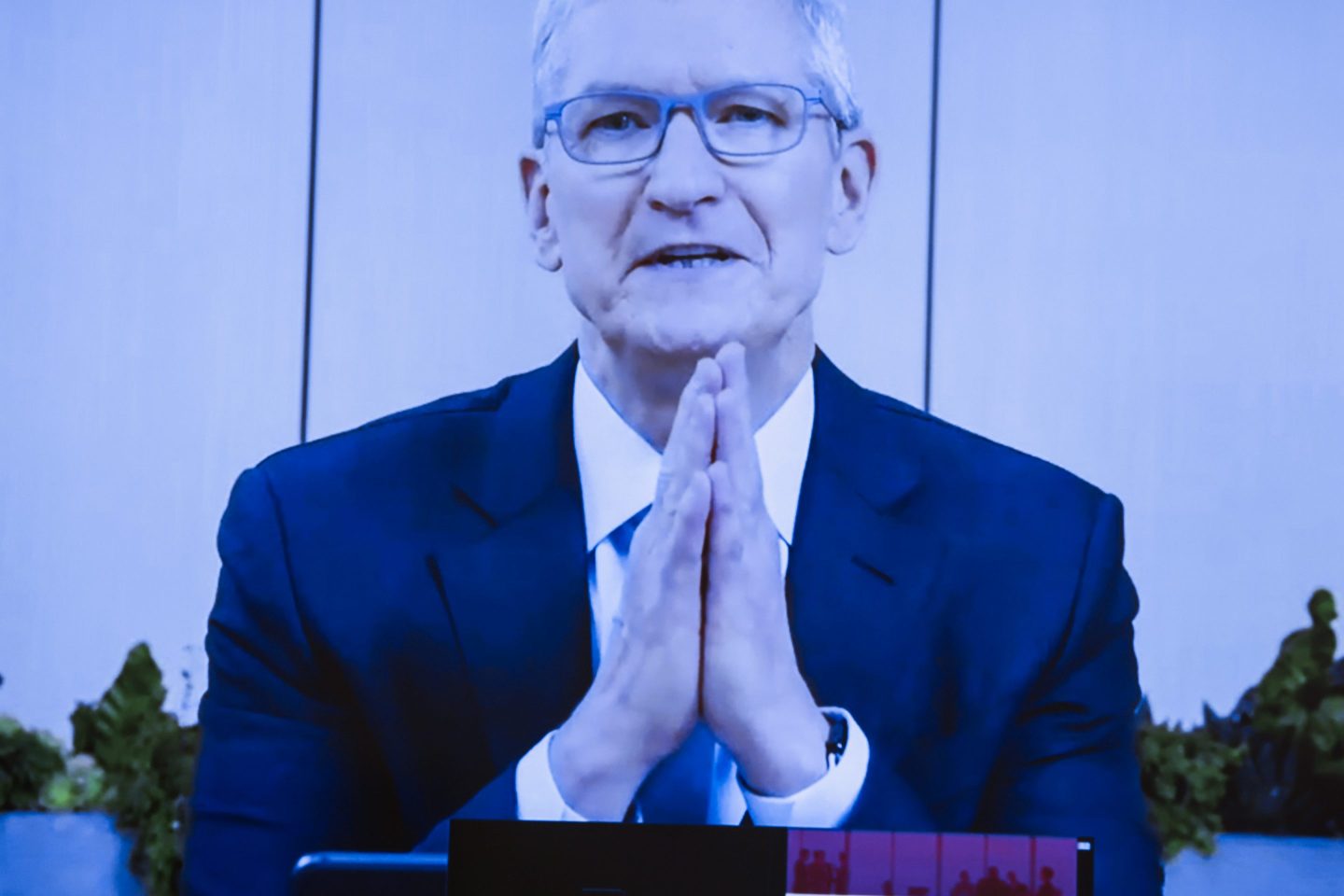
Because of strong employee resistance and turnover, Google recently backtracked from its plan to make all employees return to the office and allowed many to work remotely. Apple’s plan to force its staff back to the office has caused many to leave the company and led to substantial internal opposition.
Why are these and so many other leaders of major companies compelling employees to return to the office? They must know about the extensive, in-depth surveys from early spring 2021 that asked thousands of employees about their preferences on returning to the office after the pandemic.
All of the surveys revealed strong preferences for working from home post-pandemic at least half the time for over three-quarters of all respondents. A quarter to a third of all respondents desired full-time remote work permanently. Between 40% and 55% of respondents said they’d quit without permanent remote options for at least half the workweek; of these, many would leave if not permitted fully remote work. Minority employees expressed an especially strong preference for remote work to escape in-office discrimination.
Yet many employers intend to force their employees who can easily work remotely back to the office for much or all of the work week.
Leaders frequently proclaim that people are their most important resource. Yet the leaders resistant to permitting telework are not living by that principle. Instead, they’re doing what they feel comfortable with, even if it devastates employee morale, engagement, and productivity; seriously undercuts retention and recruitment; and harms diversity and inclusion. In the end, their behavior is a major threat to the bottom line.
Interviewing 61 mid-level and senior leaders on this question in 12 companies that I helped develop a strategic approach to transitioning back to the office, I came to understand why they’re resistant to the seemingly obvious best option: a hybrid model for most, with full-time permanent remote work for those who both want it and show high effectiveness and productivity.
This is because of cognitive biases, which are mental blind spots that lead to poor strategic and financial decision-making. Fortunately, by understanding these cognitive biases and taking research-based steps to address them, we can make the best decisions.
Many people feel a desire to go back to the world before the pandemic. They fall for status quo bias, a desire to maintain or get back to what they see as the appropriate situation and way of doing things.
A major factor in leaders wanting everyone to return to the office stems from their personal discomfort with work from home. They spent their career surrounded by other people. They want to resume regularly walking the floors, surrounded by the energy of staff working.
They’re falling for anchoring bias. This mental blind spot causes us to feel anchored to our initial experiences and information.
The evidence that work from home functions well for the vast majority doesn’t cause them to shift their perspective in any significant manner. Confirmation bias offers an important explanation for this seeming incongruity. Our minds are skilled at ignoring information that contradicts our beliefs, and looking only for information that confirms them.
Reluctant leaders usually tell me they don’t want to do surveys because they feel confident that the large majority of their employees would rather work at the office than at home. They wave aside the fact that large-scale public surveys show the opposite. For instance, one of the major complaints by Apple employees is the company’s failure to do effective surveys and listen to employees.
In this refusal to do surveys, confirmation bias is compounded by another cognitive bias called the false consensus effect. This mental blind spot leads us to envision other people in our in-group—such as those employed at our company—as being much more like ourselves in their beliefs than is the actual case.
Some of these resistant leaders brought up challenges related to working from home, ranging from burnout to deteriorating culture. But further inquiry on each problem reveals that the leaders never addressed these work-from-home problems strategically.
They transitioned to telework abruptly as part of the March 2020 lockdowns. Perceiving this shift as a very brief emergency, they focused, naturally and appropriately, on accomplishing the necessary tasks of the organization. They ignored the social and emotional glue that truly holds companies together, motivates employees, and protects against burnout.
That speaks to a cognitive bias called functional fixedness. When we have a certain perception of how systems should work, we ignore other possible functions, uses, and behaviors. We do this even if these new functions, uses, and behaviors offer a better fit for a changed situation and would address our problems better.
The post-pandemic office will require the realignment of employer-employee expectations. Leaders need to use research-based strategies to overcome their gut reactions that cause them to fall victim to mental oversights. Only by doing so can they maximize retention, recruitment, morale, productivity, and workplace culture—and thus their bottom line.
Gleb Tsipursky is a behavioral scientist, CEO of the future-proofing consultancy Disaster Avoidance Experts, and author of Returning to the Office and Leading Hybrid and Remote Teams: A Manual on Benchmarking to Best Practices for Competitive Advantage.