• Home
  • Latest
  • Fortune 500
  • Finance
  • Tech
  • Leadership
  • Lifestyle
  • Rankings
  • Multimedia
CommentaryBusiness

Cooperatives can make economies more resilient to crises like COVID-19

By
Katherine K. Chen
Katherine K. Chen
and
Victor Tan Chen
Victor Tan Chen
Down Arrow Button Icon
By
Katherine K. Chen
Katherine K. Chen
and
Victor Tan Chen
Victor Tan Chen
Down Arrow Button Icon
May 19, 2021, 8:00 PM ET
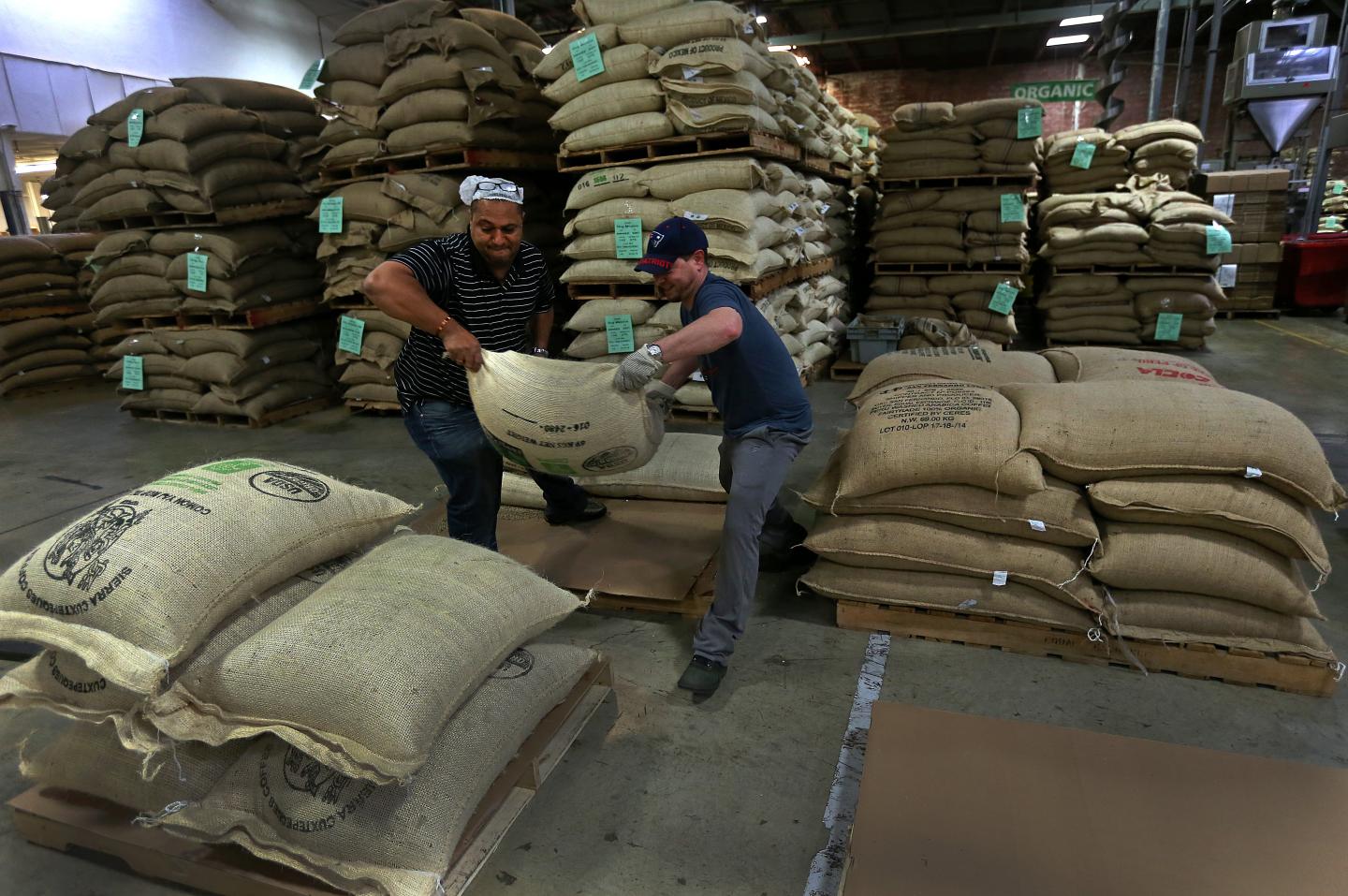
Workers at Equal Exchange, a cooperative coffee company.
Workers at Equal Exchange, a cooperative coffee company.David L. Ryan—The Boston Globe via Getty Images

With customers staying at home during the pandemic, large numbers of businesses have shuttered permanently, unable to cover their payroll and rent. Emergency governmental assistance has sustained some businesses during this period of economic uncertainty, but the crisis has also stoked interest in a private sector remedy: cooperatives.

In Baltimore, a pizzeria that shut when the pandemic hit reopened as a worker cooperative, its ownership shared equally among its 14 original employees. In Albuquerque, N.M., small farms pivoted from supporting restaurants and farmers markets, pooling their produce to sell directly to households. In New York, Mayor Bill de Blasio launched a program to help struggling businesses reopen as employee-owned businesses.

As Congress deliberates how to safeguard the country from future crises, policymakers should consider recent research that shows how so-called alternative enterprises can make local economies more resilient. Sociologist Marc Schneiberg finds that counties with more cooperatives, credit unions, community banks, nonprofit organizations, and universities experienced fewer job losses during the Great Recession and greater job growth in its aftermath. This path-breaking finding suggests that such organizations are better able than their shareholder-owned counterparts to retain workforces when the economy falters—and more willing to invest in their communities when markets pick up again. 

A worker cooperative is a venture owned equally by its employees and democratically managed by them. Customers can also own a business via a consumer cooperative (think member-owned businesses like the outdoor outfitter REI or the Park Slope Food Coop), credit union, insurance mutual, or municipal utility. 

Across these alternative models of organizing—what the sociologist Joyce Rothschild calls “collectivist organizations”—members run their operations using democratic practices while pursuing goals beyond profit. And as we describe in our new book Organizational Imaginaries, B Corporations, employee stock ownership plans, and other forms offer a middle ground between cooperatives and investor-owned firms, giving workers, consumers, and other stakeholders varying degrees of equity and control. 

While cooperatives are well-known in many European countries, Americans may not realize that this model of organizing also has deep roots here. Cooperatives undergirded the early stages of U.S. capitalism, with communities establishing electrical cooperatives, insurance mutuals, and dairy cooperatives as alternatives to government bureaucracies and conventional firms alike. America’s early unions founded hundreds of industrial cooperatives to protect workers’ rights and share the gains of industry more equitably.

Today, some view employee ownership as inefficient compared to manager-led corporations. However, research refutes this perception. Summarizing past studies, sociologist Jonathan Preminger writes, “Workers in employee-owned firms tend to be more cooperative and interested in the firm’s performance, and display a greater willingness to work hard, which generally leads to reduced employee turnover, improved productivity, better pay, and increased job security.” 

Localities where alternative organizations prevail can adapt more nimbly and humanely to disasters and long-term challenges. When workers are included in decision-making, organizations benefit from their hands-on knowledge and ideas, as companies as distinct as the automaker Toyota and the game developer Valve have long appreciated. By their very nature, democratic organizations require processes that can’t be easily automated or outsourced, and their shared ownership and commitment to the public good make the work involved inherently meaningful to those who do it—who can feel that they’re key players in causes larger than themselves. 

As Congress takes up an infrastructure bill, policymakers should consider how they might foster what sociologists call “organizational infrastructure”—the local environment of resources and expertise that can nurture diverse forms of organizing. 

In other countries, policies incentivize employee ownership. In the United Kingdom, for example, 2014 legislation established tax advantages for owners who sell their business to employee ownership trusts, contributing to a surge in employee-owned businesses there. This sort of institutional buy-in paves the way for “solidarity economies,” where worker-owned businesses assemble a supportive ecosystem—such as Cooperation Jackson in Mississippi, a city-supported campaign that knits together many cooperative enterprises. 

As the pandemic has rattled the economy, even business leaders have recommended extending greater equity to workers. For example, the billionaire entrepreneur Mark Cuban stated in an interview last year that the pandemic had proven that U.S. capitalism needed a “reset,” and that workers living “paycheck to paycheck” should own more of the businesses that employ them. 

Promoting alternatives to shareholder-owned firms would spur more private sector creativity, enabling everyday entrepreneurs to rework today’s deeply unequal system and giving workers and consumers a greater stake and voice in their businesses. That would be one smart way to revitalize capitalism so that it works for everyone.

Katherine K. Chen is an associate professor of sociology at the City College of New York and Graduate Center, CUNY. 

Victor Tan Chen is an associate professor of sociology at Virginia Commonwealth University. 

They are (no relation) the editors of the new book Organizational Imaginaries: Tempering Capitalism and Tending to Communities Through Cooperatives and Collectivist Democracy.

Our mission to make business better is fueled by readers like you. To enjoy unlimited access to our journalism, subscribe today.
About the Authors
By Katherine K. Chen
See full bioRight Arrow Button Icon
By Victor Tan Chen
See full bioRight Arrow Button Icon

Latest in Commentary

Finance
Lorem ipsum dolor sit amet, consectetur adipiscing elit, sed do eiusmod tempor incididunt ut labore et dolore magna aliqua. Ut enim ad minim veniam
By Fortune Editors
October 20, 2025
Finance
Lorem ipsum dolor sit amet, consectetur adipiscing elit, sed do eiusmod tempor incididunt ut labore et dolore magna aliqua. Ut enim ad minim veniam
By Fortune Editors
October 20, 2025
Finance
Lorem ipsum dolor sit amet, consectetur adipiscing elit, sed do eiusmod tempor incididunt ut labore et dolore magna aliqua. Ut enim ad minim veniam
By Fortune Editors
October 20, 2025
Finance
Lorem ipsum dolor sit amet, consectetur adipiscing elit, sed do eiusmod tempor incididunt ut labore et dolore magna aliqua. Ut enim ad minim veniam
By Fortune Editors
October 20, 2025
Finance
Lorem ipsum dolor sit amet, consectetur adipiscing elit, sed do eiusmod tempor incididunt ut labore et dolore magna aliqua. Ut enim ad minim veniam
By Fortune Editors
October 20, 2025
Finance
Lorem ipsum dolor sit amet, consectetur adipiscing elit, sed do eiusmod tempor incididunt ut labore et dolore magna aliqua. Ut enim ad minim veniam
By Fortune Editors
October 20, 2025

Most Popular

Finance
Lorem ipsum dolor sit amet, consectetur adipiscing elit, sed do eiusmod tempor incididunt ut labore et dolore magna aliqua. Ut enim ad minim veniam
By Fortune Editors
October 20, 2025
Finance
Lorem ipsum dolor sit amet, consectetur adipiscing elit, sed do eiusmod tempor incididunt ut labore et dolore magna aliqua. Ut enim ad minim veniam
By Fortune Editors
October 20, 2025
Finance
Lorem ipsum dolor sit amet, consectetur adipiscing elit, sed do eiusmod tempor incididunt ut labore et dolore magna aliqua. Ut enim ad minim veniam
By Fortune Editors
October 20, 2025
Finance
Lorem ipsum dolor sit amet, consectetur adipiscing elit, sed do eiusmod tempor incididunt ut labore et dolore magna aliqua. Ut enim ad minim veniam
By Fortune Editors
October 20, 2025
Finance
Lorem ipsum dolor sit amet, consectetur adipiscing elit, sed do eiusmod tempor incididunt ut labore et dolore magna aliqua. Ut enim ad minim veniam
By Fortune Editors
October 20, 2025
Finance
Lorem ipsum dolor sit amet, consectetur adipiscing elit, sed do eiusmod tempor incididunt ut labore et dolore magna aliqua. Ut enim ad minim veniam
By Fortune Editors
October 20, 2025
Fortune Secondary Logo
Rankings
  • 100 Best Companies
  • Fortune 500
  • Global 500
  • Fortune 500 Europe
  • Most Powerful Women
  • World's Most Admired Companies
  • See All Rankings
  • Lists Calendar
Sections
  • Finance
  • Fortune Crypto
  • Features
  • Leadership
  • Health
  • Commentary
  • Success
  • Retail
  • Mpw
  • Tech
  • Lifestyle
  • CEO Initiative
  • Asia
  • Politics
  • Conferences
  • Europe
  • Newsletters
  • Personal Finance
  • Environment
  • Magazine
  • Education
Customer Support
  • Frequently Asked Questions
  • Customer Service Portal
  • Privacy Policy
  • Terms Of Use
  • Single Issues For Purchase
  • International Print
Commercial Services
  • Advertising
  • Fortune Brand Studio
  • Fortune Analytics
  • Fortune Conferences
  • Business Development
  • Group Subscriptions
About Us
  • About Us
  • Press Center
  • Work At Fortune
  • Terms And Conditions
  • Site Map
  • About Us
  • Press Center
  • Work At Fortune
  • Terms And Conditions
  • Site Map
  • Facebook icon
  • Twitter icon
  • LinkedIn icon
  • Instagram icon
  • Pinterest icon

Latest in Commentary

hollywood
CommentaryMarketing
I spent 20 years learning to navigate an industry. Then I built a campaign for the man who’s dismantling it
By Matti YahavApril 29, 2026
14 hours ago
aging
HealthLongevity
We’re the CEOs of Peloton and the Hospital for Special Surgery. Living longer isn’t enough, we need to live better, too
By Bryan T. Kelly and Peter SternApril 29, 2026
15 hours ago
gen z
Commentarydisruption
AI won’t kill your job — it will kill the path to your first one
By Jeffrey Sonnenfeld, Stephen Henriques, Johan Griesel, Andrew Alam-Nist and Peter YuApril 29, 2026
16 hours ago
greer
CommentaryTariffs
No, tariffs are not strengthening the economy
By Alex DuranteApril 29, 2026
17 hours ago
AI is changing who gets to be an expert. Are your colleagues ready to become ‘directors of intelligence’?
AIProductivity
AI is changing who gets to be an expert. Are your colleagues ready to become ‘directors of intelligence’?
By Bruce BroussardApril 29, 2026
18 hours ago
gen z
CommentaryEducation
Gen Z has the wrong idea about college. Your career doesn’t start after you graduate 
By Ashley BigdaApril 29, 2026
19 hours ago

Most Popular

Apple cofounder Ronald Wayne—whose stake would be worth up to $400 billion had he not sold it in 1976—says that at 91, he has no regrets
Success
Apple cofounder Ronald Wayne—whose stake would be worth up to $400 billion had he not sold it in 1976—says that at 91, he has no regrets
By Preston ForeApril 27, 2026
3 days ago
‘Take the money and run’: Johns Hopkins economist Steve Hanke on why the UAE quit OPEC
Energy
‘Take the money and run’: Johns Hopkins economist Steve Hanke on why the UAE quit OPEC
By Shawn TullyApril 29, 2026
21 hours ago
‘The cost of compute is far beyond the costs of the employees’: Nvidia executive says right now AI is more expensive than paying human workers
AI
‘The cost of compute is far beyond the costs of the employees’: Nvidia executive says right now AI is more expensive than paying human workers
By Sasha RogelbergApril 28, 2026
2 days ago
Jamie Dimon gets candid about national debt: ‘There will be a bond crisis, and then we’ll have to deal with it’
Economy
Jamie Dimon gets candid about national debt: ‘There will be a bond crisis, and then we’ll have to deal with it’
By Eleanor PringleApril 29, 2026
17 hours ago
More than two-thirds of U.S. schools say they’re unable to afford the cost of student free lunch—and MAHA’s dietary guidelines may make it worse
Economy
More than two-thirds of U.S. schools say they’re unable to afford the cost of student free lunch—and MAHA’s dietary guidelines may make it worse
By Sasha RogelbergApril 29, 2026
19 hours ago
‘They left me no choice’: Powell isn’t going anywhere—blocking Trump from another Fed appointee
Banking
‘They left me no choice’: Powell isn’t going anywhere—blocking Trump from another Fed appointee
By Eva RoytburgApril 29, 2026
9 hours ago

© 2026 Fortune Media IP Limited. All Rights Reserved. Use of this site constitutes acceptance of our Terms of Use and Privacy Policy | CA Notice at Collection and Privacy Notice | Do Not Sell/Share My Personal Information
FORTUNE is a trademark of Fortune Media IP Limited, registered in the U.S. and other countries. FORTUNE may receive compensation for some links to products and services on this website. Offers may be subject to change without notice.