• Home
  • Latest
  • Fortune 500
  • Finance
  • Tech
  • Leadership
  • Lifestyle
  • Rankings
  • Multimedia
TechSilicon Valley

Google wins Oracle copyright fight as Supreme Court overturns ruling

By
Greg Stohr
Greg Stohr
,
Susan Decker
Susan Decker
, and
Bloomberg
Bloomberg
Down Arrow Button Icon
By
Greg Stohr
Greg Stohr
,
Susan Decker
Susan Decker
, and
Bloomberg
Bloomberg
Down Arrow Button Icon
April 5, 2021, 11:41 AM ET
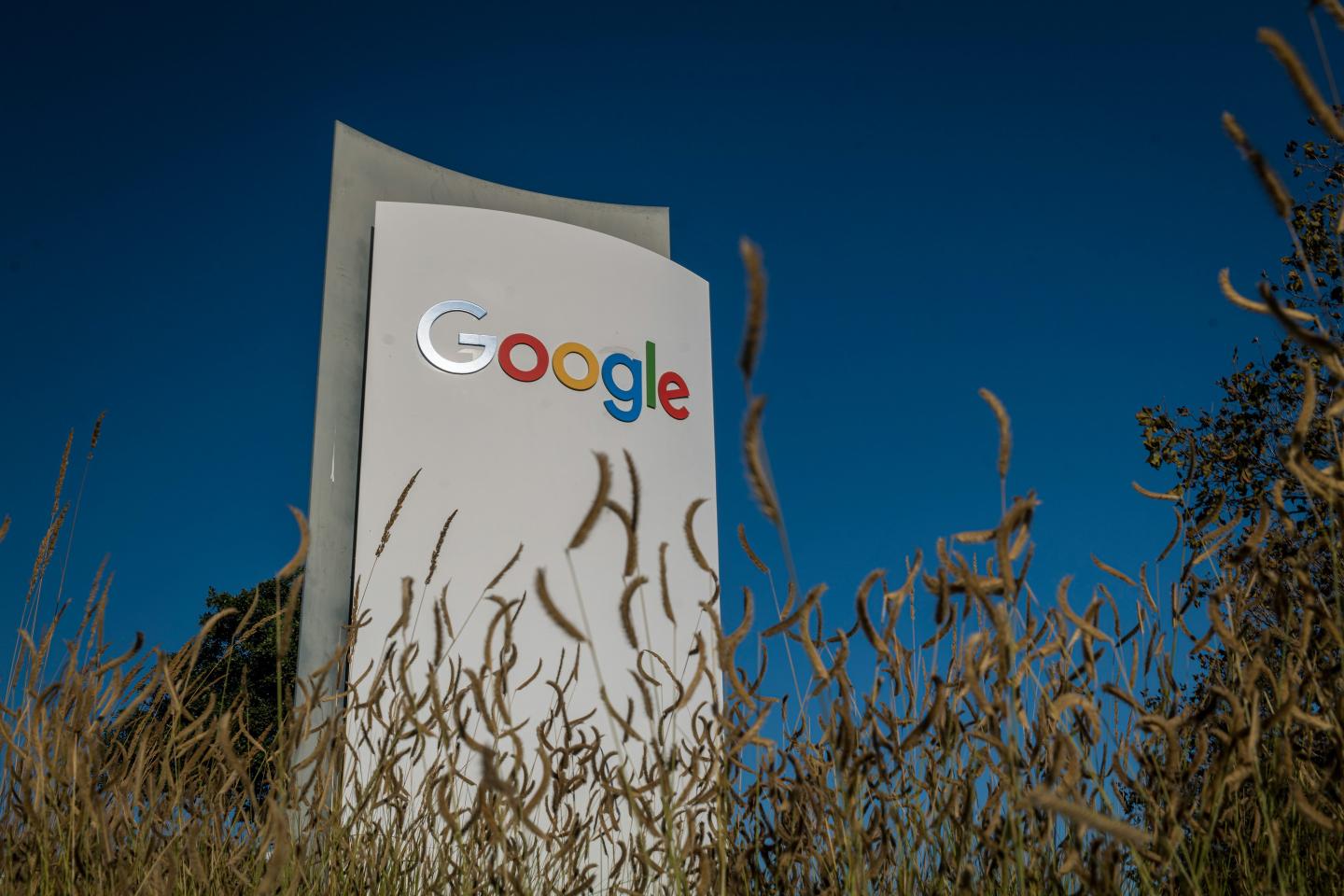
Signage is displayed in front of a building on the Google campus in Mountain View, California on Oct. 21, 2020.
Signage is displayed in front of a building on the Google campus in Mountain View, California on Oct. 21, 2020.David Paul Morris—Bloomberg/Getty Images

The U.S. Supreme Court ruled that Alphabet Inc.’s Google didn’t commit copyright infringement when it used Oracle Corp.’s programming code in the Android operating system, sparing Google from what could have been a multibillion-dollar award.

The 6-2 ruling, which overturns a victory for Oracle, marks a climax to a decade-old case that divided Silicon Valley and promised to reshape the rules for the software industry. Oracle was seeking as much as $9 billion.

Alphabet extended gains on the news, rising 2.7% as of 10:14 a.m. in New York. Oracle was up 1.7%.

The court said Google engaged in legitimate “fair use” when it put key aspects of Oracle’s Java programming language in the Android operating system.

Writing for the court, Justice Stephen Breyer said Google used “only what was needed to allow users to put their accrued talents to work in a new and transformative program.”

Justices Clarence Thomas and Samuel Alito dissented. Justice Amy Coney Barrett didn’t take part in the case, which was argued before she joined the court.

Each side contended the other’s position would undercut innovation. Oracle said that without strong copyright protection, companies would have less incentive to invest the large sums needed to create groundbreaking products. Google said Oracle’s approach would discourage the development of new software that builds on legacy products.

Oracle said the Supreme Court’s ruling means “the Google platform just got bigger and market power greater. The barriers to entry higher and the ability to compete lower.”

“They stole Java and spent a decade litigating as only a monopolist can,” the company said. “This behavior is exactly why regulatory authorities around the world and in the United States are examining Google’s business practices.”

Programming Short Cuts

Google called the decision “a victory for consumers, interoperability, and computer science.”

“The decision gives legal certainty to the next generation of developers whose new products and services will benefit consumers,” Google’s chief legal officer Kent Walker, said in a statement.

The Computer & Communications Industry Association, whose members include Google, called the ruling “a win for interoperability, copyright principles and the future of innovation.”

“The high court’s decision that fair use extends to the functional principles of computer code means companies can offer competing, interoperable products,” CCIA President Matt Schruers said in a statement.

At issue were pre-written directions known as application program interfaces, or APIs, which provide instructions for such functions as connecting to the internet or accessing certain types of files. By using those shortcuts, programmers don’t have to write code from scratch for every function in their software, or change it for every type of device.

Oracle said the Java APIs were freely available to those who wanted to build applications that run on computers and mobile devices. But Oracle said it required companies to get a license if they wanted to use the shortcuts for a competing platform or to embed them in an electronic device.

The Supreme Court didn’t address whether the code was eligible for copyright protection, an early point of contention. Instead, Breyer said that for this case the court would “assume, for argument’s sake, that the material was copyrightable.”

That approach drew criticism from Thomas, who said in his dissenting opinion that the majority opinion is “wholly inconsistent with the substantial protection Congress gave to computer code.”

Existential Threat

Oracle said Google was facing an existential threat because its search engine—the source of its advertising revenue—wasn’t being used on smartphones. Google bought the Android mobile operating system in 2005 and copied Java code to attract developers but refused to take a license, Oracle contended.

Breyer said that, though Google copied 11,500 lines of code, Google engineers wrote millions more.

“Google, through Android, provided a new collection of tasks operating in a distinct and different computing environment,” Breyer wrote. “Those tasks were carried out through the use of new implementing code (that Google wrote) designed to operate within that new environment.”

Google argued that software interfaces are categorically ineligible for copyright protection. Google also contended that a federal appeals court restricted the fair-use defense so much as to make it impossible for a developer to reuse an interface in a new application. The appeals court decision reversed a jury finding that Google’s copying was a legitimate fair use.

Google argued that software interfaces are categorically ineligible for copyright protection. Google also contended that a federal appeals court restricted the fair-use defense so much as to make it impossible for a developer to reuse an interface in a new application. The appeals court decision reversed a jury finding that Google’s copying was a legitimate fair use.

Tech companies including Mozilla Corp., Microsoft Corp., and International Business Machines Corp. supported Google. Media and entertainment businesses, which rely on strong copyright standards, backed Oracle, as did the Trump administration when the case was argued in October.

Oracle initially sued Google for copyright infringement in 2010. Since then, the case has worked its way up and down the legal system, spurring two jury trials and numerous appeals.

The case is Google v. Oracle America, 18-956.

—With assistance from Naomi Nix.

About the Authors
By Greg Stohr
See full bioRight Arrow Button Icon
By Susan Decker
See full bioRight Arrow Button Icon
By Bloomberg
See full bioRight Arrow Button Icon

Latest in Tech

Finance
Lorem ipsum dolor sit amet, consectetur adipiscing elit, sed do eiusmod tempor incididunt ut labore et dolore magna aliqua. Ut enim ad minim veniam
By Fortune Editors
October 20, 2025
Finance
Lorem ipsum dolor sit amet, consectetur adipiscing elit, sed do eiusmod tempor incididunt ut labore et dolore magna aliqua. Ut enim ad minim veniam
By Fortune Editors
October 20, 2025
Finance
Lorem ipsum dolor sit amet, consectetur adipiscing elit, sed do eiusmod tempor incididunt ut labore et dolore magna aliqua. Ut enim ad minim veniam
By Fortune Editors
October 20, 2025
Finance
Lorem ipsum dolor sit amet, consectetur adipiscing elit, sed do eiusmod tempor incididunt ut labore et dolore magna aliqua. Ut enim ad minim veniam
By Fortune Editors
October 20, 2025
Finance
Lorem ipsum dolor sit amet, consectetur adipiscing elit, sed do eiusmod tempor incididunt ut labore et dolore magna aliqua. Ut enim ad minim veniam
By Fortune Editors
October 20, 2025
Finance
Lorem ipsum dolor sit amet, consectetur adipiscing elit, sed do eiusmod tempor incididunt ut labore et dolore magna aliqua. Ut enim ad minim veniam
By Fortune Editors
October 20, 2025

Most Popular

Finance
Lorem ipsum dolor sit amet, consectetur adipiscing elit, sed do eiusmod tempor incididunt ut labore et dolore magna aliqua. Ut enim ad minim veniam
By Fortune Editors
October 20, 2025
Finance
Lorem ipsum dolor sit amet, consectetur adipiscing elit, sed do eiusmod tempor incididunt ut labore et dolore magna aliqua. Ut enim ad minim veniam
By Fortune Editors
October 20, 2025
Finance
Lorem ipsum dolor sit amet, consectetur adipiscing elit, sed do eiusmod tempor incididunt ut labore et dolore magna aliqua. Ut enim ad minim veniam
By Fortune Editors
October 20, 2025
Finance
Lorem ipsum dolor sit amet, consectetur adipiscing elit, sed do eiusmod tempor incididunt ut labore et dolore magna aliqua. Ut enim ad minim veniam
By Fortune Editors
October 20, 2025
Finance
Lorem ipsum dolor sit amet, consectetur adipiscing elit, sed do eiusmod tempor incididunt ut labore et dolore magna aliqua. Ut enim ad minim veniam
By Fortune Editors
October 20, 2025
Finance
Lorem ipsum dolor sit amet, consectetur adipiscing elit, sed do eiusmod tempor incididunt ut labore et dolore magna aliqua. Ut enim ad minim veniam
By Fortune Editors
October 20, 2025
Fortune Secondary Logo
Rankings
  • 100 Best Companies
  • Fortune 500
  • Global 500
  • Fortune 500 Europe
  • Most Powerful Women
  • World's Most Admired Companies
  • See All Rankings
  • Lists Calendar
Sections
  • Finance
  • Fortune Crypto
  • Features
  • Leadership
  • Health
  • Commentary
  • Success
  • Retail
  • Mpw
  • Tech
  • Lifestyle
  • CEO Initiative
  • Asia
  • Politics
  • Conferences
  • Europe
  • Newsletters
  • Personal Finance
  • Environment
  • Magazine
  • Education
Customer Support
  • Frequently Asked Questions
  • Customer Service Portal
  • Privacy Policy
  • Terms Of Use
  • Single Issues For Purchase
  • International Print
Commercial Services
  • Advertising
  • Fortune Brand Studio
  • Fortune Analytics
  • Fortune Conferences
  • Business Development
  • Group Subscriptions
About Us
  • About Us
  • Press Center
  • Work At Fortune
  • Terms And Conditions
  • Site Map
  • About Us
  • Press Center
  • Work At Fortune
  • Terms And Conditions
  • Site Map
  • Facebook icon
  • Twitter icon
  • LinkedIn icon
  • Instagram icon
  • Pinterest icon

Latest in Tech

Photo of vegan cheese products
AITech
A Mark Cuban–backed vegan cheese company trained AI to scrutinize cardboard boxes. It’s saved $400,000
By Jake AngeloMay 1, 2026
16 hours ago
Young trade worker learning on job
SuccessHiring
Forget Big Tech: Small businesses will hire nearly 1 million grads in 2026—and some of the hottest roles are gloriously AI-proof
By Emma BurleighMay 1, 2026
17 hours ago
Andrew McAfee
SuccessCareers
MIT AI expert warns automating Gen Z entry-level jobs could backfire—and cost companies their future workforce
By Preston ForeMay 1, 2026
17 hours ago
duke
Big TechAmazon
Amazon Prime Video reaches deal with Duke Blue Devils to air 3 games per season
By The Associated PressMay 1, 2026
19 hours ago
valerie
CommentaryLayoffs
Tesla’s former HR chief: the AI layoff panic Is built on a false premise—here’s what most workers need to know
By Valerie Capers WorkmanMay 1, 2026
19 hours ago
AI
AIdisruption
Meet the Americans dismissing AI hype and using it with ingenuity: ‘The efficiencies gained out of it have been tremendous’
By Cathy Bussewitz and The Associated PressMay 1, 2026
19 hours ago

Most Popular

Scott Bessent on financial literacy: 'it drives me crazy' to see young men in blue-collar construction jobs playing the lottery
Personal Finance
Scott Bessent on financial literacy: 'it drives me crazy' to see young men in blue-collar construction jobs playing the lottery
By Fatima Hussein and The Associated PressMay 1, 2026
20 hours ago
China dominates the world's lithium supply. The U.S. just found 328 years' worth in its own backyard
North America
China dominates the world's lithium supply. The U.S. just found 328 years' worth in its own backyard
By Jake AngeloApril 30, 2026
2 days ago
The U.S. economy is booming — just not where 50 million Americans live
Commentary
The U.S. economy is booming — just not where 50 million Americans live
By Derek KilmerMay 1, 2026
24 hours ago
Apple cofounder Ronald Wayne—whose stake would be worth up to $400 billion had he not sold it in 1976—says that at 91, he has no regrets
Success
Apple cofounder Ronald Wayne—whose stake would be worth up to $400 billion had he not sold it in 1976—says that at 91, he has no regrets
By Preston ForeApril 27, 2026
5 days ago
Current price of oil as of May 1, 2026
Personal Finance
Current price of oil as of May 1, 2026
By Joseph HostetlerMay 1, 2026
20 hours ago
A Chick-fil-A worker got fired and then showed up behind the register to allegedly refund himself over $80,000 in mac and cheese
Law
A Chick-fil-A worker got fired and then showed up behind the register to allegedly refund himself over $80,000 in mac and cheese
By Catherina GioinoMay 1, 2026
15 hours ago

© 2026 Fortune Media IP Limited. All Rights Reserved. Use of this site constitutes acceptance of our Terms of Use and Privacy Policy | CA Notice at Collection and Privacy Notice | Do Not Sell/Share My Personal Information
FORTUNE is a trademark of Fortune Media IP Limited, registered in the U.S. and other countries. FORTUNE may receive compensation for some links to products and services on this website. Offers may be subject to change without notice.