This is the web version of The Capsule, a daily newsletter monitoring advances in health care and biopharma. Sign up to get it delivered free to your inbox.
Note 4.2.21: Since CDC Director Rochelle Walensky made the comments discussed below, scientists have pushed back against the idea that vaccinated people “don’t carry the virus.” We’ve published a deeper analysis of the debate here.
The disagreement seems to hinge in part on an important distinction not entirely spelled out in Walensky’s comments. Vaccinated people can still be infected with the SARS-CoV-2 virus and suffer the symptoms of COVID-19, though this happens at a much reduced rate and severity, and vaccination eliminates the risk of death.
But the most important part of the recent CDC findings is that vaccinated people are very unlikely to suffer asymptomatic SARS-CoV-2 infections. Participants in the study who were fully vaccinated with the Pfizer-BioNTech or Moderna vaccines were 90% less likely to be infected with SARS-CoV-2. Of infections that did occur, only 10.7 percent were asymptomatic. Taken together, this means vaccinated people are highly unlikely to transmit the virus when they are not suffering symptoms. This also means that as vaccination rates continue to rise, the virus will have fewer and fewer possible hosts.
“Our data from the CDC today suggests that vaccinated people do not carry the virus, don’t get sick, and that it’s not just in the clinical trials but it’s also in real-world data,” CDC Director Dr. Rochelle Walensky told Rachel Maddow on Monday, March 29. Walensky was describing the results of a new CDC study of vaccinated Americans, which found that they not only had very high resistance to COVID-19, but also to asymptomatic infections of the SARS-CoV-2 virus – and, by extension, are very unlikely to spread it to other people.
It’s good news, of course. But as the study was ongoing, we saw months of public befuddlement over the CDC’s insistence that people should wear masks and social distance even after being vaccinated. Many experts argue that messaging contributed to vaccine hesitancy by making people think the vaccines were less effective.
It’s another instance of a conundrum health authorities have faced throughout the pandemic: How do you communicate with the public about evolving knowledge of a completely new disease? More specifically, is there a responsible way to talk about what’s likely or probable, before you have clear experimental data?
But before we dive in: Hi, I’m new here.
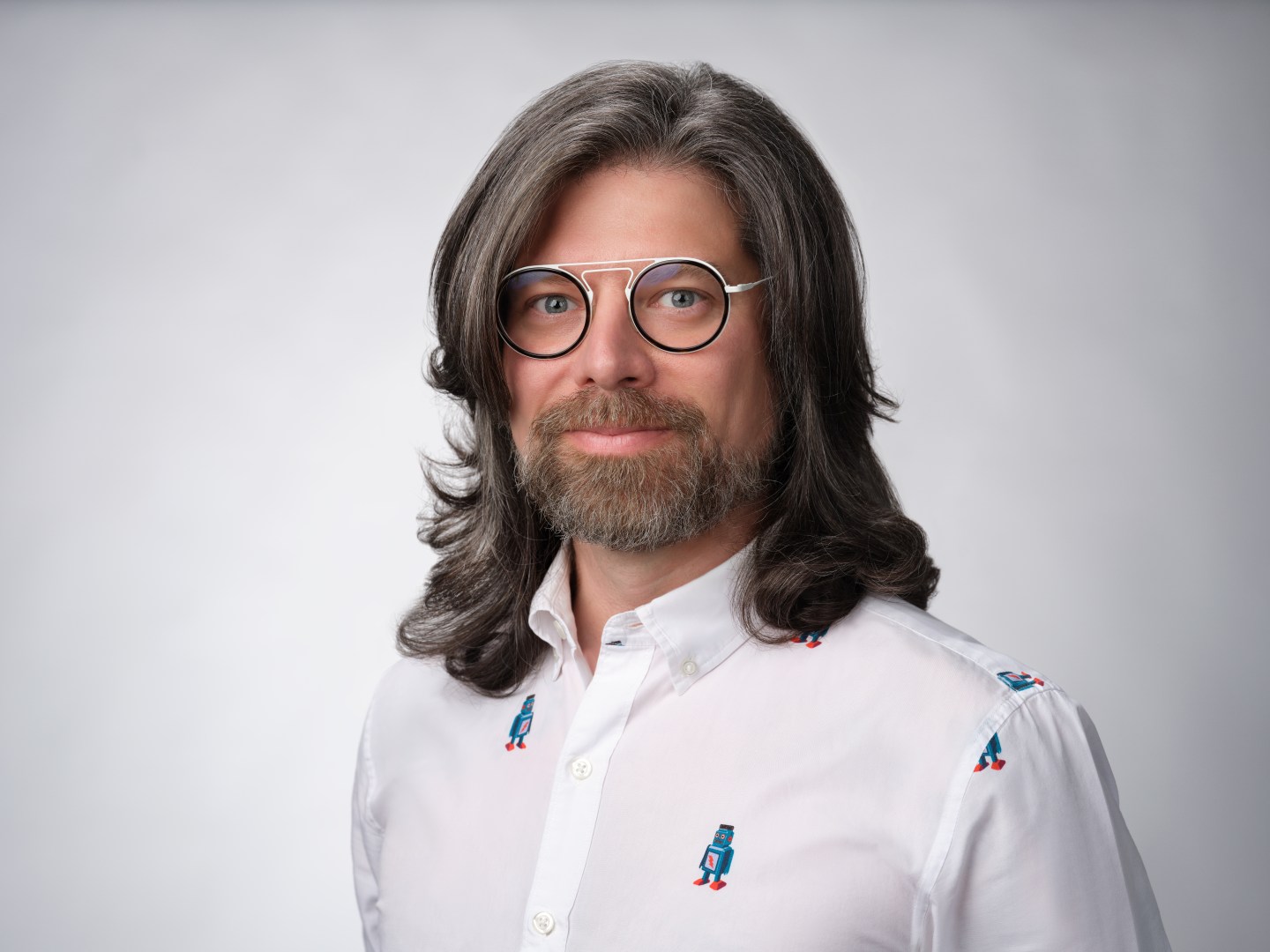
My name is David Z. Morris, and I’ll be sharing The Capsule with Sy Mukherjee while the newsletter runs daily during the month of April. I’ve been reporting on the coronavirus pandemic and vaccines since the beginning, including this recent deep dive into Pfizer’s sixth dose. I’m not nearly the seasoned hand Sy is, but I’m learning fast.
Now, to the new CDC study. While it has finally freed federal public health officials to declare that vaccinated people don’t carry the virus, it’s hardly a surprising finding. There was early evidence of reduced transmission during vaccine trials. Perhaps more importantly, there was a widespread sense among virologists and epidemiologists that SARS-CoV-2 would react to vaccinations similarly to other respiratory coronaviruses such as MERS and SARS.
But officials and experts still generally cautioned that vaccinated people should continue social distancing and wearing masks, primarily to avoid the chance that they could be asymptomatic spreaders of the virus. Several experts told the New York Times‘ David Leonhardt last month that this and similarly cautious or ‘ambiguous’ messaging about vaccine effectiveness was increasing vaccine hesitancy or indifference. (The CDC still recommends that vaccinated people mask up in public, because of the small risk of catching COVID-19 themselves while the virus is still circulating.)
That puts public health officials in a tough spot, particularly in the U.S., with its high levels of distrust of government efforts in general and the vaccine specifically. More open discussion of the process of building scientific knowledge, including discussing likelihoods and probabilities before formal experimental proof emerges, could give “anti-vaxx” ideologues more ammunition to paint science as inconclusive or flawed, even if others found the transparency reassuring.
But the current, cautious, approach doesn’t seem to be doing much good on that front, either: 20% of Americans still express strong opposition to getting vaccinated.
Would that number be lower if the CDC had told people months ago that they could relax, maybe just a bit, after they got their dose?
David Z. Morris
david.morris@fortune.com
@davidzmorris
DIGITAL HEALTH
Reno's controversial remote therapy contract. As part of its effort to spend COVID relief funds before the end of 2020, the city of Reno, Nevada entered an unusual agreement with the therapy app Talkspace: for $1.3 million dollars, every Reno resident would have access to therapy services through the app. Criticism of the deal from local therapists has been fierce, both because they say the deal takes money out of the local economy and because they question the substance of Talkspace's service, which critics consider "therapy-lite." Reno Mayor Hillary Schieve argues other forms of therapy aren't easily accessible for many - and Nevada has dismal mental health metrics, so something may be better than nothing. But months into the partnership, only 1,350 Reno residents are actively using the service, well under 1% of those eligible. (Statnews)
INDICATIONS
FDA Advisors push back on Biogen's Alzheimer's drug. On Tuesday, three FDA advisors published an article in the Journal of the American Medical Association expressing serious reservations about aducanumab, an Alzheimer's treatment up for final FDA review later this year. Their concerns include inconsistent results between trials, which Biogen attempted to explain after the fact with arguments the advisors don't buy. They conclude that there is "no persuasive evidence to support approval of aducanumab at this time." (BioPharma Dive/JAMA)
THE BIG PICTURE
Human error ruins 15 million J&J coronavirus vaccine doses. A process error at an Emergent BioSolutions plant contaminated 15 million J&J doses. None of the spoiled doses left the factory, and such errors are apparently not uncommon in medical production. And while the loss is significant enough to slow down the U.S. rollout, the disruption won't be catastrophic. A total of 24 million Johnson & Johnson doses were expected to be delivered next month, and those shipments are now in question. But the Biden administration still expects to have enough vaccine doses for all U.S. adults by early May. (New York Times)
Expanded vaccine eligibility could reduce volunteering at vaccination sites. Will Humble of the Arizona Public Health Association had a fascinating post yesterday about the unintended consequences of making all adults eligible for vaccination. Humble argues that many volunteers keeping mass vaccination sites running smoothly in recent weeks were doing so because they got a vaccination in exchange. But with expanded eligibility, fewer people are volunteering, which appears to have led to slower vaccinations at one mass site in Arizona, and may be having similar effects elsewhere. Arizona officials have since announced new measures, including more paid staff, to correct for the shortfall. (AZPHA.org)
REQUIRED READING
A complete timeline of the AstraZeneca vaccine's trials and tribulations - Jeremy Kahn
Inside Pennsylvania's rough vaccine rollout - Maria Aspan
All the weird side-effects you might get from a COVID-19 vaccine - Sy Mukherjee