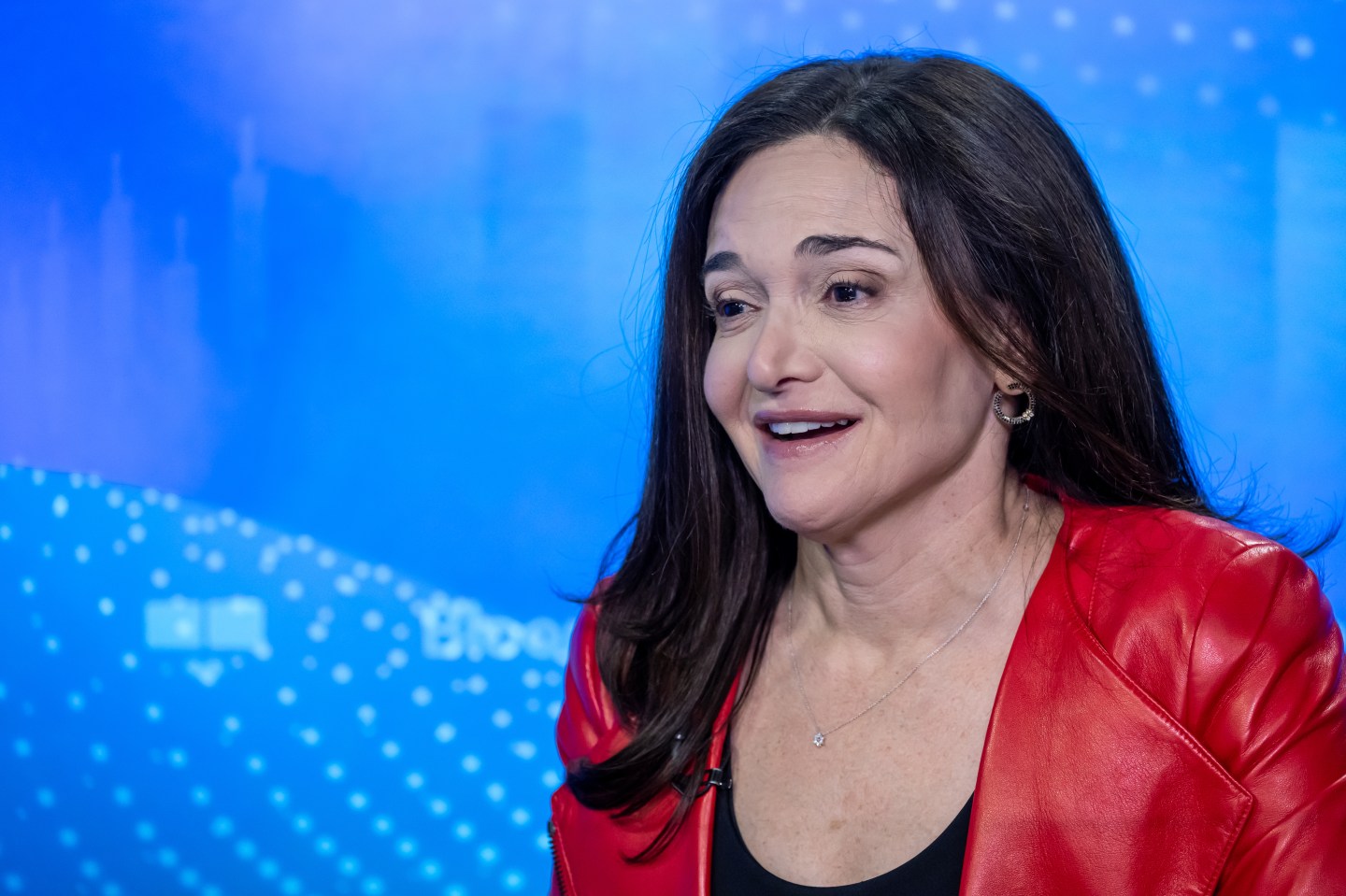

Stitch Fix began 2020 as a company that offered a fun, convenient way to shop: get a personalized box of clothes, or ‘fix,’ shipped to you and choose what you keep.
But the company is riding out the home stretch of the pandemic well aware of its other strengths. Among them, the data-informed ability to adapt quickly to changing consumer preferences, from ditching work shirts on a dime to predicting what customers will want to buy as they leave quarantine and its ubiquitous elastic waistbands behind.
That ability to react helped push Stitch Fix’s stock up 282% over the past year, from around $12 in March 2020 to $48 today. The surge made founder and CEO Katrina Lake, for a time, a new self-made female billionaire.
Although Lake says she doesn’t follow the stock’s daily ups and downs, she understands what investors are seeing in the company. “The opportunity for Stitch Fix is just increasing,” she says.
Lake told Fortune about how COVID has changed her company’s strategy, what it was like to see a new CEO—Bumble’s Whitney Wolfe Herd—take her place as the youngest woman to take a company public, and how she learned to ditch her natural pragmatism, when necessary, to think big. This interview has been edited and condensed.
Fortune: What shopping trends have you seen over the past year—and which ones do you expect will stick around after the pandemic? How have you changed Stitch Fix’s own assortment?
For obvious reasons, it’s been a really challenging year. There are tailwinds and headwinds. And the headwinds are: people are buying less clothes. All the dinners we didn’t go to, all the travel we didn’t do—although people are still continuing to buy from our kids’ business. I have two young kids, so I understand why. Kids still grow, and they still need clothes.
But for men’s and women’s, COVID is accelerating trends we were already seeing. Moving more online is an obvious trend that accelerated. But the biggest theme in the assortment is the “casualization” of clothes. We were already seeing less suiting, less blazers—but COVID really accelerated that. But particularly for men; women had started buying athleisure a few years ago, but men weren’t buying as much [before COVID].
This notion of, ‘How can I wear the same clothes on the weekends that I do to work?’ is here to stay. Inherently that will mean we see a more casual assortment, even when things go back to normal. We will see people continuing to buy pants that are more comfortable than slacks. For women, more of the athleisure that is continuing to sell. But we’re excited to see what people want when things start opening up again.
Do you have a sense of what that might be?
In our women’s business, we are already seeing people starting to buy again, and I think men’s will get there soon. And we will also have a seasonal component as we’re going into spring and summer. But we really are in the business of listening to the consumer and delivering what he or she wants; we’re not in the business of forcing it or saying, ‘This is the thing everybody has to buy.’ We really think we’re here to serve people wherever they’re at. So we’re in a state right now of monitoring where people are at and making sure we have the right assortment.
As you monitor, where is Stitch Fix positioned? Are you able to be more nimble and respond more quickly than some traditional retail as these consumer preferences change really rapidly?
We’re at this intersection of e-commerce and navigation—figuring out the right things for people. We’ve seen more new client additions in the first two quarters of this fiscal year than we did all of last year in fiscal 2020. We saw a 12% increase in active client growth. We had a 50% year-over-year increase last quarter. All of this is speaking to the strength of our model right now. I think that strength is going to continue—once you realize there’s a convenient and effective way to be able to shop at home, I think it’s pretty hard to go back.
Our business model is able to better adapt—we buy more flexibly and we’re using that data to learn about what customers want and then incorporating that in real time into the buys and the replenishment models we have. The world has been increasingly uncertain, but our model of flexibility, based on data, and being able to use that data to make better predictions—those are really important skills to have today.
How have Stitch Fix’s own brands been doing in recent months?
We have much more own brands in men’s and kids’ than we do in women’s. But our own brands are using these exact skill sets—to understand how sizes run, if we should have different colorways or different patterns, really knowing what consumers want and at what price points, and being able to work that into it quickly. Like in our kids’ business—we can react really quickly. Increased athleisure, we saw that in kids’ too, which is kind of remarkable. Kids already wear a lot of athleisure. But kids, they’re also not going to events like adults. And we were able to pivot really quickly there. It’s definitely one of our towering strengths that our own brands are really reactive. And the product that we develop there, we’re doing it with an end customer in mind with data to support that end customer.
Your stock was on a tear this year. What do you think investors are seeing in the stock? And in the company?
I don’t watch the stock on a daily basis or anything, but I do think there’s greater recognition that this is the direction the world is going. We’ve seen forecasts that say half of apparel spend is going to move online by 2025. Before the pandemic, it was in the 20% range. That’s a massive shift and a massive opening up of the opportunity for us.
I think the shift to online is permanent, like in every other industry. So I believe the opportunity for Stitch Fix is just increasing. We always knew that shift online was happening, but I don’t think anyone would have predicted the scale and magnitude of the past year. People are looking 10, 20 years out and saying, ‘What are the companies that are going to be successful? Which companies may not be?’ Our focus is of course being digital, being online, but focusing on personalizing and apparel, which no one else is doing. We believe 10 years from now, people who are going to be the winners are the ones that are going to be able to know which things you’re going to love most and deliver that the best. That’s exactly the capability we’ve been focused on developing over the past 10 years. So you’re seeing a future-focus orientation and a belief that our model can be successful.
These findings over the past year—have they changed anything about your long-term strategy?
It’s made our long-term strategy feel more important—like we’re investing our time in the right places. We pulled forward some things strategically. The last year has shown us how important it is to be flexible on the inventory side. Just like that, a year ago, people stopped buying work shirts in men’s—and we all know why. But we accelerated newer inventory models. Right now we buy wholesale and sell at retail, which is great, but has its limitations when our vendors have stock of things they could feasibly sell to our clients. But we haven’t used cash upfront to pay them for it—so we’re trying to explore, are there more flexible ways where we can access some of that inventory? It’s already on our vendors’ books, but can we make that saleable to our customers? That’s better for the vendor because we can move their inventory, better for us because it’s more revenue opportunity, and better for our clients because we have more selection. The last year helped us see that this is a big and urgent opportunity.
Earlier this year, Whitney Wolfe Herd took Bumble public and cited you as a mentor. And she took over a title from you, succeeding you as the youngest woman to take a company public. What did that feel like for you? Are you happy to pass on that designation?
I’m so happy to pass it on. It’s kind of a tricky thing. It’s hard to say I was proud to be the youngest one before because given the state of the world, I was happy to have that association, but at the same time it was so sad that it took so long. I was very eager to pass that title along. I felt lucky that it got to be to Whitney because she and I are close, and she’s overcome a lot. She was at times a bit of an underdog. It was very fulfilling to get to see that happen and exciting to see Bumble do so well as a public company.
What advice did you offer her about being a young, female public company CEO?
We talked about a lot of different things. She’s also a mom, so we talked about that. It was fun for me to see her son on that IPO stage with her.
We talked about the pros and cons of being public—that everything you do is more public. And she’s been in the public eye for a long time. But when you’re public, you realize there’s a lot more you can’t control. It makes it even more important to be really clear about the narrative internally. There are going to be headlines that say ‘Stitch Fix stock unravels,’ and our employees need to have a strong sense of why they believe the company is going to be successful, regardless of what those kinds of headlines say.
People talk about the CEO job as being a lonely job. And you look around, and you see how few women are in those public seats, and it’s an even lonelier job. The benefit for me of getting to know someone like Whitney is having that connection and greater sense of community—feeling like we’re in this together.
What advice would you offer about how to be a young woman in this sort of public company CEO job, whether to Whitney or the next person who comes along?
The fact that there’s not a lot of women doing this right now—you almost get licensed to lead in your own way. The leaders that are resonating most with people are the most authentic leaders, the ones people feel a connection to. Authentic leadership is especially accessible to women because there’s no point in putting on a pantsuit and pretending to be a guy. We can all chart our own paths of what leadership looks like.
And remember to be big, bold, and aspirational. That’s a little harder for me–I’ve always been very pragmatic. I have to learn, I do have big goals, I do have big aspirations, and unless I’m saying those things out loud I can’t bring people along on that. I can be pragmatic when I’m looking at the financials behind closed doors, but the things that people are here for are the really cool things we’re going to be able to do. Bringing people along on that is really powerful.
For Stitch Fix, what are those big things that you’ve learned to articulate more?
We’re thinking of what we deliver as recommendations, and that can take many forms. ‘Fixes’ is what most people have thought about when they think about Stitch Fix—they think about the ‘fix’ they get delivered to their home. But there are so many other ways people shop and fixes can be limiting for some of those; if you’re thinking, ‘I want a puffer jacket this week,’ fixes are not going to be a great way to get that to you. And there are categories like shoes and handbags where preferences are so strong.
But those are ones where we can show you recommendations and you can choose from those—that’s a more powerful way to shop. We’ve gotten to a place where we realize that this market opportunity—the $400 billion spent on clothes—a huge amount of that is available to us. Fixes are great and they’ll always be part of the story. But how do we access more of that impulse buy? How do we access a client who wants to have more of a say in what she wants to wear? Then our market opportunity starts to look really big. We’ve been really excited about that opportunity internally, and we’ve started to share that externally. It’s been a big source of catalyzing energy within the company.