• Home
  • Latest
  • Fortune 500
  • Finance
  • Tech
  • Leadership
  • Lifestyle
  • Rankings
  • Multimedia
LeadershipSmarter Working

Why white managers must take on the work of code-switching now

By
S. Mitra Kalita
S. Mitra Kalita
Down Arrow Button Icon
By
S. Mitra Kalita
S. Mitra Kalita
Down Arrow Button Icon
March 24, 2021, 12:01 PM ET
Worksheet-Column-Helen-gold
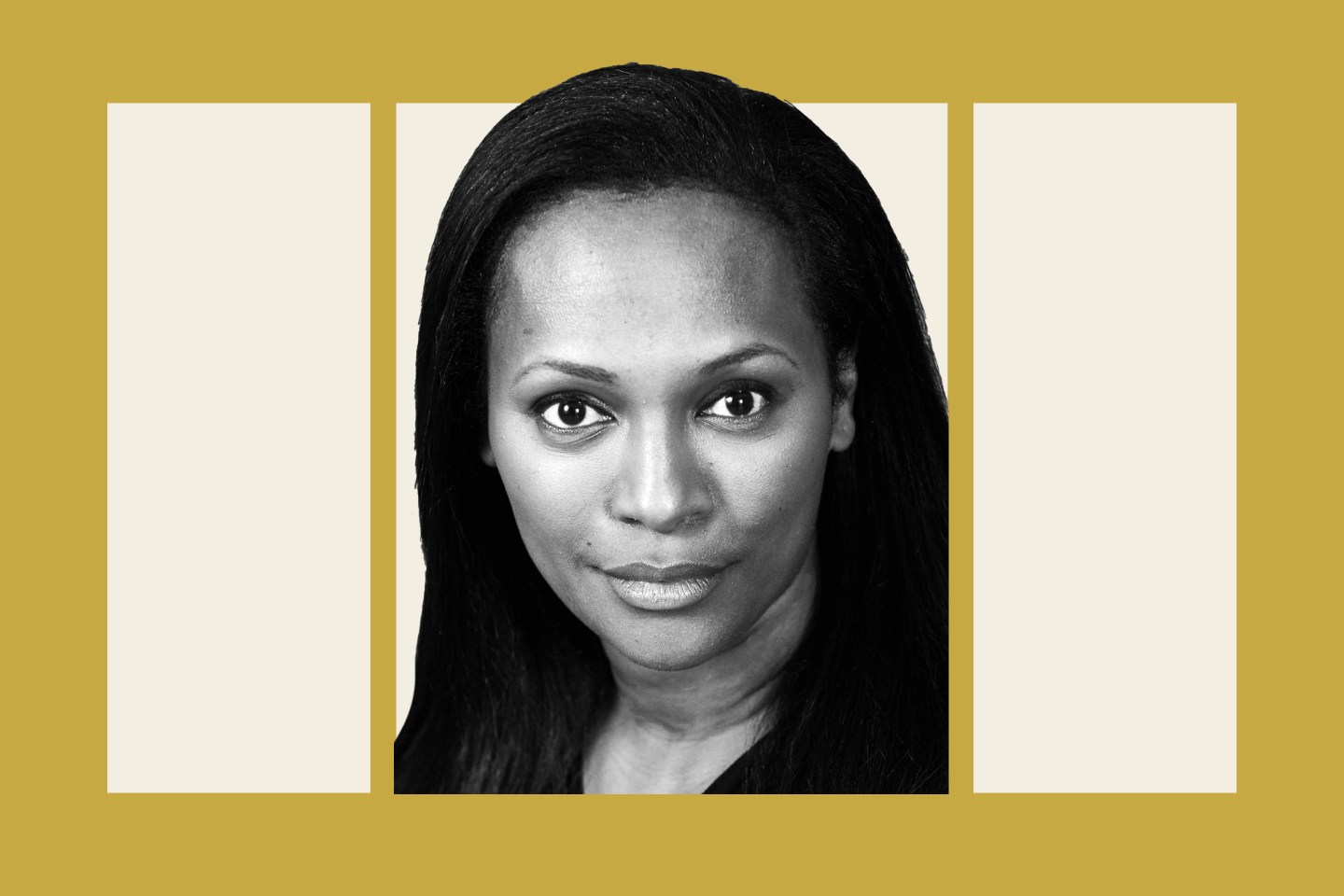
Helen Aboah, the CEO of Urban Zen, a luxury lifestyle brand created by Donna Karan. She recounts saying no to certain job opportunities when they didn’t feel rightCourtesy of Helen Aboah

A certain diversity memo is clearly making the rounds: Read books on anti-racism, hire more Black people, check in on your staffers of color. 

But then what? 

Much of the advice in business columns is geared toward white managers trying to make a change, in their companies, hopefully themselves. There’s less focus on the receiving end of their overtures. 

So this one’s for us. 

People of color are exhausted, alienated—and uncertain about what’s ahead. Surveys show that attitudes about the post-pandemic workplace vary by race; about half of Black knowledge workers say they are “treated fairly at work,” compared to three-quarters of white workers. Of those working remotely, 97% of Black workers want a hybrid or full-time remote working model, compared to 79% of whites. Workplace experts explain that telecommuting reduces the need for “code switching.” Harvard Business   Review defines the practice as “adjusting one’s style of speech, appearance, behavior, and expression in ways that will optimize the comfort of others in exchange for fair treatment, quality service, and employment opportunities.”

That we are seeing less of it, even if it took a pandemic, is a silver lining. 

White managers are not the only ones who must make behavioral changes right now. The data on code-switching underscore a positive development and could be a baby step in shifting power dynamics: The embrace of ourselves, our full selves, at work. 

And so when a colleague tries to engage you on issues of race, you have more power than you might think. Out: You being asked to “help” on a job search to ensure it’s a diverse pool. In: You asking what conditions have been set up to optimize for a candidate’s success.  

“We are together trying to imagine and live in a new society. In that society, people of color will also be required to show up differently,” said Glenn E. Singleton, founder and CEO of Courageous Conversation, a consultancy devoted to interracial dialogue in the workplace. “This time, it’s not a time of relaxation. This is about people of color really thinking about what we want in this new world. Never in our history have we not had heavy lifts. The heavy lift can’t simply be how we prop up our white brothers and sisters though. How do we actually lead?”

Hiring diversity is not enough

The knee-jerk reaction to last summer’s protests was additive: install a chief diversity officer, hire more people of color, host anti-racism training. 

A few key steps were forgotten. 

It’s kind of like choosing to have guests over, says Brooke Gregory, the recently named president of Courageous Conversation, and a longtime educator. “I prepare my house. I get the bedroom ready. I have allotted time to take you out to dinner. I feel I am in community with you.”

If none of those factors is right, the visit will not be fruitful. “That’s how I think about companies,” said Gregory. “If the culture is not one I can be successful in as a woman of color, it doesn’t matter how many women of color you hire.”

Cultural (ex)change is needed

The work before us is one of cultural transformation. Most companies are undergoing a version anyway, as they strategize office spaces, organizational charts and collaboration in post-pandemic workplaces. 

They need to weave in accommodation of difference, said Marie Han Silloway, a global marketing executive who has held senior positions in the U.S. and abroad for brands such as Subway, Starbucks and Estee Lauder.

“I have been struck by how often I see people pushing their own agendas without attempting to truly understand the other side of the equation. So when it comes to diversity, equality and inclusion,” she said, “it is a culture you have to actively promote. You have to be deliberate in creating teams who have a difference and a range of perspectives.”

Because the brunt of her career was spent in China, for example, Han Silloway talks about how much of her job was “decoding” and helping different cultures understand each other. This work now falls on everyone to prevent diversity, equity and inclusion from being just a few buzzwords.  

Otherwise, “there will be loads of ‘training’ but the concepts will not be embedded within the culture of the company and it will be superficial,” she said. “We’re seeing it right now with all the anti-Asian hate crimes. Diversity and the appreciation of diversity and inclusion is extremely fragile.”

Do only white people get to say no?

If it still sounds like a lot of work on people of color, it is. Singleton suggests employers can support and acknowledge that reality in a few ways. For example, affinity groups for employees of color might hold meetings during work hours instead of making the effort “extra.” Weave DEI into everybody’s job description, and measure effectiveness often and as conditions of bonuses and promotions. 

“When there’s a scarcity of people of color, the navigation for those folks is not individual. It is collective,” said Gregory. For example, saying no to a panel discussion that would otherwise be all white, or saying no to a mentoring program for women, or saying no to an employer looking for help finding diverse candidates might mean a very different outcome without your involvement. And yet that also puts an unfair pressure of representation on you. “My ‘no’ may change that search process and there’s not the luxury of thinking only of myself,” she said. “So I need to be able to navigate the way I say no.”

She describes a balance between “the weight of what it means to show up and surrender who I am and the cost of my soul in these environments. The boundaries we create actually establish what our value is. If all I say is yes, then I look like everyone else in the environment.”

Sometimes, it’s about reframing the question to get to “yes” on your own terms, said Helen Aboah, the CEO of Urban Zen, a luxury lifestyle brand created by Donna Karan. She recounts saying no to certain job opportunities when they didn’t feel right—but being able to steer the conversation to what she actually did want. “That opened bigger yesses,” she said. “And your yesses are as important as your no’s. When opportunity knocks, take it, take it, take it.”


About the Author
By S. Mitra Kalita
See full bioRight Arrow Button Icon

Latest in Leadership

Finance
Lorem ipsum dolor sit amet, consectetur adipiscing elit, sed do eiusmod tempor incididunt ut labore et dolore magna aliqua. Ut enim ad minim veniam
By Fortune Editors
October 20, 2025
Finance
Lorem ipsum dolor sit amet, consectetur adipiscing elit, sed do eiusmod tempor incididunt ut labore et dolore magna aliqua. Ut enim ad minim veniam
By Fortune Editors
October 20, 2025
Finance
Lorem ipsum dolor sit amet, consectetur adipiscing elit, sed do eiusmod tempor incididunt ut labore et dolore magna aliqua. Ut enim ad minim veniam
By Fortune Editors
October 20, 2025
Finance
Lorem ipsum dolor sit amet, consectetur adipiscing elit, sed do eiusmod tempor incididunt ut labore et dolore magna aliqua. Ut enim ad minim veniam
By Fortune Editors
October 20, 2025
Finance
Lorem ipsum dolor sit amet, consectetur adipiscing elit, sed do eiusmod tempor incididunt ut labore et dolore magna aliqua. Ut enim ad minim veniam
By Fortune Editors
October 20, 2025
Finance
Lorem ipsum dolor sit amet, consectetur adipiscing elit, sed do eiusmod tempor incididunt ut labore et dolore magna aliqua. Ut enim ad minim veniam
By Fortune Editors
October 20, 2025

Most Popular

Finance
Lorem ipsum dolor sit amet, consectetur adipiscing elit, sed do eiusmod tempor incididunt ut labore et dolore magna aliqua. Ut enim ad minim veniam
By Fortune Editors
October 20, 2025
Finance
Lorem ipsum dolor sit amet, consectetur adipiscing elit, sed do eiusmod tempor incididunt ut labore et dolore magna aliqua. Ut enim ad minim veniam
By Fortune Editors
October 20, 2025
Finance
Lorem ipsum dolor sit amet, consectetur adipiscing elit, sed do eiusmod tempor incididunt ut labore et dolore magna aliqua. Ut enim ad minim veniam
By Fortune Editors
October 20, 2025
Finance
Lorem ipsum dolor sit amet, consectetur adipiscing elit, sed do eiusmod tempor incididunt ut labore et dolore magna aliqua. Ut enim ad minim veniam
By Fortune Editors
October 20, 2025
Finance
Lorem ipsum dolor sit amet, consectetur adipiscing elit, sed do eiusmod tempor incididunt ut labore et dolore magna aliqua. Ut enim ad minim veniam
By Fortune Editors
October 20, 2025
Finance
Lorem ipsum dolor sit amet, consectetur adipiscing elit, sed do eiusmod tempor incididunt ut labore et dolore magna aliqua. Ut enim ad minim veniam
By Fortune Editors
October 20, 2025
Rankings
  • 100 Best Companies
  • Fortune 500
  • Global 500
  • Fortune 500 Europe
  • Most Powerful Women
  • Future 50
  • World’s Most Admired Companies
  • See All Rankings
Sections
  • Finance
  • Leadership
  • Success
  • Tech
  • Asia
  • Europe
  • Environment
  • Fortune Crypto
  • Health
  • Retail
  • Lifestyle
  • Politics
  • Newsletters
  • Magazine
  • Features
  • Commentary
  • Mpw
  • CEO Initiative
  • Conferences
  • Personal Finance
  • Education
Customer Support
  • Frequently Asked Questions
  • Customer Service Portal
  • Privacy Policy
  • Terms Of Use
  • Single Issues For Purchase
  • International Print
Commercial Services
  • Advertising
  • Fortune Brand Studio
  • Fortune Analytics
  • Fortune Conferences
  • Business Development
About Us
  • About Us
  • Editorial Calendar
  • Press Center
  • Work At Fortune
  • Diversity And Inclusion
  • Terms And Conditions
  • Site Map
  • Facebook icon
  • Twitter icon
  • LinkedIn icon
  • Instagram icon
  • Pinterest icon

Latest in Leadership

Hubbard
Future of WorkJobs
Carhartt CEO says they always focused on blue-collar workers—but hipsters came anyway: ‘We welcome anyone … that wants to celebrate hard work’
By Nick LichtenbergJanuary 13, 2026
19 hours ago
A worker in a green jacket operates a welding tool.
EconomyLabor
U.S workers just took home their smallest share of capital since 1947, at least
By Sasha RogelbergJanuary 13, 2026
21 hours ago
A smartphone displaying the Google Gemini logo.
AIEye on AI
As ‘agentic commerce’ gains ground, companies shouldn’t put too much faith in ‘GEO,’ one industry insider warns
By Jeremy KahnJanuary 13, 2026
23 hours ago
AIGoldman Sachs Group
‘Humans could go the way of horses’: Goldman calculated how bad the AI ‘job apocalypse’ will be—and its analysts were pleasantly surprised
By Jim EdwardsJanuary 13, 2026
1 day ago
micro
Future of Workhybrid
‘Microshifting,’ an extreme form of hybrid working that breaks work into short, non-continuous blocks, is on the rise
By Nick LichtenbergJanuary 13, 2026
1 day ago
Mark Zuckerberg
Future of WorkMeta
Meta is changing its performance review to reward output over effort, taking a page from Amazon and X
By Jake AngeloJanuary 13, 2026
1 day ago

Most Popular

placeholder alt text
Success
Despite his $2.6 billion net worth, MrBeast says he’s having to borrow cash and doesn’t even have enough money in his bank account to buy McDonald’s
By Emma BurleighJanuary 13, 2026
1 day ago
placeholder alt text
Tech
Elon Musk asked people to upload their medical data to X so his AI company could learn to interpret MRIs and CT scans
By Sasha RogelbergJanuary 11, 2026
3 days ago
placeholder alt text
AI
'Godfather of AI' says the technology will create massive unemployment and send profits soaring — 'that is the capitalist system'
By Jason MaJanuary 12, 2026
2 days ago
placeholder alt text
Economy
The longer the Supreme Court delays its tariff decision, the better it is for President Trump
By Jim EdwardsJanuary 13, 2026
1 day ago
placeholder alt text
Future of Work
'Microshifting,' an extreme form of hybrid working that breaks work into short, non-continuous blocks, is on the rise
By Nick LichtenbergJanuary 13, 2026
1 day ago
placeholder alt text
Success
Google's Sergey Brin admits he's hiring 'tons' of workers without degrees: 'They just figure things out on their own in some weird corner'
By Preston ForeJanuary 12, 2026
2 days ago

© 2025 Fortune Media IP Limited. All Rights Reserved. Use of this site constitutes acceptance of our Terms of Use and Privacy Policy | CA Notice at Collection and Privacy Notice | Do Not Sell/Share My Personal Information
FORTUNE is a trademark of Fortune Media IP Limited, registered in the U.S. and other countries. FORTUNE may receive compensation for some links to products and services on this website. Offers may be subject to change without notice.