• Home
  • Latest
  • Fortune 500
  • Finance
  • Tech
  • Leadership
  • Lifestyle
  • Rankings
  • Multimedia
Commentarystudent loans and debt

Why schools need to be accountable for overextending student loans

By
Scott MacDonald
Scott MacDonald
Down Arrow Button Icon
By
Scott MacDonald
Scott MacDonald
Down Arrow Button Icon
March 12, 2021, 10:06 AM ET
Commentary-University Accountability-Student Loans
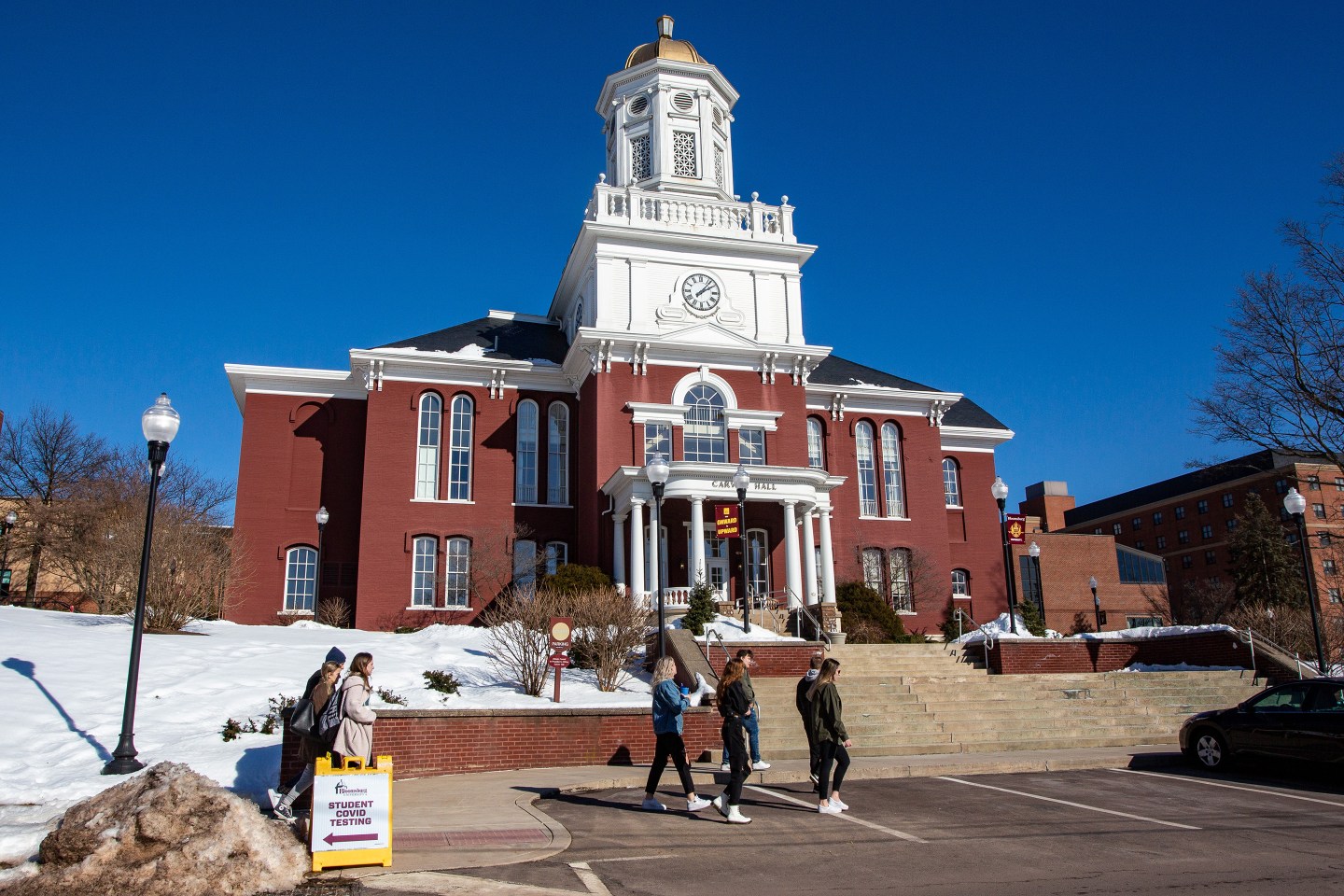
Colleges and universities overpromoting student loans should be responsible for students who default on their debt, writes Scott MacDonald.Paul Weaver—SOPA Images/LightRocket/Getty Images

Whenever one party assumes the risk and another party receives the benefit, it creates a structural imbalance that encourages bad behavior. This contributed to the global financial crisis in 2008 and is contributing to the increasing burden and rising default rate of student loans in the U.S.

In the financial crisis, mortgage lenders were paid whenever they made a loan without regard to how likely it was that the loan would ever be repaid. Borrowers were often unqualified and unable to make mortgage payments after initial teaser or below-market interest rates were adjusted to market rates. Yet they were still encouraged to borrow money because the mortgage brokers had no liability with regard to future outcomes and collected their fees upfront.

With student debt, the same principle applies. Colleges and universities, especially for-profit schools, arrange for their students to borrow money from the government and private lenders to pay their tuition, which represents income to the school. If the student subsequently defaults on the loan, there is no recourse to the school that did the paperwork and encouraged the student to borrow. The schools keep the money, and the borrowers and lenders retain the liability.

There is an important difference between mortgage debt and student debt, however. With mortgage debt, the loan is secured by the property, and a default results in loss of the house but not a lifelong impairment of one’s life. A student loan cannot be discharged by foreclosure, and unlike any other type of debt including credit card debt, a student loan cannot be discharged by bankruptcy. That loan remains with the borrower until it is paid, along with any accumulated interest. In the case of a government loan, the government can garnish wages, seize assets, and make life miserable for a borrower who misses a payment.

Private for-profit schools are the worst offenders of promoting loans to students less likely to be able to pay them off. About 48% of borrowers who attended private for-profit schools defaulted on their student loans during the first 12 years, compared with 12% for attendees of public colleges and 14% for nonprofit private schools. According to the Education Department, the 15 schools with the highest default rates are all for-profit private schools.

For-profit private schools typically rely on tuition and fees to cover all their operating costs; public universities receive some funding from states; and nonprofit universities often have endowments to help cover expenses. Nonprofit universities are more likely to receive federal grants and research funding to defray costs as well.

The need to cover operating costs and make a profit contributes to the necessity to enroll students, even if they are not qualified or likely to graduate. Student loans make this behavior possible. When a student fails to graduate, their likelihood of defaulting increases significantly because their earning potential lags a college graduate’s considerably. Such students are trapped with high debt but without commensurate future income.

Even nonprofit schools have many students who also default on their loans. While not as dependent on tuition and fees to pay operating costs, all schools need student tuition and fees. They have the same incentive to enroll students and utilize federal loans to enable lower-income students to pay for school. And like their for-profit neighbors, the nonprofit colleges and universities have no liability when their students default and leave the borrower with unsustainable debt and the public taxpayer with the bill.

Any solution to the crisis in student debt must include accountability for the schools that allow these loans to be taken out. The typical student debt is about $30,000, but many students—including many who drop out before graduating—have $5,000 or less in debt. If all universities that provide federal loans retained the first $5,000 of default liability, those schools would be more careful on assessing who is admitted and their likelihood of graduation. 

Schools would also be incentivized to make sure student borrowers graduate and are positioned to succeed and have the ability to repay their loans. Those schools that have higher-than-average default rates should have greater liability, perhaps the first $10,000. Retaining $5,000 to $10,000 liability against $30,000 average debt is not much to ask of universities, who benefit greatly from the revenue they receive from these students.

Scott MacDonald is the founder of the MacDonald Scholarship Program. His new book, Education Without Debt: Giving Back and Paying It Forward, was published in January 2021.

More opinion from Fortune:

  • Which big companies truly treat their workers well? California aims to keep score
  • Why is women’s health still so under-researched?
  • Disinformation attacks are spreading. Here are 4 keys to protecting your company
  • Biden Gender Policy Council leaders: We must fix the caregiving crisis COVID has created for women
  • How “data alchemy” could help businesses make the most of A.I.

About the Author
By Scott MacDonald
See full bioRight Arrow Button Icon

Latest in Commentary

Finance
Lorem ipsum dolor sit amet, consectetur adipiscing elit, sed do eiusmod tempor incididunt ut labore et dolore magna aliqua. Ut enim ad minim veniam
By Fortune Editors
October 20, 2025
Finance
Lorem ipsum dolor sit amet, consectetur adipiscing elit, sed do eiusmod tempor incididunt ut labore et dolore magna aliqua. Ut enim ad minim veniam
By Fortune Editors
October 20, 2025
Finance
Lorem ipsum dolor sit amet, consectetur adipiscing elit, sed do eiusmod tempor incididunt ut labore et dolore magna aliqua. Ut enim ad minim veniam
By Fortune Editors
October 20, 2025
Finance
Lorem ipsum dolor sit amet, consectetur adipiscing elit, sed do eiusmod tempor incididunt ut labore et dolore magna aliqua. Ut enim ad minim veniam
By Fortune Editors
October 20, 2025
Finance
Lorem ipsum dolor sit amet, consectetur adipiscing elit, sed do eiusmod tempor incididunt ut labore et dolore magna aliqua. Ut enim ad minim veniam
By Fortune Editors
October 20, 2025
Finance
Lorem ipsum dolor sit amet, consectetur adipiscing elit, sed do eiusmod tempor incididunt ut labore et dolore magna aliqua. Ut enim ad minim veniam
By Fortune Editors
October 20, 2025

Most Popular

Finance
Lorem ipsum dolor sit amet, consectetur adipiscing elit, sed do eiusmod tempor incididunt ut labore et dolore magna aliqua. Ut enim ad minim veniam
By Fortune Editors
October 20, 2025
Finance
Lorem ipsum dolor sit amet, consectetur adipiscing elit, sed do eiusmod tempor incididunt ut labore et dolore magna aliqua. Ut enim ad minim veniam
By Fortune Editors
October 20, 2025
Finance
Lorem ipsum dolor sit amet, consectetur adipiscing elit, sed do eiusmod tempor incididunt ut labore et dolore magna aliqua. Ut enim ad minim veniam
By Fortune Editors
October 20, 2025
Finance
Lorem ipsum dolor sit amet, consectetur adipiscing elit, sed do eiusmod tempor incididunt ut labore et dolore magna aliqua. Ut enim ad minim veniam
By Fortune Editors
October 20, 2025
Finance
Lorem ipsum dolor sit amet, consectetur adipiscing elit, sed do eiusmod tempor incididunt ut labore et dolore magna aliqua. Ut enim ad minim veniam
By Fortune Editors
October 20, 2025
Finance
Lorem ipsum dolor sit amet, consectetur adipiscing elit, sed do eiusmod tempor incididunt ut labore et dolore magna aliqua. Ut enim ad minim veniam
By Fortune Editors
October 20, 2025
Fortune Secondary Logo
Rankings
  • 100 Best Companies
  • Fortune 500
  • Global 500
  • Fortune 500 Europe
  • Most Powerful Women
  • Future 50
  • World’s Most Admired Companies
  • See All Rankings
Sections
  • Finance
  • Fortune Crypto
  • Features
  • Leadership
  • Health
  • Commentary
  • Success
  • Retail
  • Mpw
  • Tech
  • Lifestyle
  • CEO Initiative
  • Asia
  • Politics
  • Conferences
  • Europe
  • Newsletters
  • Personal Finance
  • Environment
  • Magazine
  • Education
Customer Support
  • Frequently Asked Questions
  • Customer Service Portal
  • Privacy Policy
  • Terms Of Use
  • Single Issues For Purchase
  • International Print
Commercial Services
  • Advertising
  • Fortune Brand Studio
  • Fortune Analytics
  • Fortune Conferences
  • Business Development
  • Group Subscriptions
About Us
  • About Us
  • Editorial Calendar
  • Press Center
  • Work At Fortune
  • Diversity And Inclusion
  • Terms And Conditions
  • Site Map
  • About Us
  • Editorial Calendar
  • Press Center
  • Work At Fortune
  • Diversity And Inclusion
  • Terms And Conditions
  • Site Map
  • Facebook icon
  • Twitter icon
  • LinkedIn icon
  • Instagram icon
  • Pinterest icon

Latest in Commentary

assis
CommentaryIBM
The digital sovereignty dilemma is a false choice — here’s how enterprises can have both
By Ana Paula AssisApril 9, 2026
1 day ago
housing
CommentaryHousing
The housing market has been frozen for 3 years. Here’s why this spring could finally change that
By Jessica LautzApril 8, 2026
2 days ago
curtin
CommentaryInfrastructure
TE Connectivity CEO: the real promise of AI is long-term transformation, not short-term efficiency gains
By Terrence CurtinApril 7, 2026
3 days ago
philip
CommentaryEducation
I just became CEO of one of education’s Big 3. Here’s why AI will never replace a great teacher
By Philip MoyerApril 7, 2026
3 days ago
omar
Commentarydisruption
Pearson CEO: the AI job apocalypse is a Silicon Valley story. The data tells a different one
By Omar AbboshApril 6, 2026
4 days ago
no kings
CommentaryLeadership
America’s CEOs have become reluctant guardians of democracy
By Jeffrey Sonnenfeld and Stephen HenriquesApril 6, 2026
4 days ago

Most Popular

The U.S. government is spending $88 billion a month in interest on national debt—equal to spending on defense and education combined
Economy
The U.S. government is spending $88 billion a month in interest on national debt—equal to spending on defense and education combined
By Fortune EditorsApril 9, 2026
1 day ago
A Meta employee created a dashboard so coworkers can compete to be the company's No. 1 AI token user—and Zuckerberg doesn't even rank in the top 250
AI
A Meta employee created a dashboard so coworkers can compete to be the company's No. 1 AI token user—and Zuckerberg doesn't even rank in the top 250
By Fortune EditorsApril 9, 2026
1 day ago
Gen Z doesn't want your full-time job. They want several part-time roles, and it's reshaping the entire workforce
Success
Gen Z doesn't want your full-time job. They want several part-time roles, and it's reshaping the entire workforce
By Fortune EditorsApril 9, 2026
1 day ago
Mark Cuban admits he made a mistake letting go of the Mavericks: 'I don't regret selling. I regret who I sold to'
Investing
Mark Cuban admits he made a mistake letting go of the Mavericks: 'I don't regret selling. I regret who I sold to'
By Fortune EditorsApril 9, 2026
23 hours ago
'I hate working 5 days': Zoom CEO says traditional work schedules are becoming obsolete—and predicts a 3-day workweek by 2031
Success
'I hate working 5 days': Zoom CEO says traditional work schedules are becoming obsolete—and predicts a 3-day workweek by 2031
By Fortune EditorsApril 9, 2026
24 hours ago
Current price of oil as of April 9, 2026
Personal Finance
Current price of oil as of April 9, 2026
By Fortune EditorsApril 9, 2026
1 day ago

© 2026 Fortune Media IP Limited. All Rights Reserved. Use of this site constitutes acceptance of our Terms of Use and Privacy Policy | CA Notice at Collection and Privacy Notice | Do Not Sell/Share My Personal Information
FORTUNE is a trademark of Fortune Media IP Limited, registered in the U.S. and other countries. FORTUNE may receive compensation for some links to products and services on this website. Offers may be subject to change without notice.