• Home
  • Latest
  • Fortune 500
  • Finance
  • Tech
  • Leadership
  • Lifestyle
  • Rankings
  • Multimedia
Commentaryrepresentation

Why Jeep’s response to the Cherokee Nation is harmful and disrespectful

By
Sheena C. Howard
Sheena C. Howard
Down Arrow Button Icon
By
Sheena C. Howard
Sheena C. Howard
Down Arrow Button Icon
March 10, 2021, 8:00 AM ET
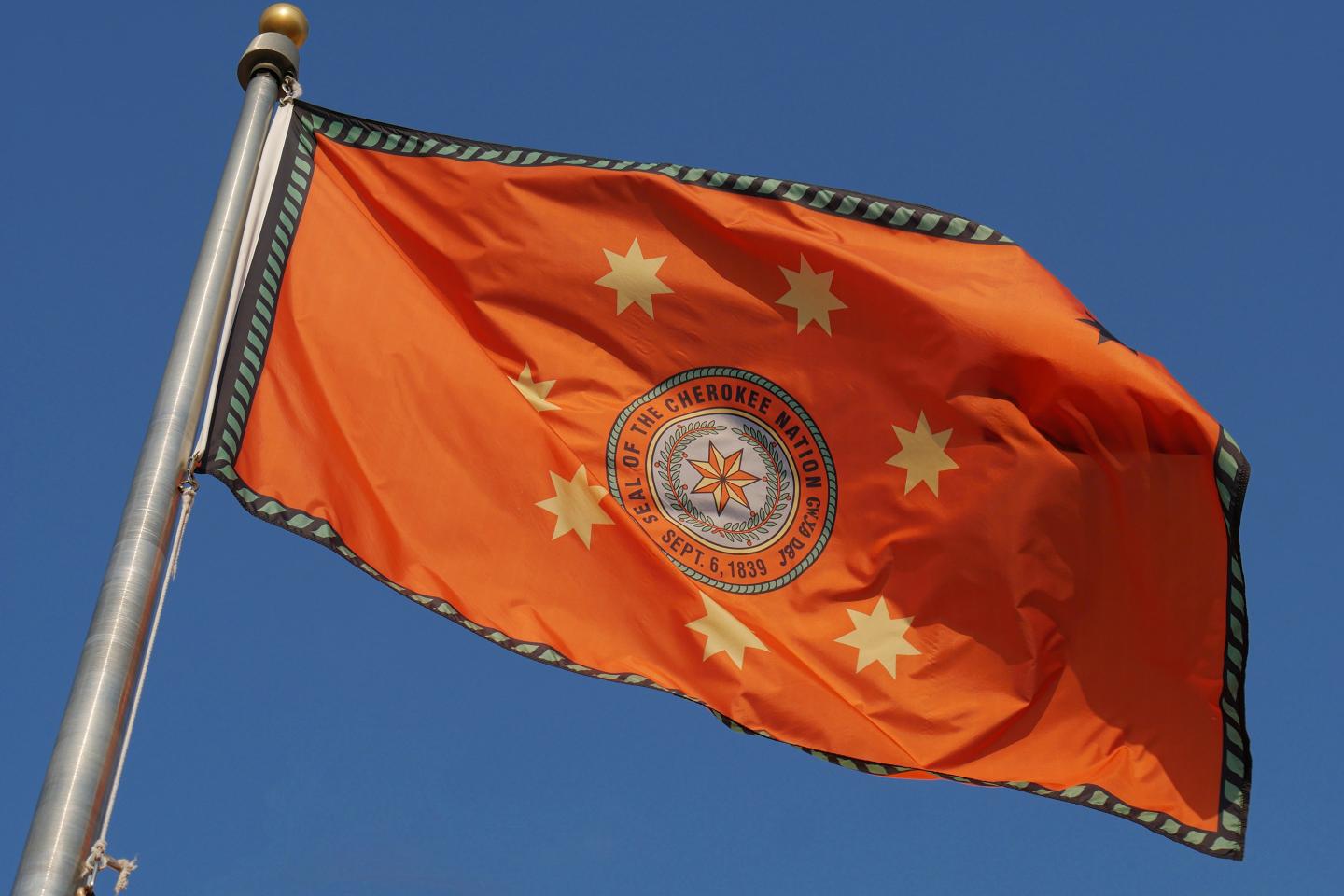
Cherokee Indian Nation Flag
The Cherokee Nation wants Jeep to stop using its name as a brand, but the company has refused, writes Sheena C. Howard.RaksybH—Getty Images

One of the silver linings of 2020 was that a growing number of Americans had their eyes opened to the racial, cultural, and economic injustices that had always been present in this country but had finally reached a boiling point. 

With this growing public recognition came a new willingness on the part of many to examine their own complicity, including some companies and brands that had previously used problematic names and imagery in their products or advertising. Examples include Quaker Oats, which recently decided to change the name of its Aunt Jemima brand and get rid of its caricature logo, or the Cleveland Indians, which last December announced they would do the same.

Within this context of heightened awareness and, for some, a racial reckoning, Jeep’s response to the Cherokee Nation’s wish that the company stop using the tribe’s name is particularly disappointing. The company’s assertion that its vehicle names “have been carefully chosen and nurtured over the years to honor and celebrate Native American people for their nobility, prowess, and pride” comes across as tone deaf and disingenuous, given its blatant lack of actions accompanying such words.

It’s important to understand how and why the use of names and associated imagery of brands such as Aunt Jemima, the Cleveland Indians, and Jeep Cherokee is harmful. Whether people are consciously aware of it or not, media images play a powerful role in the formation of self-identity. At the same time, these images also shape how others perceive us—particularly people of color. 

For the dominant culture, who are already widely and positively represented in the media, this often works in their favor. However, for members of nondominant cultures, like Native Americans, who are sparsely represented, or predominantly represented through crude stereotypes or commodification (in this instance, the Jeep Cherokee), this not only has a negative impact on how they see themselves, but it also shapes how others perceive and treat them. This cycle exacerbates one’s likelihood of developing a negative or unhealthy self-image, a process I discuss in my book, Why Wakanda Matters: What Black Panther Reveals About Psychology, Identity, and Communication.

What is even less understood in our culture are the complex ways in which stereotypical words and imagery hurt not just marginalized cultures and communities, but the dominant culture as well. The scarcity of media representation, combined with simplistic or inaccurate representations, can lead to intercultural conflict and miscommunication, or “crash moments,” that create distress for all parties involved. 

The fact of the matter is that media-influenced perception does determine how we interact with people of other groups at both the individual and collective levels. At the collective level this can lead to societal conditions that ultimately hurt everyone, not just those who are marginalized and oppressed. Institutional racism is real and pervasive.

Some may argue that while the backlash against Aunt Jemima is understandable, Jeep isn’t flaunting explicitly racist imagery in its product or advertising. “Cherokee” is just a name, and if the product itself is a good one, then where’s the harm in it? Isn’t this just cancel culture run amok?

First of all, this view doesn’t consider that the only true owners of the Cherokee name, the sovereign Cherokee Nation, have not given their consent to Jeep to use their name. In fact, they clearly expressed their desire that their name not be used, and Jeep has declined to honor this request. This signals that the opinions of the Cherokee Nation regarding their own name don’t matter. This lack of weight given to how BIPOC and other marginalized groups frame their own experience is one of the more subtle ways the insidious nature of white supremacy works. 

Next, in the absence of humane and accurate representations of Native Americans, using their culture and heritage only to sell a product is dehumanizing and exploitative. Imagine if you never saw yourself reflected or represented anywhere except on a commercial product. Understanding and empathizing with this is crucial, because the inability or unwillingness to do so is the very engine that drives white supremacy and inequality.

As mentioned earlier, 2020 led to more white Americans expressing the desire to be allies against racism, but true allyship requires more than just tweeting hashtags and displaying #BlackLivesMatter signs. It requires a willingness to sacrifice, and one of the easiest forms of sacrifice is forgoing the use of a product. Those seeking to be allies should therefore pick up their phones or hop on social media and let Jeep know that they will not buy its products unless the company shows a willingness to go beyond empty gestures.  

While Jeep has already indicated it will continue using the Cherokee name, people can pressure it to at least offer more than just lip service about honoring the tribe. Jeep could invite the Cherokee Nation to the table for an ongoing partnership, for instance, and ask what it could do to give back to the community and use its name in a more responsible way. Depending on the tribe’s feedback, Jeep could then take any number of possible actions: creating educational programs to teach Americans about Cherokee history and heritage, setting up scholarships for young Cherokee students, or offering resources to help the community fight the ongoing COVID-19 pandemic, particularly given the pandemic’s disproportionate impact on native tribes and on marginalized communities in general. This would not only be the right thing to do from an ethical standpoint, it would also be good PR in a way that would serve Jeep’s own business interests. As it stands, the company’s response isn’t just capitalist exploitation; it’s also bad business.

One of the first major steps toward social change is for individuals and organizations alike to recognize that what might seem like small things to them are not experienced that way by the people who are affected by those “small things.” And since organizations are slower to change, it’s up to individuals to push and prod them toward that change. In this case, that means telling Jeep that ignoring the Cherokee Nation’s request amounts to silencing them, and that such silencing will not be passively accepted.  

Sheena C. Howard is a professor of communication at Rider University and author-editor of Why Wakanda Matters.

More opinion from Fortune:

  • Which big companies truly treat their workers well? California aims to keep score
  • Why is women’s health still so under-researched?
  • Disinformation attacks are spreading. Here are 4 keys to protecting your company
  • Biden Gender Policy Council leaders: We must fix the caregiving crisis COVID has created for women
  • How “data alchemy” could help businesses make the most of A.I.
About the Author
By Sheena C. Howard
See full bioRight Arrow Button Icon

Latest in Commentary

Finance
Lorem ipsum dolor sit amet, consectetur adipiscing elit, sed do eiusmod tempor incididunt ut labore et dolore magna aliqua. Ut enim ad minim veniam
By Fortune Editors
October 20, 2025
Finance
Lorem ipsum dolor sit amet, consectetur adipiscing elit, sed do eiusmod tempor incididunt ut labore et dolore magna aliqua. Ut enim ad minim veniam
By Fortune Editors
October 20, 2025
Finance
Lorem ipsum dolor sit amet, consectetur adipiscing elit, sed do eiusmod tempor incididunt ut labore et dolore magna aliqua. Ut enim ad minim veniam
By Fortune Editors
October 20, 2025
Finance
Lorem ipsum dolor sit amet, consectetur adipiscing elit, sed do eiusmod tempor incididunt ut labore et dolore magna aliqua. Ut enim ad minim veniam
By Fortune Editors
October 20, 2025
Finance
Lorem ipsum dolor sit amet, consectetur adipiscing elit, sed do eiusmod tempor incididunt ut labore et dolore magna aliqua. Ut enim ad minim veniam
By Fortune Editors
October 20, 2025
Finance
Lorem ipsum dolor sit amet, consectetur adipiscing elit, sed do eiusmod tempor incididunt ut labore et dolore magna aliqua. Ut enim ad minim veniam
By Fortune Editors
October 20, 2025

Most Popular

Finance
Lorem ipsum dolor sit amet, consectetur adipiscing elit, sed do eiusmod tempor incididunt ut labore et dolore magna aliqua. Ut enim ad minim veniam
By Fortune Editors
October 20, 2025
Finance
Lorem ipsum dolor sit amet, consectetur adipiscing elit, sed do eiusmod tempor incididunt ut labore et dolore magna aliqua. Ut enim ad minim veniam
By Fortune Editors
October 20, 2025
Finance
Lorem ipsum dolor sit amet, consectetur adipiscing elit, sed do eiusmod tempor incididunt ut labore et dolore magna aliqua. Ut enim ad minim veniam
By Fortune Editors
October 20, 2025
Finance
Lorem ipsum dolor sit amet, consectetur adipiscing elit, sed do eiusmod tempor incididunt ut labore et dolore magna aliqua. Ut enim ad minim veniam
By Fortune Editors
October 20, 2025
Finance
Lorem ipsum dolor sit amet, consectetur adipiscing elit, sed do eiusmod tempor incididunt ut labore et dolore magna aliqua. Ut enim ad minim veniam
By Fortune Editors
October 20, 2025
Finance
Lorem ipsum dolor sit amet, consectetur adipiscing elit, sed do eiusmod tempor incididunt ut labore et dolore magna aliqua. Ut enim ad minim veniam
By Fortune Editors
October 20, 2025
Fortune Secondary Logo
Rankings
  • 100 Best Companies
  • Fortune 500
  • Global 500
  • Fortune 500 Europe
  • Most Powerful Women
  • Future 50
  • World’s Most Admired Companies
  • See All Rankings
Sections
  • Finance
  • Fortune Crypto
  • Features
  • Leadership
  • Health
  • Commentary
  • Success
  • Retail
  • Mpw
  • Tech
  • Lifestyle
  • CEO Initiative
  • Asia
  • Politics
  • Conferences
  • Europe
  • Newsletters
  • Personal Finance
  • Environment
  • Magazine
  • Education
Customer Support
  • Frequently Asked Questions
  • Customer Service Portal
  • Privacy Policy
  • Terms Of Use
  • Single Issues For Purchase
  • International Print
Commercial Services
  • Advertising
  • Fortune Brand Studio
  • Fortune Analytics
  • Fortune Conferences
  • Business Development
  • Group Subscriptions
About Us
  • About Us
  • Editorial Calendar
  • Press Center
  • Work At Fortune
  • Diversity And Inclusion
  • Terms And Conditions
  • Site Map
  • About Us
  • Editorial Calendar
  • Press Center
  • Work At Fortune
  • Diversity And Inclusion
  • Terms And Conditions
  • Site Map
  • Facebook icon
  • Twitter icon
  • LinkedIn icon
  • Instagram icon
  • Pinterest icon

Latest in Commentary

gary
Commentaryregulation
The biggest mistake CEOs make with AI has nothing to do with the technology
By Gary ShapiroApril 1, 2026
5 hours ago
trump
CommentaryEPA
The EPA just valued a human life at $0. That’s not just a moral crisis — it’s a market crisis
By Andrew BeharApril 1, 2026
6 hours ago
dressel
Commentaryhistory
AI can’t remember what your company learned the hard way 
By Jason DresselApril 1, 2026
7 hours ago
pelosi
CommentaryElections
Congress has a lower approval rating than Hitler in some polls. And we just keep voting for the same 2 parties
By Stu StrumwasserApril 1, 2026
8 hours ago
gen z
CommentaryGen Z
Gen Z is engineering an analog future — and it’s at least a $5 billion opportunity
By Luba KassovaApril 1, 2026
9 hours ago
brian
CommentaryCulture
The real engine of innovation is trust
By Brian DoublesMarch 31, 2026
22 hours ago

Most Popular

Jerome Powell says the $39 trillion national debt is ‘not unsustainable,’ but warns the trajectory ‘will not end well’
Economy
Jerome Powell says the $39 trillion national debt is ‘not unsustainable,’ but warns the trajectory ‘will not end well’
By Fortune EditorsMarch 30, 2026
2 days ago
Markets cheer as Trump threatens to abandon Iran war, but Jamie Dimon sides with allies: ‘Win this thing and clean up the straits’
Energy
Markets cheer as Trump threatens to abandon Iran war, but Jamie Dimon sides with allies: ‘Win this thing and clean up the straits’
By Fortune EditorsMarch 31, 2026
1 day ago
Kevin O'Leary says if you earn $68,000 a year and follow this rule, you'll retire a millionaire
Personal Finance
Kevin O'Leary says if you earn $68,000 a year and follow this rule, you'll retire a millionaire
By Fortune EditorsMarch 31, 2026
1 day ago
A man used AI to call 3,000 Irish bartenders to track the cost of Guinness. Now pubs are lowering their prices to compete
AI
A man used AI to call 3,000 Irish bartenders to track the cost of Guinness. Now pubs are lowering their prices to compete
By Fortune EditorsMarch 30, 2026
2 days ago
Two-thirds of parents say their adult Gen Z kids still rely on them financially  for support—even though it's putting them under strain
Success
Two-thirds of parents say their adult Gen Z kids still rely on them financially  for support—even though it's putting them under strain
By Fortune EditorsMarch 31, 2026
1 day ago
Hiring just hit a level not seen since the economy was ‘closed down literally’ during COVID, top economist says
Economy
Hiring just hit a level not seen since the economy was ‘closed down literally’ during COVID, top economist says
By Fortune EditorsMarch 31, 2026
24 hours ago

© 2026 Fortune Media IP Limited. All Rights Reserved. Use of this site constitutes acceptance of our Terms of Use and Privacy Policy | CA Notice at Collection and Privacy Notice | Do Not Sell/Share My Personal Information
FORTUNE is a trademark of Fortune Media IP Limited, registered in the U.S. and other countries. FORTUNE may receive compensation for some links to products and services on this website. Offers may be subject to change without notice.