Rocco Commisso, the billionaire founder of cable television giant Mediacom, ran headlong into Italy’s famed bureaucracy last year.
The 71-year-old Italian-American in 2019 shelled out €170 million for a controlling stake in Italy’s Serie A Fiorentina soccer club. He had big plans for a team that last won a championship in 1969—back when Commisso, raised in the Bronx, was an undergrad at Columbia University. He said he was willing to spend on payroll and player development, but the centerpiece of the plan was to build a larger, modern home stadium in the Tuscan capital, Florence.
“I want our fans to be protected from the elements and to be comfortable when they watch the game,” he explained about his plans at the time. “But we also want the new stadium to be a revenue driver. Juventus earns €500 million a year in revenue and we get €100 million. We can’t be competitive like this.”
Enter Italy’s Ministry of Cultural Heritage with a not-so-fast message that prompted Commisso to threaten to walk way from the whole thing (as of this week, he’s still on board). Turns out Florence’s 43,000-seat Fascist-era Artemio Franchi Stadium, built in 1931, is a historical landmark. Even in a city that boasts a gothic Duomo started in 1296, Italy’s top art museum, the Uffizi, and the Renaissance-era Ponte Vecchio, the stadium is considered one of the city’s most important architectural treasures.
Americano, Americano
Welcome to Italy, a country known as much for its business-busting red tape, as for its beauty and culture. Despite the many challenges professional football team owners face in the country, deep-pocketed Americans keep coming with plans to shake up the national pastime.
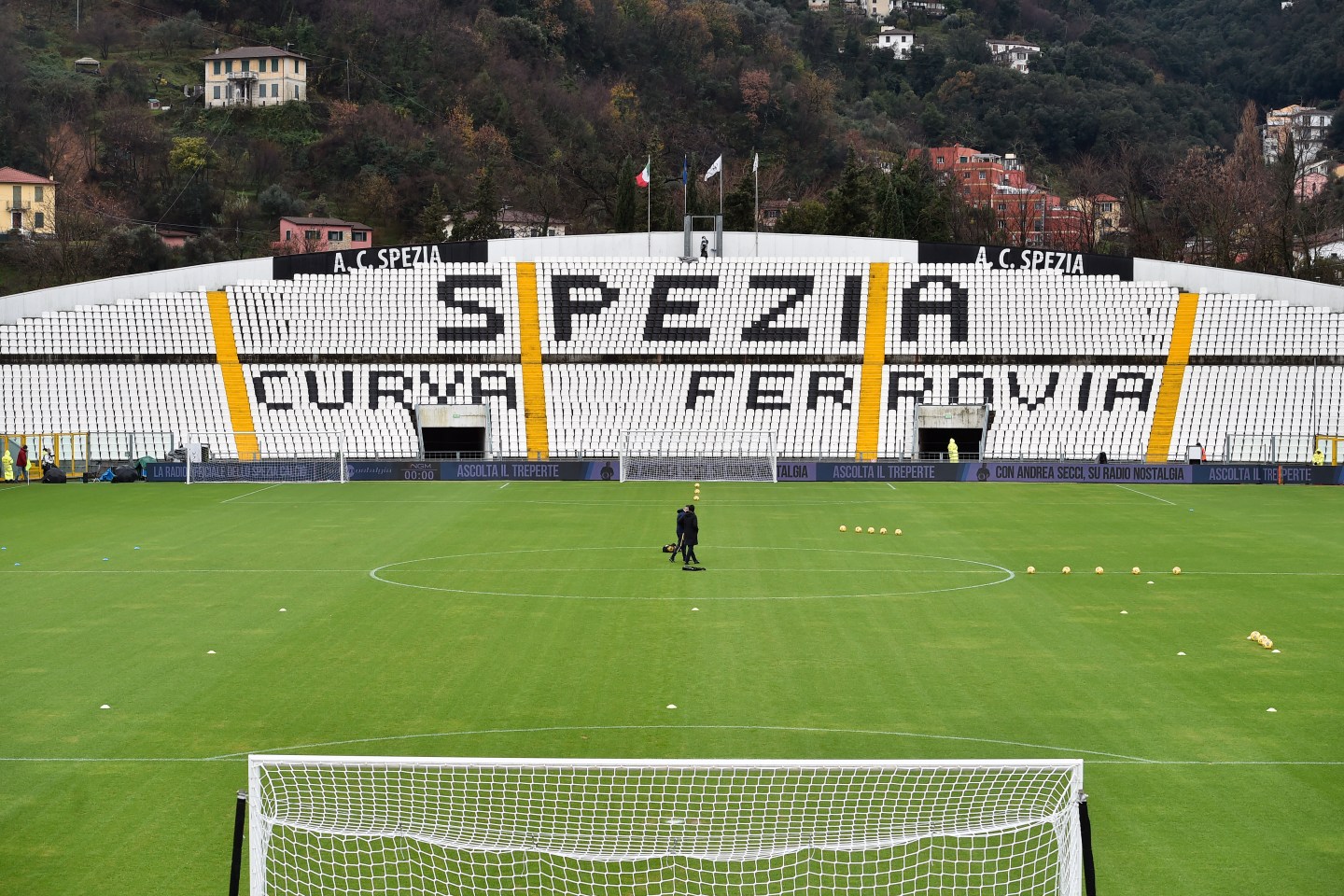
Last month, financier Robert Platek became the fifth American to take control of one of the 20 teams in Italy’s Serie A, the top division. He bought newly-minted Serie A cellar-dweller, La Spezia, for a reported €25 million.
In addition to Fiorentina and La Spezia, Americans are at the helm of Parma (investor Kyle Krause), AS Roma (businessman and film director Dan Friedkin), and AC Milan (hedge fund king Paul Singer, via fund manager Elliott Management). A sixth club, Bologna, is controlled by Canadian billionaire Joey Saputo.
From a purely competitive perspective, AC Milan probably makes some sound investment sense: it is one of Serie’s A’s “big three.” The triumvirate of Juventus, Inter-Milan and AC Milan have combined to win 27 of the last 29 Serie A titles, a streak of Darwinian inequality that might make sports fans back home spit out their over-priced ballpark beers.
As for the other billionaire outsider investors?
“I ask myself that question all of the time: What is in it for them? Why own a team that has almost zero chance to win a championship?” Marco Bellinazzo, author of the book I Veri Padroni del Calcio (The Real Owners of Soccer), told Fortune.
“In Italy, it’s not like U.S. sports, where with some good draft picks, smart trades, and some good luck, almost any team has a chance to become a contender,” he said. “La Spezia is going to have a very hard time winning a lot of games in Serie A, no matter what the owner does.”
La Spezia only made it to Serie A for the first time in its history last year. (In most European leagues, the bottom three teams in the standings are demoted to a lower division and the top three lower-division teams rise up to the top). As of last weekend’s games, both La Spezia and Fiorentina were two of the three teams in a tie for 14th through 16th place in the league. Or, to put it another way, they are a couple of bad games away from being booted to a lower division. In calcio, there’s not just pride on the line, but profits.
Match-fixing scandals
In Italy, calcio, as the sport is called, and corruption are hardly strangers.
In 2006, the “Calciopoli” match-fixing scandal took Italian soccer to its knees. The scandal started when bugged phone calls revealed top brass from a number of clubs, including Juventus, were in cahoots with the referee organizations looking for a pliant ref to officiate key matches. As punishment, Juventus was relegated to Serie B, and stripped of its title from the previous season. Five years later, the dirt flew again. A separate investigation found that players were taking dives in an effort to throw games during the 2011-2012 season. For the more casual fan of Serie A calcio, these incidents only fuel the suspicion that only the most powerful and best connected off the field stand a chance of winning the contest on it.
And no clubs are more powerful than Juve, Inter and Milan. The dominance of these three Goliaths of Serie A is the result of their grip over a league full of have-nots. With a mere two or three exceptions, the others don’t have the stadiums, name recognition, television deals or merchandise-buying fan bases to compete.
The pandemic has been something of a leveler. Game-day revenue is a non-factor this year, due to coronavirus health restrictions. That evens the playing field a little, since under normal circumstances there’s an enormous difference between the 10,000-seat Picco Stadium in La Spezia—the stadium’s name is literally the first two syllables of the Italian word “piccolo,” or “little”—and Milan’s San Siro, which seats 80,000.
It’s also doubtful that many people outside the region are going to line up to buy La Spezia’s red-back-and white uniform jerseys.
“As long as La Spezia stays in Serie A they’ll break even, since they get revenue-sharing for television rights which will give them about what Platek paid for the team,” Bellinazzo said. “But that’s probably the best-case scenario. And, if they end up back in Serie B, then good night.”
According to Paddy Agnew, a long-time writer for World Soccer and the author of “Forza Italia: The Fall and Rise of Italian Football,” American interest may be a reflection of the decline of Italian football.
“When I moved to Italy 30 years ago, Pierluigi Collina, the famous Italian football referee, could hardly ever officiate a Champion’s League match because there was always an Italian team involved,” Agnew said in an interview, referring to a rule in which the referee cannot officiate a match involving a team from his home country. “Italian soccer was like Hollywood in the 1980s and 1990s, but now it’s probably Europe’s fourth-best league at best, behind the U.K., Spain, and Germany.”
That decline can be boiled down to mismanaged television deals and an overall erosion of the Italian economy, which all combined to push the values of teams lower. Enrico Curro, a football writer with Rome’s La Repubblica newspaper, believes American owners may be motivated in part by the prestige of owning a team in what was once Europe’s top league—at a bargain price.
“The amount Platek paid for La Spezia probably wouldn’t buy a team in the top half of the second division in the U.K.,” Curro told Fortune.
“In Italy, owning a team like La Spezia doesn’t mean much. But maybe there’s some value to being able to say you own a Serie A team internationally.”
Correction and update, March 7, 2021: This post has been updated to clarify how relegation works in most European soccer leagues.