• Home
  • Latest
  • Fortune 500
  • Finance
  • Tech
  • Leadership
  • Lifestyle
  • Rankings
  • Multimedia

Trendingnow

1

OpenAI says its AI models secretly broke out of a secure test environment and hacked into AI company Hugging Face in order to cheat on an evaluation

2

Mark Cuban says he has the solution to growing income inequality, and it's to reward every employee—from CEO to janitor—with company stock

3

Mathematicians grapple with a ‘very rapid and very unsettling change’ as AI cracks yet another century-old problem

1

OpenAI says its AI models secretly broke out of a secure test environment and hacked into AI company Hugging Face in order to cheat on an evaluation

2

Mark Cuban says he has the solution to growing income inequality, and it's to reward every employee—from CEO to janitor—with company stock

3

Mathematicians grapple with a ‘very rapid and very unsettling change’ as AI cracks yet another century-old problem
Commentarytheater

When Broadway comes back: 5 ways the pandemic will transform the live theater industry

By
Michael Barra
Michael Barra
Down Arrow Button Icon
By
Michael Barra
Michael Barra
Down Arrow Button Icon
December 13, 2020, 10:00 AM ET
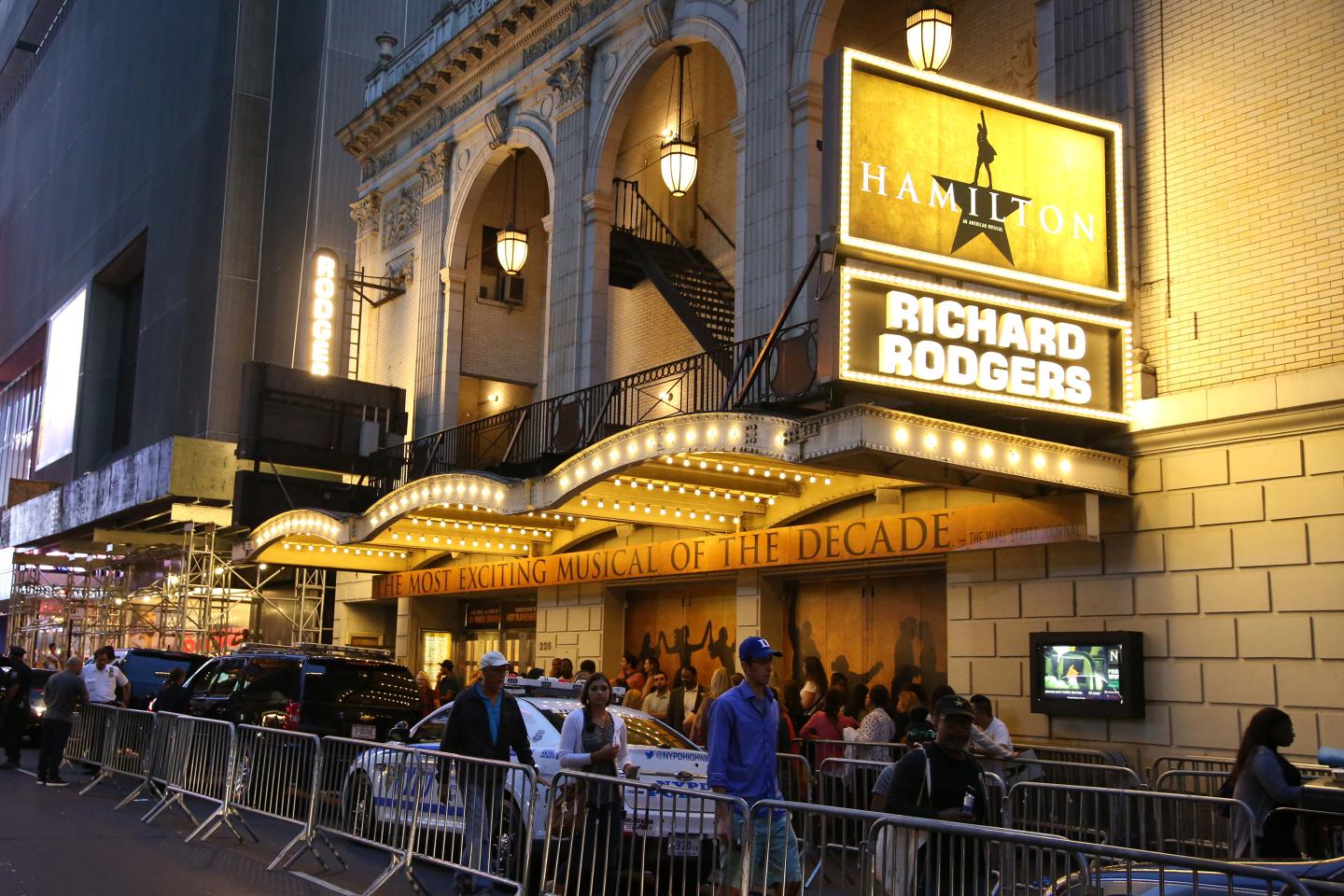
Crowds outside the theater for the final performance of Lin-Manuel Miranda in 'Hamilton' on July 9, 2016 in New York City. Post-pandemic, long-running musicals will likely play a smaller role on Broadway, writes Michael Barra.
Crowds outside the theater for the final performance of Lin-Manuel Miranda in 'Hamilton' on July 9, 2016 in New York City. Post-pandemic, long-running musicals will likely play a smaller role on Broadway, writes Michael Barra. Walter McBride—WireImage/Getty Images
Add Fortune on Google for similar content.

The COVID-19 pandemic has brought the global theater industry to a standstill. But 2020 is not the first time that the industry has faced an existential crisis. The theater community has confronted acts of terror such as 9/11 or the London Blitz that shuttered cultural activity; disruptive technologies that shifted consumer behavior, like motion pictures and television; and even prior pandemics dating back to Shakespeare, including AIDS, which ravaged a generation of artists. 

In each instance the industry has mourned, innovated, and emerged stronger. Make no mistake: Global theater is hurting right now, with its darkest days still to come. Yet the challenges experienced over this year, and the pivots and adjustments they’ve triggered, allow us to infer what may lie around the corner. 

Broadway cast members at a rally to support New York City’s entertainment industry in the wake of the World Trade Center terrorist attacks, on September 28, 2001.
David Lefranc—Gamma-Rapho via Getty Images

Here are five predictions:

Broadway programming will shift its focus

According to the Broadway League, the trade organization that represents theater owners and producers, Broadway audiences during the most recent complete season were made up of 35% local residents and 65% tourists. By the league’s estimates, Broadway will not fully regain its tourist audience until sometime in 2025. Thus, Broadway will need to develop and produce content tailored more towards the 35% of audiences that hail from New York City and its suburbs and rely less on the international tourists (19%) and domestic tourists (46%) that made up the majority of its pre-pandemic audience.

This likely means the shuttering of some tourist-friendly long-running musical productions, which may have exhausted their tristate audiences, in favor of recently opened musicals, star-vehicle plays, and special limited-run and concert events. Producers will also attempt to reduce their cost structure, which currently requires near-capacity ticket sales in order to turn profit. Expect to see tightened budgets leading to smaller companies and production scale. London’s West End, the other traditional global mecca for theater tourism, will most likely see similar changes. 

Viable alternatives to New York and London will emerge

Where will theater fans go to get their fix until they are able to safely travel back to New York and London? They will seek out—and find—high-quality professional productions closer to home. 

Expect the existing circuits of nonprofit regional theaters in the U.S., and subsidized theaters in the U.K., to lead the recovery. As ticket sales represent only a portion of their annual budgets, these theaters can better weather lower capacities and still thrive. Once audiences experience the high-quality professional theater that they produce, those patrons are more likely to become permanent. In terms of recovery, the regionals will be followed by the commercial touring circuits in the U.S. and U.K. that bring productions from city to city and are presented by local venues, often with large subscriber bases. 

Theater tourists from outside the U.S. and U.K. will similarly be looking closer to home. Germany, Spain, Australia, Japan, and even emerging theater powerhouses like China will become the global versions of regional theaters, and audiences who’d previously travel to London or New York will travel shorter distances to find what is likely to be increasing quality and quantity of top theater.

The ‘creative class’ will migrate

During the pandemic, many actors, directors, writers, and others have vacated urban cultural centers for locales offering more space and affordability. While away, they’ve learned how to better work and collaborate remotely; from submitting video auditions to doing developmental or preproduction work via Zoom. 

In the new reality, many creatives will find they can continue working in this fashion without negatively impacting their careers. Producers and casting directors can no longer expect creatives to live in the most expensive cities when they can easily come in when being paid to do so. Further, if the geographic shift of theater work mentioned in my previous prediction proves true, artists will tend to migrate to where the work is and gravitate towards cities with thriving theater scenes and lower costs of living (I’m looking at you, Minneapolis, Atlanta, and Cleveland).

Theater content will increasingly appear on screens—big and small

With the recent successes of Hamilton on Disney+, American Utopia on HBO Max, and What the Constitution Means to Me on Amazon Prime, a business model for streaming currently or recently running theater productions has now become established.

With streaming platforms ever in need of programming, and producers increasingly in need of reducing risk and maximizing revenue, you have an alignment of interests that cannot be denied. To be sure, contractual standards with authors will need to be revisited to allow for screening of live theater productions that are still running onstage, but the existence of a clear mutual benefit should help the idea prevail.

David Lee—HBO

At the same time, cinemas have been experiencing their own disruption. While the exclusive “theatrical” window for cinema exhibition has been tightening for years, the recent Warner Bros. announcement that Wonder Woman 1984 will debut Christmas Day in both cinemas and simultaneously on its sibling platform HBO Max may prove to be the end of the practice altogether. Cinema will remain the preferred consumer choice for “event viewing”—those viewing experiences that are enhanced by being shared communally. But with the output from studios earmarked for cinemas likely to decline, opportunities for others may arise for theater content, both filmed and live-streamed.

Imagine a mix of programming where at any given time a cinema multiplex may be showing the latest Marvel superhero film, the NCAA basketball tournament, a new season of a Netflix series, and the live stream of a Broadway or West End production. These local viewing opportunities could even grow the overall audience for global theater. It would make its product accessible to those who perhaps were previously excluded from the theater, whether by economics (the average ticket price for Broadway is $145, according to the Broadway League), by geography (the highest-profile productions are centered primarily in New York or London), or linguistically (those productions are staged almost exclusively in English).

Performers’ unions will consolidate

As recently as 2012 the clouding of the jurisdictional boundaries between what was considered film versus television resulted in the merger of the Screen Actors Guild (SAG) and the American Federation of Television & Radio Artists (AFTRA). The pandemic has precipitated a similar blurring of the jurisdictional boundaries between the Actors’ Equity Association (AEA) and SAG/AFTRA when it comes to filmed and live-streamed theater. 

The two unions were embroiled in a jurisdictional dispute all summer, with both unions issuing contracts to live-stream and/or film theater. A temporary compromise emerged, but the reality is that when filming and live-streaming theater becomes the norm, every production will need to engage their performers under contracts from two unions. With many AEA members also belonging to SAG/AFTRA and vice versa, a merger of those two unions seems very plausible, even if it isn’t imminent.

While no one can predict the future, what is indisputable is that the best way to ensure that theater will have a bright future is for governments worldwide to acknowledge that the sector has been among the hardest hit by the pandemic and will be among the last to fully recover. In the U.S., this should mean passing another round of small-business relief; ensuring the Save Our Stages Act—which aims to protect independent performing arts venues—is included in the next stimulus package; and most importantly, providing health and economic injury benefits to freelance artists. 

If artists get the support they need, the world need only sit back and watch the global theater do what it’s done for centuries; mourn, innovate, and emerge stronger than ever.

Michael Barra is the CEO of Lively McCabe Entertainment, a global media rights packaging and live stage production company.

More opinion from Fortune:

  • What happens next: 10 non-COVID health care predictions for 2021
  • The Facebook and Google antitrust suits are a warning shot for all corporate giants—not just Big Tech
  • The hacker “cease-fire” with hospitals is over—and that should terrify us
  • Biden will bring back climate diplomacy, and the planet will benefit
  • Why business must help end period poverty for women in America

About the Author
By Michael Barra
See full bioRight Arrow Button Icon
Add Fortune on Google for similar content.

Latest in Commentary

Finance
Lorem ipsum dolor sit amet, consectetur adipiscing elit, sed do eiusmod tempor incididunt ut labore et dolore magna aliqua. Ut enim ad minim veniam
By Fortune Editors
October 20, 2025
Finance
Lorem ipsum dolor sit amet, consectetur adipiscing elit, sed do eiusmod tempor incididunt ut labore et dolore magna aliqua. Ut enim ad minim veniam
By Fortune Editors
October 20, 2025
Finance
Lorem ipsum dolor sit amet, consectetur adipiscing elit, sed do eiusmod tempor incididunt ut labore et dolore magna aliqua. Ut enim ad minim veniam
By Fortune Editors
October 20, 2025
Finance
Lorem ipsum dolor sit amet, consectetur adipiscing elit, sed do eiusmod tempor incididunt ut labore et dolore magna aliqua. Ut enim ad minim veniam
By Fortune Editors
October 20, 2025
Finance
Lorem ipsum dolor sit amet, consectetur adipiscing elit, sed do eiusmod tempor incididunt ut labore et dolore magna aliqua. Ut enim ad minim veniam
By Fortune Editors
October 20, 2025
Finance
Lorem ipsum dolor sit amet, consectetur adipiscing elit, sed do eiusmod tempor incididunt ut labore et dolore magna aliqua. Ut enim ad minim veniam
By Fortune Editors
October 20, 2025

Most Popular

Finance
Lorem ipsum dolor sit amet, consectetur adipiscing elit, sed do eiusmod tempor incididunt ut labore et dolore magna aliqua. Ut enim ad minim veniam
By Fortune Editors
October 20, 2025
Finance
Lorem ipsum dolor sit amet, consectetur adipiscing elit, sed do eiusmod tempor incididunt ut labore et dolore magna aliqua. Ut enim ad minim veniam
By Fortune Editors
October 20, 2025
Finance
Lorem ipsum dolor sit amet, consectetur adipiscing elit, sed do eiusmod tempor incididunt ut labore et dolore magna aliqua. Ut enim ad minim veniam
By Fortune Editors
October 20, 2025
Finance
Lorem ipsum dolor sit amet, consectetur adipiscing elit, sed do eiusmod tempor incididunt ut labore et dolore magna aliqua. Ut enim ad minim veniam
By Fortune Editors
October 20, 2025
Finance
Lorem ipsum dolor sit amet, consectetur adipiscing elit, sed do eiusmod tempor incididunt ut labore et dolore magna aliqua. Ut enim ad minim veniam
By Fortune Editors
October 20, 2025
Finance
Lorem ipsum dolor sit amet, consectetur adipiscing elit, sed do eiusmod tempor incididunt ut labore et dolore magna aliqua. Ut enim ad minim veniam
By Fortune Editors
October 20, 2025
Fortune Secondary Logo
Rankings
  • 100 Best Companies
  • Fortune 500
  • Global 500
  • Fortune 500 Europe
  • Most Powerful Women
  • World's Most Admired Companies
  • See All Rankings
  • Lists Calendar
Sections
  • Finance
  • Fortune Crypto
  • Features
  • Leadership
  • Health
  • Commentary
  • Success
  • Retail
  • Mpw
  • Tech
  • Lifestyle
  • CEO Initiative
  • Asia
  • Politics
  • Conferences
  • Europe
  • Newsletters
  • Personal Finance
  • Environment
  • Magazine
  • Education
Customer Support
  • Frequently Asked Questions
  • Customer Service Portal
  • Privacy Policy
  • Terms Of Use
  • Single Issues For Purchase
  • International Print
Commercial Services
  • Advertising
  • Fortune Brand Studio
  • Fortune Analytics
  • Fortune Conferences
  • Business Development
  • Group Subscriptions
About Us
  • About Us
  • Press Center
  • Work At Fortune
  • Terms And Conditions
  • Site Map
  • About Us
  • Press Center
  • Work At Fortune
  • Terms And Conditions
  • Site Map
  • Facebook icon
  • Twitter icon
  • LinkedIn icon
  • Instagram icon
  • TikTok icon
  • YouTube icon

Latest in Commentary

t
CommentaryTariffs
Trump’s third tariff tantrum piles more dizzying distractions on top of ever-spiraling failures
By Jeffrey Sonnenfeld and Steven TianJuly 22, 2026
7 hours ago
orson
CommentaryOpenAI
We got California to intervene about OpenAI’s corporate switch from nonprofit status. It’s time for the SEC to come to the table
By Orson Aguilar and Catherine BracyJuly 22, 2026
8 hours ago
ls
Commentarybooks
Confessions of an award-winning AI memoirist — the ‘slop’ debate isn’t really about good writing, and you know it
By Luke StoffelJuly 22, 2026
9 hours ago
b
Commentarythe future of work
Manpower President: The future of work question that even CEOs can’t answer
By Becky FrankiewiczJuly 22, 2026
9 hours ago
k
Commentarypower
What I keep hearing from Fortune 500 CEOs: ‘We have no idea what we’re actually paying for power’
By Kiran BhatrajuJuly 21, 2026
1 day ago
Bolt CEO Ryan Breslow
CommentaryHuman resources
The CEO who fired HR was right. About the wrong thing.
By KeyAnna SchmiedlJuly 21, 2026
1 day ago

Most Popular

OpenAI says its AI models secretly broke out of a secure test environment and hacked into AI company Hugging Face in order to cheat on an evaluation
Cybersecurity
OpenAI says its AI models secretly broke out of a secure test environment and hacked into AI company Hugging Face in order to cheat on an evaluation
By Jeremy Kahn and Emily ForliniJuly 21, 2026
1 day ago
Mark Cuban says he has the solution to growing income inequality, and it's to reward every employee—from CEO to janitor—with company stock
Success
Mark Cuban says he has the solution to growing income inequality, and it's to reward every employee—from CEO to janitor—with company stock
By Sasha RogelbergJuly 20, 2026
2 days ago
Mathematicians grapple with a ‘very rapid and very unsettling change’ as AI cracks yet another century-old problem
AI
Mathematicians grapple with a ‘very rapid and very unsettling change’ as AI cracks yet another century-old problem
By Eva RoytburgJuly 21, 2026
1 day ago
Despite a $156 million contract, Knicks star Jalen Brunson still calls his parents for financial advice any time he makes a big purchase
Success
Despite a $156 million contract, Knicks star Jalen Brunson still calls his parents for financial advice any time he makes a big purchase
By Emma BurleighJuly 21, 2026
1 day ago
‘I want to die broke’: Billionaire philanthropist Denny Sanford dies after giving away $4 billion
Success
‘I want to die broke’: Billionaire philanthropist Denny Sanford dies after giving away $4 billion
By Sydney LakeJuly 20, 2026
2 days ago
'The audience is telling the industry something': even IMAX is stunned by Christopher Nolan's runaway 'Odyssey'
Arts & Entertainment
'The audience is telling the industry something': even IMAX is stunned by Christopher Nolan's runaway 'Odyssey'
By Tatiana SatauaJuly 21, 2026
1 day ago

© 2026 Fortune Media IP Limited. All Rights Reserved. Use of this site constitutes acceptance of our Terms of Use and Privacy Policy | CA Notice at Collection and Privacy Notice | Do Not Sell/Share My Personal Information
FORTUNE is a trademark of Fortune Media IP Limited, registered in the U.S. and other countries. FORTUNE may receive compensation for some links to products and services on this website. Offers may be subject to change without notice.