• Home
  • News
  • Fortune 500
  • Tech
  • Finance
  • Leadership
  • Lifestyle
  • Rankings
  • Multimedia
ConferencesBrainstorm Tech

How the pandemic has changed the fitness industry

By
Danielle Abril
Danielle Abril
Down Arrow Button Icon
By
Danielle Abril
Danielle Abril
Down Arrow Button Icon
December 2, 2020, 4:45 PM ET

People have changed how they exercise during the coronavirus pandemic, turning to outdoor activities like biking and running as well as home gym equipment. The shift, some of which is expected to continue long after the pandemic has ended, has created new opportunities for companies that bank on the business of sweat.

“There’s going to be a little bit more of a hybrid approach, I think, going forward,” Under Armour CEO Patrik Frisk said.

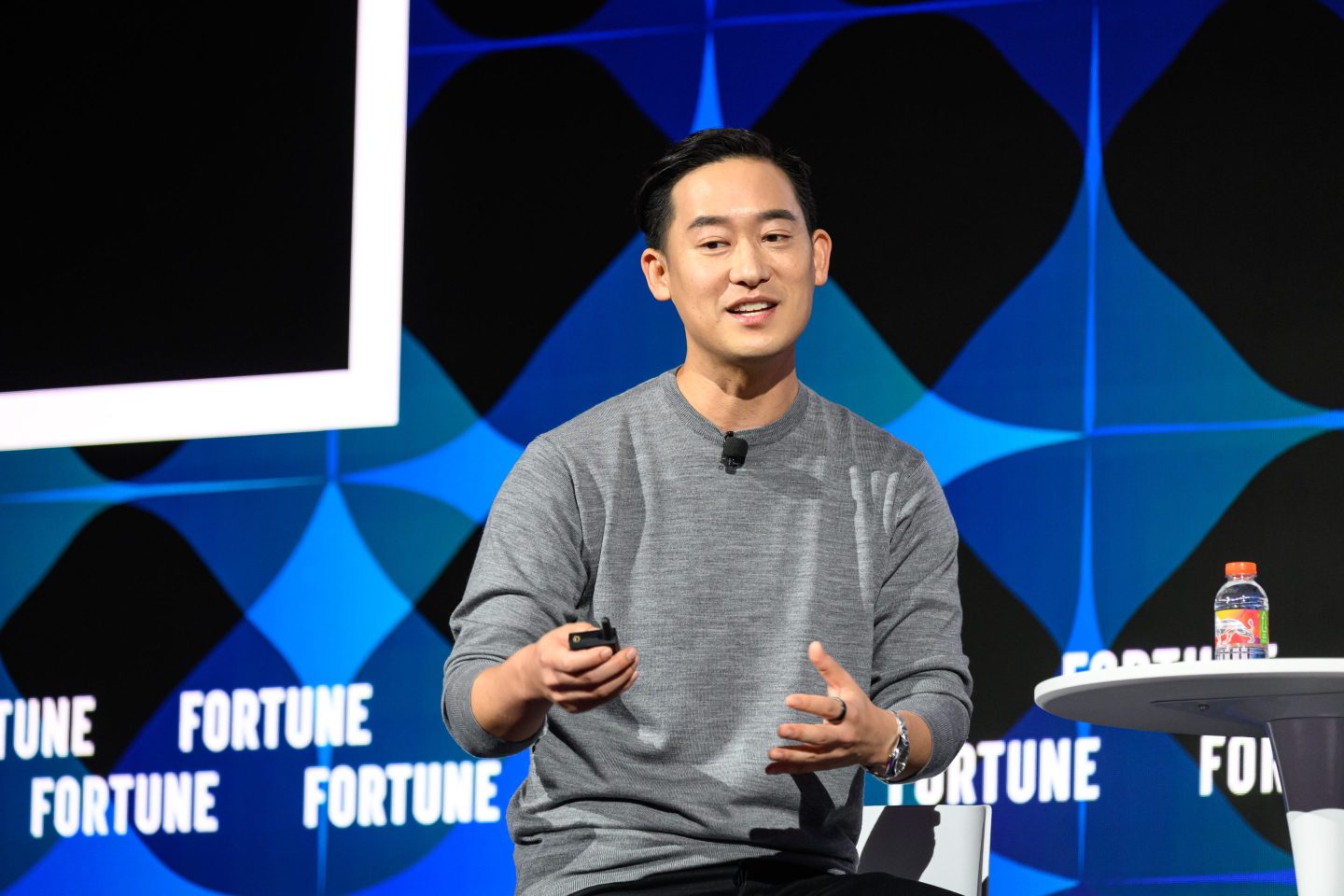
Frisk joined Melanie Whelan, managing director of Summit Partners, and Brynn Putnam, CEO of home fitness company Mirror (recently acquired by Lululemon for $500 million), to discuss the business of sweat at Fortune’s Brainstorm Tech virtual conference on Wednesday. The executives said that while some people will return to their gyms, others now prefer alternative ways of keeping fit.

In Mirror’s case, that means working out in front of a smart mirror, a high-tech computer screen that doubles as a regular mirror, for guided workouts. “What’s exciting to us is the sort of cementing of behavioral change that we’re seeing during this period,” Putnam said. “We think there’s an incredible opportunity to really unite the experiences people receive at home with those that they’re seeing at their studios or local gyms for a truly omni experience.”

The coronavirus pandemic has radically changed how people shop. For example, following pandemic shutdowns, people have increasingly relied on delivery services. People have also changed how they commute to avoid being stuck close to others on a train or in a stranger’s car. And they’re looking for convenient ways to exercise outside of crowded gyms. 

But as competition heats up, the fitness companies aiming to capitalize on the shift will have to differentiate their products and create personalized experiences for their customers, Whelan said. If they can do that, the investment from venture capitalists will follow, she added. 

“There’s a lot of capital available in the market,” Whelan said. “I think there will continue to be a space in place for great businesses that connect with their community in a very unique way.”

Under Armour is betting on its connected shoes, or shoes that track workouts and provide coaching along the way, as a big moneymaker. Since the outbreak started, customer interest in its connected shoes has increased dramatically, Frisk said, adding that more than 1 million of its customers’ shoes are now connected to Under Armour’s app, a milestone the company hit during the third quarter. And the company said that running, in terms of participation in the sport, has increased 150% compared with pre-pandemic levels.

“It’s an incredibly important part of our future,” Frisk said of the company’s connected shoes.

Putnam said there’s evidence that many people’s lifestyles have fundamentally changed, and that the length of the pandemic has likely solidified those changes into new habits. 

“Most experts say it takes about 60 days to build a habit,” she said. “Our consumers have now had six, seven, eight, nine months to really begin to live the sweat life at home, and we’re excited to see those behavioral changes stick over time.”

More must-read tech coverage from Fortune:

  • China’s “Amazon of services” says it welcomes Beijing’s stricter oversight
  • Meet Rumble, the YouTube rival that’s popular with conservatives
  • How a company best known for playing games used A.I. to solve one of biology’s greatest mysteries
  • How water-resistant is the iPhone? Italian watchdog says Apple’s claims are overblown
  • In a major scientific breakthrough, A.I. predicts the exact shape of proteins
About the Author
By Danielle Abril
See full bioRight Arrow Button Icon

Latest from our Conferences

Workplace CultureBrainstorm Design
How two leaders used design thinking and a focus on outcomes to transform two Fortune 500 giants
By Christina PantinDecember 4, 2025
4 days ago
Workplace CultureBrainstorm Design
Designer Kevin Bethune: Bringing ‘disparate disciplines around the table’ is how leaders can ‘problem solve the future’
By Fortune EditorsDecember 3, 2025
5 days ago
AIBrainstorm Design
Microsoft AI’s design head wants her team to be AI-native by the end of the fiscal year
By Angelica AngDecember 3, 2025
5 days ago
AsiaFortune Innovation Forum
Syfe CEO: Fintech founders need to focus on trust if the sector is to reach its full potential
By Dhruv AroraNovember 24, 2025
13 days ago
EnergyFortune Innovation Forum
Going green doesn’t always mean going big: ‘Pay attention to the small- and medium-size players as well’
By Angelica AngNovember 24, 2025
14 days ago
AsiaFortune Innovation Forum
A World Bank expert thinks countries should leverage ‘small AI’—and avoid competing with the biggest tech giants
By Nicholas GordonNovember 24, 2025
14 days ago

Most Popular

placeholder alt text
Real Estate
The 'Great Housing Reset' is coming: Income growth will outpace home-price growth in 2026, Redfin forecasts
By Nino PaoliDecember 6, 2025
2 days ago
placeholder alt text
AI
Nvidia CEO says data centers take about 3 years to construct in the U.S., while in China 'they can build a hospital in a weekend'
By Nino PaoliDecember 6, 2025
2 days ago
placeholder alt text
Economy
The most likely solution to the U.S. debt crisis is severe austerity triggered by a fiscal calamity, former White House economic adviser says
By Jason MaDecember 6, 2025
1 day ago
placeholder alt text
Economy
JPMorgan CEO Jamie Dimon says Europe has a 'real problem’
By Katherine Chiglinsky and BloombergDecember 6, 2025
1 day ago
placeholder alt text
Big Tech
Mark Zuckerberg rebranded Facebook for the metaverse. Four years and $70 billion in losses later, he’s moving on
By Eva RoytburgDecember 5, 2025
3 days ago
placeholder alt text
Politics
Supreme Court to reconsider a 90-year-old unanimous ruling that limits presidential power on removing heads of independent agencies
By Mark Sherman and The Associated PressDecember 7, 2025
16 hours ago
Rankings
  • 100 Best Companies
  • Fortune 500
  • Global 500
  • Fortune 500 Europe
  • Most Powerful Women
  • Future 50
  • World’s Most Admired Companies
  • See All Rankings
Sections
  • Finance
  • Leadership
  • Success
  • Tech
  • Asia
  • Europe
  • Environment
  • Fortune Crypto
  • Health
  • Retail
  • Lifestyle
  • Politics
  • Newsletters
  • Magazine
  • Features
  • Commentary
  • Mpw
  • CEO Initiative
  • Conferences
  • Personal Finance
  • Education
Customer Support
  • Frequently Asked Questions
  • Customer Service Portal
  • Privacy Policy
  • Terms Of Use
  • Single Issues For Purchase
  • International Print
Commercial Services
  • Advertising
  • Fortune Brand Studio
  • Fortune Analytics
  • Fortune Conferences
  • Business Development
About Us
  • About Us
  • Editorial Calendar
  • Press Center
  • Work At Fortune
  • Diversity And Inclusion
  • Terms And Conditions
  • Site Map

© 2025 Fortune Media IP Limited. All Rights Reserved. Use of this site constitutes acceptance of our Terms of Use and Privacy Policy | CA Notice at Collection and Privacy Notice | Do Not Sell/Share My Personal Information
FORTUNE is a trademark of Fortune Media IP Limited, registered in the U.S. and other countries. FORTUNE may receive compensation for some links to products and services on this website. Offers may be subject to change without notice.