“The key to investing is not assessing how much an industry is going to affect society, or how much it will grow, but rather determining the competitive advantage of any given company and, above all, the durability of that advantage.”
—Warren Buffett, Fortune, 1999
Few business models are more reliable than a casino’s. People love to gamble, and because the house has a statistical advantage over its customers in every game it runs, the more people play, the more the casino makes. Factor in all the cash people spend on dining and entertainment inside those bright, windowless boxes and you’ll understand why casinos are inherently good businesses.
In normal times, that is.
COVID-19 turned the world upside down, especially for businesses that depend on big crowds: theme parks, cruise ships, concert halls, and, of course, casinos. While most of these businesses remain severely depressed, casinos—especially the regional ones, where people drive from their homes for an afternoon or evening of gambling—are making a remarkable and unexpected comeback. Despite this, one casino stock—Gaming and Leisure Properties (ticker: GLPI)—has not fully recovered. That makes it a very good bet, indeed.
GLP is the creation of entrepreneur Peter Carlino, who nearly 50 years ago took over Penn National, a horse track near Hershey, Pa., and turned it into the nation’s largest regional casino business. Carlino’s father, who began modestly as a florist in Philadelphia, was a serial entrepreneur who sent his son to central Pennsylvania to oversee some of the family businesses, including the racetrack. In 1989, the family won the region’s new offtrack betting concession, and Carlino’s father tapped Peter to run it.
With little else to entertain them, central Pennsylvanians flocked to the Carlinos’ OTB parlors. It quickly became the family’s top moneymaker, and Peter Carlino sensed he’d found his calling. “Taking bets on horses at the OTB window is much more profitable than the track itself,” he remembers thinking. “We’re on to something.”
Carlino took Penn National public in 1994, around the same time that many state legislatures, eager for more tax revenue, began to legalize casinos. Carlino wanted in on the action and began to buy ones around the country. In 2000, he bought another horse track, this one in Charles Town, W.Va., in hopes that he could pass a local referendum to legalize gambling. An earlier measure had lost by a 2-to-1 margin, but Carlino spent in a year in Charles Town, applying his considerable charm and energy to reversing the outcome. When the second vote was held, the margin was 2-to-1 for instead of 2-to-1 against.
Carlino decorated the new casino with flashing lights and named it the Hollywood. Drawn by the sparkle and pizzazz, West Virginians made the Hollywood a huge success. This generated enough cash to allow Carlino to build or acquire the top casinos in St. Louis, Kansas City, Baton Rouge, and Columbus, all of them infused with the same aspirational glitz as the one in West Virginia.
Like a rock quarry or a cable television provider, regional casinos are inherently good businesses. Local economies can support only a few of them, and states often limit the number of licenses granted, restraining the number of competitors. Combined with Carlino’s knack for bringing flair to middle America, Penn National became an enormously successful company. From its IPO to 2013, Penn National compounded shareholders’ returns at 22.5% a year, three times the average rate of the S&P 500 over that period.
A split, and a surprise
In 2013, Penn National split in two: One company owned the casino licenses and ran the operations, while the other owned the real estate and served as the operating company’s landlord. This same structure—one “asset-light” company and one “asset-heavy”—had worked well in the hotel industry. But it surprised many when Carlino decided to run the landlord—the company that became Gaming and Leisure Properties—instead of the operator. A glimpse at the underlying fundamentals, however, explains why.
Unlike in the hotel industry, the casino operator must pay for all capital expenditures, either maintenance or expansions. The landlord pays nothing. Even better, Carlino structured the separation so that rent expense to the landlord had to be paid even before interest was paid to the banks. With little to do but sit back and collect the rent, this makes being a landlord to a portfolio of regional casinos a very good business indeed.
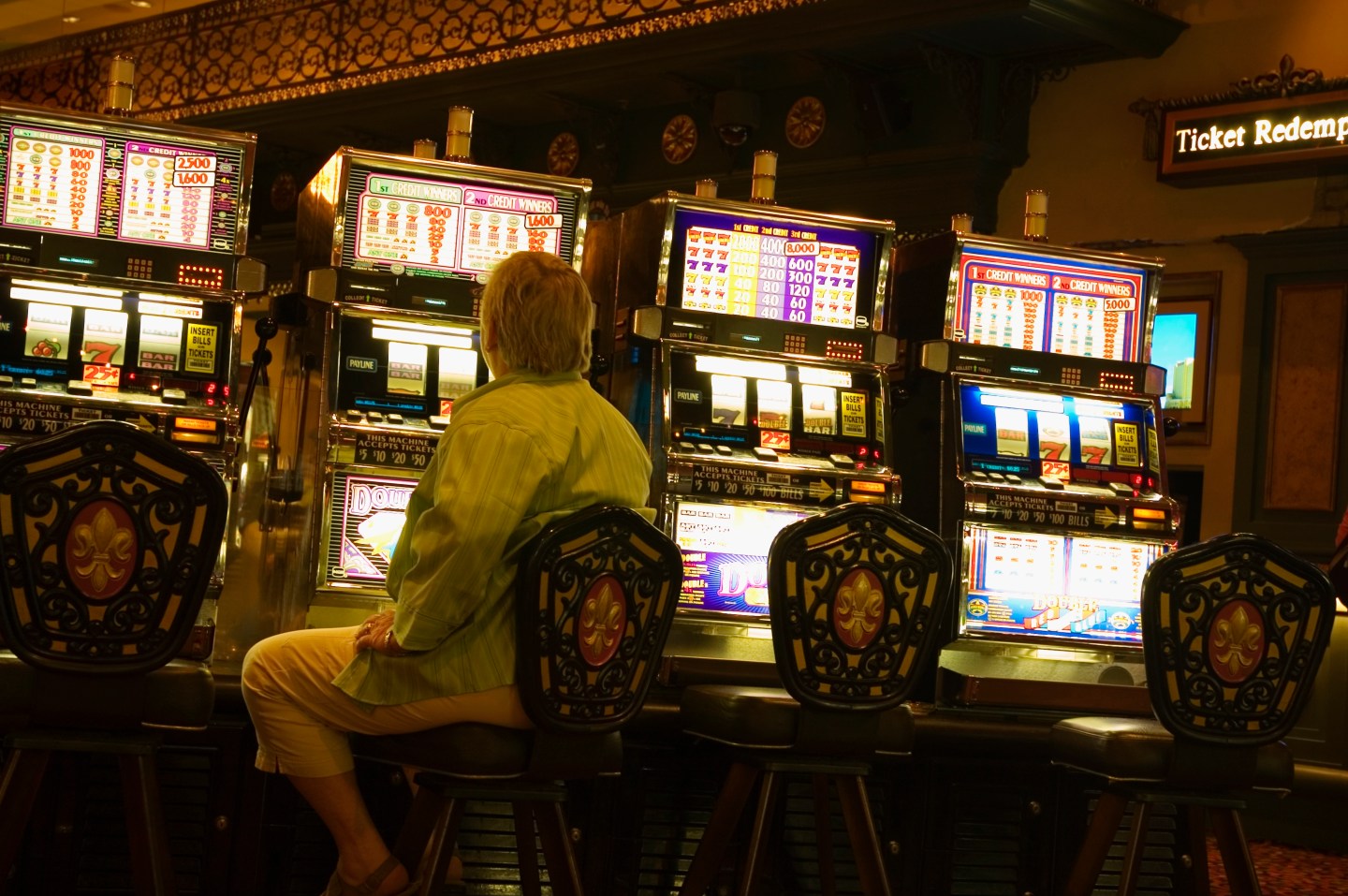
While the company’s 46 properties had to shut down early in the pandemic, they have now all reopened, with impressive results: Revenues are down 10% compared with last year, but operating profits are up 20%. How can this be? In one of COVID’s many unintended consequences, casino activities that pose a high risk of spreading the virus—table games like blackjack and poker, and all-you-can-eat buffets—are also a casino’s least profitable but have had to be shut down. Slot machines, on the other hand, can be spread far apart, require little human interaction, and are thus safe to play. Happily for casinos, slots also happen to be among their highest-margin games.
It wasn’t a surprise when COVID slammed the shares of Gaming and Leisure Properties, but given the above it’s curious that the stock remains down more than 10% year to date. I started buying GLPI for clients this spring, and I think it remains an attractive investment today in both the long- and short-term.
GLP’s attractive economics make it a good long-term hold, especially for those seeking income. As a real estate investment trust, or REIT, the company is required to pay most of its profits out as dividends. Short-term, there are several minor clouds overshadowing the stock that may soon lift, giving investors the potential for a relatively quick 30% upside.
When COVID first struck, GLP cut its dividend roughly 15%; it also elected to pay most of it in stock. This was not because GLP’s finances were shaky; indeed, GLP is the most regionally diversified among the three American casino REITs. Back then, it wasn’t clear how GLP’s tenants would survive the pandemic, and Carlino wanted to make sure that the company could meet its obligations. Nevertheless, cutting a dividend spooks REIT investors, so GLP has trailed its peers year to date.
The other knock on the stock is the risk of so-called iGaming, or online casino play. Just as states legalized casinos a generation ago in search of new tax revenues, states are now in the process of legalizing both iGaming and online betting on sports. Some think that iGaming may drain customers from brick-and-mortar casinos just as e-commerce has siphoned off traditional retail foot traffic. Both the evidence and common sense, however, suggest otherwise. Online gaming has been legal in New Jersey, for example, since 2013, but Atlantic City casino revenues have risen in four of the past five years. That’s because even more than shopping, gambling is something people want to experience in person. There’s a reason Carlino built his company around those flashing lights.
“People are social animals,” Carlino says. “Will they place a bet on a game on their couch? Sure. But will they also keep coming back to the casino? Of course.”
GLP has said it will restore its dividend to all cash in early 2021. At its current $2.40 payout, GLP trades at a nearly 6.5% yield. This is a discount to where it historically trades relative to 10-year U.S. Treasury bonds. When the dividend resumes in cash, I believe the stock will trade at a yield of less than 5%, which means that the stock should appreciate roughly 30%, from its current $38 to around $50 a share. The company should also increase the dividend next year, providing further upside potential.
Meanwhile, Carlino remains in central Pennsylvania, doing what he has always done: running the business, keeping his eye out for new real estate deals, and letting the stock price take care of itself. “I look at the stock price maybe once a month,” he says. “My philosophy has always been, put up the numbers; investors will figure it out.”
Adam Seessel is the portfolio manager at Gravity Capital Management LLC, a registered investment adviser. Certain of the securities mentioned in the article may be currently held, have been held, or may be held in the future in a portfolio managed by Gravity. The article represents the views and belief of the author and does not purport to be complete. The information in this article is as of the publication date, and the data and facts presented in the article may change.
More must-read finance coverage from Fortune:
- What Wall Street needs from the 2020 election
- How J.P. Morgan is proceeding with extreme caution—and still making plenty of money
- “A tale of two Americas”: How the pandemic is widening the financial health gap
- A disputed election could cost the U.S. its “AAA” credit rating
- As earnings season kicks off, only 48% of companies have resumed giving investors guidance