Good afternoon, readers.
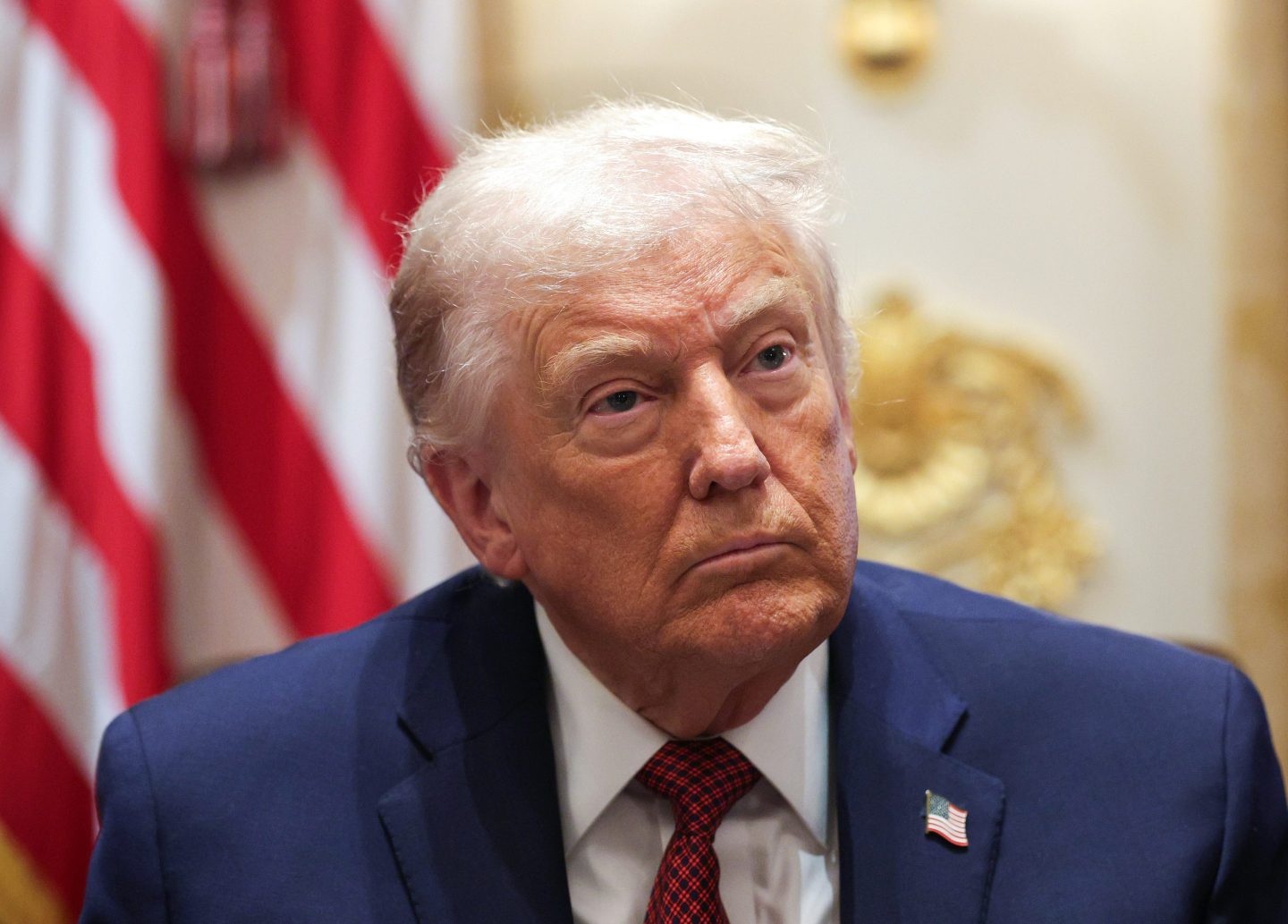
Well that was… a week. Hours after this newsletter reached your inboxes last Thursday, we found out that President Donald Trump and First Lady Melania Trump had tested positive for COVID-19. The President was hospitalized at Walter Reed (and subsequently released); a slew of other White House officials have tested positive since then; Vice President Mike Pence and Sen. Kamala Harris sparred in a debate last night; and that’s just the tip of the iceberg. More on all of that below.
But I want to focus on the vice presidential debate. It was a far more civil (or at least far less chaotic) affair than the bizarre, difficult-to-follow showdown between Trump and Democratic nominee Joe Biden the week before. Unfortunately, as is the case with many modern-day political debates, style and political talking points often overtook substantive policy conversations—and health care was no exception.
There was plenty of sparring over the Trump administration’s COVID-19 response and what a Biden administration may do differently (national mask mandates, a renewed emphasis on producing protective equipment, funding to make sure a potential vaccine can be administered at scale—all of which Pence claimed the Trump administration has already made a priority).
There were the usual scuffles over the Affordable Care Act, which forced Pence to thread the needle between the administration’s efforts to dismantle the entire law and the President’s promise to preserve protections for everyone with pre-existing conditions (the latter would likely not be possible were the former to happen barring rapid Congressional action).
These are critical topics and a predictable dialogue as COVID rages on, especially on the issue of pre-existing conditions. But there are plenty of other important health care issues which never saw the light of day.
For instance: What are we doing about other diseases which are projected to kill millions upon millions in the coming years and decades, such as Alzheimer’s and dementia-related disorders? There are some treatments working their way down the line in that field, but it’s an open question whether or not they will be effective. Given that Alzheimer’s is the 6th leading cause of death in America, killing more than 121,000 people every year, it may have been worth broaching how the federal government can enhance existing research.
Here’s another one: Nutritional inequality caused by food deserts. We often hear about America’s obesity, and child obesity, problem but tend to gloss over its sources. The reality is that there’s a very real problem in low-income neighborhoods in accessing healthy foods at affordable prices. You may have to turn to a bodega and get some cold cuts because there’s simply nowhere else to go, and that’s a recipe for bad food habits which can have long-term effects on one’s health. What can we do to fix that?
The list goes on. Environmental policy isn’t just about cleaning up the climate at large or creating or losing jobs, as was largely the focus of last night’s debate, but also an issue that disproportionately affects people who may have to live near industrial plants; the way that clinical trials are conducted discriminates against women and minorities, meaning that good science may not be serving as much of the public as it can be.
These are just some of the issues that might have come up in a truly substantive conversation around health care. Maybe some day they will.
Read on for the day’s news, and see you next week.
Sy Mukherjee
sayak.mukherjee@fortune.com
@the_sy_guy
DIGITAL HEALTH
Amwell survey: Telehealth adoption will increase after the pandemic. A new survey from telemedicine giant Amwell finds that doctors and consumers alike believe virtual care is here to stay well after the worst of COVID is in the rearview. "Telehealth usage is up considerably in 2020, with 22% of consumers and 80% of physicians having a virtual visit this year, up from 8% and 22%, respectively, in 2019," according to the report. Read the full findings here.
Lyft, Epic team up on medical transportation. Lyft, much like its rival Uber, was already in the medical transportation game. But Lyft is now widening its footprint in the arena via a partnership with Epic, which oversees electronic health records for hundreds of millions of patients. This collaboration would let a health care provider that uses the Epic software to automatically schedule a Lyft-provided ride (for those who qualify) to a medical appointment using Epic's patient record instead of having to use a separate tool, streamlining the process. (FierceHealthcare)
INDICATIONS
Could antibody drugs be the key? As I mentioned above, President Trump was hospitalized for COVID-19 last weekend. It helps to be the President of the United States—Trump was able to receive a multi-drug cocktail, including one from Regeneron that just a handful of people had received compassionate use authorization for. Leaving that aside, let's look at the science. Regeneron's drug is a combination of monoclonal antibodies, and they seem, at least according to the data we have so far, to be pretty effective in keeping those who are mildly sick out of the emergency room or hospital. In fact, just days after Trump's enthusiastic promotion of the Regeneron drug (that's another issue which we'll explore in greater depth in the coming days), pharma giant Eli Lilly said it was confident enough in its own antibody cocktail to apply for an FDA emergency authorization use. These are synthetic antibodies which can prevent a virus from actually infecting cells, and thus lower the "viral load" a patient faces, increasing their chances of staying out of the hospital. For those who are already sick and hospitalized? That's a different matter. (Fortune)
THE BIG PICTURE
Private health insurance premiums continue to spike. Status quo bias is a strange thing. People are hesitant to make a change even if they know they're getting a raw deal. But it can also be, in a weird sense, rational when it comes to something as fundamental as health insurance. Most Americans would not want to just up and lose their employer-provided private health insurance because it's just a scary and uncertain prospect (and who could blame them?). But the deal keeps getting worse, according to a new analysis by the nonpartisan Kaiser Family Foundation. "Annual premiums for employer-sponsored family health coverage reached $21,342 this year, up 4% from last year, with workers on average paying $5,588 toward the cost of their coverage," according to the report. "The average deductible among covered workers in a plan with a general annual deductible is $1,644 for single coverage." This reflects a decades-long trend in rising premiums and employers increasingly shifting out-of-pocket costs to workers in the form of high-deductible health plans, among other factors. (KFF)
REQUIRED READING
Where Harris and Pence won and lost in the debate, by Rey Mashayekhi
Google rebrands its productivity tools as more people work from home, by Danielle Abril
What it's like to open a new restaurant during a pandemic, by Rachel King