• Home
  • Latest
  • Fortune 500
  • Finance
  • Tech
  • Leadership
  • Lifestyle
  • Rankings
  • Multimedia
Environmentclimate change

As seawater moves inland, ‘ghost forests’ are spreading. Why that’s so scary

By
Katherine Dunn
Katherine Dunn
Down Arrow Button Icon
By
Katherine Dunn
Katherine Dunn
Down Arrow Button Icon
September 29, 2020, 7:00 PM ET

Rising sea levels have begun to decimate coastal forests, leaving white, dead stumps in their wake as salt water damages ecosystems that previously relied on freshwater ecosystems. Scientists call them “ghost forests.” And they’re growing at an alarming pace, say researchers at North Carolina State University.

A study released this week of the state’s Albemarle-Pamlico Peninsula found these ghost forests had spread across 15% of the land between 2001 and 2014, the years the study tracked. The researchers calculated that devastation equated to 130,000 metric tons of carbon that otherwise would have been captured by the forest.

“Many people think about sea level rise as being more of a long-term threat,” said the study’s lead author, Lindsey Smart, a research associate at the North Carolina State University Center for Geospatial Analytics.

But the researchers saw “significant changes” over shorter time periods, not just because of sea levels rising gradually, but because of extreme weather including hurricanes and droughts, which can bring salt water into regions that previously relied on fresh water. The peninsula lies just inland from the island chain that forms North Carolina’s Outer Banks.

This ecological impact underlies other research showing that while we often think of climate change as bringing gradually rising seas, the coastal flooding that threatens vast swaths of the earth’s ecosystems will be in large part the result of exceptional storm surges from hurricanes and flash floods. Over the years, the expansion of coastal marshes and the retreat of the region’s forests have also upended local communities and livelihoods. In addition, coastal forests provide a vital level of environmental protection as their soil, in good times, stores more carbon than forests further inland.

The ghost forest degradation also puts these ecosystems at greater risk for forest fires. “We think there may be an interaction between salt water and fire that accelerates forest retreat, and facilitates marsh migration into areas that were once healthy coastal forest,” Smart said.

It’s not that frequent, low-level fires don’t serve a role in the local ecosystem, the researchers noted. But after a fire, a period of regeneration must allow new seeds to take root and begin restoring the region’s vegetation. However, young seeds of woody vegetation—like trees—can be damaged by excessive salinity.

There are similar risks to coastal forests that are increasingly hit with drought, the paper noted. Collectively, the creation of ghost forests means those forests are also less able to play their roles not just as carbon sinks, but as storm buffers, to limit the impact of the same storms that are bringing salt water inland.

The intrusion of salt water into forests that were previously fresh water is often an “invisible threat” the researchers said, “because shifts in soil chemistry are difficult to measure at large spatial scales and are not generally perceived by the public,” they write in the paper.

Instead, ghostly white, semi-submerged stumps are a warning sign of what’s happening below.

“Ghost forests provide clear markers of sea level rise’s leading edge,” they wrote.

More must-read energy sector coverage from Fortune:

  • Europe’s leaders want to create a “new Bauhaus” as part of its Green Deal. But what does that even mean?
  • Can emissions cuts and economic growth coexist? Europe is certain they can
  • Uncharted Power’s Jessica O. Matthews has a plan to revive America’s crumbling infrastructure
  • After the boom: Canada’s oil capital faces an uncertain future
  • There’s an ulterior motive to China’s carbon neutral pledge: Cornering the green tech market
About the Author
By Katherine Dunn
LinkedIn iconTwitter icon
See full bioRight Arrow Button Icon

Latest in Environment

North AmericaMexico
U.S., Mexico strike deal to settle Rio Grande water dispute
By Fabiola Zerpa and BloombergDecember 13, 2025
2 hours ago
carbon
Commentaryclimate change
Banking on carbon markets 2.0: why financial institutions should engage with carbon credits
By Usha Rao-MonariDecember 13, 2025
13 hours ago
mackenzie
Personal Financephilanthropy
‘This year, I really see education and climate’: Patterns in billionaire MacKenzie Scott’s massive giving emerge with time
By Thalia Beaty and The Associated PressDecember 11, 2025
3 days ago
Google DeepMind cofounder and CEO Demis Hassabis
AIU.K.
Google DeepMind agrees to sweeping partnership with U.K. government focused on science and clean energy
By Jeremy KahnDecember 10, 2025
3 days ago
InnovationBrainstorm AI
Rivian CEO says buying an EV isn’t a political choice, pointing out that R1 buyers are split evenly between Republicans and Democrats
By Jason MaDecember 10, 2025
3 days ago
AIBrainstorm AI
Google Cloud CEO lays out 3-part strategy to meet AI’s energy demands, after identifying it as ‘the most problematic thing’
By Jason MaDecember 8, 2025
5 days ago

Most Popular

placeholder alt text
Economy
Tariffs are taxes and they were used to finance the federal government until the 1913 income tax. A top economist breaks it down
By Kent JonesDecember 12, 2025
2 days ago
placeholder alt text
Success
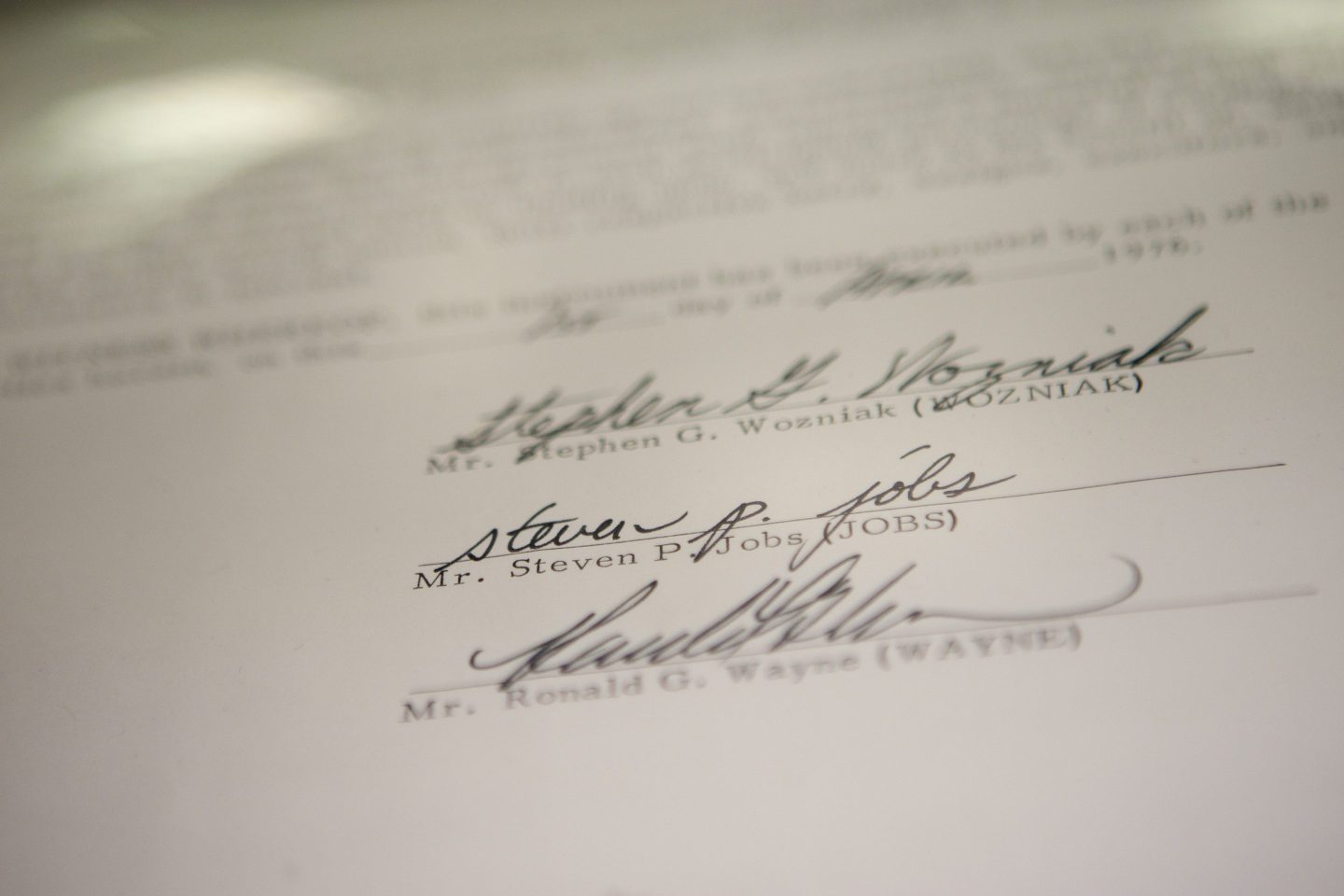
Apple cofounder Ronald Wayne sold his 10% stake for $800 in 1976—today it’d be worth up to $400 billion
By Preston ForeDecember 12, 2025
1 day ago
placeholder alt text
Success
40% of Stanford undergrads receive disability accommodations—but it’s become a college-wide phenomenon as Gen Z try to succeed in the current climate
By Preston ForeDecember 12, 2025
1 day ago
placeholder alt text
Economy
The Fed just ‘Trump-proofed’ itself with a unanimous move to preempt a potential leadership shake-up
By Jason MaDecember 12, 2025
1 day ago
placeholder alt text
Economy
For the first time since Trump’s tariff rollout, import tax revenue has fallen, threatening his lofty plans to slash the $38 trillion national debt
By Sasha RogelbergDecember 12, 2025
1 day ago
placeholder alt text
Success
Apple CEO Tim Cook out-earns the average American’s salary in just 7 hours—to put that into context, he could buy a new $439,000 home in just 2 days
By Emma BurleighDecember 12, 2025
1 day ago
Rankings
  • 100 Best Companies
  • Fortune 500
  • Global 500
  • Fortune 500 Europe
  • Most Powerful Women
  • Future 50
  • World’s Most Admired Companies
  • See All Rankings
Sections
  • Finance
  • Leadership
  • Success
  • Tech
  • Asia
  • Europe
  • Environment
  • Fortune Crypto
  • Health
  • Retail
  • Lifestyle
  • Politics
  • Newsletters
  • Magazine
  • Features
  • Commentary
  • Mpw
  • CEO Initiative
  • Conferences
  • Personal Finance
  • Education
Customer Support
  • Frequently Asked Questions
  • Customer Service Portal
  • Privacy Policy
  • Terms Of Use
  • Single Issues For Purchase
  • International Print
Commercial Services
  • Advertising
  • Fortune Brand Studio
  • Fortune Analytics
  • Fortune Conferences
  • Business Development
About Us
  • About Us
  • Editorial Calendar
  • Press Center
  • Work At Fortune
  • Diversity And Inclusion
  • Terms And Conditions
  • Site Map

© 2025 Fortune Media IP Limited. All Rights Reserved. Use of this site constitutes acceptance of our Terms of Use and Privacy Policy | CA Notice at Collection and Privacy Notice | Do Not Sell/Share My Personal Information
FORTUNE is a trademark of Fortune Media IP Limited, registered in the U.S. and other countries. FORTUNE may receive compensation for some links to products and services on this website. Offers may be subject to change without notice.