• Home
  • Latest
  • Fortune 500
  • Finance
  • Tech
  • Leadership
  • Lifestyle
  • Rankings
  • Multimedia
TechRocket Internet

The humbling of Europe’s most-hyped startup incubator: Rocket Internet

Jeremy Kahn
By
Jeremy Kahn
Jeremy Kahn
Editor, AI
Down Arrow Button Icon
Jeremy Kahn
By
Jeremy Kahn
Jeremy Kahn
Editor, AI
Down Arrow Button Icon
September 1, 2020, 10:30 AM ET
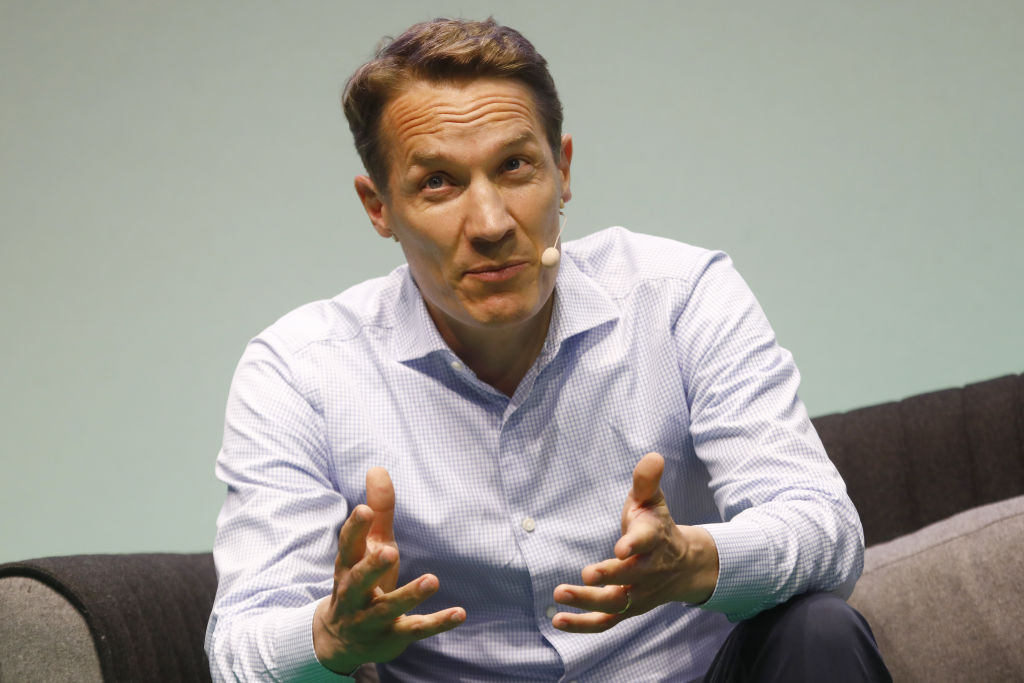
Rocket Internet CEO Oliver Samwer
BERLIN, GERMANY - JUNE 06: Oliver Samwer, CEO of Rocket Internet, speaks at the 2018 NOAH conference on June 6, 2018 in Berlin, Germany. The annual conference brings together established start-up leaders, entrepreneurs, investors and media. (Photo by Michele Tantussi/Getty Images)Photo by Michele Tantussi/Getty Images

Rocket Internet, the German startup incubator that was once the darling of Europe’s technology sector and a thorn in the side of the Silicon Valley startups whose business models it shamelessly ripped off, announced Tuesday that it plans to delist from the Frankfurt and Luxembourg stock exchanges after seeing its shares fall 13% this year.

Rocket says it has plenty of access to money to fund its startups from private investors and doesn’t need the public markets anymore. But it’s hard to read Rocket’s decision as anything other than a humbling blow for Oliver Samwer, Rocket’s brash cofounder and chief executive officer, who once boasted that he wanted to “own the Internet” and claimed his Berlin-based “startup factory” could churn out one successful tech firm after another.

Founded in 2007 by Samwer and his two brothers, Rocket’s formula was to find promising new online business models—usually copying those of fast-growing U.S. e-commerce firms—and rush to create copycat versions in different parts of the globe before the originals could expand internationally. Samwer claimed its companies could execute faster and better than tech firms elsewhere, giving them a competitive advantage.

Rocket helped put Berlin’s startup scene on the map. Many of the young business school graduates who flocked there to work for companies being incubated by Rocket have gone on to found their own technology startups or became local venture capitalists.

But Silicon Valley entrepreneurs and investors have long griped that Rocket merely produced “built-to-be-bought” clones that did little but exact a tax on American innovation—forcing the U.S. pioneers to spend more to enter new markets. Critics also accused Samwer of pumping up the valuation of Rocket’s startups through venture capital rounds led by his own, separate startup investment fund, Global Founders Capital.

Rocket did not respond to Fortune’s request for comment.

Controversial growth metrics

Rocket’s tendency to overvalue its own startups became apparent once the company went public in October 2014. Rocket used a controversial metric, called last portfolio value, or LPV, which valued these startups based on their last financing round—even though those rounds often involved Rocket itself or related funds and might not reflect current market dynamics.

The difference between Rocket’s valuations and more conventional ones became apparent when investors compared Rocket’s books with those of Swedish investment firm Kinnevik, which was once a big shareholder in Rocket and had coinvested in many of its startups. Kinnevik used far more conservative metrics to value these young companies. Its figures and Rocket’s were often miles apart. For instance, the Swedish firm valued Westwing, an e-commerce retailer, at $304 million in June 2016; at the time, Rocket said the company was worth $576 million. Rocket’s valuation of Home24, another home decor merchant, was seven times what Kinnevik thought the company was worth.

To be fair, Rocket has had some big successes: Zalando, which started as a German Zappos clone and has become one of Europe’s top online clothing retailers. Publicly listed, it is now worth $24 billion. Delivery Hero, an online food delivery app Rocket backed, also went public and is now worth $22 billion. It was added to Germany’s blue-chip Dax last month.

HelloFresh, a meal-kit delivery company, is listed and worth $8 billion. Earlier, Rocket made a killing off its investment in CityDeal, a coupon clone of U.S. company Groupon, that the original acquired in 2010. It also created Lazada, a Southeast Asia–focused consumer electronics e-commerce play that Alibaba eventually spent $1 billion to acquire majority control of in 2016.

Hits and misses

But it’s never been clear Rocket’s winning formula was anything of the sort. The company has more misses than hits—anyone remember once high-flying African e-commerce firm Jumia? It went public at lofty valuations only to see its shares tank. The same happened with Home24 when it eventually went public. Brazilian fashion retailer Dafiti has limped along through a succession of down rounds. Meanwhile, the crop of startups Rocket has launched and incubated since its own IPO have not exactly become overnight successes. (Grosenia? FlashCoffee?)

Of course, the whole model of venture capital is that most portfolio companies won’t make it. VCs typically depend on just one or two blockbusters to make their fund’s promised returns. But Samwer always claimed Rocket wasn’t a typical venture capitalist. By copying business models and extensively sharing resources and back-office technology between its portfolio companies, he had supposedly removed much of the risk from startup investing.

Well, not so much. Once worth more than $8 billion, Rocket’s market valuation is now just $3 billion. That’s a significant discount to the net asset figure of $4.9 billion it reported in December 2019. (The company has said that the COVID-19 pandemic may have significant impact on the valuation of its portfolio companies as slower global economic growth dims their prospects.)

Rocket’s investors are being offered €18.57 in the going-private deal. That’s below the stock’s 200-day moving average—no great thank-you for those who had faith in Samwer’s vision.  

Samwer himself isn’t going anywhere. He’s not tendering the 4.5% of Rocket he owns, and his investment fund, Global Founders, is retaining its 45% stake too.

Samwer, never shy, has often been quick to boast of his “own the Internet” entrepreneurial prowess. Of course, it’s easier to brag when your accounts aren’t subject to public scrutiny.


About the Author
Jeremy Kahn
By Jeremy KahnEditor, AI
LinkedIn iconTwitter icon

Jeremy Kahn is the AI editor at Fortune, spearheading the publication's coverage of artificial intelligence. He also co-authors Eye on AI, Fortune’s flagship AI newsletter.

See full bioRight Arrow Button Icon

Latest in Tech

Finance
Lorem ipsum dolor sit amet, consectetur adipiscing elit, sed do eiusmod tempor incididunt ut labore et dolore magna aliqua. Ut enim ad minim veniam
By Fortune Editors
October 20, 2025
Finance
Lorem ipsum dolor sit amet, consectetur adipiscing elit, sed do eiusmod tempor incididunt ut labore et dolore magna aliqua. Ut enim ad minim veniam
By Fortune Editors
October 20, 2025
Finance
Lorem ipsum dolor sit amet, consectetur adipiscing elit, sed do eiusmod tempor incididunt ut labore et dolore magna aliqua. Ut enim ad minim veniam
By Fortune Editors
October 20, 2025
Finance
Lorem ipsum dolor sit amet, consectetur adipiscing elit, sed do eiusmod tempor incididunt ut labore et dolore magna aliqua. Ut enim ad minim veniam
By Fortune Editors
October 20, 2025
Finance
Lorem ipsum dolor sit amet, consectetur adipiscing elit, sed do eiusmod tempor incididunt ut labore et dolore magna aliqua. Ut enim ad minim veniam
By Fortune Editors
October 20, 2025
Finance
Lorem ipsum dolor sit amet, consectetur adipiscing elit, sed do eiusmod tempor incididunt ut labore et dolore magna aliqua. Ut enim ad minim veniam
By Fortune Editors
October 20, 2025

Most Popular

Finance
Lorem ipsum dolor sit amet, consectetur adipiscing elit, sed do eiusmod tempor incididunt ut labore et dolore magna aliqua. Ut enim ad minim veniam
By Fortune Editors
October 20, 2025
Finance
Lorem ipsum dolor sit amet, consectetur adipiscing elit, sed do eiusmod tempor incididunt ut labore et dolore magna aliqua. Ut enim ad minim veniam
By Fortune Editors
October 20, 2025
Finance
Lorem ipsum dolor sit amet, consectetur adipiscing elit, sed do eiusmod tempor incididunt ut labore et dolore magna aliqua. Ut enim ad minim veniam
By Fortune Editors
October 20, 2025
Finance
Lorem ipsum dolor sit amet, consectetur adipiscing elit, sed do eiusmod tempor incididunt ut labore et dolore magna aliqua. Ut enim ad minim veniam
By Fortune Editors
October 20, 2025
Finance
Lorem ipsum dolor sit amet, consectetur adipiscing elit, sed do eiusmod tempor incididunt ut labore et dolore magna aliqua. Ut enim ad minim veniam
By Fortune Editors
October 20, 2025
Finance
Lorem ipsum dolor sit amet, consectetur adipiscing elit, sed do eiusmod tempor incididunt ut labore et dolore magna aliqua. Ut enim ad minim veniam
By Fortune Editors
October 20, 2025
Rankings
  • 100 Best Companies
  • Fortune 500
  • Global 500
  • Fortune 500 Europe
  • Most Powerful Women
  • Future 50
  • World’s Most Admired Companies
  • See All Rankings
Sections
  • Finance
  • Leadership
  • Success
  • Tech
  • Asia
  • Europe
  • Environment
  • Fortune Crypto
  • Health
  • Retail
  • Lifestyle
  • Politics
  • Newsletters
  • Magazine
  • Features
  • Commentary
  • Mpw
  • CEO Initiative
  • Conferences
  • Personal Finance
  • Education
Customer Support
  • Frequently Asked Questions
  • Customer Service Portal
  • Privacy Policy
  • Terms Of Use
  • Single Issues For Purchase
  • International Print
Commercial Services
  • Advertising
  • Fortune Brand Studio
  • Fortune Analytics
  • Fortune Conferences
  • Business Development
About Us
  • About Us
  • Editorial Calendar
  • Press Center
  • Work At Fortune
  • Diversity And Inclusion
  • Terms And Conditions
  • Site Map

Latest in Tech

Bill Gates speaks onstage at the Bloomberg Philanthropies Global Forum 2025 at The Plaza Hotel on September 24, 2025 in New York City.
AIBill Gates
Bill Gates says AI could be used as a bioterrorism weapon akin to the COVID pandemic if it falls into the wrong hands
By Eleanor PringleJanuary 9, 2026
17 hours ago
shapiro
Big TechMedia
Netflix’s competition isn’t sleep anymore. Its battle against YouTube is like fighting an ‘infinite number of monkeys,’ top strategist says
By Nick LichtenbergJanuary 9, 2026
18 hours ago
Bill Gates pictured in New York, May 2025.
SuccessBill Gates
Read Bill Gates’s 2026 annual letter in full
By Eleanor PringleJanuary 9, 2026
18 hours ago
A screen displays the Grok logo while a person holds another phone in front.
AIX
Lawmakers and victims criticize the choice to limit Grok’s AI image generation to paid users as ‘insulting’ and ‘not effective’
By Beatrice NolanJanuary 9, 2026
20 hours ago
NewslettersTerm Sheet
Andreessen Horowitz’s shiny, new $15 billion reveals where the firm sees the biggest opportunities
By Allie GarfinkleJanuary 9, 2026
21 hours ago
Chinese and U.S. flags wave outside a technology company in Beijing, on April 17, 2025. (Photo: Pedro Pardo/AFP/Getty Images)
NewslettersFortune Tech
‘Salt Typhoon’ hackers accessed email of U.S. congressional committee staff
By Andrew NuscaJanuary 9, 2026
21 hours ago

Most Popular

placeholder alt text
North America
Bill Gates warns the world is going 'backwards' and gives 5-year deadline before we enter a new Dark Age
By Eleanor PringleJanuary 9, 2026
18 hours ago
placeholder alt text
Success
Diary of a CEO founder says he hired someone with 'zero' work experience because she 'thanked the security guard by name' before the interview
By Emma BurleighJanuary 8, 2026
2 days ago
placeholder alt text
Workplace Culture
Amazon demands proof of productivity from employees, asking for list of accomplishments
By Jake AngeloJanuary 8, 2026
2 days ago
placeholder alt text
Politics
White House says it's 'reviewing protocols' after Trump seemingly violated federal policy by disclosing jobs data early
By Eva RoytburgJanuary 9, 2026
13 hours ago
placeholder alt text
Crypto
Russia and Iran are increasingly turning to crypto—especially stablecoins—to avoid sanctions, report finds
By Carlos GarciaJanuary 8, 2026
2 days ago
placeholder alt text
Real Estate
Google billionaire Larry Page copies the Jeff Bezos playbook, buying a $173 million Miami compound that will save him millions in taxes
By Nick LichtenbergJanuary 8, 2026
1 day ago

© 2025 Fortune Media IP Limited. All Rights Reserved. Use of this site constitutes acceptance of our Terms of Use and Privacy Policy | CA Notice at Collection and Privacy Notice | Do Not Sell/Share My Personal Information
FORTUNE is a trademark of Fortune Media IP Limited, registered in the U.S. and other countries. FORTUNE may receive compensation for some links to products and services on this website. Offers may be subject to change without notice.