• Home
  • Latest
  • Fortune 500
  • Finance
  • Tech
  • Leadership
  • Lifestyle
  • Rankings
  • Multimedia

Trendingnow

1

Egg companies made $1.22 billion in profit off a $6 carton — now they’re buying their way out of a price-fixing case with 53 million donated eggs

2

As Big Tech showers employees with perks to win the talent war, Nvidia built a nearly $5 trillion company by making people pay for their own lunch

3

Mark Zuckerberg feeds his cows macadamia nuts and beer to create the 'highest-quality beef in the world' on his $300 million estate in Hawaii

1

Egg companies made $1.22 billion in profit off a $6 carton — now they’re buying their way out of a price-fixing case with 53 million donated eggs

2

As Big Tech showers employees with perks to win the talent war, Nvidia built a nearly $5 trillion company by making people pay for their own lunch

3

Mark Zuckerberg feeds his cows macadamia nuts and beer to create the 'highest-quality beef in the world' on his $300 million estate in Hawaii
Commentary

Why empowering frontline workers is a key element to a safe reopening

By
Sharon Block
Sharon Block
and
Rachel Korberg
Rachel Korberg
Down Arrow Button Icon
By
Sharon Block
Sharon Block
and
Rachel Korberg
Rachel Korberg
Down Arrow Button Icon
August 18, 2020, 8:00 AM ET
coronavirus frontline TSA workers
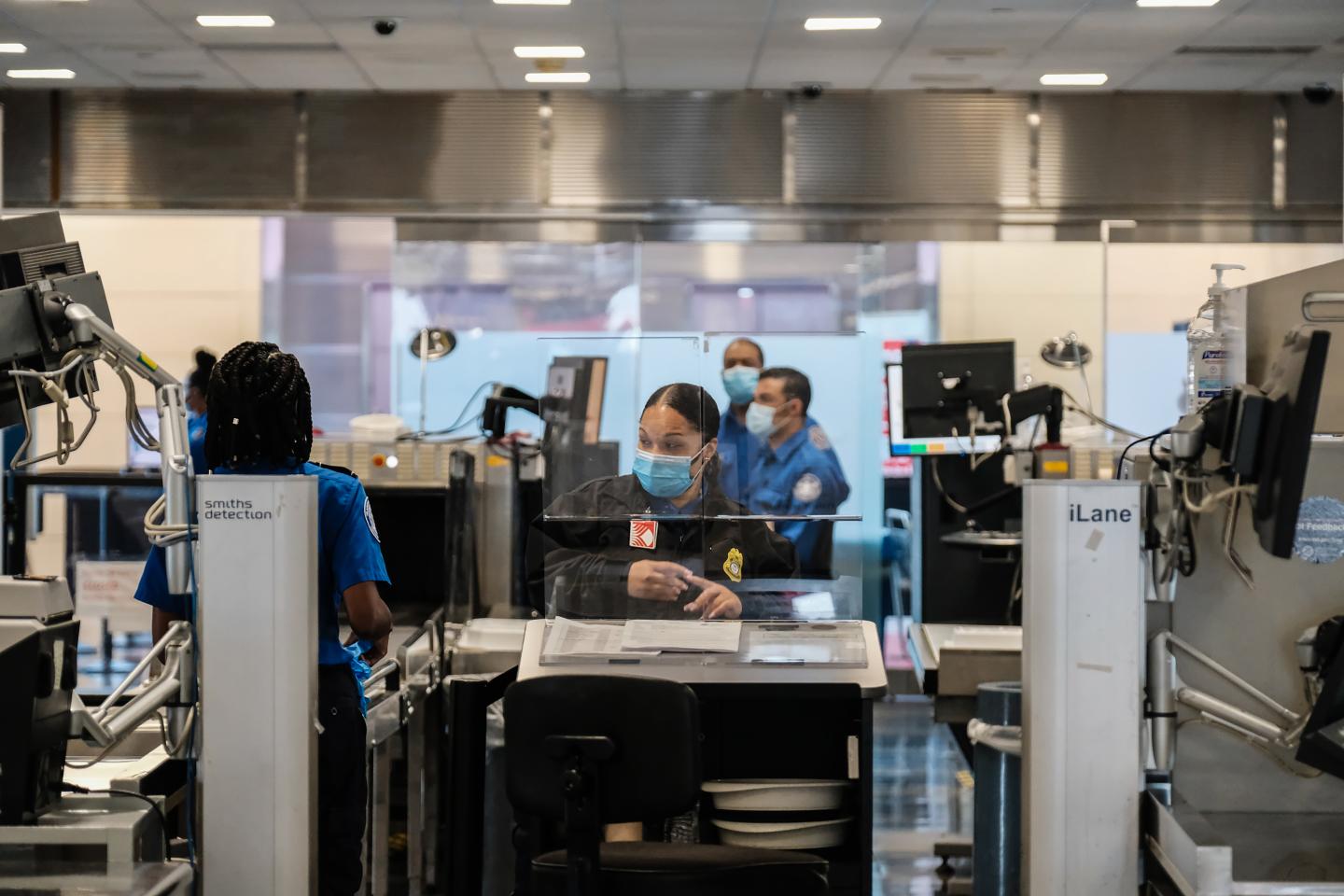
ARLINGTON, VA - JULY 22: TSA agents work at a security checkpoint at the Ronald Reagan National Airport on July 22, 2020 in Arlington, Virginia. During the COVID-19 pandemic, all employees and passengers are required to wear facemasks while onboard a Delta plane. (Photo by Michael A. McCoy/Getty Images)Michael A. McCoy—Getty Images
Add Fortune on Google for similar content.

As the U.S. reopens despite the coronavirus continuing to ravage the country, workers across industries—from agriculture to airport security and meat processing—are getting sick. A century ago it was very common for people in the U.S. to fall ill or even die on the job. We are at risk of returning to a horrifying reality where earning a paycheck again means risking your life. 

The Occupational Safety and Health Administration (OSHA), the federal government agency charged with enforcing workplace health and safety, has been missing in action during this pandemic. So what can a responsible company do to operate successfully without becoming a hotbed for COVID-19 transmission? Requiring face coverings, implementing thorough sanitation practices, and providing paid leave for all are critical, but businesses should be careful not to ignore a too-often missing element: the voices of their workers themselves.

Workers have a key role to play in designing and implementing new, on-the-job health practices—and even more so in the absence of enforceable federal standards. If they aren’t able to speak up when they spot a problem, we risk prolonging this crisis, deepening the economic pain, and ultimately losing more lives. 

MIT research has shown that companies with empowered frontline staff who have trusting, collaborative relationships with management are better at quickly identifying challenges and developing and implementing new solutions. This makes intuitive sense—workers know better than anyone how to do their jobs best, what risks they face, and how to solve problems in the workplace. 

In these types of high-trust, high-opportunity workplaces, workers may be more likely to flag unsafe conditions and propose fixes because they have received thorough training, feel valued, have open communication with management, and don’t fear retribution. 

This is all in line with what hospitals have discovered in fighting the novel coronavirus. Nurses and other frontline staff were critical in developing life-saving innovations, such as keeping IV pumps and ventilation control panels outside of patient rooms so they can be adjusted without entering, which both reduced transmission risk and preserved vital personal protective equipment (PPE). 

But industries like retail and logistics have long been characterized by low pay, inadequate benefits, and, unfortunately in many cases, antipathy to workers speaking up. How can companies rapidly reinvent their relationships with their frontline staff to strengthen public health and, ultimately, their own operations?  

One key first step is to create explicit ways for workers to directly weigh in on on-the-job health and safety practices. In unionized workplaces, this is a key role that unions have played effectively across many industries. For example, in April, grocery store workers flagged customer behavior as one of their biggest health risks, so United Food and Commercial Workers launched the #ShopSmart campaign to promote simple, safer practices. By July, nonunionized grocery stores like Walmart had followed suit and required everyone in the store—customers and staff—to wear masks. 

Nonunionized workplaces would also benefit from hearing directly from their workers and partnering to make the workplace safer. Companies should consider launching participatory workplace health and safety planning processes. This would involve inviting frontline staff to partner in designing and implementing new measures aimed at reducing transmission risk—taking into account a given business’s layout, flow of goods and people, and organizational culture—and responding effectively when workers fall sick. In fact, this approach draws on a model that is common in Europe and in fact is credited as one of the reasons German companies emerged so strongly from the Great Recession of 2008. 

In structuring a participatory workplace health planning process, the experiences of hospital nurses are again instructive. Nurses found that working safely isn’t only about PPE and sanitation, but also a much broader range of practices, from using technology in new ways to changing job descriptions. For example, nurses used social media to rapidly disseminate and workshop lessons learned across the country and globe, and developed a new role called a “runner,” whose sole task was to expedite supplies to critical cases. The breadth and creativity of the nurses’ innovations illustrate the importance of empowering workers to codesign workplace health and safety processes.

But workers will have the freedom necessary to innovate and provide meaningful input into on-the-job health practices only if employers create a transparent and collaborative work environment where there are no reprisals for flagging concerns. For example, employers must immediately alert their staff when someone falls sick. There have been far too many stories of workers contracting or even dying of COVID-19, and their colleagues not being told or being told far too late—endangering not only them but also potentially other customers, friends, and family. Workers must also be protected from any retaliation for alerting management to unsafe situations or working collectively with colleagues to address them.

Worker empowerment is not just a public health issue—it’s also a racial justice issue, as thousands of Black essential workers reminded us last month as they joined the Strike for Black Lives. The National Employment Law Project found that nearly 75% of Black workers worked outside the home during the peak of the pandemic, versus under half of white workers, and Black workers are more than two times as likely as white workers to experience retaliation by employers for raising concerns about COVID-19.  

Today, inspired by uprisings across the country, many companies are standing with the Movement for Black Lives and also committing to greater diversity in their boards and C-suites. But, especially in the context of a pandemic, racial justice also means providing a safe work environment so that frontline workers—who are disproportionately Black and other people of color—don’t fall sick or die because of avoidable risks and aren’t unfairly penalized when they express concerns. 

The terrifying truth is that even as businesses across the country reopen, we don’t yet fully know how to prevent workers and customers from getting sick. Who better to help answer that question than the people who see up close, every day, the way that workplace safety measures are actually playing out in our stores, factories, farms, hospitals, and restaurants? 

Frontline workers like security guards, house cleaners, and grocery store clerks deserved greater respect long before the pandemic began. Now our lives depend on businesses truly giving them a voice.

Sharon Block is executive director of the Labor and Worklife Program at Harvard Law School.

Rachel Korberg is a program officer with the Ford Foundation’s Future of Work(ers) initiative.

About the Authors
By Sharon Block
See full bioRight Arrow Button Icon
By Rachel Korberg
See full bioRight Arrow Button Icon
Add Fortune on Google for similar content.

Latest in Commentary

Finance
Lorem ipsum dolor sit amet, consectetur adipiscing elit, sed do eiusmod tempor incididunt ut labore et dolore magna aliqua. Ut enim ad minim veniam
By Fortune Editors
October 20, 2025
Finance
Lorem ipsum dolor sit amet, consectetur adipiscing elit, sed do eiusmod tempor incididunt ut labore et dolore magna aliqua. Ut enim ad minim veniam
By Fortune Editors
October 20, 2025
Finance
Lorem ipsum dolor sit amet, consectetur adipiscing elit, sed do eiusmod tempor incididunt ut labore et dolore magna aliqua. Ut enim ad minim veniam
By Fortune Editors
October 20, 2025
Finance
Lorem ipsum dolor sit amet, consectetur adipiscing elit, sed do eiusmod tempor incididunt ut labore et dolore magna aliqua. Ut enim ad minim veniam
By Fortune Editors
October 20, 2025
Finance
Lorem ipsum dolor sit amet, consectetur adipiscing elit, sed do eiusmod tempor incididunt ut labore et dolore magna aliqua. Ut enim ad minim veniam
By Fortune Editors
October 20, 2025
Finance
Lorem ipsum dolor sit amet, consectetur adipiscing elit, sed do eiusmod tempor incididunt ut labore et dolore magna aliqua. Ut enim ad minim veniam
By Fortune Editors
October 20, 2025

Most Popular

Finance
Lorem ipsum dolor sit amet, consectetur adipiscing elit, sed do eiusmod tempor incididunt ut labore et dolore magna aliqua. Ut enim ad minim veniam
By Fortune Editors
October 20, 2025
Finance
Lorem ipsum dolor sit amet, consectetur adipiscing elit, sed do eiusmod tempor incididunt ut labore et dolore magna aliqua. Ut enim ad minim veniam
By Fortune Editors
October 20, 2025
Finance
Lorem ipsum dolor sit amet, consectetur adipiscing elit, sed do eiusmod tempor incididunt ut labore et dolore magna aliqua. Ut enim ad minim veniam
By Fortune Editors
October 20, 2025
Finance
Lorem ipsum dolor sit amet, consectetur adipiscing elit, sed do eiusmod tempor incididunt ut labore et dolore magna aliqua. Ut enim ad minim veniam
By Fortune Editors
October 20, 2025
Finance
Lorem ipsum dolor sit amet, consectetur adipiscing elit, sed do eiusmod tempor incididunt ut labore et dolore magna aliqua. Ut enim ad minim veniam
By Fortune Editors
October 20, 2025
Finance
Lorem ipsum dolor sit amet, consectetur adipiscing elit, sed do eiusmod tempor incididunt ut labore et dolore magna aliqua. Ut enim ad minim veniam
By Fortune Editors
October 20, 2025
Fortune Secondary Logo
Rankings
  • 100 Best Companies
  • Fortune 500
  • Global 500
  • Fortune 500 Europe
  • Most Powerful Women
  • World's Most Admired Companies
  • See All Rankings
  • Lists Calendar
Sections
  • Finance
  • Fortune Crypto
  • Features
  • Leadership
  • Health
  • Commentary
  • Success
  • Retail
  • Mpw
  • Tech
  • Lifestyle
  • CEO Initiative
  • Asia
  • Politics
  • Conferences
  • Europe
  • Newsletters
  • Personal Finance
  • Environment
  • Magazine
  • Education
Customer Support
  • Frequently Asked Questions
  • Customer Service Portal
  • Privacy Policy
  • Terms Of Use
  • Single Issues For Purchase
  • International Print
Commercial Services
  • Advertising
  • Fortune Brand Studio
  • Fortune Analytics
  • Fortune Conferences
  • Business Development
  • Group Subscriptions
About Us
  • About Us
  • Press Center
  • Work At Fortune
  • Terms And Conditions
  • Site Map
  • About Us
  • Press Center
  • Work At Fortune
  • Terms And Conditions
  • Site Map
  • Facebook icon
  • Twitter icon
  • LinkedIn icon
  • Instagram icon
  • Pinterest icon

Latest in Commentary

2
Commentary250 Years of Innovation
America’s secret weapon isn’t just innovation — It’s the freedom to fail
By Keith KrachJuly 3, 2026
1 hour ago
rn
CommentaryCryptocurrency
Former Iran director at NSC: Crypto legislation is a ticket to sanctions evasion
By Richard NephewJuly 2, 2026
21 hours ago
m
Commentary250 Years of Innovation
McKinsey chairs: Building a more resilient industrial base may require $2 trillion in investment
By Eric Kutcher and Shubham SinghalJuly 2, 2026
22 hours ago
em
Commentary250 Years of Innovation
America’s 250th birthday has Elon Musk and a record IPO. Its 15th had Alexander Hamilton — and a stock market bubble
By Owen LamontJuly 2, 2026
1 day ago
paramount
CommentaryAntitrust
How Paramount’s theater commitments could boost local economies across the nation
By Ike BrannonJuly 2, 2026
1 day ago
elon
CommentaryChina
China has 400 private space companies. The West is barely paying attention
By Rainer ZitelmannJuly 2, 2026
1 day ago

Most Popular

Egg companies made $1.22 billion in profit off a $6 carton — now they’re buying their way out of a price-fixing case with 53 million donated eggs
Law
Egg companies made $1.22 billion in profit off a $6 carton — now they’re buying their way out of a price-fixing case with 53 million donated eggs
By Wyatte Grantham-Philips and The Associated PressJuly 2, 2026
18 hours ago
As Big Tech showers employees with perks to win the talent war, Nvidia built a nearly $5 trillion company by making people pay for their own lunch
Big Tech
As Big Tech showers employees with perks to win the talent war, Nvidia built a nearly $5 trillion company by making people pay for their own lunch
By Marco Quiroz-GutierrezJuly 1, 2026
2 days ago
Mark Zuckerberg feeds his cows macadamia nuts and beer to create the 'highest-quality beef in the world' on his $300 million estate in Hawaii
Success
Mark Zuckerberg feeds his cows macadamia nuts and beer to create the 'highest-quality beef in the world' on his $300 million estate in Hawaii
By Sasha RogelbergJuly 2, 2026
19 hours ago
Current price of oil as of July 2, 2026
Personal Finance
Current price of oil as of July 2, 2026
By Joseph HostetlerJuly 2, 2026
22 hours ago
Americans are escaping the U.S. for New Zealand where house prices have hit a new low—but only wealthy Americans with $3 million spare can invest
Success
Americans are escaping the U.S. for New Zealand where house prices have hit a new low—but only wealthy Americans with $3 million spare can invest
By Emma BurleighJuly 2, 2026
21 hours ago
Economists have found an answer to slowing cognitive decline: Avoid retiring early, study finds
Economy
Economists have found an answer to slowing cognitive decline: Avoid retiring early, study finds
By Sasha RogelbergJuly 2, 2026
20 hours ago

© 2026 Fortune Media IP Limited. All Rights Reserved. Use of this site constitutes acceptance of our Terms of Use and Privacy Policy | CA Notice at Collection and Privacy Notice | Do Not Sell/Share My Personal Information
FORTUNE is a trademark of Fortune Media IP Limited, registered in the U.S. and other countries. FORTUNE may receive compensation for some links to products and services on this website. Offers may be subject to change without notice.