It was a regular afternoon in May for Denise Woodard. Her daughter raced past in the background while she attended Zoom meetings from her Jersey City apartment in the black leggings and T-shirt combo that had been her uniform even before coronavirus. But when she went to check her email, the founder of Partake Foods experienced something new: hundreds of new messages, all from retailers and companies interested in selling her vegan, allergy-friendly, gluten-free cookies.
Before the pandemic, Woodard’s company Partake Foods was already set to launch nationwide with Target and hit 2,700 stores by the end of 2020. But after the murder of George Floyd by Minnesota police officers, Woodard and other Black business owners suddenly found themselves receiving more attention, the kind of interest from companies they had only dreamed of working with, as Black Lives Matter protests began in cities across the globe. After being featured in multiple articles as a Black ‘business to support,’ Woodard says Partake has taken off.
“They’ve just gone up and up and up. We’ve continued to have record months,” Woodard says, adding that she’s been working from 5 a.m. to 9 p.m. to get through incoming emails. “All of that extra love that has come our way because of this, we’re trying to pay it forward and support the Black community even more.”
Between May 25 and July 10, Yelp reported over 2,500,000 searches for Black-owned businesses— a 7,043% increase from the same time period last year. On The New York Times bestseller list, Black authors swept the board and titles addressing racism filled the top 10. In the past month alone, marketing agencies like C+R Research have received a huge spike in requests for educational presentations about the Black community and Black consumers.
“Our most recent webinar with Black consumers broke attendance records from our client ranks, more than tripling sign-ups compared to webinars we have done on other topics,” Ashleigh Williams, a researcher for the agency, told Fortune. “Brands are finally starting to realize the importance of investing in understanding Black people and other minorities with them.”
Williams has received all kinds of questions, from “Should we refer to them as Black or African American?” and “Is it the right time to focus on the Black community?” to what she calls the more complex and committed: “What should we do to fuel change?”
A surge in interest
The food industry in particular has seen a surge in interest—both as a result of consumers staying home to cook—and also looking to connect with authentic Black-owned brands, that often have developed a strong identity and story that is closely tied to heritage and culture.
“We could see it immediately after George Floyd was murdered and people started curating these Black owned-lists,” Woodard says. “There were some accounts and retailers where we’ve been reaching out literally for years with no response who are now very interested in onboarding our products.”
Partake Foods sales in the month of June were bigger than its entire e-commerce business for 2019, Woodard says. She’s thankful for the recognition and interest—but there’s guilt and anger too. While the flood of interest pushes her business close to capacity, Woodard has also been receiving more and more requests to speak on panels about race. On top of taking care of her five-year-old daughter and coping with her own reaction to the trauma of police brutality, Woodard is exhausted.
“Why weren’t these people reaching out to me before? I feel bad when I can’t get back to everyone or when I can’t say yes to all the things, but I’ve been trying to work on saying no more and owning my time,” Woodard says.
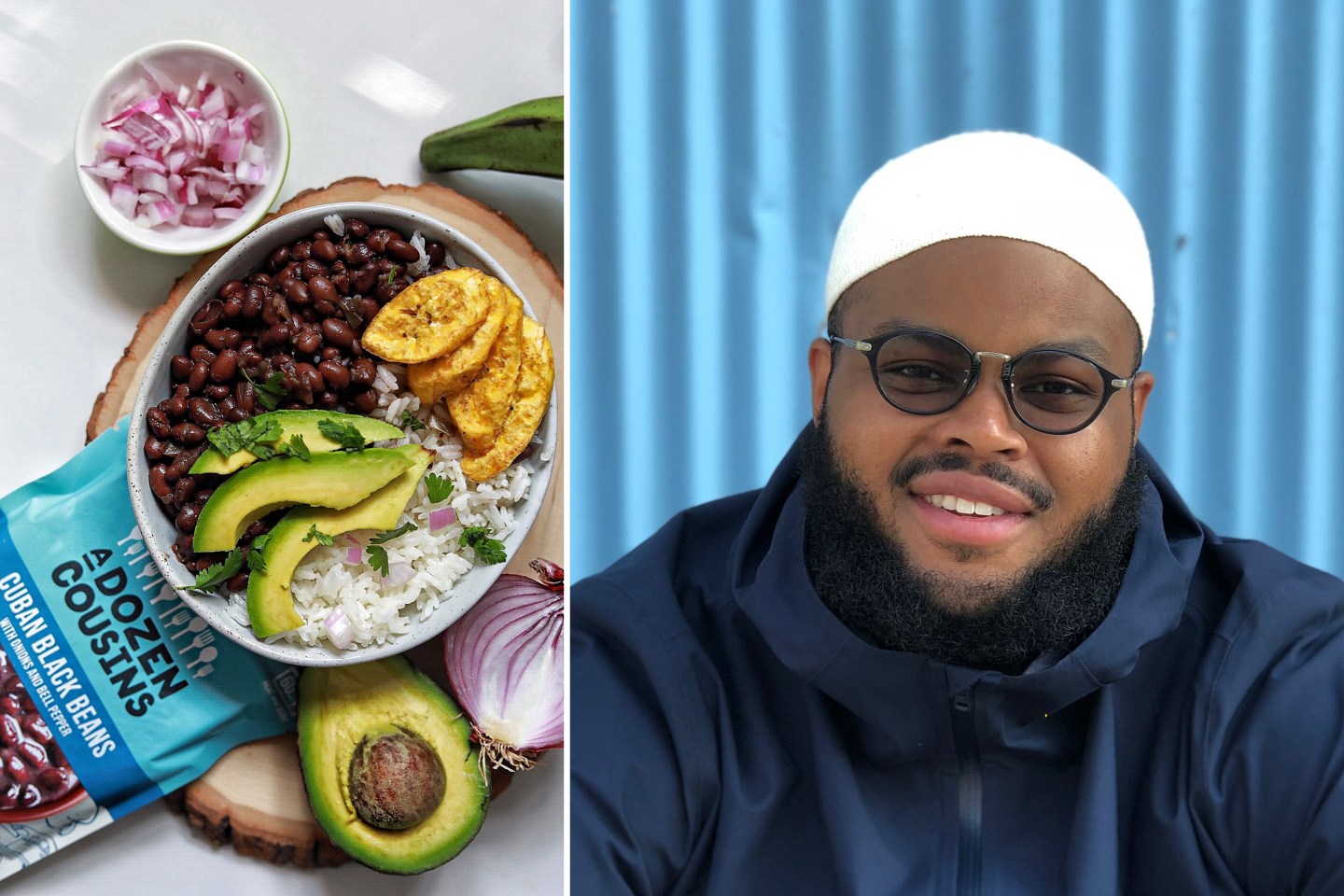
Ibraheem Basir, who grew up in Brooklyn’s Fort Greene, is another entrepreneur who has tapped into the burgeoning demand for authentic flavors. Months after launching his ready-to-eat bean company in 2018, A Dozen Cousins, Basir won a NEXTY award for best new pantry product from the biggest trade show in the industry, Natural Products Expo West. Around a crowded dinner table —he actually has a couple dozen cousins — Basir grew up with the flavors of the Caribbean, Latin America and the deep south. The proof is in the beans: consumers loved those flavors too, and A Dozen Cousins is the No. 1 seller in their category on Amazon.
“People are so used to eating global food, but for some reason in the supermarket, the industry hasn’t made that same connection.” When quarantine sent families scrambling to stock up on food, A Dozen Cousins saw “explosive” growth in March and April, with another jump in June. While they are happy to lean into the moment, founders like Basir do wonder if this moment is will grow into something bigger or if investors will continue overlooking Black companies. In 2016, a study reported that all startups raised on average $1.14 million during their first funding round. Black startups only averaged $42,000. When the study looked at only Black women, the median raised was $0.
Hoping for change
As an alumnus of the University of Pennsylvania’s Wharton School of Business and former marketing manager for General Mills, Basir had a vast network to lean on. But for Black business owners without those advantages, Basir says the challenge of attracting mainstream investors still remains. One 2011 study of the relationships between startups and VCs found that investors are more willing to invest in the startups that their peers are familiar with. When 81 percent of VC funds have no Black investors, Black founders who did not build their network by attending top MBA programs or working for big-name companies find themselves left out of the kind of networks crucial to receiving funding.
“We all understand that a lot of times people do things for marketing purposes,” Basir says. “I’m much more excited to hear people speak about a long-standing commitment that either they’ve already had or one that they’re willing to commit to over an extended period.”
Eniac Ventures founder Nihal Mehta took to Twitter in May to offer free appointments to Black founders. “Dear black founder, as an entrepreneur and VC it’s my responsibility to mentor and invest in you,” he wrote. “Bridging wealth inequity is one way we can help address our structural racism.” In less than 12 hours, his investment firm had booked over a hundred 15-minute meetings.
Other larger firms have rolled out similar intiatives. In May, PayPal announced a $530 million plan to invest in Black-owned businesses with short and longterm goals, $500 million of which the company says it will invest directly into Black startups. The company committed to matching employee donations and $10 for every volunteer hour, up to $500,000. Internally, Paypal committed $15 million to support recruiting and advancement for employees of color. JPMorgan Chase committed to hiring 4,000 Black college graduates by 2024 and announced a $5 million investment to its Advancing Black Pathways program to provide resources and support for Black businesses.
And while BLCK VC launched well ahead of the current moment, in 2018, their mission is still the same: Turn 200 black investors into 400 black investors by 2024. Founded by Storm Ventures’ Frederik Groce and Dolls Kill’s Sydney Sykes, BLCK VC aims to close the investment gap by developing a community to support Black venture investors. If a firm is looking to hire more diverse investors, BLCK VC has suggestions ready.
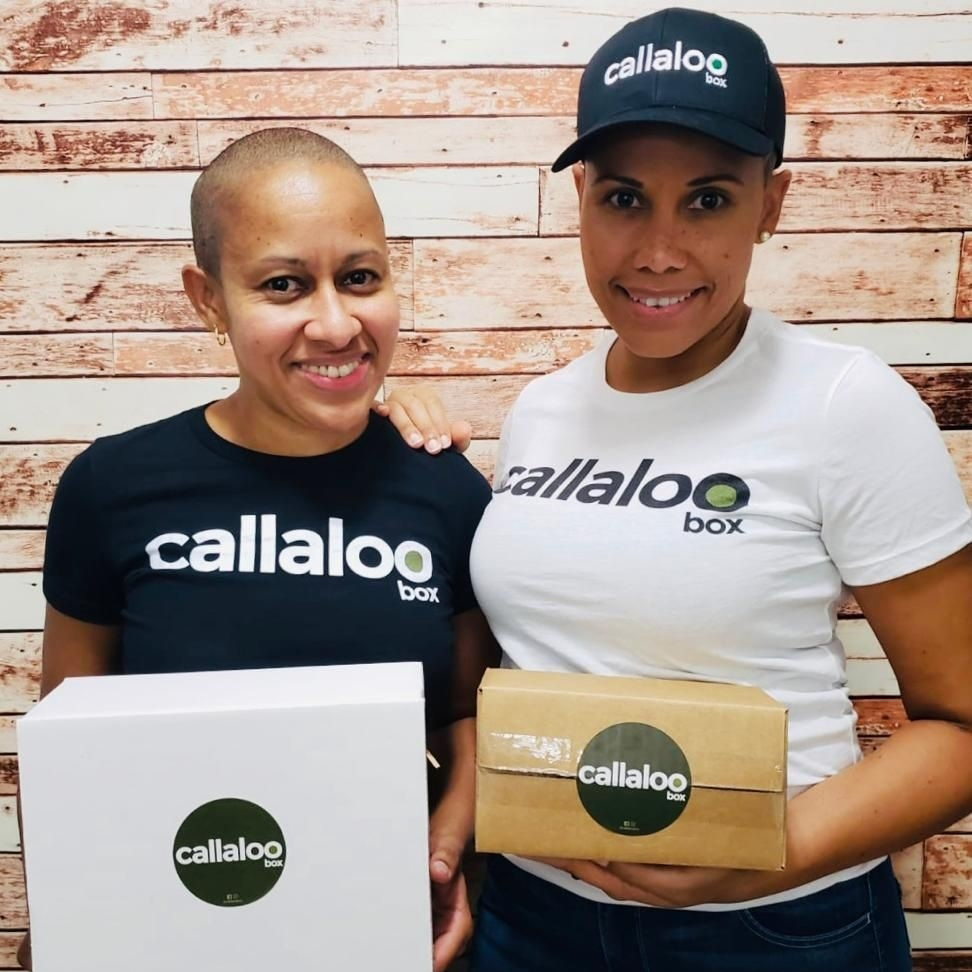
Malika and Jamila Augustin don’t have investors yet, but the explosion of interest is enough to keep business going for the two sisters who founded Caribbean subscription box and grocery service Callaloo Box. When the sisters moved to New York from Trinidad they couldn’t find the Trinidadian brands they grew up with, even in the city. Visiting home became an opportunity to not only see loved ones, but to bring back bottles of ketchup—sweeter and less tart than the American version—to feel at home. Though the business had been successful since launching in 2017, it suddenly exploded during the pandemic. As summer began, they found themselves featured in Cosmopolitan. Their orders tripled. They struggled to keep their shipping time, previously two days, to under a week.
“We could have been around forever and probably would have never gotten mentioned in many of those publications,” Jamila said. “There are so many people in our market that we’re now reaching because of it.”
August 12: This story has been updated to include Sydney Sykes’ current title and the correct spelling of her last name.