Voters in New York cast ballots on Tuesday, June 23, in a variety of state and national primaries. But they’re not expected to know the final outcome of those races until well into next week. States including Kentucky, Pennsylvania, and Georgia are seeing similar delays. That’s largely owing to a surge in demand for absentee ballots as voters seek to avoid the risk of coronavirus infection at the polls, as well as jurisdictions that aren’t well prepared to process them.
Unless decisive action is taken, experts say, the delayed results are just a preview of bigger problems in the upcoming presidential election—and potentially a threat to American democracy itself.
“I think we have to assume there’s going to be long delays [for election results] in November,” says Charles Stewart, a political science professor at MIT who specializes in voting technology. “The worry is that this delay is going to be the source of fomented distrust of the vote-counting process.”
Stewart is alluding to a recent surge of tweets and other statements from, above all, President Donald Trump. The President has repeatedly made false claims that voting by mail increases the risk of election fraud.
To speed up results and protect trust in the process, election officials across the country will need to swiftly address what experts identify as the two main issues slowing down current primary results: outdated technology and equally outdated legislation.
Mail-in ballots are typically processed manually in many of the jurisdictions seeing delayed primary results. But there are also usually far fewer of them. In New York, for example, mail-in ballots are expected to account for a majority of votes in this week’s primary, compared with a normal proportion of around 5%.
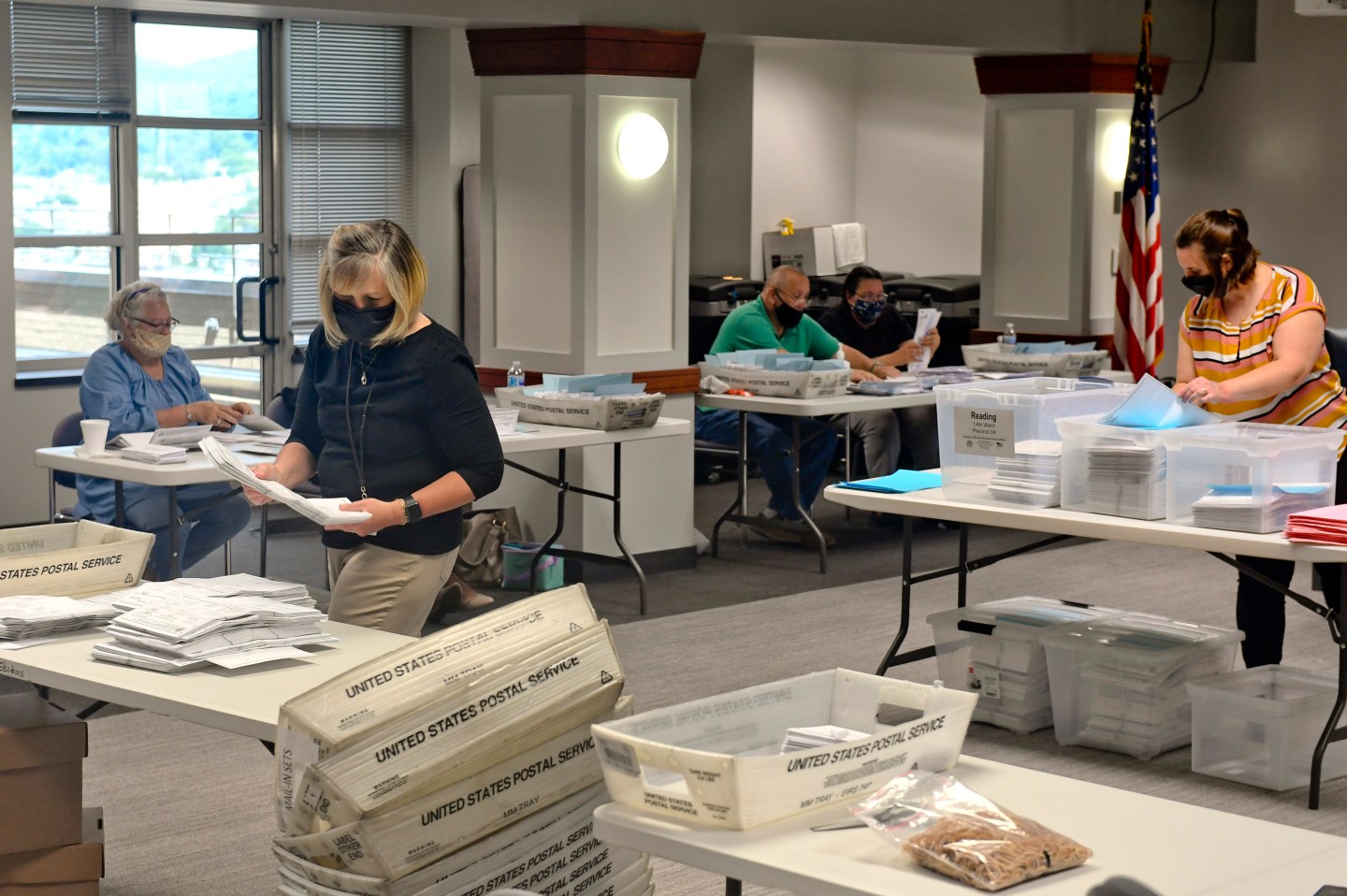
Election workers process those ballots by manually opening envelopes, reviewing voter signatures, and sorting ballots. For the most part, according to Stewart, compensating for the surge in the short term has meant simply hiring more workers.
But to prepare for November, many jurisdictions are hoping to automate more of the process, drawing in part on the robust mail-in voting infrastructure of jurisdictions including Oregon and Washington State. There, much of the process is already automated, with machines used to extract and sort ballots, and even to review signatures.
It remains to be seen, though, how many jurisdictions will be able to adopt those processes. Amber McReynolds, head of the National Vote at Home Institute and a former election official in Denver, is worried that production and supply issues may mean the needed high-tech equipment won’t be available in time, especially if state and local officials are indecisive.
“This is not a July or August decision,” says McReynolds. “That’s something election officials have to make a decision on right now.”
There are also budget constraints: According to Stewart, a single sorting machine can cost roughly a million dollars. While the CARES Act provided about $400 million in additional election funding this year, states have faced barriers in accessing those funds.
The second factor in delayed tallies are rules that, according to experts, unnecessarily slow down the processing of mail-in ballots.
In most states, according to McReynolds, mail-in ballots go through signature review and other verification processes when they’re received, allowing votes to be tallied quickly on election day.
“In Denver, on election night, you’ll see 50% of all results posted right at 7 p.m.,” says McReynolds, “because they’ve processed [mail-in ballots] weeks in advance.”
But in a relative handful of states including Pennsylvania, Michigan, and Wisconsin, rules prohibit even preliminary processing of ballots prior to election day. In New York, officials can’t tally mail-in votes until a week after in-person voting. Though the rules were originally intended to protect election integrity, the rationales behind them are largely no longer relevant.
“The regulations and laws related to mail balloting were designed for the old-fashioned, excuse-required absentee ballot process,” says Stewart. Many absentee voting rules have been modified as a result of the coronavirus, but rules about processing haven’t been updated to match, in part because they’re politically contentious. Legislative efforts to update them by November have gained steam, but are expected to have uneven results.
“I’ve been told there’s likely to be success in Pennsylvania on [revising mail-in ballot rules],” says Stewart. “And in Michigan it’s not going to happen. This is trench warfare—it’s going to be state by state.”
With both practical and political obstacles to quick reform, there’s a good chance that some major battleground states will not have decisive election returns for days, or perhaps weeks, after in-person voting on Nov. 3.
Elaine Kamarck, a senior fellow studying elections at the Brookings Institution and a former Clinton administration official, says this means Americans should adjust how they think about election night.
“We’re accustomed to staying up late for results,” says Kamarck. “Television does a good job of making it very dramatic as the returns come in. This time, that won’t be the case.”
More politics coverage from Fortune:
- Protests, coronavirus face masks pose challenges for facial recognition
- George Floyd protests force Britain to reckon with its role in slavery, leading some companies to pay reparations
- This is what people mean when they say they want to defund the police
- Photos: In city squares and parks outside U.S. embassy buildings, Black Lives Matter protests go global
- WATCH: Protests for George Floyd from around the U.S.