• Home
  • Latest
  • Fortune 500
  • Finance
  • Tech
  • Leadership
  • Lifestyle
  • Rankings
  • Multimedia
Tech

Russia’s online censorship machine is no longer running smoothly

By
David Meyer
David Meyer
Down Arrow Button Icon
By
David Meyer
David Meyer
Down Arrow Button Icon
June 24, 2020, 10:12 AM ET
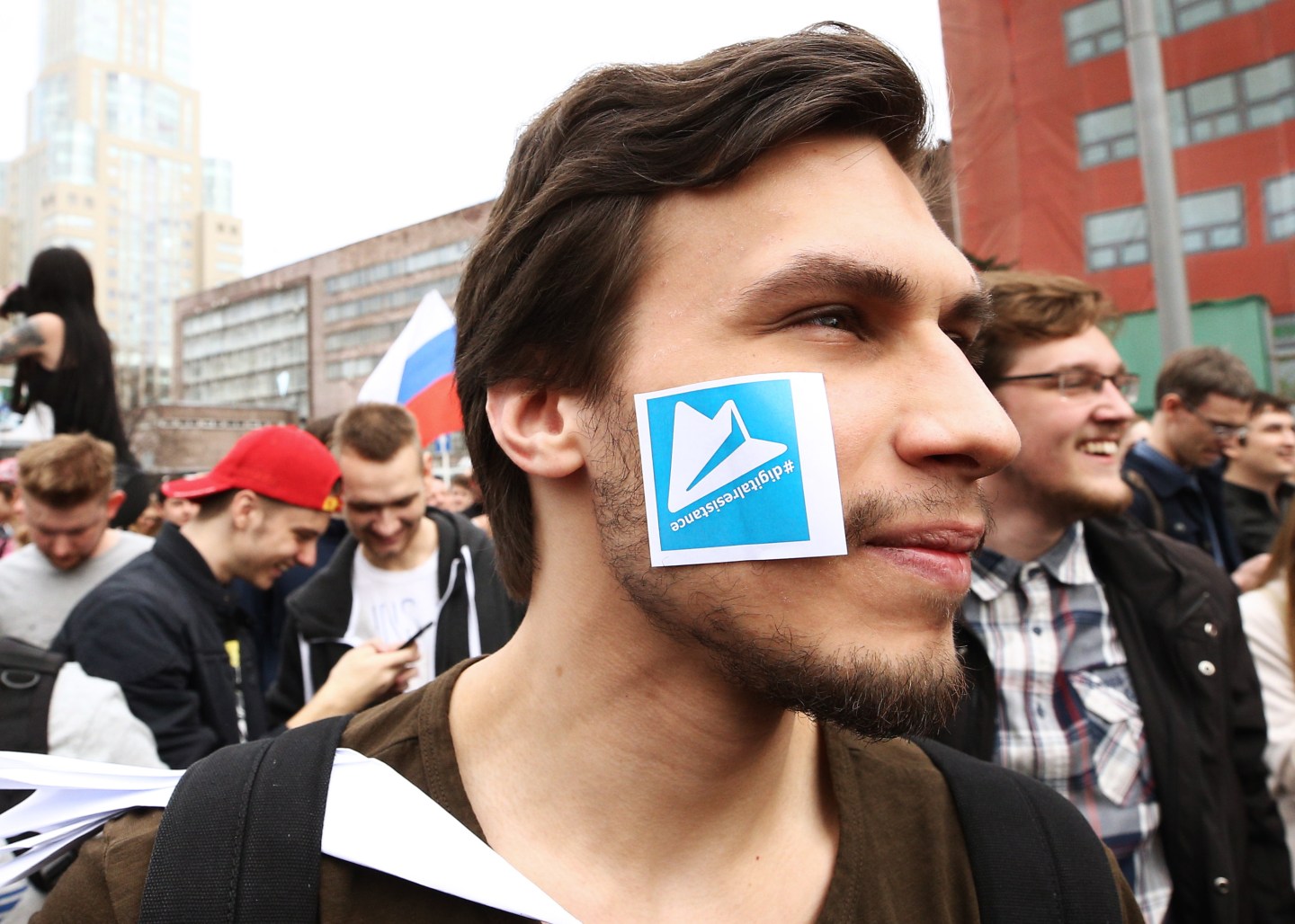
People take part in a rally for 'free Internet' and in support of the Telegram Messenger in Akademika Sakharova Avenue. On April 13, 2018, Moscow's Tagansky District Court ruled to block Telegram in Russia.
People take part in a rally for 'free Internet' and in support of the Telegram Messenger in Akademika Sakharova Avenue. On April 13, 2018, Moscow's Tagansky District Court ruled to block Telegram in Russia. Mikhail Tereshchenko—TASS/Getty ImagesMikhail Tereshchenko—TASS/Getty Images

Not long ago, it looked as if the Kremlin’s control of the Russian Internet would just get tighter and tighter. But as events of recent days have shown, the country’s online censorship regime may be faltering.

On Tuesday, the European Court of Human Rights (ECHR) dealt a blow to Russia’s extensive website-blocking regime by ruling, in four separate cases, that the blocking measures were excessive and violated the right to free expression. And just days before, Russian media regulator Roskomnadzor ended its largely ineffective two-year blockade of the messaging and microblogging app Telegram.

The ECHR polices the European Convention on Human Rights, which has been agreed among the 47 member states of the Council of Europe—including not only those in the EU, but also Russia, Turkey, and several non-EU Eastern European countries. When it rules that a country’s legal system has violated someone’s rights, the court tells the country to fix the problem that caused that violation. However, enforcement is often lacking.

Russia’s online censorship targets a range of content, including some that is banned across much of the world—notably child sexual abuse material—but also material that describes drug use or suicide methods in detail. It also cracks down on material it considers extremist and routinely goes after websites that it rules run afoul of the country’s so-called “gay propaganda law.” Roskomnadzor enforces the censorship by giving Internet service providers an ever-expanding list of websites they must block their customers from accessing.

One of the cases leading to this week’s ruling was brought about by former chess champion and current Kremlin critic Garry Kasparov, whose website was blocked by Roskomnadzor in 2014 on the grounds of promoting mass disorder or “extremist speech.”

Going overboard

The ECHR said Roskomnadzor had gone overboard by forcing Internet service providers to block Kasparov’s entire site, rather than specifying pages that broke the law, so the site’s administrators could remove them or challenge the decision. It likened the blocking of the whole site to banning a newspaper or TV station, without “any legitimate aim.”

Another case involved a site that had been blocked because it showed people how to bypass Russian Internet censorship mechanisms. 

“The Court found that suppressing information about technology for accessing information online because it could incidentally aid access to extremist material was no different from trying to restrict access to printers and photocopiers because they could be used for reproducing such material,” it said. “In the absence of a narrowly defined and specific legal basis, the Court found that such a sweeping measure was arbitrary.”

Kasparov tweeted Tuesday that he was glad the court had decided in his favor, but he’d rather see the Council of Europe expel Russia.

Glad that the European Court of Human Rights decided in my favor that my news site https://t.co/GOtOaPoWf7 was illegally banned in Russia. But I'd rather the Council of Europe ban Putin's Russia instead of legitimizing his criminal regime. https://t.co/fg6OF6G00r

— Garry Kasparov (@Kasparov63) June 23, 2020

Fortune has asked Roskomnadzor multiple times whether its site-blocking tactics will change in response to the ruling, but has received no response at the time of writing.

According to the U.K.-based free-expression NGO Article 19, the ruling’s timing is useful, given that the EU is currently considering stiffer regulation of online speech.

“The Court’s judgment is a decisive victory for freedom of expression online in Russia, and will set an important precedent on the safeguards against website blocking powers,” said senior director of law and policy Barbora Bukovska in a statement. “As EU discussions continue on the Digital Services Act and other issues such as filtering, the Court’s judgment provides an important reminder of the minimum safeguards that the law should provide when using blocking technology.”

Collateral damage

Another one of the cases decided Tuesday by the ECHR involved a site—Electronic Publishing News—that was blocked in 2012 not because it itself broke any law, but because it shared an Internet (IP) address with another website that did break Russia’s law against promoting drug use. (The same law once led to Wikipedia’s brief blockage in Russia.)

This overblocking is a recurring theme in Russian online censorship—and one that notably popped up at the start of the Telegram block in 2018.

Roskomnadzor tried to block Telegram because it refused to give the security services encryption keys that would allow the monitoring of private conversations. In order to dodge the blockade, Telegram started hosting its service on servers with IP addresses different from those listed on the blocking order.

As Telegram hopped from server to server, the censorship agency responded by trying to block every IP address it could associate with the app. It ended up blocking millions of IP addresses, accidentally knocking out Amazon’s and Google’s cloud services in Russia, along with the websites of universities and national media.

Despite the best efforts of erstwhile Roskomnadzor head Aleksandr Zharov, Telegram didn’t just survive; its Russian user numbers doubled to 30 million over the course of the attempted blockade, and senior Kremlin officials continue to use it. Late last week, Roskomnadzor—under new leadership since March—announced that it was lifting the Telegram ban.

The regulator suggested the change was the result of Telegram founder and CEO Pavel Durov’s “readiness…to counter terrorism and extremism.” Indeed, Durov said back in late 2018 that he was willing to provide terrorist suspects’ IP addresses and phone numbers if presented with a court order. However, Telegram reportedly still has not handed over those encryption keys or secret messages.

“To characterize the ban as a case study of failed Internet censorship is to put it lightly,” wrote Foreign Policy Centre research fellow Lincoln Pigman in a Monday postmortem. “Its resort to shock and awe saw millions of IP addresses blacklisted in the weeks following Telegram’s proscription. Yet Roskomnadzor succeeded only in causing sporadic outages while inflicting significant collateral damage.”

More must-read international coverage from Fortune:

  • Corporate Germany has a race problem—and a lack of data is not helping
  • George Floyd protests force Britain to reckon with its role in slavery, leading some companies to pay reparations
  • The insurance case that helped end the slave trade
  • George Floyd protests, coronavirus face masks pose challenges for facial recognition
  • From beekeepers to giant pension funds, activist shareholders are being silenced by the coronavirus

About the Author
By David Meyer
LinkedIn icon
See full bioRight Arrow Button Icon

Latest in Tech

Finance
Lorem ipsum dolor sit amet, consectetur adipiscing elit, sed do eiusmod tempor incididunt ut labore et dolore magna aliqua. Ut enim ad minim veniam
By Fortune Editors
October 20, 2025
Finance
Lorem ipsum dolor sit amet, consectetur adipiscing elit, sed do eiusmod tempor incididunt ut labore et dolore magna aliqua. Ut enim ad minim veniam
By Fortune Editors
October 20, 2025
Finance
Lorem ipsum dolor sit amet, consectetur adipiscing elit, sed do eiusmod tempor incididunt ut labore et dolore magna aliqua. Ut enim ad minim veniam
By Fortune Editors
October 20, 2025
Finance
Lorem ipsum dolor sit amet, consectetur adipiscing elit, sed do eiusmod tempor incididunt ut labore et dolore magna aliqua. Ut enim ad minim veniam
By Fortune Editors
October 20, 2025
Finance
Lorem ipsum dolor sit amet, consectetur adipiscing elit, sed do eiusmod tempor incididunt ut labore et dolore magna aliqua. Ut enim ad minim veniam
By Fortune Editors
October 20, 2025
Finance
Lorem ipsum dolor sit amet, consectetur adipiscing elit, sed do eiusmod tempor incididunt ut labore et dolore magna aliqua. Ut enim ad minim veniam
By Fortune Editors
October 20, 2025

Most Popular

Finance
Lorem ipsum dolor sit amet, consectetur adipiscing elit, sed do eiusmod tempor incididunt ut labore et dolore magna aliqua. Ut enim ad minim veniam
By Fortune Editors
October 20, 2025
Finance
Lorem ipsum dolor sit amet, consectetur adipiscing elit, sed do eiusmod tempor incididunt ut labore et dolore magna aliqua. Ut enim ad minim veniam
By Fortune Editors
October 20, 2025
Finance
Lorem ipsum dolor sit amet, consectetur adipiscing elit, sed do eiusmod tempor incididunt ut labore et dolore magna aliqua. Ut enim ad minim veniam
By Fortune Editors
October 20, 2025
Finance
Lorem ipsum dolor sit amet, consectetur adipiscing elit, sed do eiusmod tempor incididunt ut labore et dolore magna aliqua. Ut enim ad minim veniam
By Fortune Editors
October 20, 2025
Finance
Lorem ipsum dolor sit amet, consectetur adipiscing elit, sed do eiusmod tempor incididunt ut labore et dolore magna aliqua. Ut enim ad minim veniam
By Fortune Editors
October 20, 2025
Finance
Lorem ipsum dolor sit amet, consectetur adipiscing elit, sed do eiusmod tempor incididunt ut labore et dolore magna aliqua. Ut enim ad minim veniam
By Fortune Editors
October 20, 2025
Fortune Secondary Logo
Rankings
  • 100 Best Companies
  • Fortune 500
  • Global 500
  • Fortune 500 Europe
  • Most Powerful Women
  • Future 50
  • World’s Most Admired Companies
  • See All Rankings
Sections
  • Finance
  • Fortune Crypto
  • Features
  • Leadership
  • Health
  • Commentary
  • Success
  • Retail
  • Mpw
  • Tech
  • Lifestyle
  • CEO Initiative
  • Asia
  • Politics
  • Conferences
  • Europe
  • Newsletters
  • Personal Finance
  • Environment
  • Magazine
  • Education
Customer Support
  • Frequently Asked Questions
  • Customer Service Portal
  • Privacy Policy
  • Terms Of Use
  • Single Issues For Purchase
  • International Print
Commercial Services
  • Advertising
  • Fortune Brand Studio
  • Fortune Analytics
  • Fortune Conferences
  • Business Development
  • Group Subscriptions
About Us
  • About Us
  • Editorial Calendar
  • Press Center
  • Work At Fortune
  • Diversity And Inclusion
  • Terms And Conditions
  • Site Map
  • About Us
  • Editorial Calendar
  • Press Center
  • Work At Fortune
  • Diversity And Inclusion
  • Terms And Conditions
  • Site Map
  • Facebook icon
  • Twitter icon
  • LinkedIn icon
  • Instagram icon
  • Pinterest icon

Latest in Tech

Even Nvidia’s own research teams can’t get enough GPUs amid the race for AI computing power
NewslettersEye on AI
Even Nvidia’s own research teams can’t get enough GPUs amid the race for AI computing power
By Sharon GoldmanApril 9, 2026
7 hours ago
You’re looking at the AI revolution all wrong, top economist says: 40% unemployment and a 3-day work week are the same thing
AIdisruption
You’re looking at the AI revolution all wrong, top economist says: 40% unemployment and a 3-day work week are the same thing
By Nick LichtenbergApril 9, 2026
8 hours ago
Zoom CEO Eric Yuan
Successthe future of work
‘I hate working 5 days’: Zoom CEO says traditional work schedules are becoming obsolete—and predicts a 3-day workweek by 2031
By Preston ForeApril 9, 2026
9 hours ago
Nutella seen aboard the Orion spacecraft Integrity.
RetailFood and drink
Nutella jumps on the best product placement money can’t buy: a trip to the far side of the moon
By Catherina GioinoApril 9, 2026
10 hours ago
kash
Cybersecuritycyber
Trump’s ‘cease-fire’ won’t stop Iranian hackers for long, cyber experts say
By David Klepper and The Associated PressApril 9, 2026
10 hours ago
lego
PoliticsIran
AI-savvy pro-Iran groups troll America with Lego Movie-style propaganda videos mocking American failure
By Sam McNeil and The Associated PressApril 9, 2026
10 hours ago

Most Popular

The U.S. government is spending $88 billion a month in interest on national debt—equal to spending on defense and education combined
Economy
The U.S. government is spending $88 billion a month in interest on national debt—equal to spending on defense and education combined
By Fortune EditorsApril 9, 2026
12 hours ago
The U.S. had a national debt ‘home run’ in its grasp, says Jamie Dimon. But the government did nothing, and now its best option is crisis management
Economy
The U.S. had a national debt ‘home run’ in its grasp, says Jamie Dimon. But the government did nothing, and now its best option is crisis management
By Fortune EditorsApril 8, 2026
2 days ago
2 years ago, Saudi Arabia quietly canceled the ‘petrodollar’ deal with America that wired the world economy for 50 years. Then war broke out in Iran
Energy
2 years ago, Saudi Arabia quietly canceled the ‘petrodollar’ deal with America that wired the world economy for 50 years. Then war broke out in Iran
By Fortune EditorsApril 7, 2026
2 days ago
Self-made billionaire MrBeast says his work-life balance is nonexistent and calls it a ‘miracle’ if he works less than 15-hour days: ‘I live to work’
Success
Self-made billionaire MrBeast says his work-life balance is nonexistent and calls it a ‘miracle’ if he works less than 15-hour days: ‘I live to work’
By Fortune EditorsApril 8, 2026
1 day ago
Gen Z workers are so fearful AI will take their job they’re intentionally sabotaging their company’s AI rollout
AI
Gen Z workers are so fearful AI will take their job they’re intentionally sabotaging their company’s AI rollout
By Fortune EditorsApril 8, 2026
1 day ago
Gen Z doesn't want your full-time job. They want several part-time roles, and it's reshaping the entire workforce
Success
Gen Z doesn't want your full-time job. They want several part-time roles, and it's reshaping the entire workforce
By Fortune EditorsApril 9, 2026
16 hours ago

© 2026 Fortune Media IP Limited. All Rights Reserved. Use of this site constitutes acceptance of our Terms of Use and Privacy Policy | CA Notice at Collection and Privacy Notice | Do Not Sell/Share My Personal Information
FORTUNE is a trademark of Fortune Media IP Limited, registered in the U.S. and other countries. FORTUNE may receive compensation for some links to products and services on this website. Offers may be subject to change without notice.